Can You Use 1/2 Plywood for Cabinets Expert Guide
Building your own cabinets is a rewarding project, but knowing which materials to use can sometimes feel confusing, especially for those just starting out. Many DIYers wonder, “Can You Use 1/2 Plywood for Cabinets? Expert Guide” and if it’s a good choice.
It’s a common question because the right material makes a big difference in how strong and good your cabinets look. Don’t worry, we’ll walk through it step by step, making it simple and clear so you can build cabinets you’ll be proud of. Let’s get started on figuring out if 1/2-inch plywood is the right pick for your next project.
Is 1/2 Inch Plywood Good for Cabinets
Deciding if 1/2 inch plywood is suitable for cabinet construction involves looking at its strengths, weaknesses, and where it fits best in your DIY projects. While it’s a common question for beginners, understanding the material’s properties helps make informed decisions. This section will explore why people ask about 1/2 inch plywood for cabinets and what factors make it a viable or less ideal option.
We aim to provide a clear picture so you can confidently choose the right thickness for your cabinet builds.
Understanding Plywood Thickness
Plywood comes in various thicknesses, typically measured in fractions of an inch. The thickness you choose directly impacts the structural integrity, weight, and cost of your project. Common thicknesses include 1/4 inch, 1/2 inch, 5/8 inch, and 3/4 inch.
Each thickness serves different purposes in woodworking. For instance, 1/4 inch is often used for cabinet backs or drawer bottoms, while 3/4 inch is a standard for cabinet carcasses and shelves due to its strength.
The thickness of plywood is determined by the number of layers, also known as plies, and the glue used to bond them together. More plies generally mean a stronger and more stable sheet. The way the wood grain alternates in direction between plies also contributes to plywood’s strength and resistance to warping.
Understanding these basic principles helps you appreciate why thickness is a critical factor in selecting materials for any construction project.
When considering cabinets, the load they will bear is a primary concern. Shelves holding heavy items need thicker, stronger material than decorative panels. Similarly, cabinet boxes need to be sturdy enough to support doors, drawers, and their contents without sagging or deforming over time.
This is where the question of whether 1/2 inch plywood is sufficient often arises, as it sits in the middle range of common plywood thicknesses.
What Does 1/2 Inch Plywood Mean
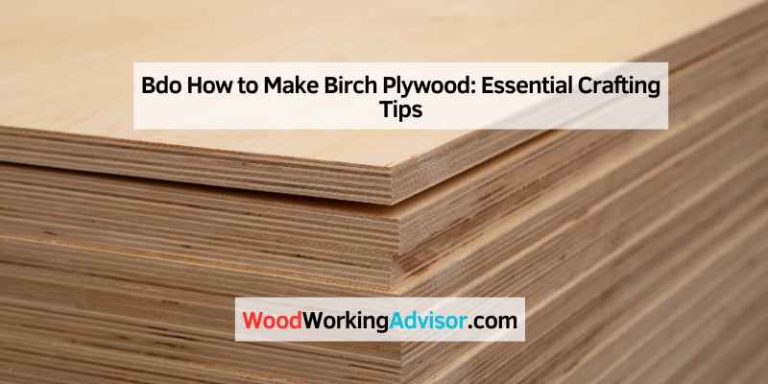
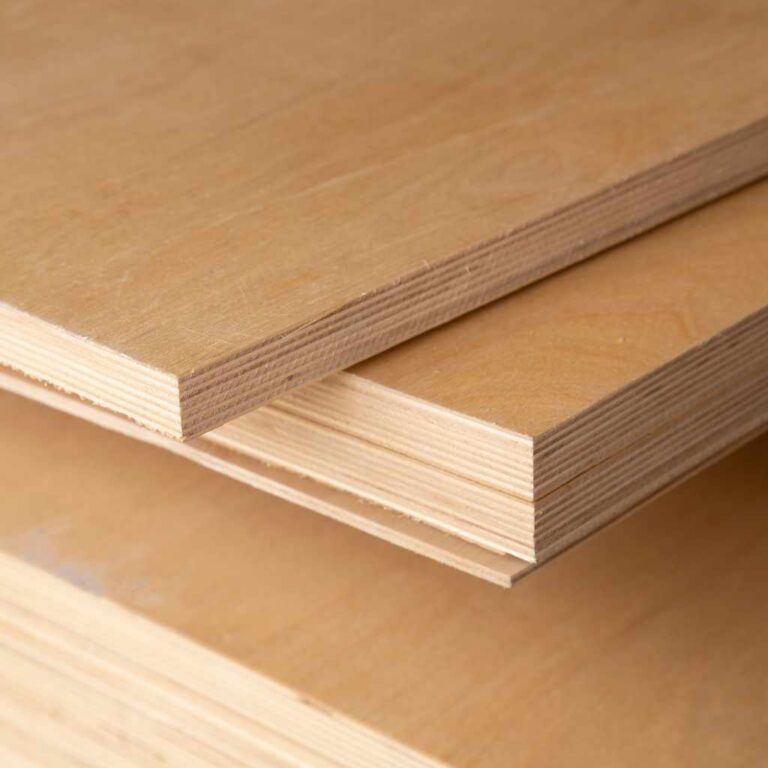
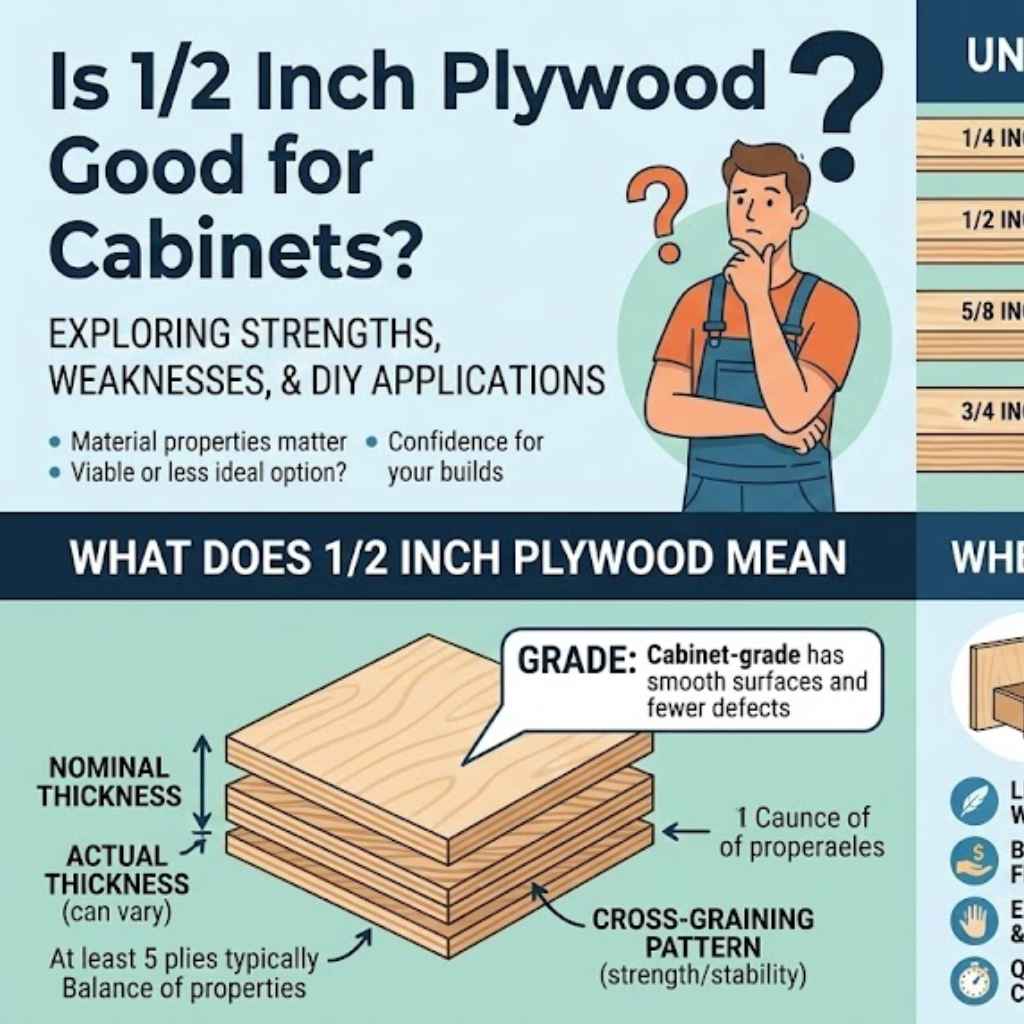
When we talk about 1/2 inch plywood, we’re referring to sheets that are nominally 1/2 inch thick. In reality, the actual thickness can vary slightly due to manufacturing tolerances. This material is made by layering thin sheets of wood veneer, called plies, with their grain oriented at right angles to each other.
These layers are then bonded together with adhesive under heat and pressure. The cross-graining pattern is what gives plywood its strength and stability, preventing it from splitting or warping as easily as solid wood.
The number of plies in a 1/2 inch sheet can vary, but typically it will have at least five plies. More plies generally lead to a stronger and more dimensionally stable product. The quality of the veneer used for the plies, the type of adhesive, and the manufacturing process all contribute to the overall quality and performance of the plywood.
For cabinet making, the grade of the plywood also plays a significant role, with cabinet-grade plywood offering smoother surfaces and fewer defects.
The nominal 1/2 inch thickness is a common choice for various woodworking projects, offering a good balance between strength, weight, and cost. It is thicker than 1/4 inch material, which is often too thin for structural applications, but not as thick or heavy as 3/4 inch plywood. This makes it an attractive option for builders looking for a material that is manageable to work with while still providing adequate support for certain cabinet components.
When 1/2 Inch Plywood Is A Good Choice
1/2 inch plywood can be a perfectly suitable material for specific parts of cabinet construction, particularly where extreme load-bearing is not a primary concern. It’s often used for cabinet sides, backs, and drawer sides. For cabinet backs, especially if they are dadoed into the cabinet frame or attached securely to the wall, 1/2 inch plywood provides adequate rigidity and prevents the cabinet from racking or twisting.
For cabinet sides, if the shelves are well-supported and not expected to hold exceptionally heavy items, 1/2 inch plywood can suffice.
Furthermore, 1/2 inch plywood is a lighter option than 3/4 inch plywood, which can make handling and installation easier, especially for larger cabinet sections or when working at height. Its lighter weight also translates to less strain on hinges and mounting hardware. When cost is a significant factor, 1/2 inch plywood is generally less expensive than its thicker counterpart, making it a budget-friendly choice for many DIY projects.
It’s also easier to cut and shape, which can speed up the construction process.
However, the suitability of 1/2 inch plywood depends heavily on the specific application within the cabinet. While it might be adequate for a wall cabinet holding lighter items like glasses or spices, it might not be the best choice for a base cabinet that needs to support heavy pots, pans, or appliances. Always consider the intended use and the weight the cabinet will need to hold when making your material selection.
Using 1/2 Inch Plywood for Cabinet Carcasses
The cabinet carcass, essentially the main box of the cabinet, is a critical structural component. The question of whether 1/2 inch plywood is adequate for this primary structure is a common one. While it can be used, there are important considerations to keep in mind regarding its strength, durability, and potential for deflection under load.
This section will explore the pros and cons of using 1/2 inch plywood for cabinet carcasses and offer guidance on when it might be appropriate.
Strength and Durability Considerations
When building cabinet carcasses, strength and durability are paramount. The carcass must withstand the weight of doors, drawers, shelves, and whatever items are stored inside. 1/2 inch plywood, while offering some strength due to its layered construction, is generally considered less robust than 3/4 inch plywood.
The primary concern with 1/2 inch plywood in a carcass application is its potential for flexing or sagging, especially over longer spans or under significant weight.
For instance, if you have a 30-inch wide cabinet with shelves spaced widely apart, 1/2 inch plywood shelves could start to bow over time. Similarly, the side panels of a cabinet might not be as rigid if they are made from 1/2 inch material, potentially leading to issues with door alignment if the cabinet twists. The quality of the 1/2 inch plywood also plays a role; higher quality plywood with more plies and better-grade veneers will be stronger than lower-quality options.
However, if the cabinet is small, intended for light storage, and has frequent shelf supports, 1/2 inch plywood might hold up adequately. The use of reinforcing elements, such as internal bracing or a strong back panel, can also significantly enhance the rigidity of a carcass made with 1/2 inch plywood. It’s about matching the material’s capabilities to the demands placed upon it.
When 1/2 Inch Plywood Carcasses Are Suitable
1/2 inch plywood can be a suitable choice for cabinet carcasses in specific scenarios where the demands on the structure are relatively low. For example, in utility cabinets where you might store cleaning supplies or lightweight tools, or in decorative wall cabinets for displaying items that aren’t exceptionally heavy, a 1/2 inch carcass might perform perfectly well. Small pantry cabinets or linen closets with closely spaced shelves can also be constructed using 1/2 inch plywood for the main box.
Another situation where 1/2 inch plywood carcasses are viable is in situations where the cabinets are primarily for aesthetic purposes and will not bear significant weight. For example, display cabinets in a living room or cabinets designed to house lightweight electronics might not require the robust support of 3/4 inch material. The key is to assess the intended use and the expected load carefully.
If the cabinet will be subject to heavy use or needs to support substantial weight, opting for thicker plywood for the carcass is generally a safer bet.
It’s also worth noting that if you are building frameless cabinets (also known as European-style cabinets), the construction method itself can provide additional rigidity. In these cabinets, doors often attach directly to the cabinet sides, and the overall construction relies on precise joinery and often a very strong back panel. Even with 1/2 inch sides, a well-executed frameless cabinet can be quite strong, but careful planning is still essential.
Reinforcing and Supporting 1/2 Inch Carcasses
To enhance the strength and longevity of cabinet carcasses made from 1/2 inch plywood, several reinforcing techniques can be employed. One of the most effective is the addition of a solid wood face frame. A face frame, typically made from 1×2 or 1×3 lumber, attaches to the front edges of the cabinet sides, top, and bottom.
This frame adds significant rigidity, prevents the front edges from chipping, and provides a solid surface for mounting doors and drawers. It dramatically increases the overall stability of the cabinet box.
Another crucial reinforcing element is the cabinet back. While a thin back panel can be made from 1/4 inch plywood, a 1/2 inch back panel, especially if it’s securely attached to the cabinet frame, adds substantial structural integrity. Dadoing the back panel into the sides, top, and bottom of the cabinet creates a stronger joint than simply nailing or screwing it on.
This technique makes the entire cabinet box much more resistant to racking and twisting.
Internal bracing can also be used. Adding horizontal strips of wood along the top and bottom edges inside the cabinet, or even vertical supports in larger cabinets, can further reduce flexing. If you plan to install adjustable shelves, ensure that the shelf pins are supported by adequate material.
While 1/2 inch plywood can work, using thicker shelf material or adding reinforcing strips beneath the shelf support holes can prevent sagging.
Using 1/2 Inch Plywood for Cabinet Shelves
Cabinet shelves are another area where the choice of material thickness is critical. Shelves bear the direct weight of the items stored within the cabinet, and failure in this area can lead to sagging, breakage, and damage to stored goods. This section will examine whether 1/2 inch plywood is a suitable choice for cabinet shelves and under what conditions it can be used effectively.
Load Bearing Capacity of 1/2 Inch Shelves
The load-bearing capacity of 1/2 inch plywood shelves is a key concern. Unlike cabinet carcasses, shelves are essentially cantilevers, meaning they project from a support and must resist bending. The longer the shelf span (the distance between supports) and the heavier the load, the more likely a 1/2 inch shelf is to sag.
For short spans, say 18 inches or less, and for storing lighter items, 1/2 inch plywood can often perform adequately.
However, if you plan to store heavy items like books, canned goods, or heavy dinnerware, 1/2 inch plywood shelves are generally not recommended for spans much longer than about 24 inches without additional support. Even on shorter spans, over time, the constant weight can cause the plywood to develop a noticeable dip in the center. This deflection can make it difficult to close doors or drawers, and it can also lead to items falling off the shelves.
The type of plywood matters as well. Cabinet-grade birch or maple plywood will typically be stronger and more stable than a utility-grade pine plywood. The number of plies and the quality of the veneers also influence how well the shelf will hold up.
When in doubt, it’s always better to err on the side of caution and opt for a thicker material or add supports.
When 1/2 Inch Plywood Shelves Are Appropriate
1/2 inch plywood shelves are most appropriate for cabinets designed for lightweight items or where the shelf spans are short. For example, upper cabinets that hold glasses, mugs, or spices are often well-suited for 1/2 inch shelves. These items typically do not exert significant downward pressure.
In a small pantry cabinet holding only boxes of cereal or bags of chips, 1/2 inch shelves might also be perfectly fine, especially if the shelves are no more than 24 inches wide.
Another scenario where 1/2 inch shelves can work is in decorative or display cabinets. If you are building a cabinet to showcase lightweight collectibles or knick-knacks, the aesthetic appearance of the shelf is often more important than its heavy-duty load-bearing capacity. In these cases, 1/2 inch plywood provides a good balance of affordability and workability, and it can be finished to a high standard.
It’s also important to consider the frequency of use. Shelves that are accessed regularly and have items placed on and removed from them might experience more stress than those that are loaded once and left. For any shelf intended to hold substantial weight or cover a longer span, it is highly recommended to use at least 3/4 inch plywood or to incorporate support systems.
Strategies to Strengthen 1/2 Inch Shelves
If you decide to use 1/2 inch plywood for shelves, several strategies can significantly increase their strength and prevent sagging. One of the most effective methods is to add a solid wood edge banding or a cleat to the front edge of the shelf. This typically involves gluing and screwing a strip of wood, such as a 1×2 or 1×3 board, along the entire length of the front edge.
This creates an “L” or “T” shape profile, which greatly increases the shelf’s resistance to bending.
Another common technique is to use shelf supports that reduce the span. Instead of relying on just two support points at the ends, you can add intermediate supports. For cabinets with adjustable shelves, this means using more shelf pins.
For fixed shelves, you can install a vertical divider in the center of a wider cabinet to break up the span into two shorter, more manageable sections. These dividers can be made from plywood or solid wood.
For very wide shelves, you might even consider adding a reinforcing runner underneath. This involves gluing and screwing a long, thin strip of wood to the underside of the shelf, running from front to back, close to the front edge. This acts like a beam, providing extra support.
In some cases, combining multiple techniques, such as a front edge reinforcement and intermediate supports, will provide the best results for ensuring your 1/2 inch shelves remain strong and level.
Can You Use 1/2 Plywood for Cabinet Doors and Drawer Fronts
When it comes to cabinet doors and drawer fronts, the primary requirements are stability, flatness, and a good surface for finishing. The thickness of the plywood used for these components can affect how they hang, their resistance to warping, and their overall aesthetic. This section will explore the suitability of 1/2 inch plywood for cabinet doors and drawer fronts, considering the advantages and limitations.
Stability and Warping Concerns
Cabinet doors and drawer fronts need to remain flat and stable over time. Warping, or the tendency for the wood to twist or bend, can cause doors to bind, hinges to misalign, and drawers to stick. Plywood is generally more stable than solid wood due to its cross-graining construction, but thinner plywood can still be susceptible to warping, especially if exposed to changes in humidity or if the finish is not applied uniformly to all surfaces.
1/2 inch plywood, when used for doors and drawer fronts, can offer a good degree of stability. It is thick enough to resist minor warping tendencies. However, for larger cabinet doors, particularly those exposed to direct sunlight or significant temperature fluctuations, even 1/2 inch plywood might eventually show signs of movement.
The quality of the plywood is again crucial here; cabinet-grade plywood with a smooth, defect-free face veneer is essential for a good finish and for minimizing warping.
The method of attachment also plays a role. Doors hung with robust hinges, and drawer fronts attached to a sturdy drawer box, are less likely to experience issues related to the material’s inherent stability. For a truly premium result, especially on large doors, some woodworkers might still opt for solid wood or thicker engineered panels, but 1/2 inch plywood remains a very popular and practical choice for many cabinet door and drawer front applications.
Finishing and Appearance
The appearance of cabinet doors and drawer fronts is paramount to the overall look of the kitchen or room. 1/2 inch plywood can provide an excellent surface for a variety of finishes, from paint to stain. Cabinet-grade plywood typically has a smooth, consistent face veneer, free from large knots or voids, which makes it ideal for painting.
For stained finishes, the grain pattern will be visible, adding a natural beauty to the cabinets.
The thickness of 1/2 inch plywood also gives doors and drawer fronts a substantial feel. They don’t feel flimsy or cheap. When edge banding is applied to the exposed edges of the plywood, it creates a clean, finished look that mimics solid wood.
This edge banding can be made from hardwood veneer or solid wood strips, which can then be stained or painted along with the rest of the door.
For drawer fronts, 1/2 inch plywood is often an excellent choice. It’s strong enough to withstand the forces of opening and closing drawers, and it provides a smooth, flat surface for hardware like handles and knobs. The relatively lightweight nature of 1/2 inch plywood compared to thicker materials can also make the drawers easier to operate smoothly.
Examples of Using 1/2 Inch Plywood for Doors and Fronts
Many DIY and professional cabinet makers successfully use 1/2 inch plywood for cabinet doors and drawer fronts. For instance, consider a typical kitchen cabinet project. For the upper cabinets, 1/2 inch birch plywood is commonly used for doors measuring up to about 30 inches in height.
These doors are then fitted with standard cabinet hinges. The plywood is sanded smooth, primed, and painted a crisp white, giving a clean, modern look.
Another example is in a workshop or garage cabinet setup. Here, durability and ease of maintenance might be more important than a high-end finish. Drawer fronts made from 1/2 inch plywood are attached to robust drawer slides.
These can be left unfinished or coated with a durable polyurethane or enamel paint. The 1/2 inch thickness ensures they can handle the frequent opening and closing without issue.
A third scenario involves custom furniture pieces. A media console might have cabinet doors made from a decorative plywood, like a figured maple or a stained oak veneer. For doors of moderate size, 1/2 inch plywood provides a stable and attractive surface.
The edges are then often finished with solid wood, and the entire piece is sealed with a protective clear coat, highlighting the plywood’s grain and providing a durable finish.
Where 1/2 Inch Plywood Is Not Ideal
While 1/2 inch plywood has its uses in cabinet making, there are specific applications where it is generally not recommended due to its limitations in strength, rigidity, and durability. Understanding these limitations is crucial for avoiding potential problems and ensuring the longevity of your cabinet projects. This section will highlight the scenarios where using thicker plywood is a much better choice.
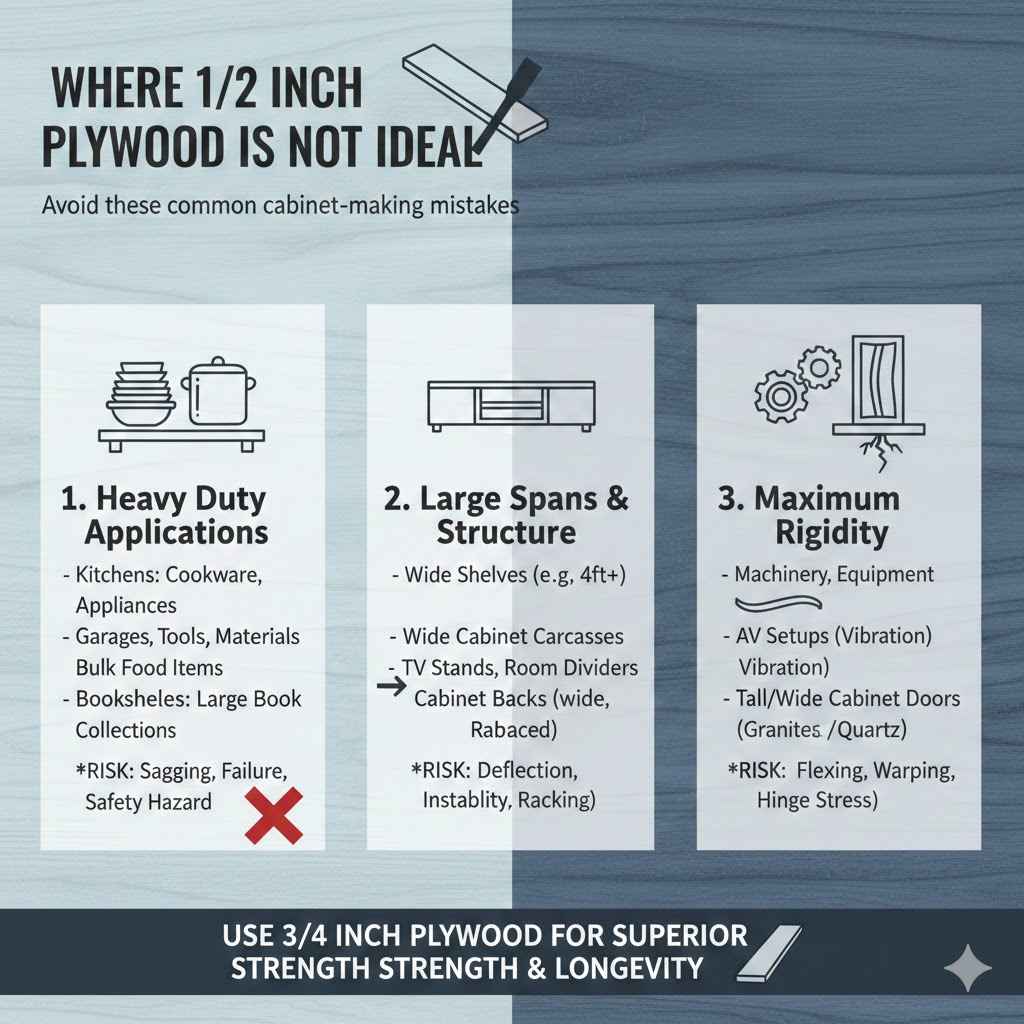
Heavy Duty Applications
For cabinets that will house very heavy items, 1/2 inch plywood is often not the best choice. This includes base cabinets in kitchens intended for storing heavy cookware, appliances, or large collections of dishes. Similarly, storage cabinets in garages or workshops that might hold tools, equipment, or building materials can place significant stress on shelves and carcasses.
In these heavy-duty applications, 3/4 inch plywood is the standard for a reason; it offers superior strength and resistance to sagging and deformation.
Consider a deep pantry cabinet designed to hold multiple large bags of flour, sugar, or pet food. The weight can add up quickly. If the shelves are made of 1/2 inch plywood, they are highly likely to bow and eventually fail over time.
Even with reinforcement, the overall structural integrity might be compromised compared to using a thicker material from the start. The same applies to built-in bookshelves or cabinets designed to hold large collections of books, which are notoriously heavy.
The risk of failure in heavy-duty applications is not just about aesthetics; it can also be a safety hazard. Collapsed shelves can damage stored items and potentially cause injury. Therefore, for any application where significant weight is expected, it is wise to use thicker plywood.
Large Spans and Structural Components
Large spans are particularly challenging for thinner materials. If you need to build a cabinet with wide open sections, such as a TV stand with large open compartments, or a room divider with wide shelf spaces, 1/2 inch plywood is generally inadequate for the structural components like shelves or the main carcass. The longer the unsupported span, the more force is applied to the center of the material, leading to deflection.
For example, a 4-foot wide shelf made from 1/2 inch plywood would almost certainly sag significantly, even with light loads. Similarly, the side panels of a very wide cabinet, if made from 1/2 inch plywood, might not provide enough rigidity to keep the cabinet square and stable, especially when doors are opened and closed. This can lead to alignment issues and a general feeling of instability.
Even for cabinet backs, while 1/2 inch can be strong, if the cabinet has a very wide span and is not well-braced, the back panel can help significantly with rigidity. However, if the back panel is also made from 1/2 inch and the span is large, it might not offer sufficient resistance to racking. In these situations, 3/4 inch plywood for key structural elements or the use of internal bracing becomes much more important.
Areas Requiring Maximum Rigidity
Certain cabinet applications demand the utmost rigidity and stability, where even minor flexing is unacceptable. This often includes cabinets for precise machinery, scientific equipment, or high-end audio-visual setups. In these scenarios, the slightest vibration or movement can affect performance.
1/2 inch plywood, while stable for its thickness, might not offer the absolute best in terms of rigidity compared to thicker alternatives or specialized materials.
Another area requiring maximum rigidity is in the construction of very tall or wide cabinet doors. Large doors are more prone to warping and can put significant stress on hinges. A door made from 1/2 inch plywood, especially if it’s over 3 feet tall, might start to sag over time, making it difficult for the hinges to function correctly and for the door to close flush.
Using 3/4 inch plywood or even incorporating a metal stiffener can be necessary for such applications.
The frame of a cabinet, if it is intended to support a heavy countertop, like a granite or quartz slab, also needs to be exceptionally rigid. While 3/4 inch plywood is standard for cabinet carcasses, if the cabinet is particularly wide or tall, additional reinforcement or even doubling up the plywood to create an effective 1.5-inch thickness might be considered to ensure it can support the immense weight of the countertop without any risk of flexing or failure.
Summary
Can you use 1/2 inch plywood for cabinets? Yes, but with careful consideration. It works well for cabinet backs, drawer sides, and even doors and drawer fronts, offering a good balance of cost and workability.
For cabinet carcasses and shelves, it’s best reserved for lighter loads and shorter spans. Always reinforce shelves and consider the weight your cabinets will hold.
Frequently Asked Questions
Question: Is 1/2 inch plywood strong enough for kitchen cabinet shelves
Answer: For light items and short spans (under 24 inches), 1/2 inch plywood can work for kitchen cabinet shelves. However, for heavy items like dishes or pantry staples, 3/4 inch plywood is recommended to prevent sagging.
Question: Can I use 1/2 inch plywood for the main box of my cabinets
Answer: Yes, you can use 1/2 inch plywood for the main cabinet box (carcass), especially for smaller or lighter-duty cabinets. Adding a solid wood face frame and a strong back panel will significantly increase its rigidity.
Question: What is the difference between 1/2 inch and 3/4 inch plywood for cabinets
Answer: 3/4 inch plywood is significantly stronger, more rigid, and less prone to sagging or warping than 1/2 inch plywood. It is the preferred choice for heavy-duty applications like base cabinet shelves and carcasses.
Question: How can I make 1/2 inch plywood shelves stronger
Answer: You can strengthen 1/2 inch plywood shelves by adding a solid wood edge banding to the front, using intermediate supports, or installing a reinforcing cleat on the underside of the shelf.
Question: Is 1/2 inch plywood good for cabinet doors
Answer: Yes, 1/2 inch plywood is a popular choice for cabinet doors and drawer fronts because it is stable, offers a good surface for finishing, and provides a substantial feel.
Final Thoughts
Using 1/2 inch plywood for cabinets is a practical choice for many areas. It excels for cabinet backs, drawer sides, and doors. For carcasses and shelves, its use depends on load and span.
Reinforce where needed, and you’ll build strong, great-looking cabinets. Choose wisely based on your project’s demands.