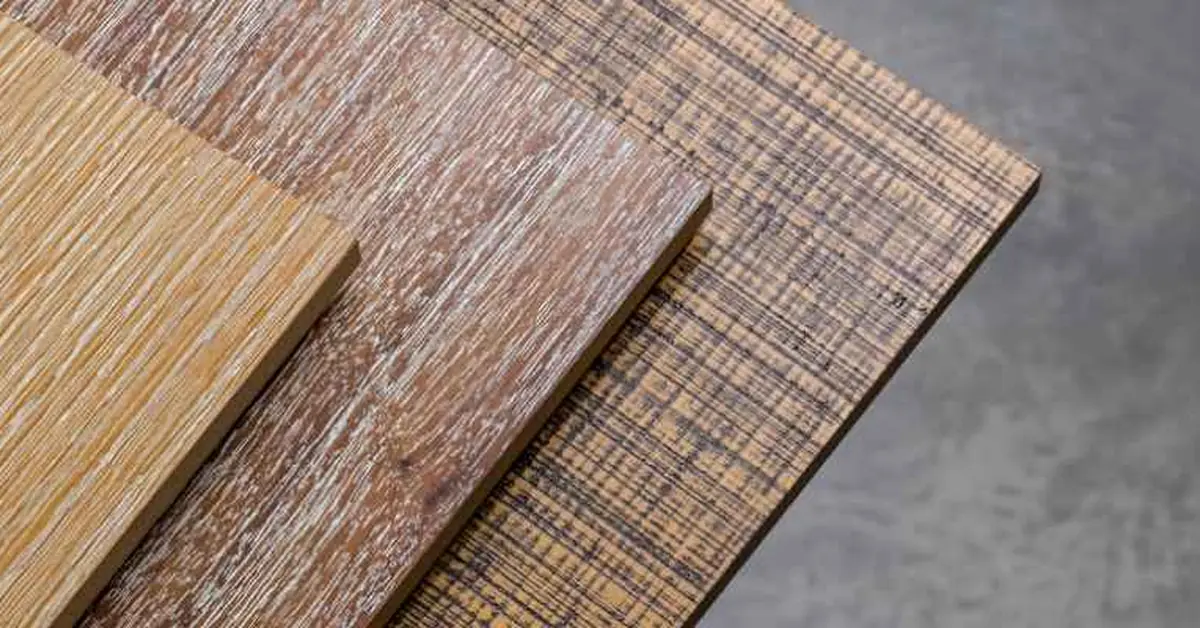
When Was Plywood First Made? The 1865 Patent (Not Egypt)
Modern plywood wasn’t invented in ancient Egypt — it traces to a U.S. patent John K. Mayo filed on December 26, 1865, describing cross-grain wood layers glued together. Mayo never built a business around it, and the idea sat unused for 40 years until Portland Manufacturing Company opened the first commercial mill in Oregon in 1905. This guide traces the real timeline: the 1865 patent, the 1905 mill, the 1933 grading standard, and the 1934 glue that finally made plywood waterproof.
Affiliate Disclosure: As an Amazon Associate, we earn from qualifying purchases at no extra cost to you.
Quick Answer
Plywood as we use the term today — three or more layers with alternating grain direction — was first patented on December 26, 1865, by John K. Mayo in New York. It wasn’t manufactured commercially until 1905, when Portland Manufacturing Company built the first American plywood mill in Oregon.
What “Plywood” Actually Means (And Why Ancient Egypt Doesn’t Count)
Best B/BB-Grade Plywood Pick

Baltic Birch Plywood, 1/8 x 12 x 24 In, Box of 6 – $32.99
Graded B/BB — the exact single-piece-face/back-veneer standard the Douglas Fir Plywood Association codified in 1933, still the reference grade for craft and cabinet-quality plywood.
- Best for: Cabinet-grade projects, laser/CNC cutting, and anywhere a clean face veneer matters
- Why we picked it: True B/BB grading with a smooth, uniform face veneer
- Main drawback: Craft-size sheets only — not a substitute for full 4×8 construction sheets
Compare more Baltic birch plywood options
 Option 1 Baltic Birch Plywood, Box of 45 – $56.96
|
 Option 2 Baltic Birch Plywood, 18x24x1/2 In – $48.69
|
 Option 3 Baltic Birch Plywood, 24x24x3/4 In – $44.99
|
As an Amazon Associate we earn from qualifying purchases.
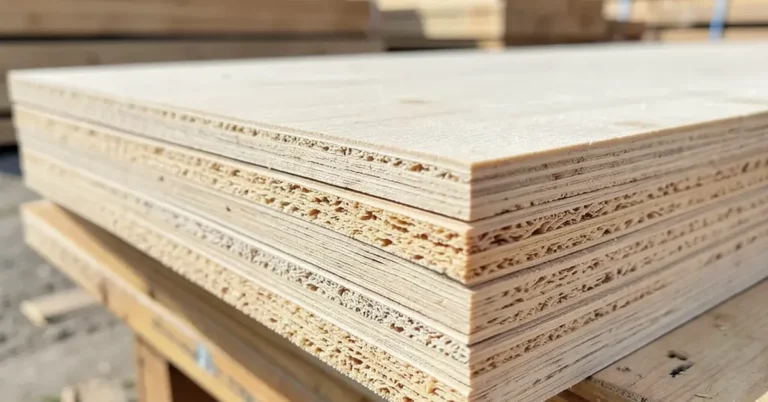
Veneer is a thin slice of wood glued onto a surface for looks or economy — Egyptian furniture makers did this roughly 3,500 years ago, gluing decorative wood faces over cheaper cores because good timber was scarce and imported wood was expensive. Plywood is a more specific engineered product: three or more veneer layers glued with the grain of each layer rotated 90 degrees from the layer beneath it, which is what resists warping and splitting in both directions.
Egyptian craftsmen used the first idea. Nobody documented the second one — cross-grain lamination — until the 19th century. That distinction is why “ancient Egypt invented plywood” is repeated on nearly every plywood history page you’ll find, but it describes veneering, not plywood.
When Did We Start Using Plywood As We Know It Today?
Plywood as a manufactured, cross-grain product started with Mayo’s 1865 patent, but it didn’t become an actual industry until Portland Manufacturing Company’s 1905 mill and the 1933 grading rules that followed. “As we know it today” — a graded, standardized sheet good — really dates to the 1930s.
The First Real Patents: Bentham (1797) to Mayo (1865)
In 1797, English engineer Samuel Bentham filed a patent describing machinery for cutting veneers and the concept of gluing several layers together. In the 1850s, Immanuel Nobel — father of Alfred Nobel — developed a rotary lathe in Russia that could peel a continuous thin veneer sheet off a spinning log, turning veneer from a hand-cut luxury into something a machine could produce quickly.
Cross-grain lamination — the technique that actually defines plywood — got its first U.S. patent on December 26, 1865, when John K. Mayo of New York described gluing sheets together with the grain of each layer running crosswise from the one before it (re-issued August 18, 1868, with more detailed wording). Mayo never built a business around the idea; the patent sat unused for four decades.
📊 Mayo’s 1865 patent sat completely unused for roughly 40 years — commercial plywood production didn’t begin until 1905. Source: APA – The Engineered Wood Association, History of APA, Plywood, and Engineered Wood
1905: Portland Manufacturing Company’s First Commercial Mill
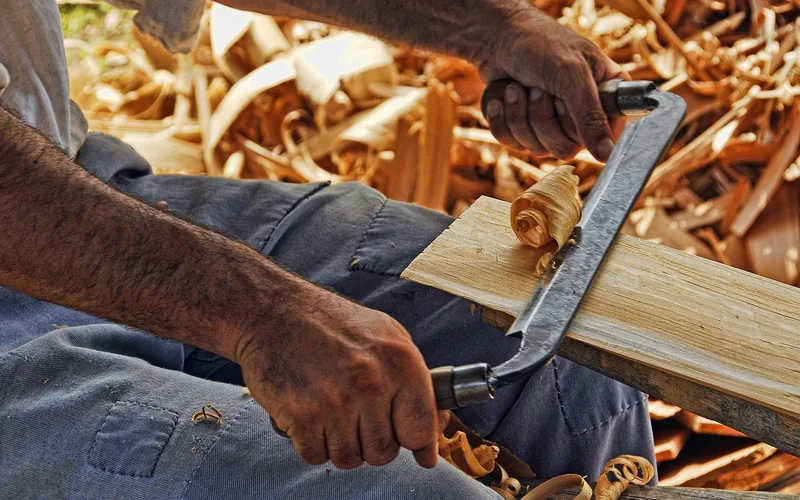
Portland Manufacturing Company started in 1902 as a small box-and-barrel factory in St. Johns, Oregon. In 1905, the company produced three-ply veneer panels from Pacific Northwest Douglas fir and displayed them at the Lewis & Clark Centennial Exposition, Portland’s world’s fair. Thomas Autzen showed the panels to more than half a million visitors, including door and cabinet manufacturers who immediately saw a use for them — the exhibit essentially launched the West Coast plywood industry.
Early plywood was strictly an indoor material. The Douglas fir panels from that first mill used animal- and vegetable-based glues that failed the moment they got wet, which is why plywood spent its first three decades as a furniture and cabinet material rather than a construction one.
A Furniture Industry Secret: John Henry Belter’s Laminated Chairs (1850s)
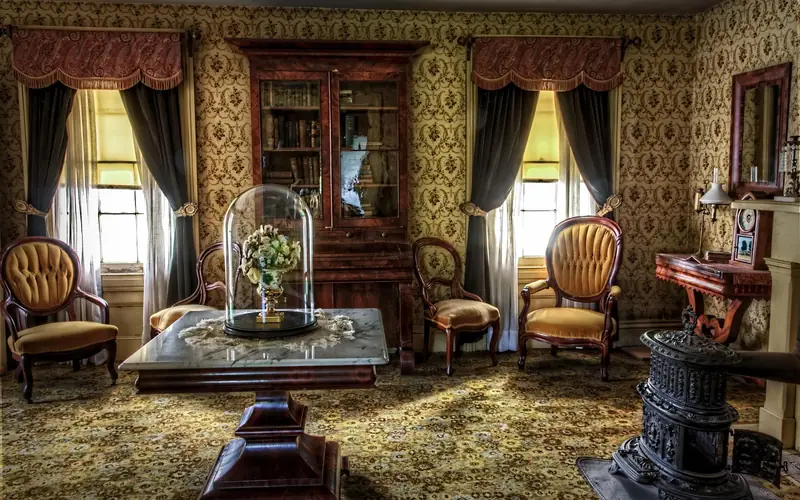
Plywood shows up in American furniture more than a decade before Mayo’s patent — just not by that name. Cabinetmaker John Henry Belter patented a laminated-wood process in 1856, 1858, and 1860 that steamed and pressed up to 21 layers of glued rosewood veneer into curved molds, then carved the resulting panel into the ornate Rococo Revival chairs and sofas now held in museum collections. It wasn’t cross-grain in Mayo’s sense, but it was multi-layer glued wood engineered for strength — built for curves and carving, not for resisting moisture.
Before either technique had a name, furniture and shipbuilding relied on solid boards or hand-cut veneer over solid cores — materials that move with humidity and are limited by how wide a single log can be milled. Neither Belter’s laminated curves nor Mayo’s cross-grain patent solved every problem at once; it took another 80 years of grading standards and better glue to get there.
Setting the Standard: 1933 Grading Rules and the 1934 Waterproof Glue
Early plywood quality varied wildly from mill to mill, so a buyer couldn’t tell a good panel from a bad one until it was already installed. On May 16, 1933, fir plywood manufacturers met in Tacoma, Washington, and — after weeks of negotiation — officially formed the Douglas Fir Plywood Association on June 13, 1933 (now APA – The Engineered Wood Association) to set uniform grading and trademark standards, including the B/BB grade naming still used on craft and cabinet plywood today.
The bigger limitation was still glue. That changed in 1934, when chemist James Nevin at Harbor Plywood Corporation in Aberdeen, Washington, developed a fully waterproof phenol-formaldehyde adhesive. By 1938, the Federal Housing Administration accepted exterior-grade plywood for construction — the point where plywood became a legitimate building material instead of just a furniture shortcut.
Plywood at War, Then Everywhere: WWII to Today
World War II turned plywood into a strategic material. Britain’s de Havilland Mosquito fighter-bomber — nicknamed the “Wooden Wonder” — used a fuselage molded from birch and spruce plywood sandwiching a balsa core, precisely because plywood didn’t consume the aluminum needed elsewhere in the war effort. Design began in 1938 and production ran from 1941 through the end of the war, with 7,781 built across British, Canadian, and Australian factories.
Postwar housing demand and the FHA’s 1938 exterior-grade approval pushed plywood into flooring, roof sheathing, and siding at a scale the 1905 mill’s founders never imagined. Today’s plywood line runs from interior CDX sheathing to fully waterproof marine grade, all graded under the same B/BB-style system the 1933 association wrote down.
When Was 4×8 Plywood Standardized?
The 4×8-foot sheet size became the industry default alongside the 1933 Douglas Fir Plywood Association grading rules, sized to match standard framing layouts (16- and 24-inch stud spacing) rather than any single invention date. It’s a manufacturing-standard convention, not a patent.
Frequently Asked Questions
Did ancient Egyptians really invent plywood?
No. Egyptian craftsmen glued decorative wood veneer over cheaper cores roughly 3,500 years ago, but that’s single-layer veneering, not cross-grain plywood. True plywood — layers glued with alternating grain direction for strength in two directions — wasn’t patented until John K. Mayo’s 1865 U.S. patent.
When was plywood first introduced commercially?
Commercial plywood production began in 1905, when Portland Manufacturing Company in St. Johns, Oregon, produced and displayed three-ply Douglas fir panels at the Lewis & Clark Centennial Exposition — 40 years after Mayo’s original patent had gone unused.
What did builders use before plywood?
Solid lumber boards and hand-cut veneer over solid cores. For curved furniture specifically, cabinetmakers like John Henry Belter used multi-layer laminated, steam-molded wood starting in the 1850s — engineered for shape, not for the moisture resistance modern plywood offers.
When did plywood become waterproof enough for outdoor use?
Not until 1934, when chemist James Nevin at Harbor Plywood Corporation developed a fully waterproof phenol-formaldehyde glue. The Federal Housing Administration accepted exterior-grade plywood for construction in 1938, which is when plywood became a legitimate building material rather than an indoor-only one.
Conclusion
Plywood’s real history has three dates worth remembering: 1865, when Mayo patented cross-grain lamination and nobody used it; 1905, when Portland Manufacturing Company finally turned it into a product; and 1934, when a waterproof glue turned it into a building material. The Egypt story is about veneer, not plywood — a different, older, and genuinely interesting technique that just isn’t this one.
Sponsored / affiliate links. As an Amazon Associate I earn from qualifying purchases. I may earn additional commission from eligible campaigns.