Do Termites Eat Plywood? Yes, and It Cuts R-Value 74%
Yes — termites eat plywood, targeting the wood veneers between its glue lines wherever moisture gets in. In a University of Florida study, termites that consumed just 3.1% of a plywood sample cut its insulation value by 74% in eight weeks, and softwood-core sheets (pine, fir) go first unless treated. This guide covers which plywood grades actually resist termites, how to spot early damage, and when treating beats replacing a damaged panel.
How Termites Actually Get Into Plywood
Best Plywood Termite Treatment Pick
Bora-Care with Mold-Care Termiticide Concentrate
A borate-based concentrate labeled for wood, plywood, drywall, and particleboard — the same product pest professionals apply during new construction and after water damage.
- Best for: whole-panel or whole-cavity protection in new builds, additions, or post-leak restoration
- Why we picked it: one product treats termites, decay, and mold together, which matters on plywood since moisture invites all three at once
- Main drawback: concentrate needs diluting and a pump sprayer — not a grab-and-spray solution for a single small spot
Compare more plywood termite treatment options
 Option 1 PenaShield Ready-to-Use Preservative
|
 Option 2 TERRO Termite Killer Spray
|
 Option 3 Klein Tools ET140 Moisture Meter
|
As an Amazon Associate we earn from qualifying purchases.
Plywood is layers of wood veneer glued face-to-face, and every one of those veneers is still cellulose — the exact food source termites are built to digest. The adhesive between layers can make plywood slightly less appealing than solid lumber, but it doesn’t make plywood immune, and the glue seams create a specific weakness solid wood doesn’t have: they trap moisture. Termites are drawn to wood with elevated moisture content, and a damp glue line running the length of a sheet gives them a soft, easy starting point.
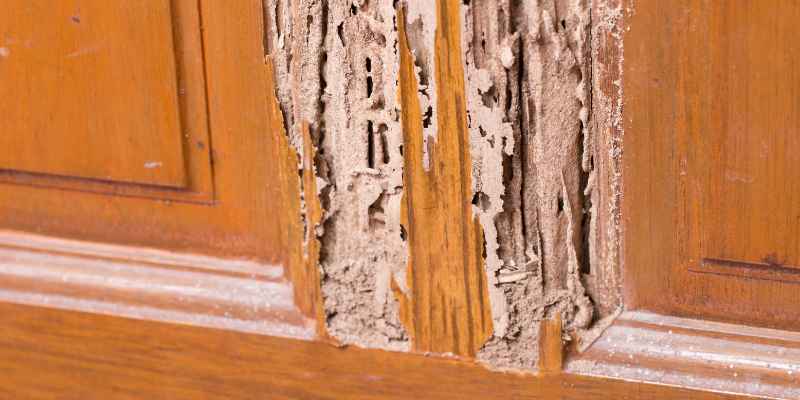
Subterranean termites are the species most likely to reach structural plywood, since they travel through soil and up mud tubes into subfloors, sheathing, and sill areas. Drywood termites can infest exposed plywood furniture or trim directly without any soil contact at all. Either way, the cellulose is the target — plywood just adds moisture-trapping glue seams to the equation. It’s also why dry wood isn’t automatically safe either: moisture content, not the wood product’s name, is what decides most of the risk.
For the full picture on identifying and treating an infestation once it’s found — not just in plywood, but anywhere in a structure — see our termite prevention and control guide.
Plywood vs. OSB vs. Solid Wood: Which Resists Termites Best?
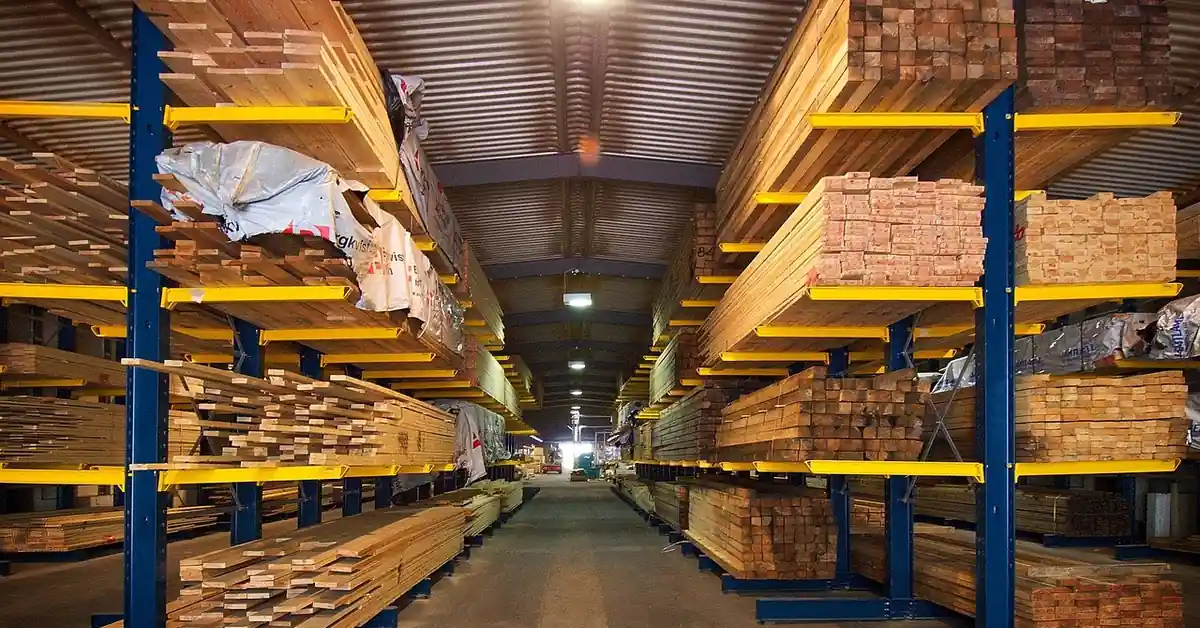
Not every sheet good responds to termites the same way. Plywood and solid wood share the same basic vulnerability, but oriented strand board (OSB) and marine-grade plywood sit at opposite ends of the moisture-resistance scale — and moisture is what decides how fast a termite colony can work through a panel.
| Material | Termite Vulnerability | Why | Best For |
|---|---|---|---|
| Standard plywood | Moderate–High | Glue seams trap moisture; softwood veneers (pine, fir) are eaten first | Subfloors, sheathing, cabinetry |
| OSB | High once wet | Absorbs moisture like a sponge; strand structure gives termites more surface area once damp | Budget sheathing in dry climates only |
| Solid softwood lumber | Moderate | No glue seams to trap moisture, but same cellulose target as plywood veneers | Framing, exterior trim |
| Marine/BWR-grade plywood | Low | Waterproof phenolic glue and a void-free core resist the moisture buildup termites need | Boat parts, decks, high-moisture builds |
The practical takeaway: OSB isn’t safer than plywood by default — it’s more vulnerable the moment it gets wet, because it can’t be pressure-treated the way plywood can (the treatment process causes it to swell and delaminate). If a subfloor or sheathing panel sits anywhere near grade, plumbing, or a roof leak, plywood — ideally BWR or borate-treated — is the safer material, not OSB. Naturally resistant solid species like cedar and redwood hold up even better on their own, but that resistance comes from natural oils in solid heartwood — it doesn’t automatically carry over to a plywood veneer of the same species once it’s been milled thin and glued.
The Real Damage: How Fast Termites Weaken Plywood
Most articles on this topic stop at “yes, they eat it.” What actually matters for a homeowner is how little damage it takes before a panel stops doing its job. Entomologists at the University of Florida’s Institute of Food and Agricultural Sciences tested plywood, 2×4 lumber, and foam board insulation against subterranean termites (Reticulitermes flavipes) over eight weeks and measured the resulting insulation loss.
| Material tested (8 weeks) | Amount consumed | Insulation (R-value) lost |
|---|---|---|
| Plywood | 3.1% | 74% |
| 2×4 lumber | 6.7% | 35% |
| Foam board insulation | 12% | 27% |
📊 Termites consuming just 3.1% of a plywood sample cut its insulation value by 74% in eight weeks — Source: Koehler, Tucker & Pereira, University of Florida IFAS, published in Sociobiology (2008).
Plywood held up better against heat flow than the other two materials before damage started — but once termites got into it, the drop was the steepest of the three. The lesson isn’t “plywood is worse,” it’s that plywood’s insulation performance is disproportionately fragile once termites establish a colony inside it, which is exactly why early detection (next section) matters more for plywood than for solid lumber.
Signs of Termite Damage in Plywood
Plywood damage is easy to miss because the outer veneer face often stays intact while the layers underneath hollow out. Check for these signs, especially along seams and edges:
- A hollow or papery sound when you tap the surface with a knuckle or screwdriver handle
- Fine, pellet-like frass (drywood termite droppings) collecting in small piles near edges or fastener holes
- Mud tubes — pencil-width tunnels of dirt and saliva — running up a foundation wall toward a sill or subfloor
- Blistering or rippling in paint or flooring directly above a plywood subfloor
- Visible delamination or soft, crumbling layers when you probe an edge with a flathead screwdriver
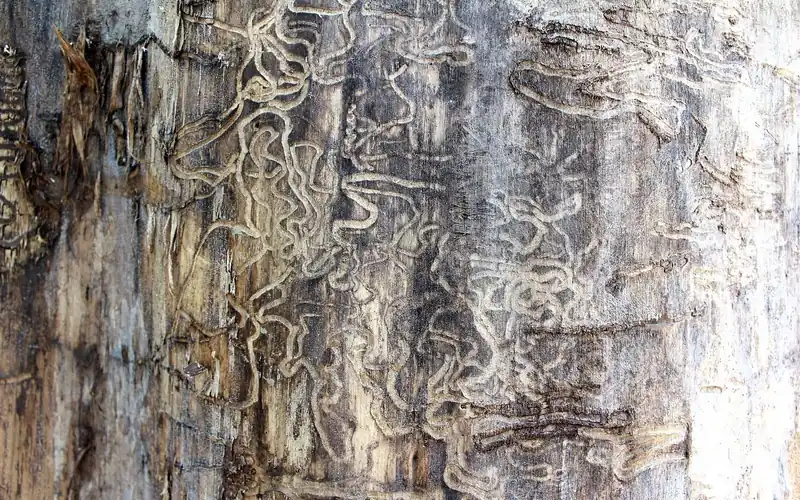
Termite damage is a network of galleries that generally follow the wood grain, unlike wood rot, which produces cubical cracking and a soft, spongy texture throughout. If you find hollowed-out wood but the surrounding fibers still look stringy rather than crumbly, that points to an active termite problem rather than moisture rot alone.
How to Protect Plywood From Termites
Prevention is cheaper than replacement, and most of it comes down to controlling moisture before it ever reaches the plywood.
- Test moisture before you build: check subfloor and sheathing plywood with a moisture meter and keep readings under roughly 19% before closing in a wall or floor.
- Choose the right grade for the location: use BWR-rated or factory borate-treated plywood anywhere the panel will sit near grade, plumbing, or exterior moisture.
- Treat cut edges and exposed faces: apply a borate-based penetrating preservative before install — cut edges expose raw end grain that soaks up moisture fastest.
- Keep plywood off the soil: store sheet stock on dunnage in a garage or shed, and maintain at least 6 inches of clearance between soil and any structural wood at the foundation.
- Inspect twice a year: probe seams and edges with a flathead screwdriver each spring and fall, and treat any confirmed activity with a labeled termiticide immediately rather than waiting for a bigger problem.
“I check subfloor plywood the same way every time — screwdriver point at roughly a 45° angle along the seam. If it sinks in with no resistance, that panel’s already compromised underneath, and no surface treatment fixes hollowed-out core veneers at that point. It has to come out.”
For wood that’s already exposed to the elements rather than buried in a wall or floor, the same moisture-first logic applies — see our guide on protecting untreated wood outdoors for sealants and coatings that work alongside a borate treatment.
Repair or Replace? What to Do With Damaged Plywood
Assess the extent of damage before deciding. Probe the affected area and the wood immediately around it with a screwdriver — soft, punky wood that offers no resistance has lost its structural strength, while wood that’s merely surface-scarred but still firm underneath can often be treated and kept.
- Repair when: damage is confined to a small area, surrounding wood still probes firm, and the panel isn’t a load-bearing subfloor span. Cut back to solid wood, treat the exposed area with a borate preservative, and patch or sister a new piece of plywood over the repair.
- Replace when: damage runs along a structural span, multiple joists or panel seams are affected, or probing reveals soft wood more than an inch or two from the visible entry point. At that stage, patching only hides a weak spot that’s still failing underneath.
Either way, treat the surrounding wood and eliminate the moisture source that let termites in — replacing damaged plywood without fixing a leak, grading issue, or missing vapor barrier just gives the next colony the same opening.
Frequently Asked Questions
Do Termites Prefer Plywood Over Solid Wood?
No — if anything, termites slightly prefer solid softwood over plywood, since plywood’s adhesive layers are somewhat less palatable than continuous solid grain. But “less preferred” isn’t “safe”: termites will still infest and eat plywood readily, especially softwood-veneer sheets, whenever solid wood isn’t the easier option nearby.
How Can You Tell If Termites Are Eating Plywood?
Tap or probe the surface — a hollow sound or a screwdriver that sinks in with no resistance both indicate hidden tunneling. Also check for frass pellets near edges, mud tubes on nearby foundation walls, and blistering paint or flooring directly above a plywood subfloor. The outer face often looks fine while the inner layers are already hollowed out.
Is OSB or Plywood More Resistant to Termites?
Plywood is generally the safer choice in moisture-prone locations. OSB absorbs water more readily due to its strand-and-resin structure, and unlike plywood, it can’t be pressure-treated without swelling and delaminating. Once OSB gets wet, it becomes easier for termites to work through than an equivalent plywood panel.
Does Pressure-Treated Plywood Stop Termites?
Pressure-treated and borate-treated plywood significantly reduce termite feeding and are the standard choice for ground-contact or high-moisture applications, but no treatment makes plywood completely termite-proof forever. Treatment effectiveness fades over years of exposure, and cut edges made after treatment expose untreated wood unless resealed with a penetrating preservative.
Can Termites Live in Untreated Plywood?
Yes. Untreated plywood exposed to moisture is one of the more vulnerable sheet materials in a home, since the glue seams hold dampness against the wood fibers. Keeping plywood dry, sealed, and off bare soil is the single biggest factor in whether it attracts termites at all.
Conclusion
Termites eat plywood the same way they eat any cellulose-based wood — the glue seams just give moisture, and moisture-loving termites, a head start. A University of Florida study found that consuming barely 3% of a plywood panel was enough to cut its insulation value by nearly three-quarters, which is a bigger practical risk than most homeowners assume. Choose BWR or borate-treated plywood in moisture-prone spots, keep panels off bare soil, check moisture and probe seams twice a year, and treat any confirmed activity immediately rather than waiting for a repair to become a replacement.
Sponsored / affiliate links. As an Amazon Associate I earn from qualifying purchases. I may earn additional commission from eligible campaigns.