Can a Wood Lathe Turn Metal? Yes for Small Brass, Never Steel
A wood lathe can turn small, soft metals like brass or aluminum using an HSS scraper at low RPM (800 to 1200 RPM for small stock), but not steel, and never with a wood-turning gouge or skew. The real risk isn’t speed — it’s that handheld tools riding a tool rest can catch violently on metal in a way wood rarely does, unlike a metal lathe’s rigidly clamped tool post. This guide covers what’s actually safe, real technique, and when to just buy a mini metal lathe instead.
Can You Actually Turn Metal on a Wood Lathe?
Best Budget Metal Lathe Pick
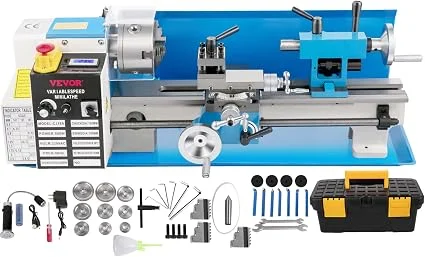 |
VEVOR 7"x14" Benchtop Metal Lathe, Variable Speed – $489.90 The real fix for the rigidity gap described above — a rigid tool post and cross-slide instead of a handheld tool on a wood lathe’s tool rest.
|
In a limited way, yes. Woodturners regularly turn small brass or aluminum stock — things like tool ferrules, small knobs, or bushings — on a standard wood lathe using a metal-rated scraper instead of a wood gouge. What a wood lathe cannot do safely is general metalworking: turning steel, cutting large-diameter metal stock, or using the same shear-cutting technique and tools you’d use on wood — see our guide on using a wood lathe chuck for the basics of secure workholding either way.
Why Hand Tools on Metal Are More Dangerous Than They Look
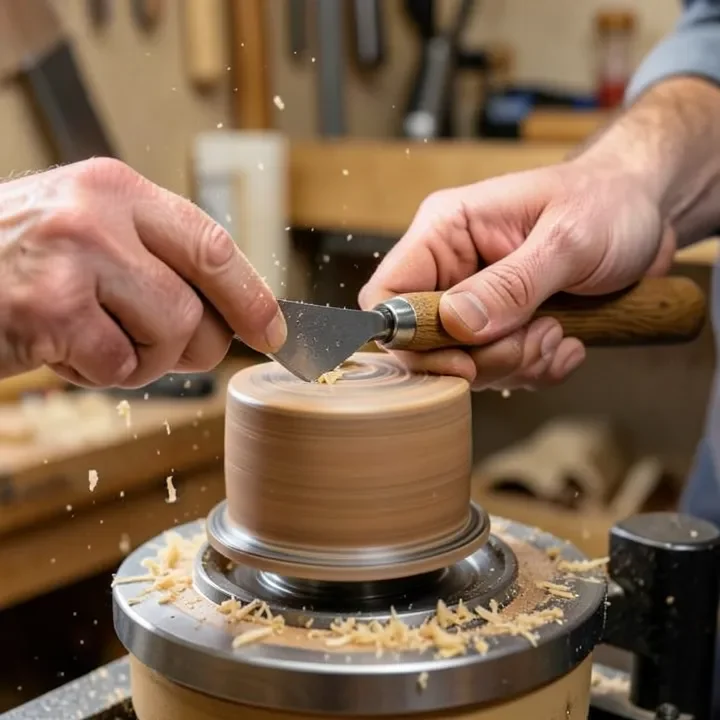
Wood turning works with a handheld tool riding a tool rest because wood shears cleanly and forgives small technique errors. Metal doesn’t behave the same way: a tool edge that digs in even slightly can catch violently, and because you’re holding the tool by hand instead of locking it into a rigid tool post, that catch transmits straight into your hands and arms. A metal lathe removes the operator’s hand from the cutting force entirely by clamping the tool into a cross-slide and tool post — that mechanical rigidity, not just a heavier frame, is the actual safety feature a wood lathe lacks.
Wood lathe spindle bearings are also sized for the lighter axial loads of wood turning, not the sustained radial cutting force of removing metal, which is part of why “upgrading” a wood lathe’s motor for more torque doesn’t actually fix the core safety gap.
What Actually Works: Turning Small Brass or Aluminum Safely
Experienced turners who do this successfully follow a consistent set of rules:
- Use your lathe’s slowest speed setting for larger stock, or 800-1200 RPM for small-diameter brass or aluminum on a variable-speed lathe.
- Use an HSS or negative-rake scraper, never a gouge or skew — a scraper produces controlled chips instead of catching the way a gouge’s cutting edge can. Keep it sharp with a proper lathe tool sharpening system.
- Take light passes and let the tool do the work; a scraping or funny grinding sound means you’re feeding too fast.
- Anneal work-hardened brass first (heat and quench) or buy 360 free-machining brass, which cuts easier and more predictably.
- Cover the surrounding area — metal filings are sharp and don’t clean up like wood shavings.
- Wear a full face shield, not just safety glasses — metal chips travel differently than wood shavings and can be sharp-edged.
What Not to Do
Don’t turn steel on a wood lathe — it’s hard enough to dull tools fast and generate the exact high, sudden cutting forces that cause violent catches. Don’t use a wood-turning gouge or skew on any metal; their cutting geometry is built to shear wood fibers, not to safely engage metal. And don’t try to “convert” a wood lathe into a metal lathe by swapping the motor and bearings — you’re adding power to a frame and tool-holding system that was never designed for the resulting forces, which makes the catch risk worse, not better.
📊 Small-diameter brass turns cleanly on a wood lathe at roughly 800-1200 RPM using a scraper — Source: American Association of Woodturners forum
If You Want to Turn Metal Regularly, Get a Real Metal Lathe
If turning metal is more than an occasional small accessory, a benchtop mini metal lathe solves the actual problem instead of working around it: a rigid tool post that holds the cutting tool for you, a cross-slide for controlled feed, and speeds and gearing built for metal removal from the start. Entry-level 7×12/7×14-class benchtop metal lathes start in the same rough price range as a mid-range wood lathe.
“The lathes aren’t interchangeable because the tool-holding method isn’t interchangeable — a wood lathe trusts your hands to control the cut, a metal lathe locks the tool down because metal doesn’t forgive the way wood does.”
Frequently Asked Questions
Can you turn metal on a wood lathe?
Yes, but only small, soft, non-ferrous metal like brass or aluminum, using a metal-rated scraper at low RPM. General metalworking, large stock, and steel are not safe on a wood lathe.
What tools do you need to turn brass or aluminum on a wood lathe?
An HSS or negative-rake scraper, run at 800-1200 RPM for small stock. Never use a wood-turning gouge or skew on metal, since their cutting geometry is built for shearing wood, not engaging metal safely.
What are the risks of using a wood lathe for metal?
The main risk is a violent tool catch: handheld tools on a tool rest can dig into metal and be wrenched from your hands with much more force than a similar catch in wood, since a wood lathe has no rigid tool post to absorb that force the way a metal lathe does.
Should I modify my wood lathe for metalwork instead of buying a metal lathe?
No. Adding a stronger motor or heavier bearings to a wood lathe doesn’t add the rigid tool post and cross-slide that actually make metal turning safe. A benchtop mini metal lathe is designed for this from the start and isn’t much more expensive than a mid-range wood lathe.
Conclusion
A wood lathe can handle small brass or aluminum accessories with the right scraper and low RPM, but it was never built to turn metal generally, and no motor or bearing upgrade changes that — the missing piece is a rigid tool post, not more power. For anything beyond an occasional small part, a real benchtop metal lathe is the safer and, in the long run, cheaper answer.
Sponsored / affiliate links. As an Amazon Associate I earn from qualifying purchases. I may earn additional commission from eligible campaigns.