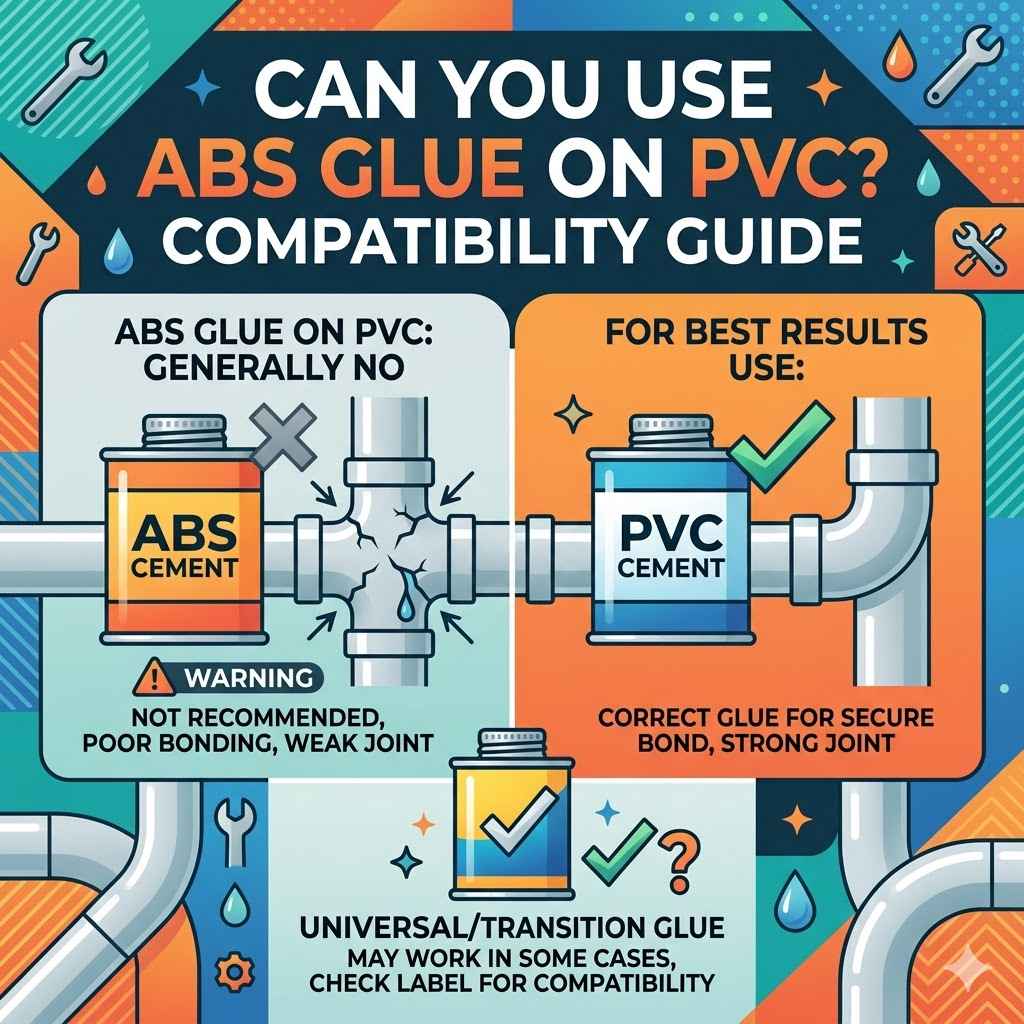
Can You Use ABS Glue on PVC Compatibility Guide
Figuring out if you can use ABS glue on PVC pipes can seem tricky when you’re new to DIY projects. Lots of people wonder about this, and it’s easy to get confused because both plastics look alike. But don’t worry!
This guide breaks it down simply. We’ll walk you through exactly what you need to know to make sure your pipe connections are strong and won’t leak. Get ready to learn the simple steps to avoid mistakes.
ABS Glue and PVC Pipe Compatibility Explained
This section covers the basic differences between ABS and PVC pipes and why they often get confused. We’ll explain why using the wrong glue can lead to problems and why it’s important to get this right for any plumbing job. Understanding these differences is the first step to a successful project.
Understanding ABS and PVC Pipes
ABS (Acrylonitrile Butadiene Styrene) and PVC (Polyvinyl Chloride) are both common plastics used for pipes. They look similar, but they have different chemical structures. This difference is key to how they react with glues and solvents.
ABS pipes are usually black, while PVC pipes are most often white or gray.
ABS plastic is more flexible and tends to be tougher. It can handle impacts better than PVC. This makes it a good choice for drainage, waste, and vent (DWV) systems where it needs to be strong but also absorb some stress.
PVC plastic, on the other hand, is more rigid and can withstand higher temperatures and pressures. This makes it ideal for water supply lines and other applications where water is pushed through under pressure.
Why Compatibility Matters
Using the wrong glue on either ABS or PVC can cause serious problems. Pipe connections need to be strong and watertight to prevent leaks. If you use a glue that isn’t designed for the specific plastic, it might not bond properly.
The connection could weaken over time, leading to leaks, cracks, or even complete failure of the joint.
PVC pipes require a primer and a specific PVC cement. The primer softens the PVC surface, and the cement then chemically welds the pipe and fitting together. ABS pipes need a primer and ABS cement, which works similarly but is formulated for ABS plastic.
Using an ABS glue on PVC might not soften the PVC enough, or the chemical reaction could be wrong. This results in a weak bond that won’t last. The question of Can You Use ABS Glue on PVC?
Compatibility Guide is common because these differences aren’t always obvious.
The Chemical Difference
The main difference lies in the chemical solvents used in the glues. PVC cement contains solvents like Tetrahydrofuran (THF), which is very effective at dissolving PVC. ABS cement also uses solvents, but they are formulated to work with the unique chemical makeup of ABS.
When you use a solvent cement, it doesn’t just stick the pieces together like tape. Instead, it softens the outer layer of the plastic, a process called solvent welding. Then, when the pieces are pushed together, the softened plastic fuses.
As the solvent evaporates, the plastic hardens again, creating a strong, seamless bond.
If you try to use ABS glue on PVC, the solvents in the ABS glue might not be aggressive enough to properly soften the PVC. This means the fusion process won’t happen effectively, leaving you with a weak joint. The same applies if you use PVC cement on ABS, though some PVC cements can sometimes work on ABS in a pinch, it’s not recommended for reliable, long-term connections.
Can You Use ABS Glue on PVC Pipes The Direct Answer
This section directly answers the main question. We will explain the official stance and the practical implications. You will learn why the answer is generally no and what happens if you try to mix them.
This is the core of our Can You Use ABS Glue on PVC? Compatibility Guide.
The Official Recommendation
The plumbing industry’s standard recommendation is clear: Do not use ABS glue on PVC pipes, and do not use PVC glue on ABS pipes unless specifically stated by the manufacturer. Manufacturers design their glues and cements to work with a specific type of plastic to ensure maximum bond strength and durability. Using the wrong type can void warranties and lead to premature pipe failure.
This is a critical safety and performance issue. Plumbing systems, especially those carrying water or waste, need to be reliable. A failed joint can cause water damage, mold growth, and costly repairs.
Following the correct product usage guidelines is essential for any plumbing project.
What Happens If You Try
If you attempt to use ABS glue on a PVC pipe, you will likely experience a weak bond. The ABS glue’s solvents are not formulated to effectively dissolve PVC. This means the pipe and fitting will not fuse properly through solvent welding.
The connection might seem solid initially, especially if you use a lot of glue. However, under pressure, temperature changes, or vibration, the bond will likely fail. You might see small leaks appear after a few days or weeks, or the joint could completely break apart during use.
It is a gamble that is not worth taking for any plumbing application.
When Mixing Might Seem Possible
Sometimes, you might see information or hear anecdotal stories about people successfully using one type of glue on the other. This can happen, especially if the joint is not under high pressure or stress, or if the connection is only temporary. However, these instances are exceptions, not the rule.
For instance, some “transition cements” are available that are designed to join ABS to PVC. These are specifically formulated to handle both types of plastic. However, a standard ABS cement is NOT a transition cement.
Relying on such exceptions for permanent plumbing repairs is risky and not advisable for a safe and lasting connection.
The Consequences of a Failed Joint
A failed plumbing joint can lead to significant problems. Water damage can occur in walls, floors, and ceilings. This can lead to expensive repairs and the growth of mold and mildew, which poses health risks.
In DWV systems, a leak can cause unpleasant odors and allow sewer gases to enter your home.
For example, a homeowner using ABS glue on a PVC drain pipe under their sink might not notice a small leak immediately. Over time, the constant moisture can damage the cabinet base and the subfloor. Eventually, this could lead to a much larger and more expensive repair than if the correct PVC cement had been used initially.
The Correct Way to Glue PVC Pipes
Now that we know why mixing glues is a bad idea, let’s focus on the right way to connect PVC pipes. This section will guide you through the steps for using PVC primer and cement correctly. Following these instructions ensures a strong, leak-free connection every time.
This is the essential part of our Can You Use ABS Glue on PVC? Compatibility Guide.
Gathering Your Supplies
Before you start, make sure you have everything you need. This includes the PVC pipe and fittings, a PVC primer, PVC cement, a clean cloth or paper towel, and a pipe cutter or saw. For larger pipes, you might also need a deburring tool.
Always check that your PVC pipe and fittings are clean and free of dirt or debris. The surfaces must be dry for the primer and cement to work effectively. Having all your materials ready makes the process smoother and helps prevent errors.
The Priming Step
PVC primer is a critical step that many DIYers sometimes skip, but it’s very important. The primer softens the surface of the PVC pipe and fitting. This allows the PVC cement to create a stronger, welded bond.
It also helps to clean the pipe surface.
Apply the primer liberally to the outside of the pipe and the inside of the fitting socket. You should see the plastic surface change slightly as the primer works. Work quickly, as the primer dries fast.
Most primers are colored (often purple) so you can easily see where you have applied them.
Applying PVC Cement
After priming, and while the primer is still wet, apply the PVC cement. Use a dauber, which is usually attached to the lid of the cement can. Apply a thick, even coat of cement to the outside of the pipe, the same area you just primed.
Then, apply a thinner coat of cement to the inside of the fitting socket. It’s important to get good coverage on both surfaces. The goal is to ensure the solvent in the cement can begin to soften both pieces of PVC for a proper weld.
Making the Connection
Immediately after applying the cement, push the pipe into the fitting with a quarter-turn twist. This twist helps to spread the cement evenly and ensure full contact between the softened surfaces. Hold the joint together firmly for about 30 seconds to prevent the pipe from backing out of the fitting as the cement begins to set.
This firm hold is vital. It allows the initial bond to form before the pieces can move. If the pipe slides back, it can weaken the weld.
The quarter-turn twist is a technique recommended by most manufacturers for the best results.
Curing Time
The pipe connection needs time to cure properly. The exact curing time depends on the type of PVC cement used, the temperature, humidity, and pipe size. Always check the instructions on the cement can for specific curing times.
Generally, you should allow at least a few hours for handling strength (enough to move the assembly carefully) and up to 24 hours for full cure before putting the system under pressure. For larger pipes or in cold weather, you may need to wait even longer. Rushing the cure time can lead to joint failure.
The Correct Way to Glue ABS Pipes
Just as important as gluing PVC is knowing how to properly join ABS pipes. This section details the process for ABS, highlighting its similarities and differences from PVC joining. This will complete your understanding for the Can You Use ABS Glue on PVC?
Compatibility Guide.
Gathering ABS Supplies
Similar to PVC, you’ll need specific materials for ABS. This includes ABS pipes and fittings, ABS primer, ABS cement, a clean cloth, and a pipe cutter. Ensure your ABS components are clean and dry.
The primer for ABS is often clear or slightly colored, and it’s formulated to prepare ABS plastic for the cement. ABS cement is also specifically designed to chemically bond ABS.
Priming ABS
Apply the ABS primer to the outside of the pipe and the inside of the fitting socket. The primer softens the ABS surface, preparing it for the solvent cement. Like with PVC, this step is crucial for a strong, lasting bond.
Work in a well-ventilated area when using primers and cements. The solvents can have strong fumes. Ensure complete coverage on the surfaces that will be joined.
Applying ABS Cement
After priming, apply a generous coat of ABS cement to the outside of the pipe and a lighter coat to the inside of the fitting socket. Make sure both surfaces are fully coated.
The ABS cement will begin to soften the plastic. This process is what allows the two pieces to fuse together.
Joining ABS Components
Immediately push the pipe into the fitting with a slight twist. This helps distribute the cement and ensures a good connection. Hold the joint firmly for about 30 seconds to allow the cement to start setting.
This step is very similar to joining PVC pipes. The goal is to create a seamless fusion of the two ABS pieces.
ABS Curing
Allow the ABS joints to cure according to the cement manufacturer’s instructions. Curing times can vary based on temperature and humidity. Generally, ABS bonds set faster than PVC bonds.
However, it’s still wise to let the joints cure for a sufficient period before putting them into service, especially if they will be under any kind of stress or pressure.
Specialty Cements and Transition Fittings
Sometimes, you might need to connect an ABS pipe to a PVC pipe. This isn’t as simple as just picking one glue. There are special products designed for this exact purpose.
This part of our Can You Use ABS Glue on PVC? Compatibility Guide is for those trickier jobs.
Transition Cements
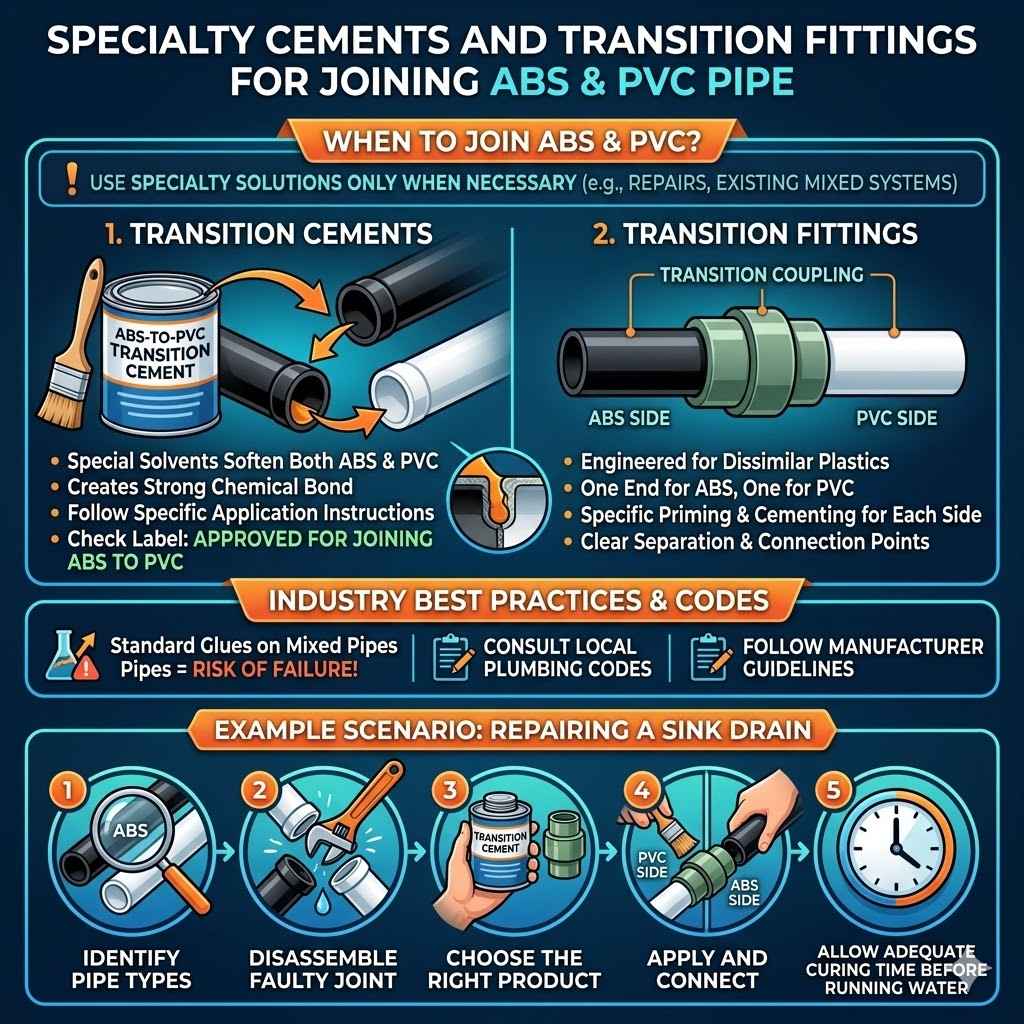
These are special glues designed to work with both ABS and PVC. They contain a mix of solvents that can effectively soften both types of plastic. If you need to connect an ABS pipe to a PVC fitting, or vice versa, using a transition cement is the correct method.
Always check the product label to confirm it is a transition cement and that it is approved for joining ABS to PVC. These cements often have specific application instructions that must be followed carefully to ensure a strong bond.
Transition Fittings
Another solution for joining dissimilar plastics is using transition fittings. These fittings are manufactured to accept both ABS and PVC pipe ends. They often have one end designed for ABS and the other for PVC, with specific priming and cementing instructions for each side.
Using a transition fitting can sometimes be simpler than using transition cement, as the fitting itself is engineered for the job. It provides a clear separation and specific connection points for each type of pipe.
When to Use Specialty Products
You should only consider using transition cements or fittings when you absolutely need to join an ABS pipe to a PVC pipe. In most new installations or repairs, it’s best to stick with the same type of pipe and use the appropriate standard cement for that material.
Specialty products are valuable tools, but they should be used when the situation demands it. For example, if you are repairing an existing system that has both types of pipes, a transition solution will be necessary.
Industry Standards and Best Practices
The plumbing industry emphasizes using the correct materials for the job to ensure safety and longevity. Mixing ABS and PVC with standard glues is against best practices. This can lead to future problems that are much more expensive to fix than the cost of using the right products initially.
Always consult local plumbing codes and manufacturer guidelines. They provide the most up-to-date information on approved materials and installation methods.
Example Scenario: Repairing a Sink Drain
Imagine you have a sink drain assembly where the pipe coming from the sink is PVC, but the pipe going into the wall is ABS. You notice a small leak at the joint.
- Identify the pipe types: Confirm which pipe is PVC and which is ABS. The PVC pipe will likely be white or gray and more rigid. The ABS pipe will likely be black and slightly more flexible.
- Disassemble the faulty joint: Carefully remove the old fitting, making sure to clean the ends of both the PVC and ABS pipes.
- Choose the right product: In this case, you need either a transition cement specifically labeled for ABS-to-PVC or a transition fitting.
- Apply and connect: If using transition cement, follow its specific instructions, applying the correct solvent blend to each pipe end as directed. If using a transition fitting, prime and cement each side according to the fitting and cement instructions.
- Cure: Allow adequate curing time before running water through the drain.
This scenario highlights why understanding the compatibility is essential. Using standard ABS glue on the PVC would likely result in a failed repair.
Frequently Asked Questions
Question: Can I use ABS glue on PVC pipes for a temporary fix?
Answer: While it might seem like a quick solution, it’s not recommended. Even for temporary fixes, a weak bond from incompatible glues can fail unexpectedly, leading to bigger problems. It’s best to use the correct primer and cement for PVC.
Question: What is the difference between ABS and PVC primer?
Answer: ABS primer is formulated to soften ABS plastic, while PVC primer is designed to soften PVC plastic. They use different solvents to achieve this. Using the wrong primer can prevent a proper chemical weld, leading to a weak joint.
Question: How do I know if I have ABS or PVC pipes?
Answer: Generally, ABS pipes are black, and PVC pipes are white or gray. ABS is also more flexible than PVC. However, always check the printing on the pipe itself for its material identification if you are unsure.
Question: Can I use PVC cement on ABS pipes?
Answer: It is not recommended. While some PVC cements might have a slight effect on ABS, they are not optimized for it. This can result in a weaker bond compared to using the correct ABS cement.
For best results, use the cement specifically designed for ABS.
Question: Are there any universal glues for plastic pipes?
Answer: Not for solvent welding. For solvent welding, you need specific glues designed for ABS or PVC. However, specialty transition cements are available that can join ABS to PVC, but these are not universal glues.
Summary
You cannot use standard ABS glue on PVC pipes. They require different primers and cements due to their distinct chemical properties. Always use the correct PVC primer and cement for PVC pipes and ABS primer and cement for ABS pipes.
For joining ABS to PVC, use specialized transition cements or fittings. Ensuring correct material compatibility guarantees strong, leak-free plumbing connections for lasting reliability.