Couch Stoppers for Wood Floors: Rubber vs Felt Pads Compared
A couch stopper only stops a couch if it has a grip surface: rubber-faced pads do, while felt pads and felt sliders are made to protect or to glide. Floor makers such as Hartco, Bruce and Shaw recommend felt for scratch protection, but none of the pages we read promise grip. This guide compares pad materials, shows how to size them with simple math, and links to the guides on rugs, sectionals and other fixes.
The Best Couch Stoppers for Wood Floors at a Glance
| BEST COUCH GRIPPER PICK | |
 |
Slipstick GorillaPads CB142 Furniture Grippers (8 pcs, 2 in Square), $8.99
|
There are five product types in this category, and they do different jobs. The table uses what each maker’s own listing says, so you can see which type actually targets sliding.
| Type | What the maker says it is | Built to stop sliding? | Where it fits |
|---|---|---|---|
| Rubber-over-felt gripper pad | GorillaPads CB142: rubber outer layer, solid felt core, 5/16 in thick (about 1/8 in compressed), adhesive optional | Yes, the listing says it stops sliding | Couch, sofa and sectional legs on hard floors |
| Screw-in rubber foot | Slipstick CB325: screw-in or peel-and-stick foot with a rubber O-ring, fits legs up to 1-3/4 in | Yes, the listing says it prevents sliding | Round legs you can drill; listing advises pre-drilling |
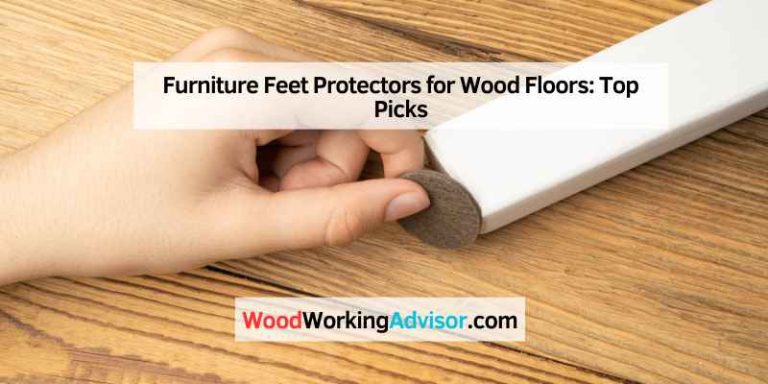
| Plain felt pad | X-Protector 133-piece set: brown and beige felt pads in sizes from 1/2 in to 4 2/3 x 6 in | No, sold to prevent scratches and scuffs | Chairs and tables you lift and move |
| Felt-bottom slider with rubber foam top | Super Sliders 2-1/2 x 9 in: felt bottom to glide, rubber foam top that grips the leg | No, built to make heavy pieces easy to move | Moving or rearranging, not holding in place |
| Caster cup | Slipstick CB600: 2 in cup, holds wheels up to 1-3/4 in, rubber O-ring base | Yes, it holds a wheel in place | Only furniture with wheels |
Listing text can change, so read the current page before you buy. The table describes the products as listed on Amazon when we checked, and we have not tested any of them ourselves.
Grip, Glide or Protect: The Mix-Up That Makes Stoppers Fail
The most common mistake is buying a felt pad and expecting it to hold a couch still. The Bruce floor care guide, the Shaw hardwood care page and the Hartco homeowner guide all say to put felt pads under furniture legs, and the Shaw page adds not to drag heavy furniture. Those lines are about scratches. Felt reduces friction by design, and the Super Sliders listing says its felt bottom lets even sofas glide across hardwood.
That makes the pad you want depend on what is going wrong. If the couch scratches the floor when you lift and set it down, felt does the job. If the couch creeps across the room when someone sits down, you need a rubber-faced gripper, a rug under the legs, or both. A felt slider on a couch that already slides will make it worse, because it is designed to make heavy things easier to push.
Rubber, Felt and Your Floor Finish: What the Makers Actually Say
Many guides state flatly that rubber pads stain wood finishes. We looked for a floor maker or pad maker that says so about small furniture pads and did not find one. What we did find is narrower. The Hartco care guide says rugs with solid rubber or vinyl backings are not recommended, and that rugs should be made of a breathable material. Slipstick says non-marking rubber or high-quality felt pads made for wood are the right choice for hardwood, and describes its own grippers as safe on all hard floors. So the honest position is: rubber-backed rugs are a documented concern, small rubber grippers are not covered either way by the floor makers, and a quick test costs nothing.
| Material | What we found in maker guidance | Our cautious default |
|---|---|---|
| Felt pads | Recommended under furniture legs by Bruce, Shaw and Hartco | Safe default for any finish, but felt alone will not hold a couch |
| Rubber-over-felt grippers | Slipstick states they protect hardwood and other hard floors; no floor maker page we read addresses them | Fine to use, but test one pad under a hidden leg first, especially on an oiled or waxed floor |
| Solid rubber or vinyl rug backing | Hartco: not recommended | Choose a breathable rug and keep solid-backed mats off the wood |
| Hard plastic cups and glides | Slipstick lists hard plastic on soft floors as a common mistake; its caster cup listing warns of indentations in soft wood floors | Avoid on softwood floors or when the couch is heavy and on wheels |
| Adhesive backing | Not covered by the floor-maker pages we read | Press on a clean leg, peel slowly, and test on a hidden spot if your floor is waxed or oiled |
The test is simple. Put one gripper under one hidden leg, leave it for a few weeks, then lift the leg and look for a mark, haze or tacky patch. If the finish looks the same as the floor around it, use the set. If you see a mark, switch that room to felt plus a rug. This is our own cautious routine and not a manufacturer requirement, so treat it as a precaution rather than a rule.
How to Size Couch Stoppers: A Simple Contact-Area Calculation
Two floor makers give sizing rules. The Mannington hardwood care page recommends floor protectors with a minimum of 1 inch of continuous width and says to keep them clean, and the Hartco care guide says the heavier the item, the wider the protector needs to be. Neither gives a formula, so here is one you can run yourself. Pressure under a leg is the weight on that leg divided by the pad’s contact area.
| Pad (common listed sizes) | Contact area | Pressure with 60 lb on one leg |
|---|---|---|
| 1 in round | about 0.8 sq in | about 76 psi |
| 1.5 in round | about 1.8 sq in | about 34 psi |
| 2 in square | 4 sq in | 15 psi |
| 4 in square | 16 sq in | about 3.8 psi |
The 60 lb figure is an example, not a measured value, and the areas are simple geometry (pi times radius squared for rounds, side squared for squares). The point holds for any weight: moving from a 1 inch round pad to a 2 inch square pad cuts the pressure by about five times. Hartco’s wider-protector advice and the dent warning on the caster cup listing both point the same way. Weight on one leg also rises when someone sits on that end, so do not size to the empty couch.
Use the load figures in listings only as the maker’s claim. The CB325 listing says a set of 4 can hold up to 700 lb and the CB600 caster cup listing says up to 3,100 lb per cup, while the CB142 listing we picked gives no load number at all. Do not assume a number that the page does not state.
How to measure your couch feet
- Empty the couch and clear the area: take off cushions and keep pets and children out of the way.
- Lift one end with a helper: do not drag the couch, and do not tip it onto a single leg. Use two people and set it down gently.
- Measure the flat bottom of each foot: note the width, or the diameter for round feet, and whether the base is flat or curved.
- Pick a pad that covers the whole foot: go up one size when you are between two, and never go below 1 inch of width.
- Count the legs: a four-legged couch needs 4 pads, a center leg makes it 5 or 6, and a pack of 8 pads usually covers two couches.
- Clean and fit: wipe the leg, press the pad on, and lower the couch slowly.
Installing Couch Stoppers Without Hurting Your Back or Your Floor
Heavy furniture is a real injury and floor-damage risk. The Mannington hardwood care page advises using a dolly and protective sheets of plywood when moving heavy objects, and the Hartco homeowner guide says to lift rather than drag heavy pieces. For a couch, that means a second person, no tilting onto one leg, and removing the cushions and closing a recliner footrest before you lift. If the couch is a connected sectional, separate the sections first.
After the pads are on, press the couch with your hands in the direction it usually moves, then sit at each end and check that no pad has rolled or lifted. Recheck after a week and then whenever you vacuum under the couch. Pads that curl at the edges are a sign the foot is wider than the pad.

Which Stopper for Which Couch
- Couch with narrow wooden legs (up to about 2 in): rubber-over-felt grippers such as the CB142, in a size that covers the whole foot.
- Couch with round legs you do not mind drilling: screw-in rubber feet like the CB325, which the listing says need pre-drilled holes.
- Sectional on short block feet: a larger square gripper or a rug under the front legs. Our sectional guide covers nine other fixes.
- Recliner or sofa with wheels: caster cups sized to the wheel, with the softwood warning in mind.
- Couch you move often: felt sliders for moving day, grippers back on afterward.
Rugs, Pads and Other Fixes That Work Alongside Stoppers
A rug under the front legs is often the cheapest fix, and the floor makers agree on the main rules. Mannington says area rugs help floors wear more evenly at pivot points, and Hartco says rugs must be breathable and that solid rubber or vinyl backings are not recommended. Our guide to keeping rugs from slipping on hardwood covers what to put under the rug itself.
For a step-by-step approach to the couch problem rather than the product choice, read how to stop a couch from sliding on hardwood floors, what keeps furniture from sliding and our furniture grippers for wood floors roundup. For small items and chairs, see furniture coasters for wood floors and chair glides for hardwood floors. If you would rather build felt pads yourself, how to glue felt to wood shows the method.
If the damage is already done, removing scuff marks and repairing a scratched wood floor cover light marks, and a scratch repair kit handles small ones. A couch that shifts onto loose boards can also expose a creak, so see how to fix squeaky wood floors if you hear one. For day-to-day care, the wood care and maintenance guide has the routine.
Common Mistakes When Buying Couch Stoppers
- Buying felt pads or sliders and expecting them to hold the couch still.
- Choosing a pad smaller than the foot, so the edge of the leg sits on bare floor.
- Putting a solid rubber or vinyl backed mat under the couch on a hardwood floor, which Hartco does not recommend.
- Skipping the hidden-spot test on an oiled or waxed floor.
- Fitting pads on a dusty leg so the adhesive lets go within days.
- Dragging the couch into position instead of lifting it with a helper.
Frequently Asked Questions
Do couch stoppers actually work on hardwood floors?
Yes, if you pick a gripper rather than a glider. Rubber-faced pads such as the Slipstick GorillaPads are sold specifically to stop furniture sliding, while felt-only pads and felt-bottom sliders are made to protect or to glide. Match the pad to the job, and cover the whole foot.
Can rubber furniture pads damage a hardwood finish?
The floor makers we read do not address small rubber pads directly. Hartco does say rugs with solid rubber or vinyl backings are not recommended, and Slipstick says its rubber-and-felt grippers are safe on hardwood. Until you know your finish, test one pad under a hidden leg for a few weeks and check for marks.
Are felt pads enough to stop a couch from sliding?
Usually not. Bruce, Shaw and Hartco recommend felt pads under furniture legs to prevent scratching, and felt-bottom sliders are designed to glide so heavy pieces move easily. If the goal is to stop movement, use a rubber-faced gripper or a rug under the legs instead.
What size couch stopper do I need?
Measure the flat bottom of the foot and pick a pad that covers all of it. Mannington recommends a minimum of 1 inch of continuous width on floor protectors, and Hartco says heavier furniture needs a wider protector. For thick block feet, a 2 inch or 4 inch square pad is a better fit than a 1 inch round one.
Do caster cups stop a couch from sliding?
Only if the couch has wheels. A caster cup holds the wheel in place; the Slipstick CB600 listing says it locks wheels up to 1-3/4 inches in diameter and warns that indentations may occur in cushion vinyl and soft wood floors. A couch on plain legs needs a gripper pad instead.
Should I use adhesive-backed pads on a couch?
Adhesive pads are quick to fit but need a clean, dry leg. Some grippers, including the GorillaPads CB142, are sold with the adhesive as optional, so you can try them loose first. We found no floor-maker guidance on adhesive residue, so peel slowly and test on an unseen spot if your floor has an oil or wax finish.
Conclusion
Pick the pad by the job: felt to protect, rubber-faced grippers to stop a couch creeping, caster cups for wheels. Size to the whole foot, never under 1 inch wide, and lift the couch with a helper to fit them. We did not find a floor maker that explains how small rubber pads affect finishes, so test one hidden pad before you commit a whole set.
Sponsored / affiliate links. As an Amazon Associate I earn from qualifying purchases. I may earn additional commission from eligible campaigns.