Cordless vs Corded Drill for Woodworking
Choose cordless for bench assembly, pocket holes, pilot holes, and quick moves around the shop. Choose corded when you drill often under load, because steady power and no battery swaps matter more than mobility. Pick the wrong one, and you lose time to dead batteries, stalled bits, or a tool that feels fine until repeated holes or large bits slow it down. This guide compares torque, runtime, weight, chuck size, and the woodworking tasks each drill handles best.
| Factor | Cordless | Corded Drill for Woodworking | Winner |
|---|---|---|---|
| Mobility and setup speed | No outlet planning, fast to grab for bench work, pocket holes, and assembly. | Needs an outlet or extension cord, so setup takes more planning. | Cordless |
| Sustained drilling under load | Strong enough for many woodworking jobs, but runtime and heat management matter more during long sessions. | 120V AC power supports continuous work with no battery fade during repeated holes. | Corded Drill for Woodworking |
| Upfront cost | $150-300 for the drill, plus battery and charger cost in many setups. | $80-150 for the drill. | Corded Drill for Woodworking |
| Weight and fatigue | 4-6 lbs, with the battery adding weight at the rear. | 5-7 lbs, but no battery pack hanging off the handle. | Tie |
| Top-speed drilling | Variable trigger control is useful, but top speed varies by model. | Can spin chucks up to 2,000+ RPM. | Corded Drill for Woodworking |
| Torque ceiling | Up to 1,200 in-lbs. | Up to 1,400 in-lbs. | Corded Drill for Woodworking |
Cordless vs corded drill: the core trade-off
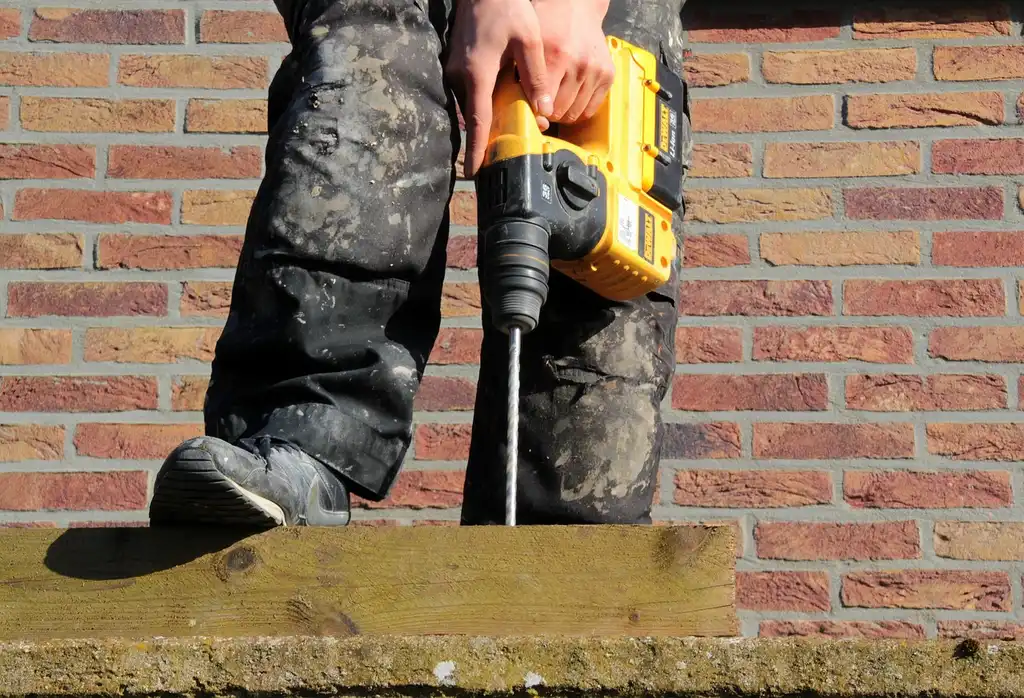
The main choice is moving freely or keeping steady output. Cordless drills run on rechargeable lithium-ion batteries, often in 18V/20V platforms and commonly with brushless motors, so they are quick to move around a shop and useful away from outlets. Corded drills plug into 120V household current and keep working without runtime planning, which matters more when holes repeat or the bit is large.
Mobility and setup speed
Cordless wins when you move from bench to assembly table, then to a clamped workpiece, then to the floor. There is no cord to route, no outlet hunt, and no extension cord to drag around sawhorses. That speed matters most for pilot holes, countersinking, and pocket-hole work.
Sustained power and runtime
Corded Drill for Woodworking wins when the job keeps going. A corded drill has no battery limit, so it avoids the slowdown that can show up when a cordless pack heats up or runs low. That is why repeated drilling in hardwood, or a series of larger holes, often favors corded.
Upfront cost versus total setup cost
On sticker price alone, corded usually looks cheaper. The comparison table lists corded drill price at $80-150 and cordless at $150-300, but cordless setups also need battery and charger planning, and spare packs can push the total higher. If you already own compatible batteries from another tool, that changes the math.
Drill decision matrix for woodworking tasks
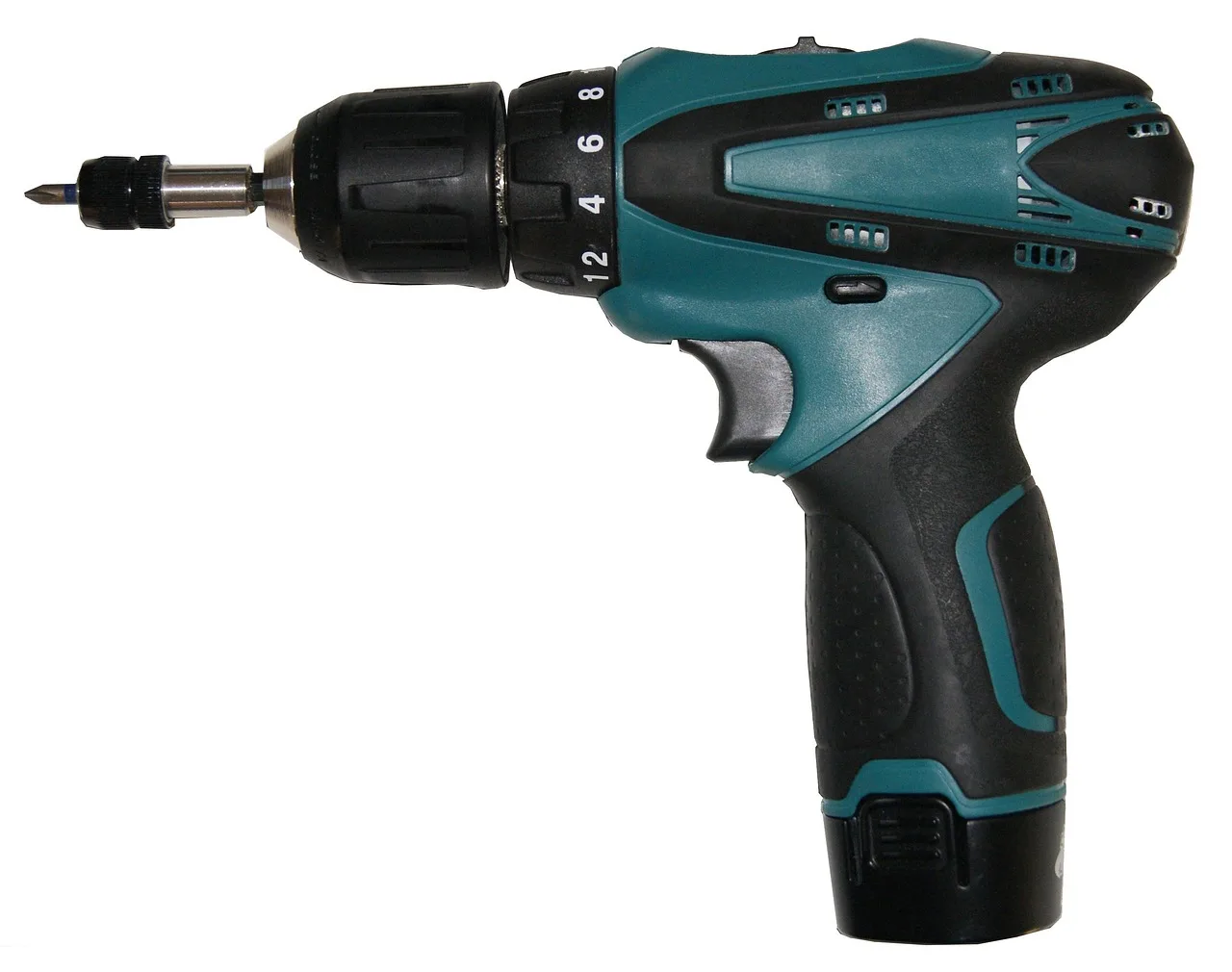
This matrix ties the drill choice to the job, not the category. For woodworking, that matters more than a generic “which is better” answer, because pilot holes, pocket holes, Forstner bits, and hole saws all ask different things from the motor and battery.
| Woodworking task | Torque demand | Runtime risk | Weight and fatigue | Setup cost | Recommended pick |
|---|---|---|---|---|---|
| Pilot holes | Low to moderate | Low | Cordless is easier to move around the bench | Lower with corded, but cordless stays convenient | Cordless |
| Countersinking | Low | Low | Very light work either way | Either works | Cordless |
| Pocket holes | Moderate | Moderate during batch work | Cordless is faster for repeated repositioning | Either works, but cordless setup is quicker | Cordless |
| Forstner bits | High in hardwood | Moderate to high | Longer drilling can tire you faster with a heavier battery drill | Corded is usually the better value for repeat use | Corded Drill for Woodworking |
| Hole saws | High | Moderate to high | Continuous pressure favors a corded tool | Corded often wins on total cost for repeated use | Corded Drill for Woodworking |
| Long assembly sessions | Low to moderate | High if you forget spare batteries | Cordless reduces cord routing fatigue | Cordless can cost more up front | Cordless |
Pilot holes and countersinking
For pilot holes, a cordless drill is usually the cleaner choice. Pilot holes reduce splitting risk before screws go into hardwoods, and the work is short enough that runtime rarely becomes the limit. Countersinking is even easier; the job rewards control more than raw power.
Pocket holes and driver work
Pocket-hole drilling is repetitive, but it is still a fit for cordless in most shops. The drill moves from joint to joint, and that mobility matters when you are clamping, shifting parts, and checking fit. If you are doing a long batch of pocket holes in dense stock, a corded drill starts to make more sense.
Forstner bits and hole saws
These are the tasks where torque and steady output matter most. A Forstner bit in hardwood can ask for steady pressure at low RPM, and a hole saw increases load fast as diameter grows. That is where Corded Drill for Woodworking usually earns its place.
Long assembly sessions
Say your day is mostly cabinet assembly, hinge pilot holes, and repetitive screw work at a bench. Cordless is usually the better fit, because the drill follows the work instead of forcing the work to follow an outlet. The limit is battery planning, not power from the wall.
Which drill handles your woodworking tasks better?
For softwood and light bench work, cordless is usually the better match. For hardwood, repeated drilling, and larger bits, corded takes the lead because it keeps pulling without battery fade. If your task list mixes both, pick the one that matches the heavier half of your work.
Softwood and hardwood drilling
Softwood tolerates lower torque demand, so cordless often feels plenty strong for pilot holes and assembly. Hardwood changes the picture because density rises, tearout risk increases, and larger bits slow the drill more quickly. That shift is why many woodworkers keep corded for the harder jobs.
Low-speed, high-torque work
At low RPM, the drill has to keep twisting without stalling. That matters for larger hole saws, Forstner bits, and deep holes in hardwood. A cordless drill can do the job, but the motor, battery state, and bit sharpness matter more, which is why corded is safer for repeated high-load work.
Dense material and large-bit drilling
Picture a 1-inch Forstner bit boring several holes in maple for cabinet hardware. A cordless drill may start well, then slow as the pack drains or the motor heats up. Corded Drill for Woodworking is the steadier pick because it keeps its output without runtime management.
What the numbers mean: torque, RPM, and battery Ah
Torque tells you how well a drill resists stalling. RPM tells you how quickly the chuck can spin, and battery amp-hours tell you how much work a cordless pack can deliver before recharging. For woodworking, those three numbers matter more than brand language or marketing terms.
Torque in inch-pounds
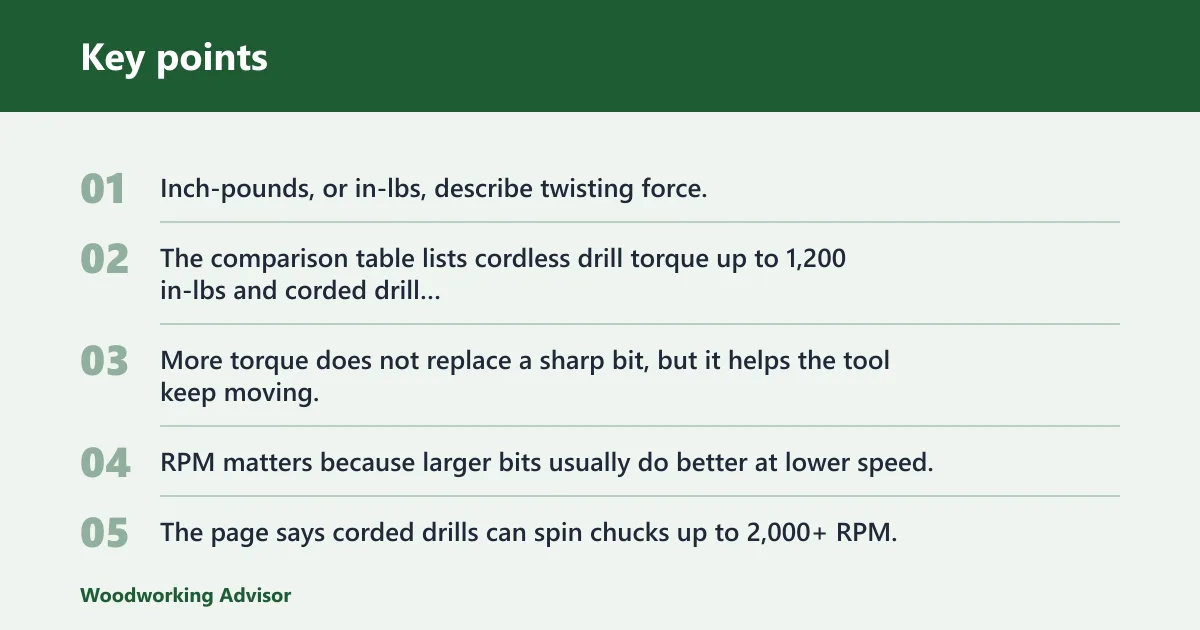
Inch-pounds, or in-lbs, describe twisting force. The comparison table lists cordless drill torque up to 1,200 in-lbs and corded drill torque up to 1,400 in-lbs, and that difference shows up when a bit bites hard in hardwood or when the hole diameter grows. More torque does not replace a sharp bit, but it helps the tool keep moving.
No-load speed and trigger control
RPM matters because larger bits usually do better at lower speed. The page says corded drills can spin chucks up to 2,000+ RPM, which helps when you need fast drilling with smaller bits. For woodworking, a variable trigger is still important because it lets you start cleanly and avoid wandering or tearout.
Battery amp-hours and spare-pack planning
Battery amp-hours, or Ah, describe capacity. A 5Ah battery is the reference point in the runtime data here, and the cited heavy-use range is 30-60 minutes per 5Ah battery. That is enough for many jobs, but batch drilling calls for a spare pack or a charging pause, which is a real part of cordless planning.
Cordless drill details that matter in the shop
Modern cordless drills are not the weak battery tools of older expectations. Current 18V/20V platforms with brushless motors are efficient, and the better ones can handle a lot of woodworking before the pack needs a break. The key is matching the drill to the task, not assuming cordless means underpowered.
18V/20V platforms and brushless motors
Brushless motors waste less energy as heat, so they stretch runtime and usually hold up better under repeated use. That matters when you are drilling a set of pocket holes or moving through a list of pilot holes and countersinks. The gain is efficiency, not magic, so load still matters.
Weight with battery and fatigue
Cordless drills are listed at 4-6 lbs, but the battery adds weight where your wrist feels it most. That extra rear weight is fine for short tasks, yet overhead drilling and repeated vertical work can tire you faster. If your job involves long sessions above shoulder height, that weight matters.
Chuck size and bit retention
A 1/2-inch chuck is commonly used on woodworking drills because it holds larger shanks more securely than a smaller chuck. Keyless chucks are faster for bit changes, while keyed chucks can grip well but are slower to adjust. For most shop work, a quality keyless chuck is the practical choice.
Corded drill details that matter in the shop
Corded drills are simple in one important way: plug them in, and they keep going. That makes them useful for long drilling sessions, dense wood, and larger bits where you do not want to watch the battery meter. The trade-off is cord management around benches, clamps, and finished parts.
120V power and sustained output
Corded drills plug into 120V household current, so runtime is not the issue. The listed torque ceiling is up to 1,400 in-lbs, and that sustained output helps when the bit is cutting hard for several holes in a row. If your work is repetitive, that consistency is hard to ignore.
Extension cord length and routing safety
An extension cord can restore reach, but it also adds drag, trip risk, and voltage drop if you choose the wrong size or run it too long. Keep the cord out of the cutting path, away from sharp edges, and clear of clamps or drawer slides. In a crowded shop, cord routing becomes part of the setup time.
Lower upfront cost and fewer runtime limits
Corded drills usually cost less at the register, and they avoid battery replacement costs over time. The comparison table lists corded drill price at $80-150, with a separate cost example that places some corded models at $60-$150. If you do not need mobility, that lower entry cost is hard to beat.
Choose Cordless if… / Choose Corded Drill for Woodworking if…
Choose Cordless if your work is mostly bench assembly, pocket holes, pilot holes, countersinking, and frequent moves around the shop. It also fits small shops where outlet access is awkward, or where quick setup matters more than maximum sustained output. Spare battery planning is reasonable if the drill is used in shorter bursts.
Choose Corded Drill for Woodworking if you drill often in hardwood, use Forstner bits or hole saws, or run long drilling sessions where stopping to swap batteries would slow the job. It also makes sense if you want the lowest setup cost and do not mind cord routing around benches and clamps. For repetitive high-load work, it is the steadier choice.

Frequently asked questions
Corded vs cordless drill
For woodworking, cordless wins on mobility and quick setup, while corded wins on sustained output and no runtime planning. If your tasks are mostly pilot holes, pocket holes, and assembly, cordless is usually the better fit. If you do repeated drilling in hardwood or with large bits, corded is the safer pick.
Are corded drills more powerful than cordless?
Often, yes in practical shop use. The comparison here puts corded torque up to 1,400 in-lbs and cordless up to 1,200 in-lbs, and corded also avoids battery fade. That said, modern 18V/20V brushless cordless drills can be strong enough for many woodworking jobs.
Cordless driver vs drill
A driver is better for driving screws, while a drill is better for drilling clean holes. Many woodworking tasks need both roles, which is why some users pick a drill/driver combo. For pilot holes, countersinking, and bits that need more support, the drill side matters more than driver mode.
What are the best cordless drills?
The best cordless drills for woodworking are brushless 18V/20V models with strong chuck retention, good low-speed control, and enough battery capacity to avoid constant swaps. If your work leans toward long drilling sessions or large bits, a strong cordless model may still lose to a corded drill for the same job.
Sponsored / affiliate links. As an Amazon Associate I earn from qualifying purchases. I may earn additional commission from eligible campaigns.