Impact Driver vs Drill for Woodworking
For woodworking, use a drill driver for drilling, driving screws, and countersinking, plus any task that needs steadier control. Use an impact driver for long screws, lag screws, and repetitive fastening where reduced cam-out matters more than fine control. Using the wrong tool can split stock, strip screw heads, overdrive fasteners, or force extra setup changes. This guide compares both tools for common shop tasks so you can choose the one that protects the work and speeds the job.
Matching tools to drilling and fastening tasks
| Factor | Impact Driver | Drill for Woodworking | Winner |
|---|---|---|---|
| Hole drilling | Can drill with the right hex-shank bit, but it is not the cleanest choice for fine hole work. | Chuck accepts a wide range of bits and gives better control for clean, centered holes. | Drill for Woodworking |
| Screw driving | Best for large fasteners and repetitive screw driving. | Handles smaller screws well and can drive reasonable-sized screws, especially with a heavy battery. | Impact Driver |
| Control | No clutch and less finesse. | Adjustment and clutch give better depth control for delicate work. | Drill for Woodworking |
| Bit compatibility | Uses 1/4-inch hex-head bits only. (Thisoldhouse) | Uses standard chuck bits and a wider bit mix. | Drill for Woodworking |
| Noise | Higher noise than drill drivers. | Lower noise than impact tools. | Drill for Woodworking |
| Setup changes | Fewer bit swaps for repetitive fastening. | More flexible overall, but often needs more bit changes when you move from drilling to driving. | Impact Driver |
Hole drilling
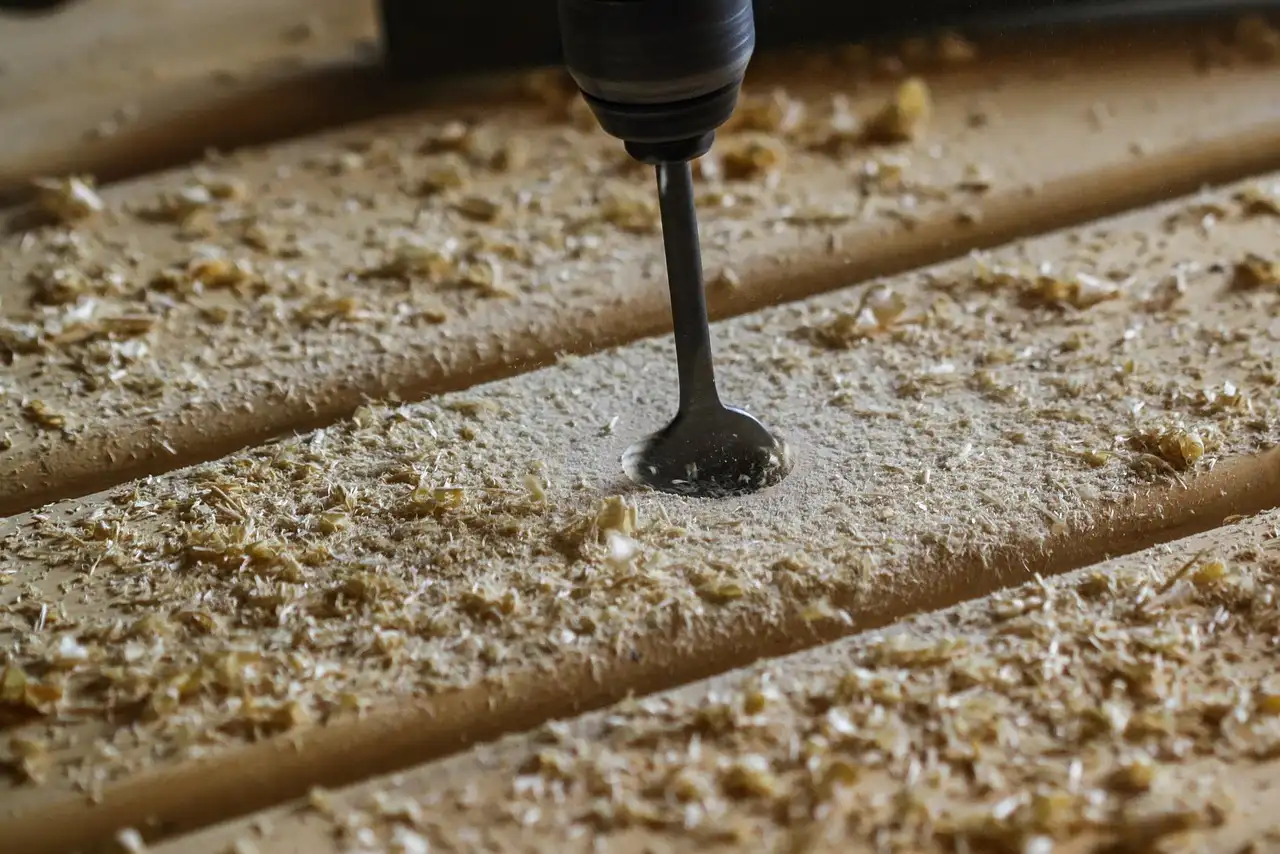
A drill driver wins here because the chuck accepts a broad set of round-shank and hex-shank bits, including brad-point bits, twist bits, countersinks, and specialty woodworking bits. That flexibility matters when you need clean entry, accurate sizing, and fewer pauses between steps.
Screw driving
An impact driver is the better fastening tool when the job involves longer screws, hardwood, or repeated driving. It is built for large fasteners, and it feels more decisive when a screw needs extra push in dense stock.
Control and finish quality
The drill driver has the clutch advantage. That matters when you are setting hinge screws, fastening thin face frames, or driving into softer wood where overdriving can damage the surface fast.
Bit compatibility
The impact driver only holds hex-head bits, not standard chuck bits. That means you need 1/4-inch hex accessories for driving, and if you want to drill with it you need a hex-shank drill bit or a hex-head adapter setup.
Noise and comfort
Impact tools are louder. For a small shop, or for repeated light fastening near finished surfaces, the lower noise of a drill driver is easier to live with.
Which tool is better for drilling holes?
A cordless drill driver is the better choice for drilling holes in wood. It accepts more bit types, centers bits more easily, and gives you the control needed for clean pilot holes, countersinks, and hardware layouts where a wandering bit creates visible damage.
Cordless drill driver for hole work
The chuck is the key advantage. You can swap from a pilot bit to a countersink to a Forstner bit without fighting bit compatibility, and the clutch helps when you switch from drilling to driving screws on the same project.
When an impact driver can drill and when it should not
An impact driver can drill if you use a hex-shank drill bit, but that does not make it the cleaner choice for most woodworking holes. It is better reserved for rough holes, structural work, or situations where you already have an impact-ready bit set and want to stay with one tool.
Say your project needs a row of 3/32-inch pilot holes for brass hinge screws on a cabinet door. A drill driver is the safer tool because it gives you steadier alignment and less chance of chewing up the veneer at the entry point.
Which tool is better for driving screws?
An impact driver is better for driving larger screws, especially in hardwood and in repetitive fastening where screw heads tend to bind. A drill driver still has a place for smaller fasteners, delicate hardware, and any screw where depth control matters more than speed.
Small fasteners and light trim work
For light trim, cabinet hardware, and small screws around #8 and below, a drill driver often gives the cleaner result. Its clutch helps prevent strip-out, and its slower, smoother feel reduces the chance of sinking a screw too deep into soft wood.
Larger screws in hardwood and repeated fastening
For longer screws, especially in hardwood such as white oak, hickory, or maple, an impact driver is the stronger choice. How To Decide lists 2 to 3 inches as the screw size range for impact drivers and hammer drills, while up to 1.5 inches is listed for drill drivers. That split fits woodworking tasks that need more driving force and less cam-out.
A common first-timer mistake is forcing a 2-inch screw into maple with a drill driver and no pilot hole near the edge. The screw can bind, the head can strip, or the board can split before the joint seats cleanly.
Woodworking task decision table
| Task | Best tool | Why it wins | Bit type needed | Risk of tear-out or strip-out | Pilot hole recommended? |
|---|---|---|---|---|---|
| Cabinet assembly | Drill for Woodworking | Most cabinet work needs control, clean pilot holes, and careful screw depth near finished edges. | Standard drill bit, countersink, or driver bit in the chuck | Moderate if you rush near veneer or end grain | Yes, especially near edges and in hardwood. |
| Pocket screws | Drill for Woodworking | Setting pocket screws often benefits from clutch control and a bit setup that does not overdrive the joint. | Square or Phillips driver bit in the chuck | Moderate if the screw seats too hard | Usually yes in hardwood or near fragile edges |
| Joinery prep | Drill for Woodworking | Layout holes, alignment holes, and countersinks are cleaner with a tool built for drilling first and fastening second. | Brad-point, twist, or countersink bits | Low when you use the right bit and speed | Yes, for most hardwood and hardware work |
| Pilot holes in hardwood | Drill for Woodworking | Hardwoods punish poor alignment and overdriven screws, so the drill’s control matters more than brute force. | Pilot bit and countersink as needed | Low if the pilot size matches the screw | Yes |
| Hinge hardware and small fixtures | Drill for Woodworking | Small screws and visible hardware need controlled seating, not aggressive impact pulses. | Small driver bit, sometimes a pilot bit first | High if the screw head cams out or the finish chips | Usually yes |
| Repeated deck-style fastening | Impact Driver | Repeated driving of longer screws is a common case where an impact driver can save effort and reduce cam-out. | 1/4-inch hex-head driver bit | Moderate if you skip pilots in split-prone stock | Often yes in hardwood or near edges |
Can you use an impact driver as a drill?
Yes, you can use an impact driver as a drill if the bit has a hex shank or fits through a hex adapter setup. That said, a drill driver is still the cleaner choice for most woodworking holes because it holds more bit types and gives better control over alignment and cut quality.
Hex-shank drill bits and hex-head driver bits
Impact drivers only hold hex-head bits, so the bit or adapter must match that format. A hex-head driver bit is common in 1/4-inch form, and some special drill bits are made with a hex head for this exact use.
Impact-rated drill bits and bit wear
Not every drill bit is made for impact use. Impact-rated drill bits are built to handle impact stress and usually cost more than standard bits, which matters if you plan to drill often with an impact driver rather than only use it for occasional holes.
When a drill still makes the cleaner choice
For clean pilot holes, countersinks, and repeated furniture work, the drill still wins. It is quieter, easier to control, and less likely to make the bit chatter at the start of the hole.
- Use a drill driver for layout holes, pilot holes, countersinks, and small hardware.
- Use an impact driver for longer screws, hardwood fastening, and repetitive screw runs.
- Choose 1/4-inch hex accessories if you want the impact driver to drill or drive.
- Match the pilot hole to the screw and material, especially in hardwood or near edges.
- Move to a heavier battery pack if a bundle battery feels underpowered for sustained fastening.
Choose Impact Driver if… / Choose Drill for Woodworking if…
Choose Impact Driver if… you are driving 2- to 3-inch screws, working in hardwood, repeating the same fastening step over and over, or want less cam-out on larger screws. It also makes sense when you already have a hex-bit system and do not need fine drilling control.
Choose Drill for Woodworking if… you need hole drilling, countersinking, pilot holes, hinge hardware, pocket screws, or any task where the screw depth has to be exact. It is also the better first buy if you want one tool that handles a broader mix of woodworking steps.
If you can only buy one tool for a small shop, a drill driver is the safer default. It covers more jobs, accepts more bits, and gives you the control that many woodworking tasks need before a screw ever goes in.
Battery size also changes how each tool feels. A 1.3 Ah bundle battery can limit performance, while a 4 Ah or 5 Ah battery often gives an impact driver more room to work at its intended pace during longer fastening sessions.
A regular drill can drive reasonable-sized screws without a pilot hole when paired with a heavy battery, but that does not make it the best choice for every joint. In hardwood and near edges, the pilot hole still matters more than raw drive force.

Frequently asked questions
Impact driver vs drill
The simplest split is control versus fastening force. A drill driver is better for holes, small screws, and careful work because it has a chuck and clutch. An impact driver is better for larger screws and repetitive fastening because it drives with more torque and less cam-out.
Impact driver vs drill driver
These terms are often used interchangeably for the drill category, but the woodworking choice is still the same: the drill driver is the more flexible tool for hole drilling and delicate fastening. The impact driver is narrower in purpose and works better when screw driving becomes hard on the wrist or bit.
Which is better for hardwood screws?
The impact driver is usually better for hardwood screws, especially in white oak, hickory, and maple. Those woods resist screw driving more than softwood, so the impact tool’s higher driving force and reduced cam-out are useful. Pilot holes still matter, especially near edges.
Do I need a drill or impact driver for woodworking?
If you only buy one, start with a drill driver. It covers hole drilling, pilot holes, countersinking, and lighter screw work. Add an impact driver when your projects move toward longer screws, harder stock, or repeated fastening where speed and reduced cam-out matter more than fine control.
Impact driver vs regular drill
The regular drill, meaning the drill driver, is the better all-purpose woodworking tool. It is quieter, more adjustable, and more forgiving on hardware and hole work. The impact driver is narrower but stronger where screw driving is the main job.
Sponsored / affiliate links. As an Amazon Associate I earn from qualifying purchases. I may earn additional commission from eligible campaigns.