Cedar vs Redwood Fence: Which Wood Is Right for You?
Choosing the right fence can feel tricky! Many people find figuring out the best wood for their needs, like with a Cedar vs Redwood Fence: Pros and Cons, a bit challenging. Don’t worry, though. This guide will break it down simply, comparing these popular choices step by step. You’ll soon see that picking the perfect fence for your yard is easier than you think. Let’s explore how these woods stack up!
Weighing Your Options: Cedar vs Redwood
Before jumping into specifics, let’s look at the general differences between cedar and redwood. Both woods are popular for fencing, but they have different qualities that make them suitable for various projects. Knowing these basics helps you narrow down your choices and select the option that best fits your needs, budget, and local environment. You’ll learn what makes each wood type stand out and what to consider when making your decision. Both options offer natural beauty, and your choice may depend on what you need from your fence in terms of look, durability, and cost.
Appearance and Aesthetics
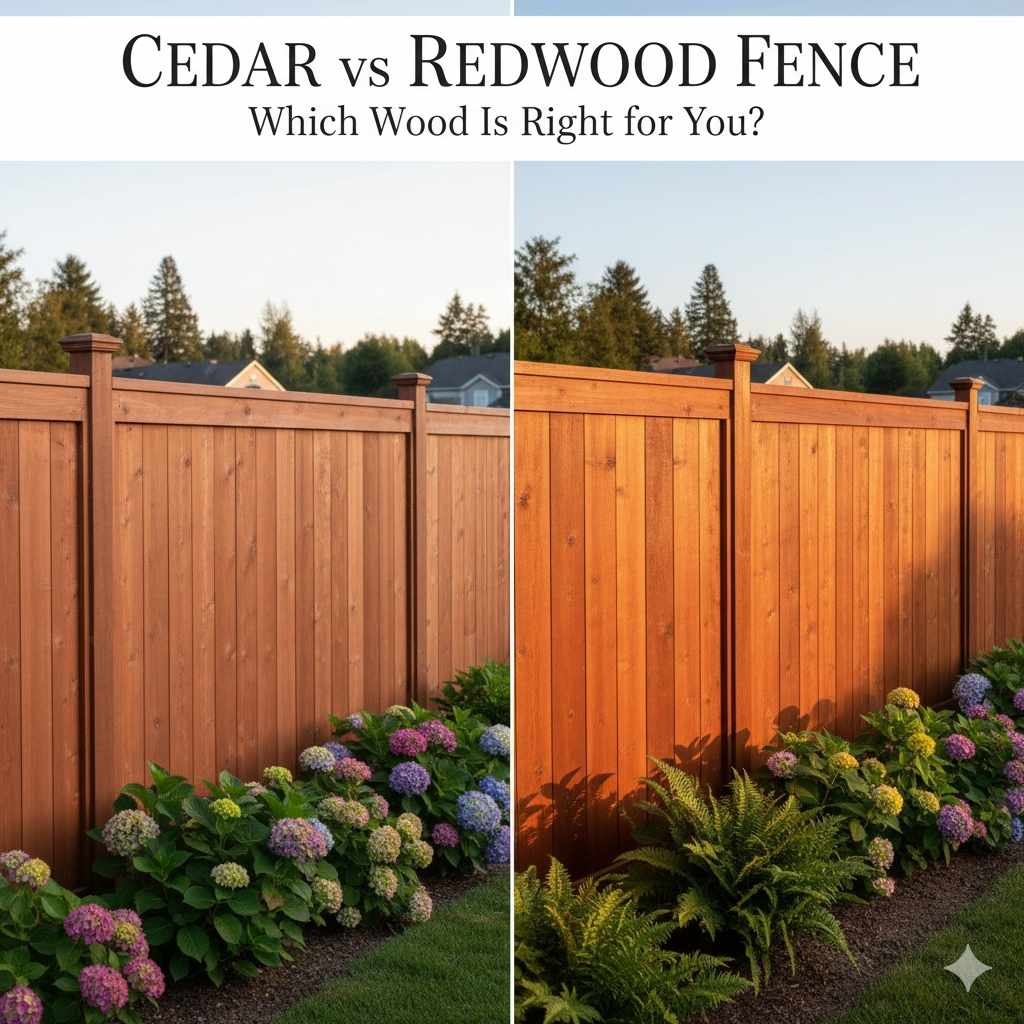
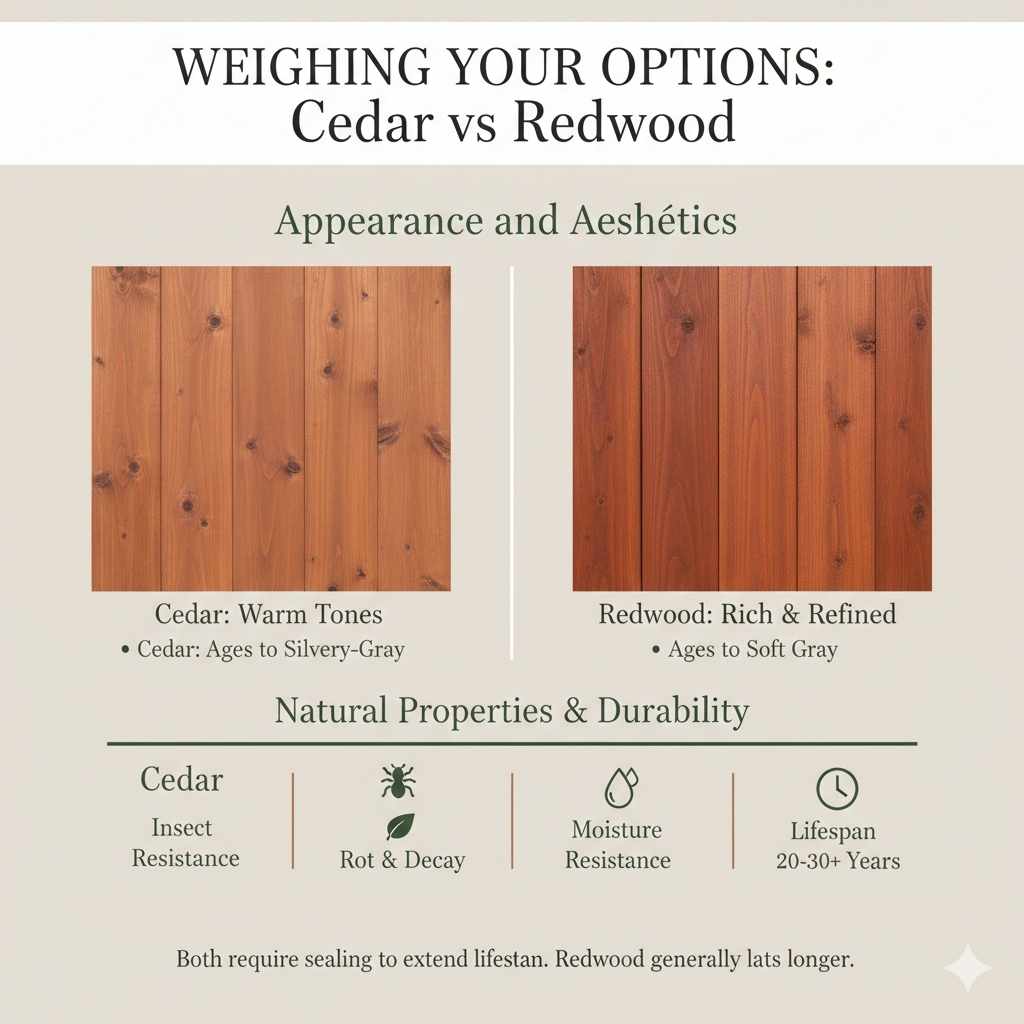
One of the first things people notice is the look. Cedar often has a warmer, reddish-brown color that adds charm. Redwood, on the other hand, can vary from a light pink to a deep red-brown. Its color tends to mellow over time, aging into a silvery-gray. Both woods offer a natural beauty that many homeowners find appealing. The grain patterns and natural imperfections contribute to the unique character of each fence, giving your yard a distinct look. Remember, the wood’s appearance can greatly impact the overall style of your outdoor space. Consider which color and texture you prefer to complement your home and landscape design.
- Cedar’s Warm Tones: Cedar’s reddish-brown hue provides a classic, inviting look. This can complement many home styles.
- Redwood’s Rich Colors: Redwood offers a range of red hues, from light pink to deep reddish-brown. The richness of redwood can provide a striking appearance.
- Grain and Texture: Both types have attractive grain patterns, but redwood tends to have fewer knots than cedar, leading to a smoother appearance.
- Weathering: Both woods weather to a gray color over time, especially if not treated, giving them a rustic appearance. The rate of weathering varies.
Natural Properties and Durability
The natural properties of cedar and redwood significantly impact how long they last and how well they resist the elements. Both woods contain natural oils and tannins, which act as preservatives against rot, decay, and insect damage. However, the exact composition of these substances varies, giving each wood unique advantages. Knowing these factors can help you gauge the longevity of your fence and the amount of maintenance required. Durability directly influences the lifespan of your fence, saving money and effort on repairs or replacements over time. Evaluate where you live and what weather your fence will be exposed to.
- Insect Resistance: Both cedar and redwood are naturally resistant to insects like termites. This helps to extend the lifespan.
- Rot and Decay: Their natural oils make them resistant to rot and decay, particularly when in contact with the ground.
- Moisture Resistance: Both wood types are known for their resistance to moisture, reducing the chances of warping, splitting, or cracking.
- Lifespan: Redwood generally lasts longer than cedar. The exact lifespan will depend on climate, care, and quality.
- Maintenance Needs: Periodic maintenance, like sealing or staining, is important to extend the life of either fence type.
Budget and Cost Considerations
The price of your fence is likely a major factor in your decision. Wood prices change over time due to market forces, availability, and the specific grade of wood. Cedar and redwood differ in their cost, with redwood typically being the more expensive choice. This price difference is due to the growth rates, supply, and regional availability of the woods. Keep in mind that initial costs aren’t the only expense; maintenance will also affect your budget over time. Factor in the cost of labor if you’re not building the fence yourself and the materials needed for maintenance. The best option is the one that fits your budget and offers long-term value.
Material Costs and Installation
The cost of materials will vary depending on where you are. Redwood is usually more expensive than cedar because it’s less available. Installation costs can also vary. Professional installation often costs more than a DIY project. The size and complexity of your fence can also impact overall costs. It’s smart to get several quotes for the project and consider the long-term maintenance costs when creating your budget. You can save money by doing some tasks yourself.
- Cedar Price Range: Cedar is typically more budget-friendly. The price can vary based on the grade and availability in your area.
- Redwood Price Range: Redwood is usually more expensive because it is slower growing.
- Installation Costs: Professional installation will add to your total costs.
- DIY vs. Professional: DIY projects can save money on labor costs, but consider your skills and the time commitment needed.
Long-Term Expenses
Beyond the initial costs, you must think about future expenses. Regular maintenance, such as staining or sealing, is important to preserve both cedar and redwood fences. The frequency of maintenance can vary. Redwood might require less frequent maintenance due to its natural properties, but it’s still good to check regularly. Budget for the costs of cleaning products, stains, and sealants. Also, consider the cost of potential repairs or replacements. A well-maintained fence will last longer and reduce overall expenses. Proper care and maintenance will ensure that your investment in your fence lasts.
- Maintenance Frequency: Both require maintenance, but redwood might need less frequent upkeep.
- Staining and Sealing: Staining or sealing is an important part of maintenance and adds to the long-term cost.
- Cleaning: Regular cleaning helps prevent the growth of mold or mildew, which can damage the wood.
- Repair Costs: Be prepared for potential repair costs.
Cedar’s Advantages and Disadvantages
Let’s take a closer look at the benefits and downsides of cedar. Cedar is a common fencing material, known for its pleasant scent and natural beauty. It’s often chosen for its affordability and ease of use. However, like any material, cedar has its drawbacks. Understanding these pros and cons helps you make an informed decision for your project. Consider your priorities, budget, and aesthetic preferences. Weighing these features can help ensure your fence meets your needs for appearance, durability, and cost.
Pros of Choosing Cedar
Cedar offers several attractive qualities that make it a popular choice. Its warm tones and natural resistance to insects and rot are strong selling points. The lighter weight of cedar makes it easier to install. It also tends to be more budget-friendly than other options. These factors make cedar an excellent pick for many homeowners. Cedar is great if you want a fence that has a classic, welcoming look and will last for many years. It is a good choice for those who are looking for a nice fence without spending a lot.
- Affordability: Cedar is often less expensive than redwood, which makes it easier on the budget.
- Aesthetics: The warm, reddish-brown color of cedar complements many homes and landscapes.
- Natural Resistance: Cedar is naturally resistant to insects and rot, which contributes to its long life.
- Workability: Cedar is relatively easy to cut, shape, and install, which is good for DIY projects.
- Scent: Cedar has a pleasant, natural aroma that some people love.
Cons of Choosing Cedar
While cedar has many strengths, it also has a few weaknesses to consider. Cedar isn’t as naturally durable as redwood. You might need to maintain it a little more often to extend its lifespan. It can be susceptible to damage from impacts or severe weather, and its appearance might change over time without treatment. Understanding these disadvantages allows you to prepare for maintenance and anticipate any potential issues. If you live in an area with harsh weather conditions or want maximum durability, you might want to look at alternatives.
- Durability: Cedar is less durable than redwood and may not last as long.
- Maintenance: It can require more frequent maintenance, such as staining or sealing, to keep it in good condition.
- Susceptibility: It might be more susceptible to damage from impacts or extreme weather.
- Appearance: Without treatment, cedar can weather to a silver-gray color, which may not match your preferences.
- Availability: Depending on the region, the availability of certain cedar grades can vary.
Redwood’s Advantages and Disadvantages
Redwood is prized for its beauty and longevity, making it a favorite for fences. Its rich color, resistance to decay, and natural preservatives are noteworthy features. However, redwood is more expensive than cedar, and it’s important to understand the overall picture. These points will help you compare and contrast the different choices. By understanding both the pros and cons, you can decide whether redwood is the best option for your project.
Pros of Choosing Redwood
Redwood offers many benefits that make it a great choice. Its natural durability and ability to withstand the elements are major advantages. Redwood’s resistance to rot and insects means that it will last a long time with minimal effort. This makes it a great choice for those who want a long-lasting, low-maintenance fence. The rich color and smooth texture of redwood add a touch of elegance to any outdoor space. Its beauty makes it a great choice for areas that need a stylish, functional fence.
- Durability: Redwood is naturally durable and can last for many years with little maintenance.
- Appearance: Its rich color and grain patterns offer a visually appealing look.
- Natural Resistance: Redwood is resistant to rot, decay, and insect damage.
- Weather Resistance: Redwood holds up well in different weather conditions.
- Low Maintenance: Redwood requires less maintenance, which can save time and money in the long run.
Cons of Choosing Redwood
Even with its impressive qualities, redwood has some downsides to consider. It is typically more expensive than cedar, which can be a budget constraint. Redwood’s availability can vary depending on where you are, and it might be harder to find certain grades. While it’s durable, it can still be susceptible to damage from impacts. If you are looking for a lower-cost option or if availability is a concern, redwood may not be the ideal choice. Consider these limitations to determine if redwood fits your requirements.
- Cost: Redwood is more expensive.
- Availability: The availability of redwood can vary, especially in certain areas.
- Damage: It can be susceptible to damage from impacts, such as falling trees or large debris.
- Environmental Concerns: Some people have environmental concerns regarding the harvesting of redwood.
- Splitting: In very dry climates, redwood can be prone to splitting if not properly maintained.
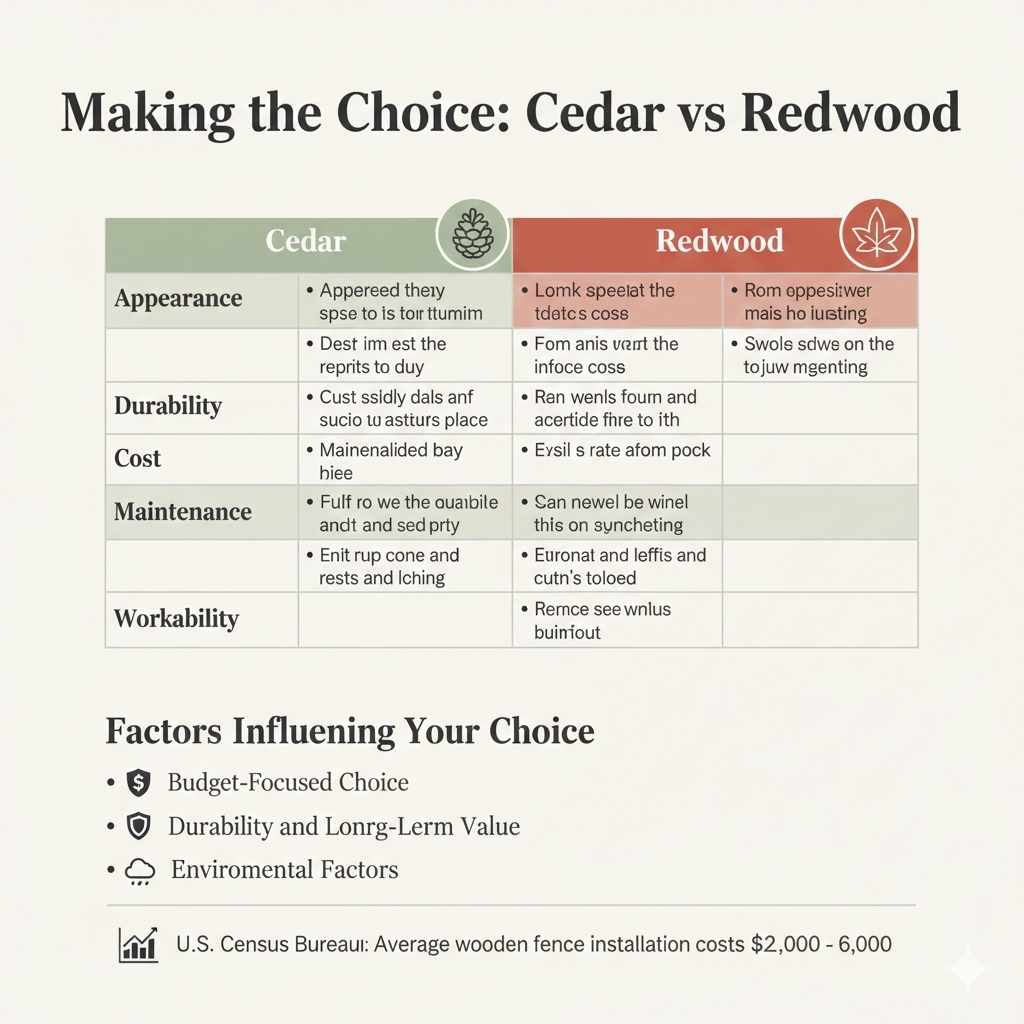
Making Your Choice: A Comparison Table
Let’s make a quick comparison of cedar and redwood. This chart will help to visualize the key differences between the two woods, so you can easily compare. Consider your personal requirements, budget, and local conditions. The perfect choice depends on what you value most. The table will break down the features and help you make a decision.
| Feature | Cedar | Redwood |
|---|---|---|
| Appearance | Warm reddish-brown; may weather to gray | Rich red hues; may weather to silver-gray |
| Durability | Good; less durable than redwood | Excellent; naturally resistant to rot and insects |
| Cost | Generally less expensive | Generally more expensive |
| Maintenance | Requires periodic sealing or staining | Requires less frequent maintenance |
| Workability | Easy to cut, shape, and install | Easy to cut and install; less prone to splintering |
Here are some examples of what might influence the choice:
- Budget-Focused Choice: If you are on a tight budget, cedar might be a better choice because it is usually cheaper.
- Durability and Long-Term Value: If you want the longest-lasting fence possible, redwood’s superior durability makes it a great choice.
- Environmental Factors: If you live in an area with a lot of rain or humidity, the moisture resistance of both is helpful.
According to the U.S. Census Bureau, the average cost of a wooden fence installation is between $2,000 and $6,000 depending on materials, size, and labor. This data confirms that there is a range of costs associated with different wood types. According to the National Association of Home Builders, approximately 60% of homeowners choose wood fencing for its aesthetic value and natural appearance. This statistic underscores the appeal of wood for its visual appeal and how that factors in.
Frequently Asked Questions
Question: Is cedar or redwood better for a fence?
Answer: Both have advantages. Redwood is generally more durable and lasts longer, while cedar is often more affordable. Your choice depends on your budget and needs.
Question: How long do cedar fences last?
Answer: With proper maintenance, a cedar fence can last for 15–20 years or more. Factors such as climate and care influence this.
Question: How long do redwood fences last?
Answer: A redwood fence can last 20–30 years, or even longer, due to its natural durability and resistance to decay.
Question: Which wood is easier to install?
Answer: Both are easy to work with. Cedar is lighter, making it easier to handle. Redwood’s smooth surface can be an advantage.
Question: Does cedar or redwood need to be treated?
Answer: Both will benefit from treatment. Applying stain or sealant will extend their lifespan and maintain their appearance. It’s especially useful in areas with a lot of rain or direct sun.
Final Thoughts
Choosing between a Cedar vs Redwood Fence: Pros and Cons depends on your particular situation. Cedar offers a budget-friendly option with a charming look, while redwood provides superior durability and low maintenance. Both woods have strengths that will improve your outdoor space. Think about your goals and what you value most in a fence. Consider the costs of materials, installation, and upkeep. By carefully considering these points, you can make the best choice for your needs. Research local suppliers and get quotes to ensure you find the perfect fence for your yard and budget. Good luck with your project!