Choosing the Best Blade for Makita Track Saw
Finding the Best Blade for Makita Track Saw can seem tricky at first. Many options exist, and it’s easy to get confused about what makes one blade better than another for your specific needs. Don’t worry, though. This guide will make it simple. We will walk you through everything you need to know to pick the perfect blade, so you can get clean, accurate cuts every time. Let’s get started on finding that ideal blade.
Finding the Best Blade for Makita Track Saw
Selecting the right blade for your Makita track saw is essential for achieving precise and clean cuts. This choice impacts the quality of your work, the efficiency of your cutting, and even the lifespan of your saw. Many factors come into play, from the material you’re cutting to the desired finish. Understanding these elements will empower you to make an informed decision that benefits your projects. We will explore the key aspects that define a superior blade for this popular tool.
Blade Material and Tooth Count Explained
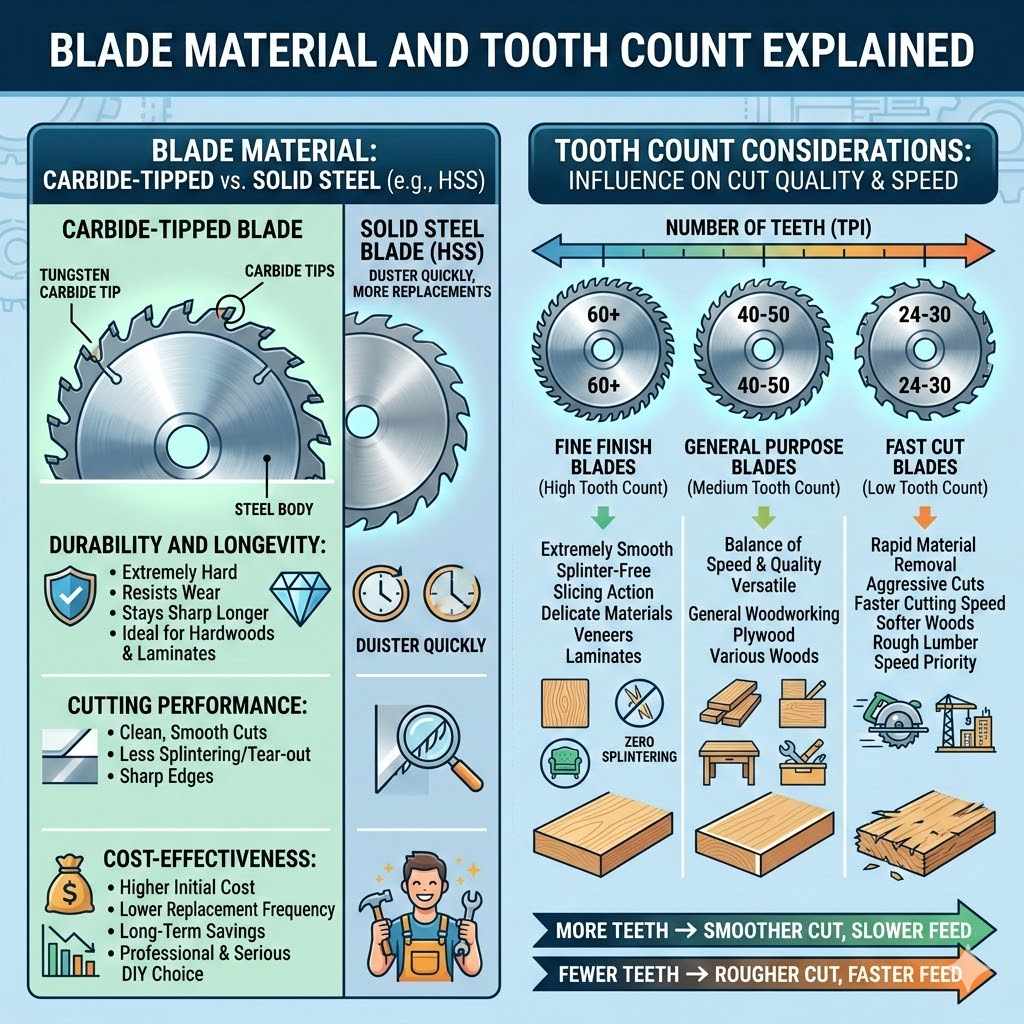
The material a blade is made from and the number of teeth it has are fundamental characteristics that dictate its performance. High-speed steel (HSS) and carbide-tipped blades are common. Carbide is much harder and more durable, making it ideal for most woodworking tasks.
The tooth count, often measured in TPI (teeth per inch) or simply as the total number of teeth, directly influences the cut quality. More teeth generally mean a smoother, cleaner cut, especially in delicate materials, while fewer teeth can provide faster, more aggressive cuts in thicker stock.
Carbide-Tipped Blades
Carbide-tipped blades feature small, hard pieces of tungsten carbide brazed onto the steel body of the blade. This combination offers significant advantages.
Durability and Longevity
Carbide is extremely hard, making these blades much more resistant to wear and dulling than solid steel blades. This means they stay sharp for longer, requiring less frequent replacement or sharpening. A good carbide-tipped blade can perform hundreds, if not thousands, of cuts before needing attention, saving both time and money in the long run. This extended lifespan is a major reason why they are the preferred choice for professional and serious DIY users alike.
Cutting Performance
The hardness of carbide allows for sharper edges, which translate to cleaner cuts with less splintering or tear-out. This is particularly important when working with laminates, veneers, and hardwoods. The precise geometry of the carbide tips, combined with the blade’s design, ensures that the material is sliced rather than torn, leaving a smooth edge that often requires minimal sanding.
Cost-Effectiveness
While initial cost might be higher than basic steel blades, the extended lifespan and superior performance of carbide-tipped blades make them more cost-effective over time. The reduction in replacement costs and the improvement in cut quality often justify the investment for regular users.
Tooth Count Considerations
The number of teeth on a blade is a critical factor in determining the type of cut it will produce. This is often expressed as the total number of teeth or teeth per inch (TPI).
Fine Finish Blades (High Tooth Count)
Blades with a high tooth count, typically 60 teeth or more for a standard 165mm track saw blade, are designed for producing extremely smooth, splinter-free cuts. These are ideal for cutting delicate materials like veneered plywood, laminates, and hardwoods where tear-out is a significant concern. The sheer number of teeth engage the material gradually, slicing through it cleanly.
General Purpose Blades (Medium Tooth Count)
A blade with a medium tooth count, often in the range of 40-50 teeth, offers a good balance between cutting speed and finish quality. This type of blade is versatile and can handle a variety of wood types and sheet goods effectively. It’s a great all-around choice for general woodworking projects.
Fast Cut Blades (Low Tooth Count)
Blades with a lower tooth count, usually around 24-30 teeth, are designed for rapid material removal. They are excellent for cutting softer woods, rough lumber, or when speed is more important than a perfectly smooth finish. However, these blades will produce a rougher cut and are more prone to splintering on delicate surfaces.
Understanding Blade Geometry and Kerf
Beyond material and tooth count, the specific geometry of the blade’s teeth and the width of its cut (kerf) play significant roles in performance. These subtle design differences can dramatically affect how the blade interacts with the material, influencing cut quality, speed, and the amount of dust produced.
Tooth Geometry Features
The shape and arrangement of the teeth are engineered for specific purposes. Common tooth geometries include ATB, FTG, and Hi-ATB.
Alternate Top Bevel (ATB)
ATB teeth have a beveled edge that alternates on each side of the blade. This design provides a good balance of cutting efficiency and finish quality, making it a popular choice for general woodworking. The angled edges help to shear the wood fibers cleanly, reducing tear-out, especially in crosscuts.
Flat Top Grind (FTG)
FTG teeth have a flat, square profile. These are designed for aggressive material removal and are often used for ripping lumber or cutting softer materials where speed is a priority. While they cut quickly, they tend to produce a rougher finish compared to ATB teeth.
High Alternate Top Bevel (Hi-ATB)
Hi-ATB teeth are similar to ATB but with a steeper bevel angle. This geometry provides an even cleaner and smoother cut, making them exceptional for fine woodworking and materials prone to splintering. They offer superior finish quality, often leaving a mirror-like edge.
Positive Hook Angle
This refers to the angle at which the tooth face is presented to the material. A positive hook angle helps the blade bite into the material more aggressively. For general woodworking, a hook angle between 10 and 20 degrees is common. Extremely high hook angles can be aggressive but may also increase the risk of kickback in some situations.
Kerf Width
The kerf is the width of the cut made by the blade. Blades come in standard kerf and thin kerf options.
Standard Kerf
These blades are wider and offer greater stability during cuts. They are typically found on older saws or designed for more demanding applications where blade deflection needs to be minimized. Standard kerf blades require more power from the saw motor because they remove more material.
Thin Kerf
Thin kerf blades are designed to remove less material with each pass. This results in less strain on the saw’s motor, leading to longer battery life on cordless models and less power draw on corded saws. They also produce less dust and can make cuts faster. However, they may be slightly less rigid than standard kerf blades and might be more prone to deflection in very thick or hard materials. For Makita track saws, especially cordless models, thin kerf blades are often recommended for optimal battery performance.
Specialty Blades for Specific Materials
While general-purpose blades are versatile, using a blade specifically designed for the material you’re cutting can dramatically improve results. Makita offers various blades, and understanding their intended use for different materials is key. From melamine to metal, the right blade makes a difference.
Melamine and Laminate Blades
These materials are notoriously prone to chipping and splintering when cut. Specialty blades are engineered to minimize this.
Blade Design
Melamine and laminate blades typically have a very high tooth count (often 60-80 teeth or more for a 165mm blade) and a Hi-ATB or specialized triple-chip grind. The high tooth count ensures that only a small amount of material is removed at each tooth engagement, creating a very fine, clean cut. The specialized grinds are designed to shear the material precisely rather than tear it.
Cutting Technique
When cutting melamine or laminate, it is crucial to ensure that the blade is sharp and that the saw is supported well. Using a zero-clearance insert on your track saw base can also help support the material right up to the cut line, further reducing the chance of chipping on the underside.
Real-World Example
A cabinet maker was struggling with significant chipping on the visible edge of melamine shelving. After switching to a 60-tooth Hi-ATB blade specifically designed for laminates, the chipping was virtually eliminated. This saved hours of costly touch-up work and improved the professional appearance of the finished cabinets. The initial investment in the specialty blade paid for itself quickly through reduced labor and material waste.
Plywood and Softwood Blades
For general woodworking with plywood and softwoods, a balance of speed and finish is often desired.
Versatile Tooth Count
A blade in the 40-50 tooth range with an ATB grind is usually a good choice. This offers a good compromise, allowing for relatively fast cuts while still producing a clean enough finish for most applications. For softer woods, a slightly lower tooth count might even suffice if speed is paramount.
Durability for Sheet Goods
Plywood can contain hidden knots or occasional voids that can be hard on blades. A good quality carbide-tipped blade will hold up well to these inconsistencies. Ensuring the blade is properly seated in the track and the saw is guided smoothly will help prevent damage from unexpected material variations.
Hardwood Blades
Hardwoods are denser and can be tougher on blades. The right blade ensures clean cuts without excessive strain.
Smoother Cut Focus
For hardwoods, you generally want a smoother finish to reduce sanding. Blades with higher tooth counts (50-60 teeth) and an ATB or Hi-ATB grind are excellent. These teeth slice through the dense wood fibers cleanly.
Preventing Burn
If you are making many cuts or cutting very dense hardwoods, there’s a risk of the blade overheating and causing burn marks. A sharp blade and appropriate cutting speed help prevent this. For very demanding hardwood applications, a blade designed with features to reduce friction and heat buildup might be considered.
Makita Track Saw Blade Specifications and Recommendations
Makita offers a range of blades designed to work seamlessly with their track saw systems. Understanding their specific offerings and common recommendations can simplify your selection process.
Makita’s Blade Range
Makita provides blades in various tooth counts and designs to suit different needs. Common sizes for their track saws include 165mm (6-1/2 inch) and 190mm (7-1/2 inch) diameters.
General Purpose Blades
These often feature around 48 teeth and an ATB grind. They are suitable for a wide array of wood types and sheet goods, offering a good balance of cutting speed and finish.
Fine Finish Blades
These blades have a higher tooth count, typically 60 teeth or more, and often a Hi-ATB or similar grind for exceptionally clean cuts, especially on hardwoods and laminates.
Specialty Blades
Makita may also offer blades specifically for materials like melamine or even non-ferrous metals, though the latter is less common for standard woodworking track saws. Always check the product description for the intended application.
Key Specifications to Look For
When choosing a Makita blade, or any blade for your track saw, pay attention to these details:
Blade Diameter
This must match your track saw. For most common Makita models, this will be 165mm.
Arbor Size
This is the size of the hole in the center of the blade that fits onto the saw’s spindle. For most Makita track saws, this is 20mm.
Tooth Count
As discussed, this determines the cut quality and speed.
Tooth Grind (ATB, FTG, Hi-ATB)
This affects the type of cut and finish.
Kerf Width
Thin kerf is generally preferred for battery-powered track saws to conserve power.
Sample Scenario: Cutting Kitchen Countertops
Imagine you need to cut a new kitchen countertop to size. Countertops are typically made of particle board or MDF with a thick laminate or veneer surface.
1. Material Assessment
The laminate surface is prone to chipping, and the particle board core is dense. A blade that excels at preventing chipping is crucial for a clean, professional edge.
2. Blade Selection
For this task, a high-tooth-count blade (60-80 teeth) with a Hi-ATB grind is ideal. This will ensure the laminate surface is cut cleanly without significant tear-out. A thin kerf blade will also help conserve battery life, which is important for longer cuts.
3. Cutting Process
Use a zero-clearance insert on your track saw. Ensure the track is firmly secured to the countertop. Make a slow, steady pass with the saw, allowing the blade to do the work. Avoid forcing the saw. After the cut, the edges should be clean, requiring minimal or no further finishing.
Comparing Different Blade Brands and Technologies
While Makita provides excellent blades, the market is filled with numerous reputable manufacturers offering innovative technologies. Comparing different brands and their specialized features can help you find the absolute best blade for your specific needs and budget.
Reputable Blade Manufacturers
Beyond Makita’s own line, several other brands are highly regarded for their quality track saw blades. These include Diablo, Freud, Bosch, and CMT. Each often brings unique features or specific material optimizations to their blade designs.
Diablo
Known for their “Dura-CerMet” carbide teeth and laser-cut expansion slots, Diablo blades are often praised for their durability and smooth cutting performance. They offer a wide range of blades suitable for various materials.
Freud
Freud blades are recognized for their “Perma-SHIELD” coating, which reduces heat and friction, and their “Thi-Cer-Carbide” for extreme durability. They offer excellent performance on hardwoods and laminates.
Bosch
Bosch offers a comprehensive line of blades for various applications, often focusing on durability and precision. Their blades are designed to provide clean cuts and long service life.
Innovative Blade Technologies
Manufacturers continually innovate to improve blade performance. Some notable technologies include:
Anti-Vibration Slots
These slots are cut into the blade body and are filled with a durable polymer or are simply shaped to absorb vibrations. This reduces noise, minimizes blade deflection, and leads to a smoother cut and longer blade life. Makita blades often feature these.
Specialized Carbide Tipping
Different manufacturers use proprietary carbide formulations and brazing techniques to enhance tooth hardness, impact resistance, and overall blade durability. This can translate to more cuts between sharpenings and less risk of teeth chipping.
Laser-Cut Expansion Slots
Precisely cut slots allow the blade to expand and contract with heat without warping. This helps maintain blade stability and accuracy, especially during prolonged use.
Comparison Table: General Purpose vs. Fine Finish Blade
To illustrate the differences, let’s consider a comparison between a general-purpose blade and a fine-finish blade for a 165mm Makita track saw.
| Feature | General Purpose Blade (48-Tooth ATB) | Fine Finish Blade (60-Tooth Hi-ATB) |
|---|---|---|
| Blade Diameter | 165 mm | 165 mm |
| Arbor Size | 20 mm | 20 mm |
| Tooth Count | 48 | 60 |
| Tooth Grind | ATB (Alternate Top Bevel) | Hi-ATB (High Alternate Top Bevel) |
| Ideal For | General woodworking, plywood, softwoods | Hardwoods, laminates, melamine, veneers |
| Cut Quality | Good to very good | Excellent, very smooth, minimal chipping |
| Cutting Speed | Faster | Slower |
| Material Removal | Moderate | Lower |
| Splintering Risk | Low to moderate | Very low |
| Cost | Lower to moderate | Moderate to higher |
| Vibration / Noise | Standard | Often reduced (anti-vibration slots) |
Case Study: Remodeling a Kitchen
A contractor was tasked with refacing an entire kitchen, which involved cutting numerous cabinet boxes and shelves from plywood and MDF. The existing blades they were using were leaving a rough edge, requiring significant sanding before the veneer could be applied.
1. Problem Identified
The contractor realized their current blades were not suitable for the precision required. The time spent sanding was increasing labor costs and slowing down the project timeline.
2. Solution Implemented
They invested in several high-quality 60-tooth Hi-ATB blades designed for fine woodworking and sheet goods. They also ensured they were using thin kerf blades to maximize battery life on their cordless Makita track saw.
3. Results Achieved
The new blades cut through the plywood and MDF with exceptional smoothness. The edges were so clean that sanding was significantly reduced, saving approximately 2-3 hours of labor per day. The overall quality of the finished cabinets also improved, leading to satisfied clients. This demonstrates how the right blade can directly impact project efficiency and profitability.
Maintaining Your Makita Track Saw Blades
Even the best blade will perform poorly if not maintained. Proper care ensures your Makita track saw blades remain sharp, efficient, and safe to use. This involves cleaning, storage, and knowing when it’s time for professional sharpening or replacement.
Cleaning Your Blades
After cutting, sawdust and resin can build up on the blade, affecting its cutting performance and potentially causing overheating.
Removing Resin and Sawdust
Use a stiff brush and a mild degreaser or specialized blade cleaner to remove any buildup. For tougher residue, a solvent like mineral spirits can be effective. Always wear gloves to protect your hands and avoid transferring oils to the blade.
Safety Precautions
Always ensure the blade is removed from the saw and is completely cool before cleaning. Use a vise or clamp to hold the blade steady while cleaning. Never use harsh abrasives or power tools to clean the blade, as this can damage the carbide tips or the blade body.
Proper Storage
Storing your blades correctly is crucial for preventing damage and maintaining their sharpness.
Protecting the Teeth
The carbide teeth are the most vulnerable part of the blade. Store blades in their original packaging, blade cases, or a dedicated blade organizer. This prevents them from knocking against other tools or hard surfaces, which can chip the teeth.
Keeping Them Dry
Moisture can lead to rust on the blade body. Store blades in a dry environment, away from humidity and potential water exposure.
Sharpening and Replacement
Blades don’t stay sharp forever. Knowing when to sharpen or replace a blade is key to safe and effective cutting.
Signs a Blade Needs Sharpening
You’ll notice increased effort is needed to push the saw through the material. The cut quality will degrade, with more splintering and tear-out. Burn marks appearing on the wood are also a strong indicator of a dull blade.
Professional Sharpening Services
For carbide-tipped blades, professional sharpening is often recommended. Specialized sharpening services can restore the blade’s cutting edge and ensure the correct tooth geometry is maintained. This is usually more cost-effective than buying new blades frequently.
When to Replace
If a blade has been sharpened multiple times, the carbide tips may become too small to sharpen effectively. Also, if the blade body is warped or damaged, it should be replaced immediately for safety reasons. A significantly reduced number of teeth due to wear also signals it’s time for a new blade.
Choosing the Right Blade for Your Makita Track Saw Project
Selecting the Best Blade for Makita Track Saw depends entirely on what you’re cutting and the finish you need. We’ve explored different blade materials, tooth counts, geometries, and specialized options. Now, let’s bring it all together to help you make the perfect choice for your next project.
Matching Blade to Material
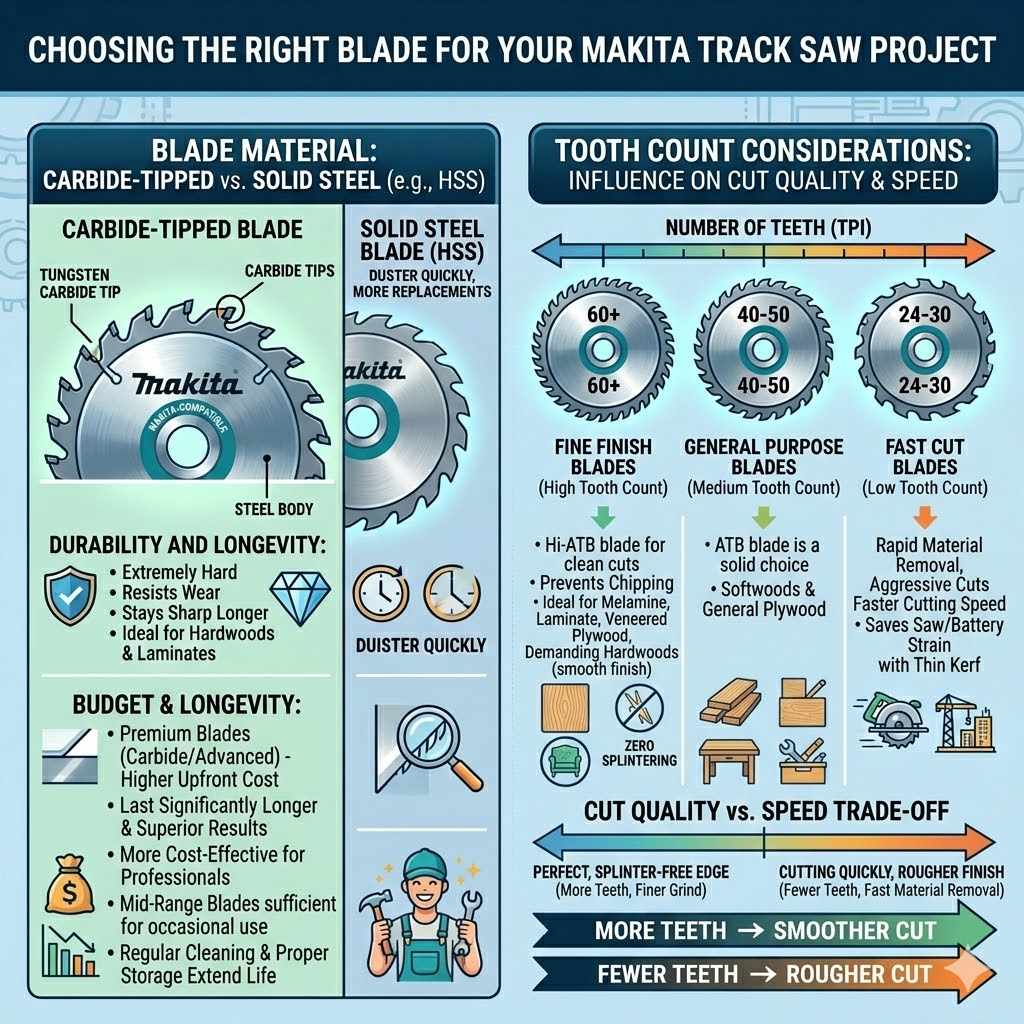
The most critical factor is the material. For softwoods and general plywood, a 40-50 tooth ATB blade is a solid choice. When cutting melamine, laminate, or veneered plywood, a high-tooth-count (60+ teeth) Hi-ATB blade is essential to prevent chipping. For demanding hardwood applications where a very smooth finish is needed, also opt for a higher tooth count blade with a favorable grind.
Considering Cut Quality vs. Speed
Do you need a perfect, splinter-free edge, or is cutting quickly the priority? If it’s the former, choose a blade with more teeth and a finer grind. If speed is paramount, a blade with fewer teeth will remove material faster, though the finish will be rougher. Remember that thin kerf blades offer a good balance, reducing strain on your saw and battery while still providing good performance.
Budget and Longevity
Higher-quality blades with carbide tips and advanced geometries will cost more upfront but last significantly longer and provide superior results. For occasional use, a mid-range blade might be sufficient. For frequent or professional use, investing in a premium blade is often more cost-effective in the long run due to its durability and cutting performance. Regular cleaning and proper storage will extend the life of any blade.
Final Thoughts
Selecting the best blade for your Makita track saw comes down to matching the blade’s design to your material and desired outcome. A blade with the right tooth count and grind ensures clean cuts and efficiency. Proper maintenance keeps your blades performing optimally.
Frequently Asked Questions
Question: What is the most common blade size for Makita track saws
Answer: The most common blade diameter for Makita track saws, especially their popular cordless models, is 165mm (approximately 6-1/2 inches).
Question: Should I use a thin kerf blade with my Makita track saw
Answer: Yes, using a thin kerf blade is generally recommended for Makita track saws, especially cordless models. It requires less power, extending battery life, and produces less dust.
Question: How many teeth should a blade have for cutting laminate
Answer: For cutting laminate and materials prone to chipping, a blade with a high tooth count, typically 60 teeth or more for a 165mm blade, is best to ensure a smooth, splinter-free cut.
Question: Can I use a blade designed for metal on my wood track saw
Answer: No, you should not use a metal-cutting blade on a wood track saw. Wood cutting blades have specific tooth geometries and materials designed for wood. Using the wrong blade can be dangerous and damage both the blade and the saw.
Question: How often should I sharpen my track saw blades
Answer: The frequency of sharpening depends on usage and the material cut. A general rule is to sharpen when you notice a decrease in cut quality, increased splintering, or excessive effort is needed to push the saw through the material. This could be after tens or hundreds of cuts.
Summary
Choosing the best blade for your Makita track saw means considering the material you’re cutting, the finish you desire, and balancing speed with cut quality. Blades with the right tooth count and grind, like Hi-ATB for delicate surfaces, ensure excellent results. Thin kerf options are great for battery conservation. Proper cleaning and storage keep your blades sharp and safe for many projects to come.