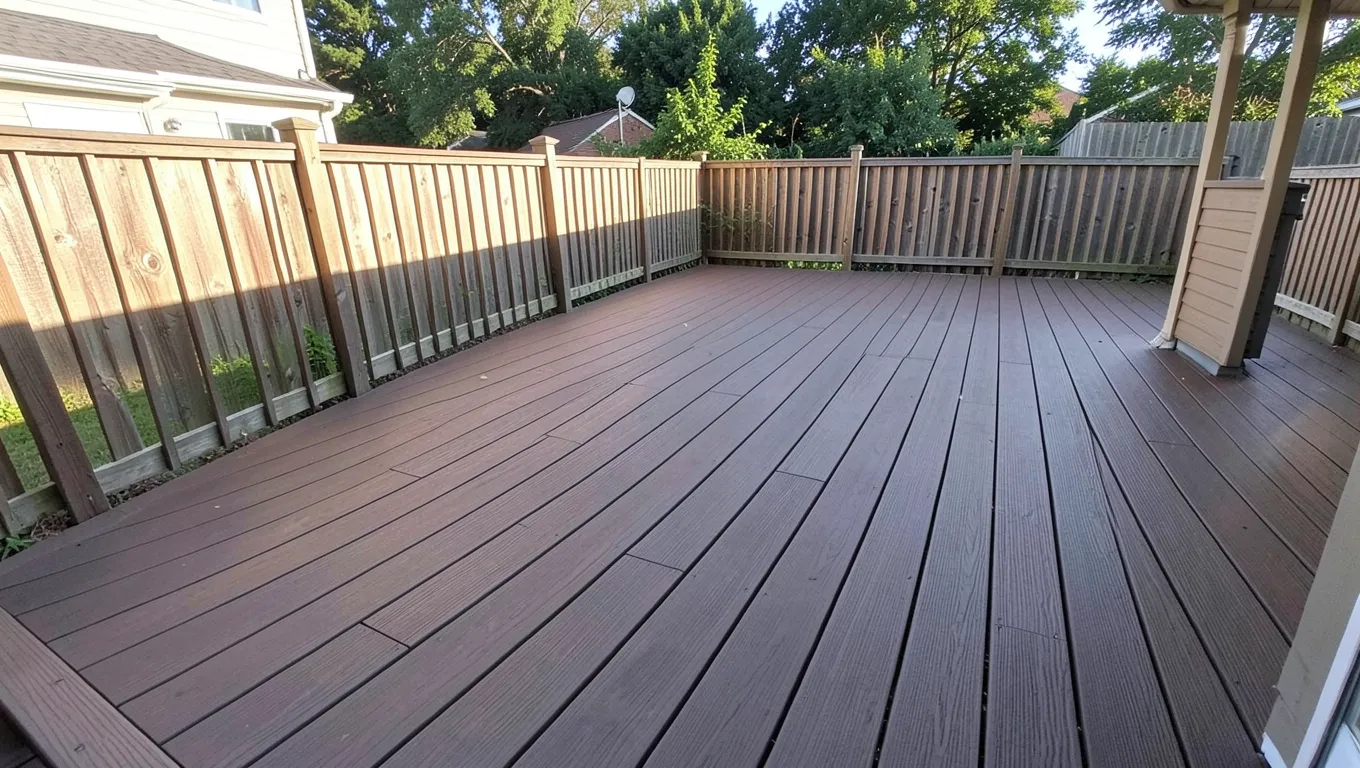
20 Ft Composite Deck Boards: Which Brands Make Them & How to Install Them Right
Yes — Trex, Fiberon, TimberTech, and NewTechWood all manufacture composite deck boards in 20-foot lengths, and for most composite lines, 20 feet is the longest run you can buy without a factory seam. That matters more than it sounds: a 20-footer lets you frame a large deck, porch, or dock run in a single continuous board instead of butting two shorter pieces together mid-span — and a mid-span butt joint is where composite decking tends to fail first, not at the ends. It traps moisture and shows up as a dark line a few years in.
Not every big-box store stocks every brand’s 20 ft option on the shelf, though, and the longer a composite board gets, the more it matters how you support, transport, and fasten it. Below is what’s actually available by brand, the real specs, and what changes about installation once you’re working with a board this long.
Which Brands Actually Make 20 Ft Composite Deck Boards
Best Fastener System for Long Composite Runs
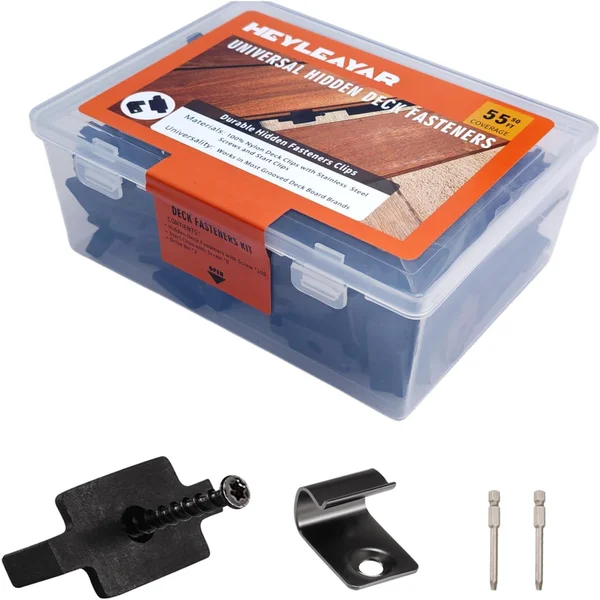 |
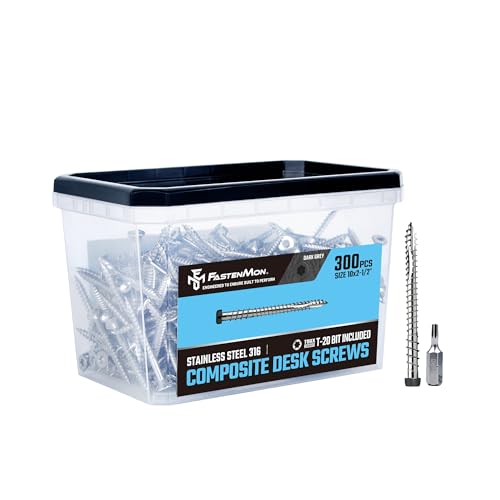
HEYLEAYAR Universal Hidden Deck Fastener Clips (100-pack) – $23.99 On a 20 ft board you need a clean attachment point at every joist to keep the run from flexing between fasteners — this kit’s stainless clips and start clips fit most grooved composite profiles, including Trex, Fiberon, and TimberTech.
|
Trex covers 20 ft lengths across several lines: Enhance Naturals and Select are both commonly stocked at 20 ft in Home Depot and Lowe’s, while Transcend is more often a special order through those same retailers. Fiberon’s ArmorGuard line ships at 20 ft as well. TimberTech’s Reserve line includes a 1x6x20 ft board, but it’s typically a dealer special-order rather than something sitting on a store shelf. NewTechWood’s UltraShield composite line also reaches 20 ft. Availability shifts by region and season, so it’s worth confirming in-stock status at your local store before planning a project around a specific brand.
Real Specs for a 20 Ft Composite Board
Most 20 ft composite boards are sold as a nominal 1×6, which works out to roughly 5.5 inches of actual width and about 1 inch of thickness — close enough to standard 5/4 pressure-treated decking that it drops into the same joist layout without reframing. You’ll find two edge profiles: grooved, made for hidden fastener clips (the more common choice on a long run, since it leaves no visible screw heads), and square-edge, meant for face-screwing.
Length changes the handling, too. A single 20 ft board is heavy and awkward — expect it in the 35 to 45 lb range depending on brand density, which is why most retailers recommend carrying it with two people rather than one, and why it flexes noticeably if you pick it up from just the ends.
Why 20 Ft Is the Practical Ceiling for Composite Length
This isn’t an arbitrary marketing cutoff. Composite boards are formed by pushing a wood-plastic blend through an extrusion die, and most manufacturers’ extrusion lines are built around a maximum run length that tops out around 20 feet. Going longer would mean retooling the line for a niche length most homeowners don’t need.
Trucking plays a role too. A standard flatbed trailer runs 48 to 53 feet, so 20 ft boards ship two-deep or stack efficiently without triggering the oversize-load permits and escort requirements that come with anything much longer. That’s a real cost the manufacturer would otherwise have to pass on, and it’s part of why 20 ft — not 24 or 28 — has become the industry’s de facto maximum standard length.
Installing a 20 Ft Run Without Sagging or Bowing
A 20 ft composite board is more flexible than a piece of lumber the same length, and that flexibility is exactly what causes problems if the board isn’t handled right before it’s ever screwed down.
- Support the full length during storage and transport. Lay boards flat on a truck bed or sawhorses spaced every few feet — never lean a 20-footer against a wall or support it only at the two ends, or it will take a permanent bow before installation even starts.
- Follow the brand’s joist-spacing table, not a generic rule. 16 inches on-center is the common baseline for composite decking at standard residential heights, but several manufacturers call for 12-inch spacing on diagonal installs or higher-traffic layouts. Composite stiffness varies enough by brand that it’s worth checking that specific product’s span table rather than assuming.
- Leave the manufacturer’s expansion gap at both ends. Composite moves more with temperature than wood does, and a 20 ft board has more total length to expand and contract — skipping the gap is what causes buckling at the ends in summer.
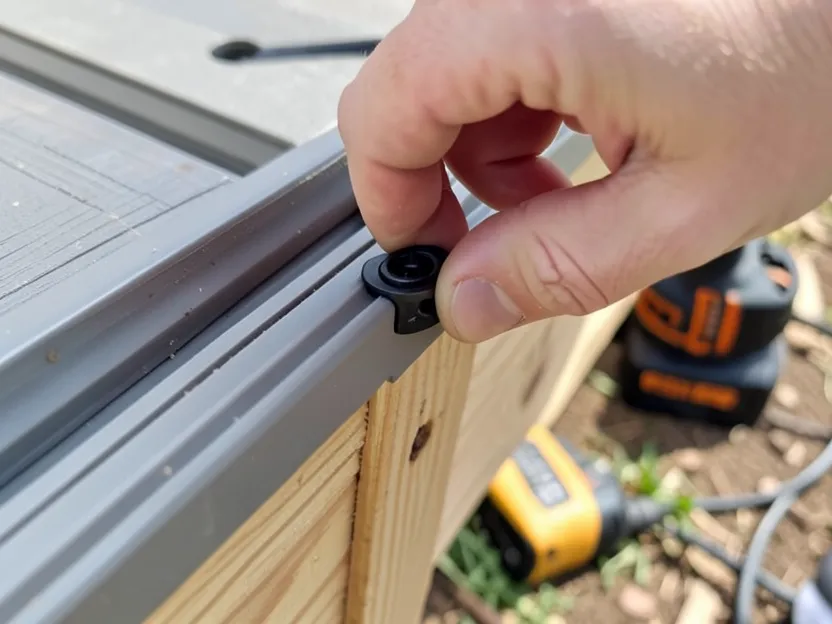
- Fasten at every joist, not just some of them. The longer the board, the more attachment points it needs to stay straight between joists. Hidden fastener clips (like the kit above) seat in the board’s groove at each joist and hold it flat without face-screw holes to fill later.
20 Ft Boards vs. Seaming Two Shorter Ones
If your deck run is longer than 20 feet, or your local store only has 16 ft boards in stock, the alternative is a butt joint — seaming two shorter boards end to end over a joist. It’s a legitimate technique, and plenty of decks are built this way, but it comes with trade-offs worth knowing before you decide it’s not worth the extra cost or wait for a true 20-footer.
A butt joint needs its own joist directly under the seam (not just any joist — one positioned exactly there), and manufacturers generally require a small gap at the joint for expansion, which means picking a butt-joint fastener or trim piece designed for that gap rather than just pushing two boards together. Over a few seasons, that seam is also the spot most likely to show a visible line, since even a well-executed joint moves slightly with temperature swings in a way that a continuous board doesn’t. None of that makes seaming wrong — it’s often the only practical option on decks longer than 20 feet, since no composite line makes a true seamless board past that length — but on a run of 20 feet or under, a single continuous board avoids the extra joist planning, the fastener choice, and the long-term seam line entirely.
What a 20 Ft Composite Board Actually Costs
At Home Depot, current pricing on 20 ft composite boards runs roughly $21 to $80 per board depending on brand and finish — Trex Enhance Naturals square-edge sits near the low end, while Trex Select grooved and other premium finishes push toward the top. Fiberon ArmorGuard and NewTechWood UltraShield typically land in between. That’s a wide enough range that brand and finish matter more to your total cost than the length itself.
For a full brand-by-brand price breakdown, see our 20 ft composite deck board price guide. If you specifically want to know what’s in stock at Home Depot right now, our 20 ft composite deck boards at Home Depot page covers current pricing and picks in more depth. And if Home Depot doesn’t have what you need in stock, our guide to where to buy 20 ft deck boards covers Lowe’s, specialty lumber yards, and online suppliers that carry both wood and composite options.
FAQ
Does any composite decking brand make boards longer than 20 feet?
Not as a standard catalog length. 20 feet is the practical ceiling across Trex, Fiberon, TimberTech, and NewTechWood’s mainstream lines, tied to extrusion equipment limits and standard flatbed trucking length. Anything longer generally means a custom or special order with a freight surcharge, if it’s offered at all.
What joist spacing do 20 ft composite deck boards need?
16 inches on-center is the standard baseline most brands’ span tables allow for a typical residential deck. Step down to 12 inches on-center if the boards run at a diagonal or the manufacturer’s specific span table calls for it — check that brand’s own table since composite stiffness varies from one product to the next.
Will a 20 ft composite board sag or bow?
It can, but mostly before installation. A 20-footer leaned against a wall or supported at only two points will bow under its own weight. Once it’s fastened at every joist across its full length with hidden clips or screws, it holds straight. A board that sags on a finished deck usually has a missed or failed joist connection, not a length problem.
What does a 20 ft composite deck board cost?
At Home Depot, prices run roughly $21 to $80 per board depending on brand and finish — Trex Enhance Naturals square-edge sits at the low end, Trex Select grooved and other premium finishes at the high end, with Fiberon and NewTechWood in between. See our full price guide and Home Depot breakdown for current numbers by brand.
Sponsored / affiliate links. As an Amazon Associate I earn from qualifying purchases. I may earn additional commission from eligible campaigns.