Composite Decking vs Pressure-Treated Wood Cost Guide
Pressure-treated wood usually costs noticeably less upfront, but composite can often pull even after several years once labor, staining, and board replacement start repeating. I have seen plenty of low-bid wood decks get expensive in a hurry, especially where water sits or owners fall behind on finish work. This guide compares year-1, 5-year, and 10-year costs, maintenance hours, repair patterns, and the climates where each material makes better financial sense. The core trade-off is simple: pressure-treated wood starts cheaper, while composite usually costs less to own over time when maintenance and repairs are included.
| Decision factor | Composite Decking | Pressure Treated Wood: Cost Compared | Winner |
|---|---|---|---|
| Upfront installed cost | About $55 to $95 per square foot installed for mid-range composite | About $35 to $65 per square foot installed | Pressure Treated Wood: Cost Compared |
| 10-year ownership cost pattern | Higher year-1 cost, lower recurring finish and repair cost | Lower year-1 cost, but recurring sealing, staining, and more board repair risk | Composite Decking |
| Estimated lifespan | 25 years or more in one estimate | About 15 years in one estimate | Composite Decking |
| Routine maintenance | Cleaning only; no sanding, staining, or sealing once installed | Cleaning plus periodic sealing or staining, often every one to two years in wet or high-sun settings | Composite Decking |
| Appearance drift over time | More consistent color and texture, especially with capped boards | Can fade, crack, splinter, cup, and show fastener pop if upkeep slips | Composite Decking |
| Natural wood look | Uniform, manufactured grain and color | Real wood grain and a more traditional look when maintained | Pressure Treated Wood: Cost Compared |
| Wet, shaded, or damp-site performance | Capped shell blocks moisture, stains, and UV damage, but surface mildew still needs cleaning in shade | Porous surface absorbs more moisture and needs closer finish maintenance | Composite Decking |
Upfront installed cost
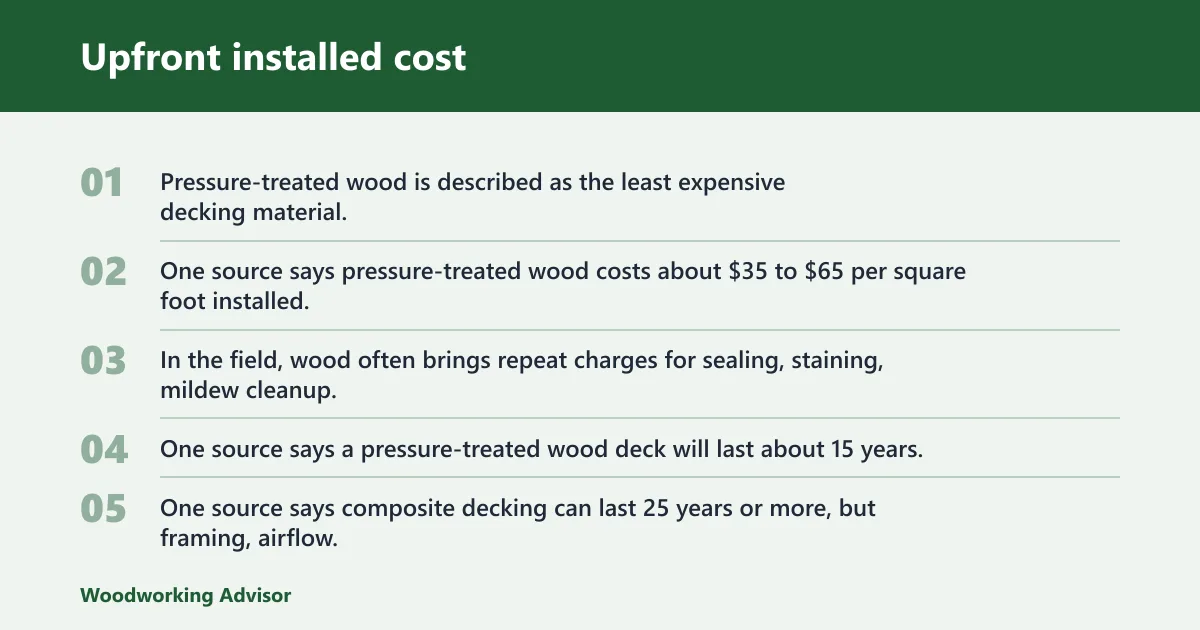

Pressure-treated wood is described as the least expensive decking material, and that usually stays true once boards, rails, trim, and labor are counted. One source says pressure-treated wood costs about $35 to $65 per square foot installed, while mid-range composite runs about $55 to $95.
10-year ownership cost pattern
The first quote rarely shows the whole bill. In the field, wood often brings repeat charges for sealing, staining, mildew cleanup, proud fasteners, and the occasional board swap, while composite pushes more of the spending into year 1.
Estimated lifespan
One source says a pressure-treated wood deck will last about 15 years. One source says composite decking can last 25 years or more, but framing, airflow, flashing, and drainage still decide whether the surface gets there cleanly.
Routine maintenance
Composite does not need sanding, staining, or sealing after installation. Pressure-treated boards have a porous surface, so they need periodic finish work if the goal is to slow water uptake, surface checking, and color loss.
Appearance drift over time
Most composite boards have a capped outer shell, and capped boards block moisture, stains, and UV damage. Wood can still age well, but only if cleaning and recoating happen on schedule and water is kept away from board ends, stairs, and the ledger.
Natural wood look
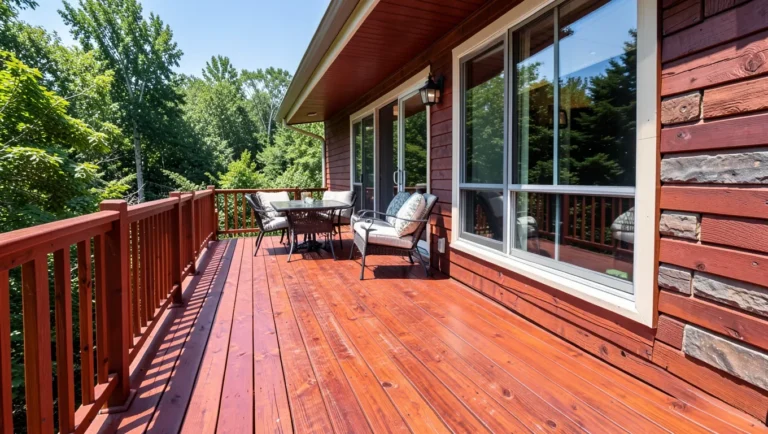
This is the main row where wood can still win outright. A fresh, well-kept pressure-treated deck has real grain, natural variation, and a look many homeowners still prefer to molded textures.
📊 One source says a pressure-treated wood deck will last about 15 years. Source: Greenwayfence.
Composite decking vs pressure-treated wood at a glance
What each material is made from
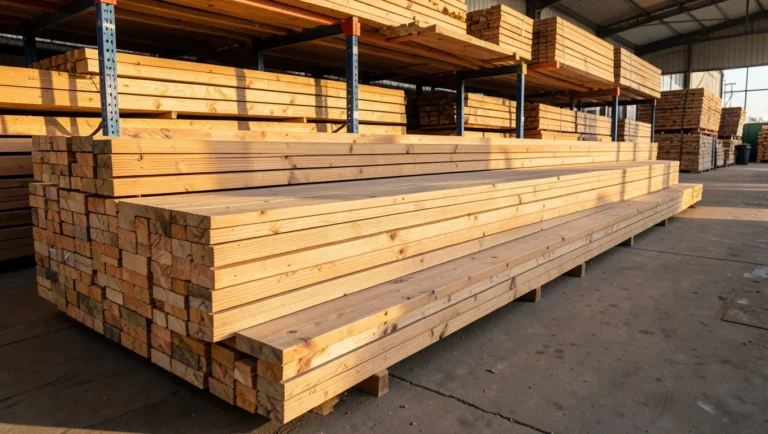
Pressure-treated wood decking is lumber treated with copper-based preservatives such as ACQ or MCA. That treatment helps the board resist decay and insects, but it does not change the fact that the wood surface remains porous, so it still takes on water, loses finish, and moves with wet-dry cycles.
Composite decking is made from wood fibers plus plastic polymers. Many lines are capped, meaning the board gets an outer shell that reduces moisture pickup and helps resist stains and UV damage. Capped and uncapped composites should not be treated as the same product class in a budget or durability discussion.
Where upfront savings and long-term costs split
Board price is only one line item. One comparison lists pressure-treated wood deck boards at about $1.40 per lineal foot and composite at about $2.40 per lineal foot, with composite described as nearly double the price of wood. That gap matters, but installed cost is shaped just as much by framing layout, fastening method, rail tie-ins, drainage details, and labor time.
In practice, the split usually starts here: wood gives you the cheaper first invoice, composite cuts many of the service bills that follow. The more exposed the deck is to sun, standing moisture, damp shade, and freeze-thaw stress, the sooner those later bills show up.
How much does composite decking cost compared with pressure-treated wood?
Composite decking costs more upfront by both board price and installed price. Pressure-treated wood boards are about $1.40 per lineal foot in one comparison versus about $2.40 for composite, and installed costs run about $35 to $65 per square foot for pressure-treated wood versus about $55 to $95 for mid-range composite.
Installed cost per square foot
Installed cost matters more than the tag on the decking stack. Pressure-treated wood about $35 to $65 installed and mid-range composite about $55 to $95 installed is the better planning range because it includes labor and site conditions, not only the decking boards.
Site moisture and drainage affect the final number. A low deck over wet ground, a layout with complex stairs, or a ledger that needs flashing correction can move either material higher fast.
Why board price and installed price are not the same
Homeowners often compare deck boards and assume they are comparing decks. They are not. A deck budget usually includes decking boards, framing, fasteners, stairs and rail tie-ins, drainage details, flashing, and labor.
That matters because composite can require tighter attention to joist spacing and hidden-fastener compatibility, while wood can drive more later labor in sanding rough spots, replacing split boards, and resetting proud fasteners.
Budget lines most homeowners miss
- Framing condition or replacement if this is a resurfacing job
- Fastener type, including hidden fastener systems for compatible composite lines
- Ledger flashing and water management at the house connection
- Airflow and drainage under the deck surface
- Stair treads and rail-post tie-ins, where water often collects
- Future staining labor for wood, whether done by the owner or hired out
What does a 12×16 deck really cost over 10 years?
A sample 12×16 deck shows why year-1 price can mislead. Using a 192-square-foot deck and realistic maintenance line items, pressure-treated wood starts lower, but recurring cleaning, staining or sealing, board replacement, and minor repairs can narrow the gap sharply by year 10 and sometimes erase it in wet or high-sun sites.
Assumptions used for the comparison
The sample deck uses a simple rectangular layout and is about 192 square feet. Installed cost assumptions use the ranges above, with a sample midpoint for pressure-treated wood and another for mid-range composite to build a sample, not a market-wide promise.
Maintenance and repair numbers below are practical planning allowances for a deck of this size. They are not industry standards. They separate annual cleaning, wood finishing, board replacement, and likely repair costs because those are the charges most comparison pages leave blurred together.
10-year total cost table for a sample 12×16 deck
| Cost line, 12×16 deck | Composite Decking | Pressure Treated Wood |
|---|---|---|
| Material and installation, year 1 | 192 sq. ft. x about $75 = roughly $14,400 | 192 sq. ft. x about $50 = roughly $9,600 |
| Annual cleaning allowance | Roughly $120 per year | Roughly $120 per year |
| Staining or sealing allowance | $0 after installation | Roughly $900 every 2 years |
| Board replacement allowance over 10 years | Roughly $300 | Roughly $1,200 |
| Likely repair allowance over 10 years | Roughly $400 | Roughly $1,000 |
| Total by end of year 1 | Roughly $14,520 | Roughly $9,720 |
| Total by end of year 5 | Roughly $15,000 | Roughly $12,000 |
| Total by end of year 10 | Roughly $16,300 | Roughly $16,000 |
What the table shows by year 1, year 5, and year 10
Year 1 is easy: wood is far cheaper. By year 5, wood is still ahead in this sample, but the gap has narrowed once two stain cycles and light repairs are counted.
By year 10, the totals are close enough that climate and upkeep habits decide the winner. If staining labor costs more than this sample assumes, or if damp shade pushes earlier board replacement, wood can overtake composite sooner. If the owner keeps up with finish work and the site drains well, wood can stay near break-even longer.
Where pressure-treated wood can overtake composite in total cost
The tipping point usually comes from labor, not boards. A deck that needs hired staining every one to two years, mildew cleanup in deep shade, and repeated spot replacement around stairs or rail posts can burn through its opening savings fast.
What maintenance costs should I expect for each material?
Pressure-treated wood needs both cleaning and finish maintenance, while composite needs cleaning but no sanding, staining, or sealing once installed. Over time, wood usually costs more in upkeep because the labor repeats and because neglected finish work often leads to extra board replacement, splinters, cupping, and fastener issues.
Cleaning, mildew control, and annual upkeep
Both materials need sweeping and soap-and-water cleaning. Neither surface likes packed leaf litter, pollen, or wet debris left sitting in corners. In shaded or damp spots, both can show mildew staining on the surface, though wood is more likely to absorb moisture and stay wet longer.
Composite owners should still budget for regular washing. Composite is lower-maintenance, not maintenance-free.
Sealing and staining costs for pressure-treated wood
One page says staining or sealing every one to two years is common for wood in wet or high-sun settings. That interval is where ownership cost starts to move. Material for finish work is one charge, but labor is usually the bigger one, especially on stairs, guard areas, and deck perimeters.
Skipping finish work does not always mean immediate failure, but it does raise the odds of fading, checking, splintering, and water pickup. Once that starts, repairs become more than cosmetic.
Repair and board replacement patterns
Pressure-treated wood commonly shows cupping, cracking, splintering, board-end movement, and fastener pop over time. Composite has a different failure pattern: cap scratching, heat retention in strong sun, and occasional surface staining in damp shade.
Those failure modes matter because they drive different repair bills. Wood often needs more small interventions. Composite usually needs fewer repairs, but board replacement can be pickier if a profile or color changes years later.
How long does pressure-treated wood last versus composite?
One estimate puts pressure-treated wood at about 15 years and composite at 25 years or more, but the deck surface never acts alone. Lifespan changes with joist spacing, airflow under the boards, ledger flashing, drainage, and whether moisture sits at stairs, seams, and house connections.
Expected service life by material
Pressure-treated wood uses ACQ or MCA preservatives, so it is built to resist rot better than untreated lumber. Even so, its porous face checks, swells, dries, and moves across the seasons. One source says a pressure-treated wood deck will last about 15 years.
Composite boards combine wood fibers and plastic polymers, and most composite boards have a capped outer shell. One source says composite decking can last 25 years or more.
Real failure modes in use
For wood, the common path is gradual surface wear: fading first, then raised grain, then checking, then the occasional split or splinter. Add trapped moisture near a stair stringer or ledger, and the aging curve gets steeper.
For composite, failure is usually less about decay and more about surface condition. Scratched cap layers, dirt lodged in embossed grain, and heat buildup on dark colors are the issues most likely to affect satisfaction.
How framing, drainage, and airflow change lifespan
Decking never outperforms bad framing. Tight joist spacing supports the surface better, airflow under the deck lets boards dry, drainage keeps water from ponding, and proper ledger flashing keeps the house side from staying wet.
These details shape ownership cost as much as material choice. I have seen cheap decks over wet soil age badly no matter what boards went on top.
How do climate, shade, and moisture affect the choice?
Climate shifts the cost math more than most pricing charts admit. Composite usually gains ground in wet shade, coastal air, and freeze-thaw conditions because it takes on less moisture, while pressure-treated wood remains viable where drainage is good, sun exposure is moderate, and upkeep will actually happen on schedule.
Full sun and heat buildup
Composite holds color better over time, especially when capped with a UV-resistant layer. In direct summer sun, though, some composite surfaces can feel hotter underfoot than wood, particularly darker colors.
Wood can fade faster in high sun and may need more frequent sealing or staining. A fully exposed deck often pushes wood toward the one-to-two-year finish cycle.
Shade, damp sites, and mildew pressure
Damp shade is where many wood decks start costing more than expected. Mildew pressure rises, boards stay wet longer, and finish life shortens.
Composite is a better fit here, but it still needs cleaning. Surface mildew can form on dirt and pollen sitting on the cap, even though the board itself is less likely to absorb the moisture that feeds deeper damage in wood.
Freeze-thaw, coastal air, stairs, and ledger trouble spots
Freeze-thaw cycles punish boards that take on water. Wood is more exposed to that cycle because the surface is porous and board ends often wick moisture first. Coastal or damp conditions create a similar pattern, with salt air and constant humidity keeping surfaces wet longer.
Stairs, ledger boards, and rail-post penetrations are the trouble spots to inspect first. If the site already has moisture collection at those points, composite usually makes more financial sense.
Can pressure-treated wood look as good as composite over time?
Yes, pressure-treated wood can still look good over time if cleaning and staining stay on schedule, but that result has to be maintained. Composite usually holds color and texture more consistently because capped boards resist moisture, stains, and UV damage better than a porous wood surface.
Color drift, fading, and surface wear
Wood changes fast when left unfinished or underfinished. The color softens, then the grain raises, then small cracks begin to read from across the yard. Some owners like the weathered look. Many do not.
Composite stays more uniform. That uniformity is a selling point for buyers who want the deck to look similar in year 8 to the way it looked after installation.
Cap layers, UV resistance, and stain resistance
One page says most composite boards have a capped outer shell, and one page says capped boards block moisture, stains, and UV damage. Higher-end cap layers tend to hold the best visual consistency, especially where grills, planters, and tree debris create routine staining risk.
What maintained wood looks like after several seasons
Well-kept pressure-treated wood can still look very good. The key is consistency. Once the owner misses a cleaning cycle, lets mildew sit, or delays recoating through a wet season, the deck usually shows it in uneven color and rougher texture.
Which material has better resale value or ROI?
Composite has the stronger published resale signal in the supplied data. One page cites an 82.9% national average ROI for composite deck additions from the 2024 Cost vs. Value Report, while pressure-treated wood is usually judged more by present appearance and condition than by material category alone.
What the published ROI figure says
The 82.9% national average ROI for composite deck additions is a useful benchmark because it reflects buyer response to a lower-upkeep exterior feature. Buyers understand what fewer future chores mean, even if they do not know board construction details.
Why buyer perception differs from ownership cost
Resale value and ownership cost overlap, but they are not the same thing. A buyer may pay more for a deck that looks stable and low-maintenance, while an owner may still choose wood if the home will be sold before major finish cycles add up.
When ROI should matter less than upkeep tolerance
ROI matters most when a sale is likely within a few years. If the homeowner plans to stay put, upkeep tolerance matters more. A deck that fits the owner’s willingness to clean, stain, inspect, and repair is usually the better financial pick than chasing resale optics alone.
Choose Composite Decking if… / Choose Pressure Treated Wood: Cost Compared if…
Choose Composite Decking if…
- The site is shaded, damp, coastal, or exposed to freeze-thaw cycles.
- Low upkeep matters more than the lowest possible first invoice.
- The budget can absorb a higher year-1 installed cost.
- Consistent color and texture over 10 years matters more than a real wood grain surface.
Choose Pressure Treated Wood: Cost Compared if…
- The project has a tight upfront budget and must hit the lowest installed cost.
- The site drains well, gets decent airflow, and does not stay damp for long stretches.
- Regular staining or sealing every one to two years is realistic, not wishful.
- A natural wood look matters enough to justify repeat maintenance spending.
Quick buyer checklist
- Set the budget line correctly. Compare full installed price, not board price alone.
- Inspect the site. Note shade, drainage, airflow, and moisture collection near stairs and the ledger.
- Decide who does upkeep. Owner labor makes wood easier to justify; hired labor often shifts the math toward composite.
- Ask about framing and fasteners. Confirm joist spacing, hidden-fastener compatibility, and ledger flashing before picking the surface.
- Plan past year 1. Look at year 5 and year 10 cost, not only the first contract total.
Frequently asked questions
How much does composite decking cost compared with pressure-treated wood?
Composite costs more both by board and by installed square foot. One comparison lists pressure-treated wood at about $1.40 per lineal foot and composite at about $2.40, while installed cost runs about $35 to $65 per square foot for pressure-treated wood and about $55 to $95 for mid-range composite.
Is composite decking worth the extra upfront cost?
Composite is usually worth the extra upfront cost when the deck will be kept long term, the site stays damp, or all maintenance labor will be hired out. Those conditions tend to turn wood’s lower first price into repeat spending on staining, repairs, and board replacement within the first decade.
How long does pressure-treated wood last versus composite?
One source says a pressure-treated wood deck will last about 15 years, while one source says composite decking can last 25 years or more. Those ranges improve or worsen with drainage, airflow, joist support, ledger flashing, and whether the owner keeps up with cleaning and finish work.
What maintenance costs should I expect for each material?
Both materials need sweeping and soap-and-water cleaning. Pressure-treated wood also needs periodic sealing or staining, often every one to two years in wet or high-sun settings, plus more frequent minor repairs. Composite needs cleaning only after installation, though shaded decks can still need mildew cleanup on the surface.
Does composite decking need staining or sealing?
No. Composite does not need sanding, staining, or sealing once installed. Many boards have a capped outer shell that helps block moisture, stains, and UV damage. It still needs regular cleaning, especially in shady or damp areas where pollen, dirt, and mildew can sit on the surface.
Which material has better resale value or ROI?
Composite has the clearer published resale signal in the supplied facts. One page cites an 82.9% national average ROI for composite deck additions. Pressure-treated wood can still support value when it looks well maintained, but buyer reaction usually depends more on visible condition than on the wood category itself.
Sponsored / affiliate links. As an Amazon Associate I earn from qualifying purchases. I may earn additional commission from eligible campaigns.