Wood Deck Installation Cost: 2026 Price Guide by Material and Size
A pressure-treated wood deck installed by a contractor runs $15 to $25 per square foot, cedar or redwood typically lands at $25 to $45 per square foot, and tropical hardwoods like ipe or cumaru can reach $50 to $80 or more per square foot. For a typical 300 to 400 square foot deck, that works out to a total project cost of roughly $4,000 to $12,000, with most homeowners landing near $7,500 once framing, footings, hardware, and labor are all added in.
Those ranges are the finished, installed price – material cost alone is usually less than half of that number, since labor typically makes up 50 to 70 percent of what a contractor charges. This guide breaks the cost down by material, by project component, and by deck size, so you can budget from real numbers instead of a single vague average.
How Much Does a Wood Deck Cost Per Square Foot?
Best Hidden-Fastener Deck Tool
 |
CAMO Marksman PRO Edge Fastening Deck Tool – $55.43 Adds roughly $3 to $6 per square foot to your material and labor cost, but leaves the decking surface completely free of visible screw heads.
|
Wood decking cost gets quoted two different ways, and mixing them up is the most common budgeting mistake homeowners make: material cost per square foot (just the lumber) and installed cost per square foot (lumber, framing, hardware, and labor together). The table below shows both, using current national averages.
| Wood Type | Material Cost/Sq Ft | Installed Cost/Sq Ft | Typical Lifespan |
|---|---|---|---|
| Pressure-Treated Pine | $4 – $8 | $15 – $25 | 10-15 years before major refinishing |
| Cedar | $7 – $12 | $25 – $40 | 15-20 years |
| Redwood | $8 – $15 | $28 – $45 | 20-25 years |
| Tropical Hardwood (Ipe, Cumaru) | $12 – $20 | $50 – $80+ | 25-50+ years |
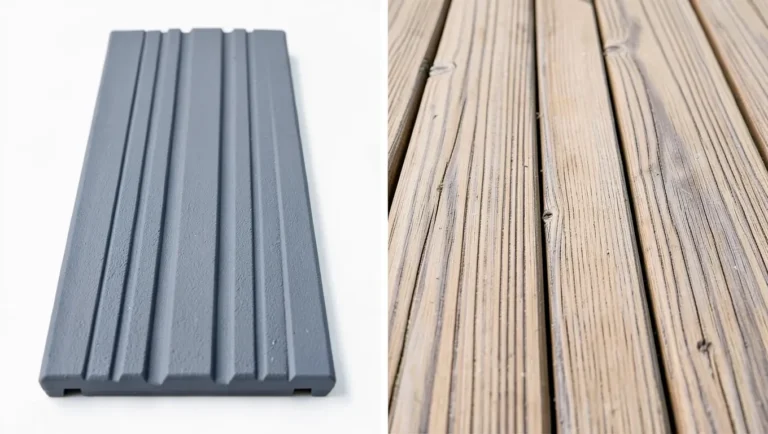
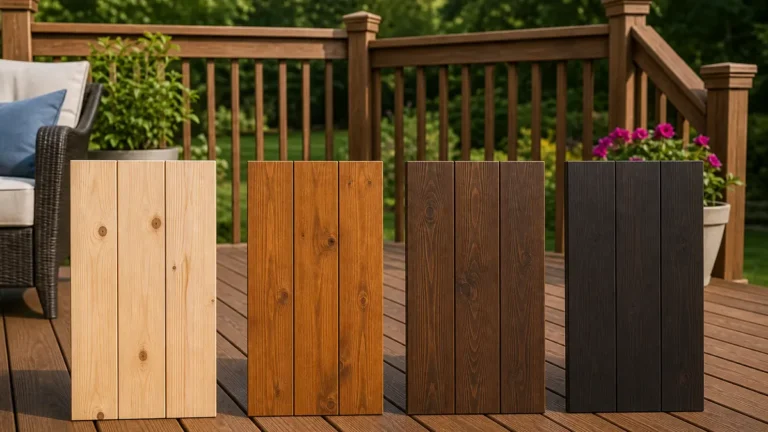
Pressure-treated pine is the budget option and the most common choice for framing regardless of what decking material sits on top. Cedar and redwood cost more but resist rot and insects naturally, without the chemical treatment. Tropical hardwoods cost the most upfront but can outlast the other three combined – for a full breakdown of that specific material, see our pressure-treated wood deck cost guide.
What Determines Your Total Installation Cost
Deck Size and Shape
Size is the single biggest cost driver, but not in a straight line – a 20×20 foot deck doesn’t just cost double what a 10×12 deck costs. Buying lumber in bulk usually brings the per-square-foot material price down slightly as the project gets bigger, while labor cost scales more evenly with square footage. Shape matters almost as much as size: a simple rectangle wastes very little material, while a multi-level deck, a wraparound design, or curved railings add cutting time, extra framing connections, and material waste that a straightforward footprint doesn’t have.
Framing, Footings, and Support Structure
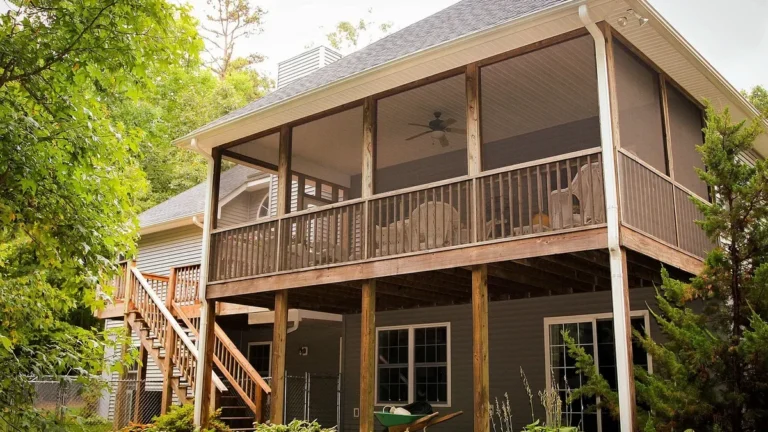
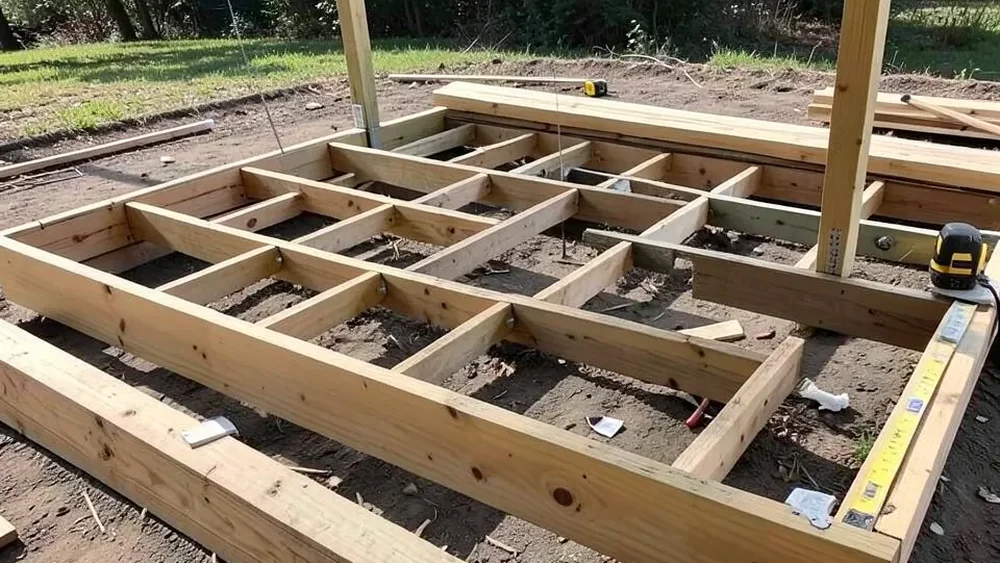
Everything you see on top of a deck sits on a support structure you never see once it’s finished: joists, beams, posts, and concrete footings. Framing lumber is almost always pressure-treated, since it sits in constant contact with the ground or moisture, regardless of what decking material is used above it. Footing depth is set by your local frost line, not by preference – skimping here to save money is the single most common way a budget deck turns into an expensive repair a few years later, since a shifting footing can throw the whole structure out of level.
- Joist size and spacing: Standard is 2×8 or 2×10 lumber at 16 inches on center; closer spacing or larger joists are needed for heavier loads like hot tubs or dense hardwood decking.
- Footings and posts: Concrete footings below the frost line anchor each post; sloped lots or larger decks need more footings, which adds both material and labor cost.
Hardware and Fasteners
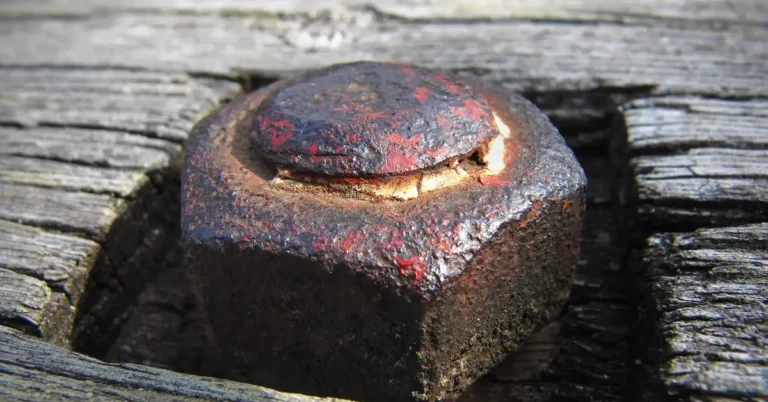
Standard exposed deck screws are the cheapest fastening option and work fine for a budget rebuild. Galvanized or stainless steel is worth the small upcharge over plain steel, since it resists the rust streaks that plain fasteners leave on lighter woods like cedar. Hidden-fastener systems, like the CAMO tool above, cost more in both hardware and install time – typically $3 to $6 more per square foot – but leave a completely smooth surface with no visible screw heads, which matters most on cedar, redwood, or hardwood decking where the wood grain is the whole point.
Labor and Permits
Labor is usually the largest single line item, running roughly $8 to $40 per square foot depending on your region, the contractor’s experience, and how accessible your backyard is. A flat, easy-to-reach lot costs less to build on than a sloped site or a second-story deck that needs extra bracing. Most municipalities also require a building permit for a deck over a certain size or height, typically $100 to $500, which is either rolled into a contractor’s bid or paid separately by the homeowner – skipping the permit can create problems later when you sell the house.
Real Cost Examples by Deck Size
Putting the per-square-foot numbers into real project totals makes budgeting much easier than working from a single average. Here’s what a fully installed deck costs at four common sizes, using the installed cost-per-square-foot ranges above.
| Deck Size | Pressure-Treated Pine | Cedar | Tropical Hardwood |
|---|---|---|---|
| 10×12 ft (120 sq ft) | $1,800 – $3,000 | $3,000 – $4,800 | $6,000 – $9,600 |
| 12×16 ft (192 sq ft) | $2,900 – $4,800 | $4,800 – $7,700 | $9,600 – $15,400 |
| 16×20 ft (320 sq ft) | $4,800 – $8,000 | $8,000 – $12,800 | $16,000 – $25,600 |
| 20×24 ft (480 sq ft) | $7,200 – $12,000 | $12,000 – $19,200 | $24,000 – $38,400 |
These totals assume a simple rectangular deck with basic railings. Add roughly $500 to $2,000 for stairs, $20 to $50 per linear foot for upgraded railings, and $80 to $300 per fixture for deck lighting if you want them – see our deck railing systems guide for railing material options.
DIY vs. Professional Installation Cost
Building your own deck saves the labor portion of the bill, which is typically 40 to 60 percent of the total project cost – on a $8,000 professionally installed deck, that’s $3,200 to $4,800 you keep by doing the work yourself. What you give up is time and a safety net: a DIY build commonly takes several weekends to a few months depending on experience, and you’re responsible for getting the footing depth, joist spacing, and permit inspections right without a contractor’s built-in accountability. If you’ve never built a deck before, our DIY decking guide walks through the tools and skills you’ll actually need before you commit to skipping the labor line item.
Hiring a professional costs more upfront but usually comes with workmanship warranties and existing supplier relationships that can offset some of the labor premium through material discounts. For a first deck, especially one over 30 inches off the ground where a structural mistake is a real safety issue, the labor cost often buys real peace of mind.
How to Lower Your Wood Deck Installation Cost
- Stick with pressure-treated pine for the decking, not just the frame: it’s the only material where the material-to-installed cost gap is smallest, since it needs no special handling.
- Keep the footprint a simple rectangle: curves, multiple levels, and wraparound shapes add labor and waste that a straightforward shape avoids entirely.
- Get at least three written contractor quotes: labor rates for the same job can vary by hundreds or thousands of dollars between contractors in the same area.
- Ask about off-season scheduling: many deck builders lower their rates in late fall and winter when demand drops, especially in regions where outdoor construction slows down seasonally.
- Save hidden fasteners for visible areas only: use standard screws on framing and less-visible boards, and reserve the CAMO-style hidden system for the sections guests actually see.
Frequently Asked Questions
What is the average cost per square foot to build a wood deck?
Answer: Installed cost ranges from about $15 per square foot for pressure-treated pine up to $80 or more per square foot for tropical hardwoods like ipe. Cedar and redwood typically fall in the $25 to $45 per square foot range.
How much does pressure-treated pine decking cost installed?
Answer: Pressure-treated pine typically costs $4 to $8 per square foot for materials alone, or $15 to $25 per square foot fully installed with framing, hardware, and labor included.
Answer: They usually add $3 to $6 per square foot in hardware and install time. That’s worth it on cedar, redwood, or hardwood decking where a smooth, screw-free surface matters; it’s a skippable upgrade on a budget pressure-treated rebuild.
Does the cost of permits factor into the total price?
Answer: Yes. Most municipalities require a building permit for a deck over a certain size or height, typically $100 to $500, which is either included in a contractor’s bid or paid separately by the homeowner.
How can I reduce the cost of my wood deck installation?
Answer: Choose pressure-treated pine, keep the footprint a simple rectangle, get at least three written quotes, ask about off-season contractor pricing, and limit hidden fasteners to the boards you’ll actually see.
Summary
A fully installed wood deck runs $15 to $80+ per square foot depending on material, with pressure-treated pine the budget option and tropical hardwoods the long-lasting premium choice. Labor makes up 50 to 70 percent of that number, so the size and complexity of your design matter more than the wood species alone. Get multiple written quotes, budget for permits and footings up front, and decide early whether hidden fasteners are worth the extra $3 to $6 per square foot for your project.
Sponsored / affiliate links. As an Amazon Associate I earn from qualifying purchases. I may earn additional commission from eligible campaigns.