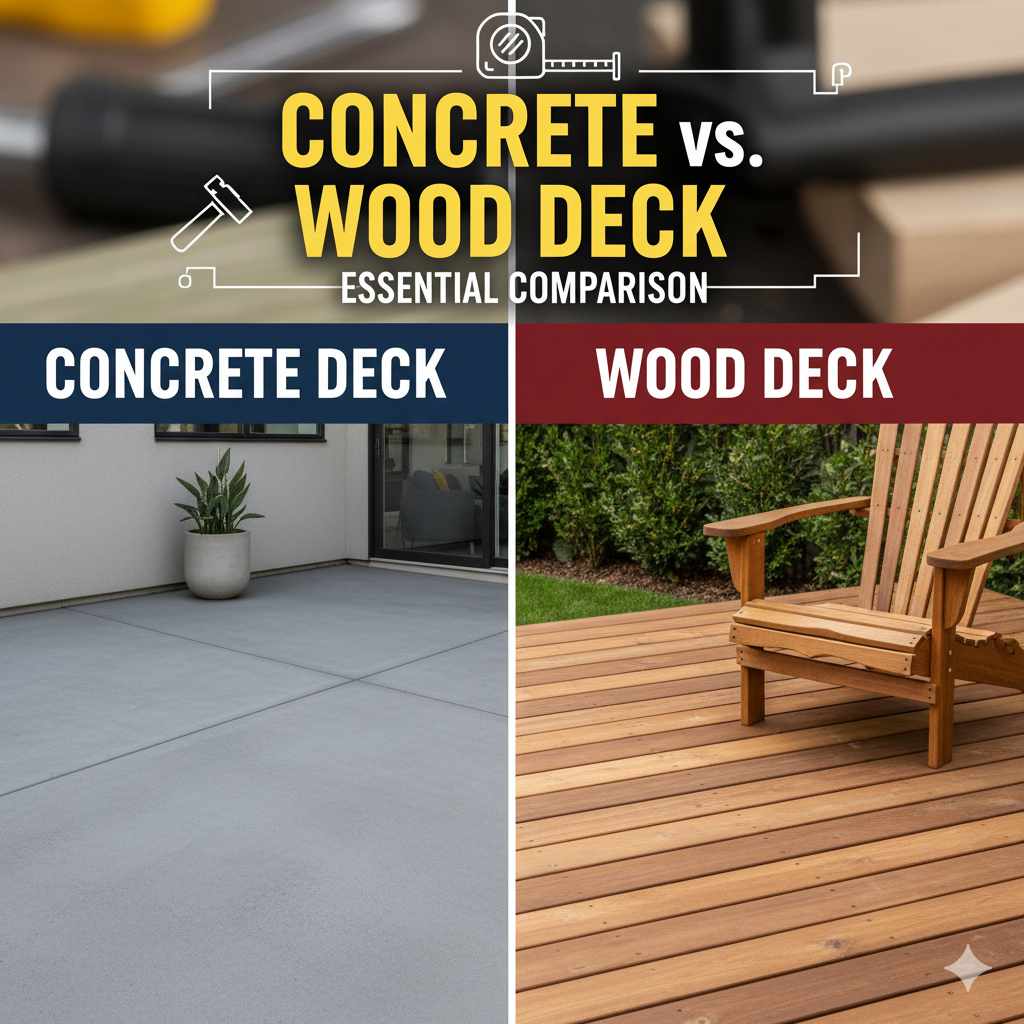
Concrete vs Wood Deck: Essential Comparison
Concrete vs. Wood Deck: For a durable, low-maintenance outdoor space, concrete can offer advantages, while wood provides timeless warmth and DIY flexibility. Choose based on your budget, desired look, and upkeep commitment. This guide breaks down the key differences to help you decide!
Hey there, DIY friends! Md Meraj here, ready to help you tackle a big decision for your outdoor living space: concrete versus wood decks. Thinking about building a deck or patio can feel overwhelming, and choosing the right material is a huge part of that. You want something that looks great, lasts a long time, and doesn’t break the bank or your back with endless upkeep, right? It’s a common puzzle, but don’t you worry! We’re going to break down the pros and cons of each option in plain English. By the end of this, you’ll feel super confident about which material is the perfect fit for your home and your DIY dreams. Let’s start exploring!
Concrete vs. Wood Deck: Key Differences at a Glance
When you’re picturing your ideal backyard oasis, the first thing that comes to mind might be the surface underfoot. That’s where the big choice between concrete and wood decks really comes into play. Both can create beautiful and functional outdoor spaces, but they are quite different in cost, look, feel, maintenance, and even how they get installed. Understanding these core differences is like having a blueprint for your decision-making process.
The Aesthetics: Visual Appeal and Feel
Let’s talk about how each option looks and feels. This is often where our personal preferences really shine through.
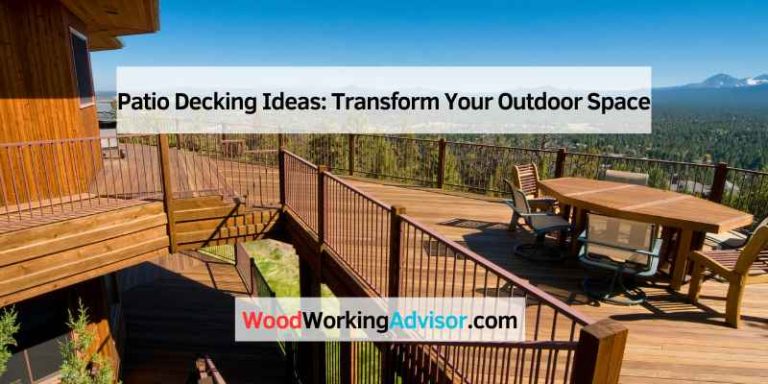
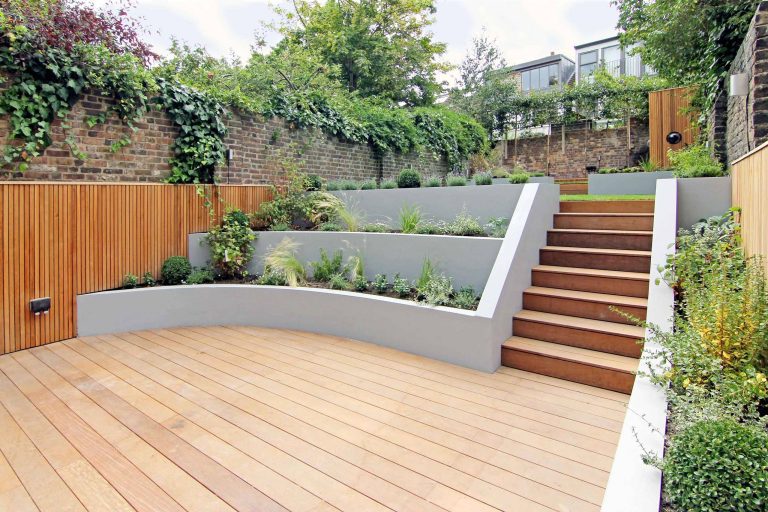
Wood decks bring a classic, natural warmth to any backyard. The organic grain and rich colors of wood like cedar, redwood, or pressure-treated pine create an inviting and traditional feel. It’s a look that many homeowners adore for its timeless elegance. Wood can also be stained or painted in a variety of colors, allowing for a lot of customization to match your home’s exterior.
Concrete, on the other hand, offers a more modern and versatile aesthetic. While plain gray concrete might seem a bit sterile to some, modern concrete patios can be incredibly stylish. They can be stamped to mimic the look of natural stone, brick, or even wood planks. Stains and color additives can also create a wide range of appearances, from earthy tones to bold, contemporary shades. The finish can range from smooth and polished to textured for better grip.
Durability and Longevity: How Long Will It Last?
This is a big one! You’re investing in your home, so you want a material that can stand the test of time, weather, and plenty of backyard parties or quiet evenings.
Wood decks, while beautiful, are susceptible to the elements. Over time, they can warp, rot, crack, and splinter if not properly maintained. Insects like termites can also be a concern. However, with regular sealing, staining, and proper construction, a well-cared-for wood deck can last anywhere from 10 to 30 years, depending on the type of wood and the climate.
Concrete is known for its incredible durability and longevity. It’s highly resistant to rot, insects, and fire. Properly installed and sealed concrete can last for 30 years or even longer, often requiring minimal repairs. Its solid structure means it’s less prone to shifting or settling compared to some other materials, provided the foundation is sound. For more information on concrete durability, you can check out resources from organizations like the Portland Cement Association.
Maintenance Requirements: Upkeep Effort
Let’s be honest, none of us want a weekend chore list as long as our arm! Maintenance is a key factor when comparing concrete and wood decks.
Wood decks demand regular attention. They typically need to be cleaned annually, and then stained or sealed every 1-3 years to protect them from moisture, UV rays, and general wear and tear. Missing a year or two of maintenance can lead to premature aging of the wood, resulting in costly repairs or even replacement much sooner than expected. This can involve power washing, sanding, and re-applying protective finishes.
Concrete, on the other hand, is a champion of low maintenance. The primary care involves occasional sweeping or hosing down to keep it clean. Sealing concrete every 2-5 years can help prevent stains and protect it from harsh weather, especially freezing and thawing cycles, but it’s often less critical than wood sealing. For most homeowners, this translates to much less time and money spent on upkeep.
Cost: Initial Investment and Long-Term Value
Budget is always a significant consideration for any home improvement project. The initial cost and the long-term value of concrete versus wood decks can vary quite a bit.
The initial cost of a wood deck can range significantly depending on the type of wood you choose. Pressure-treated pine is usually the most affordable option for lumber. More exotic hardwoods or composite decking materials can be much more expensive. Installation costs also play a role, especially if you’re hiring professionals.
Concrete patios or slabs typically have a more predictable initial cost, often falling in a mid-range price point. While decorative finishes like stamping or complex staining can increase the price, a basic concrete slab is often less expensive upfront than a comparable-sized deck made from premium wood or composite materials. However, it’s important to consider the lifespan and reduced maintenance costs of concrete when evaluating its long-term value.
Installation and DIY Friendliness
Are you planning a do-it-yourself project, or will you be bringing in the pros? This can heavily influence your material choice.
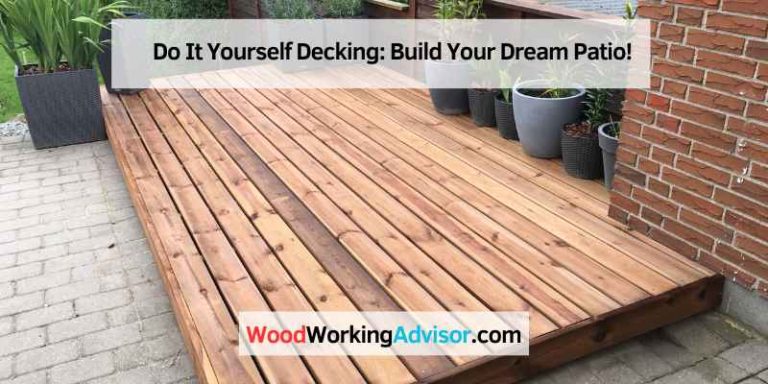
Building a wood deck is a very popular DIY project. With basic carpentry skills, the right tools, and careful planning, many homeowners can successfully build their own wood decks. It involves measuring, cutting lumber, driving screws, and ensuring structural integrity. There are countless guides and resources available to help beginners through the process. For example, the National Association of Home Builders offers some great starting points for DIY projects.
Installing a concrete patio is generally considered a more involved DIY project and often requires specialized skills or equipment. While pouring a simple slab can be done by dedicated DIYers, achieving a professional finish, especially with decorative elements like stamping or intricate designs, often benefits from professional experience. It involves site preparation, pouring, leveling, and finishing concrete, which can be physically demanding and requires precision.
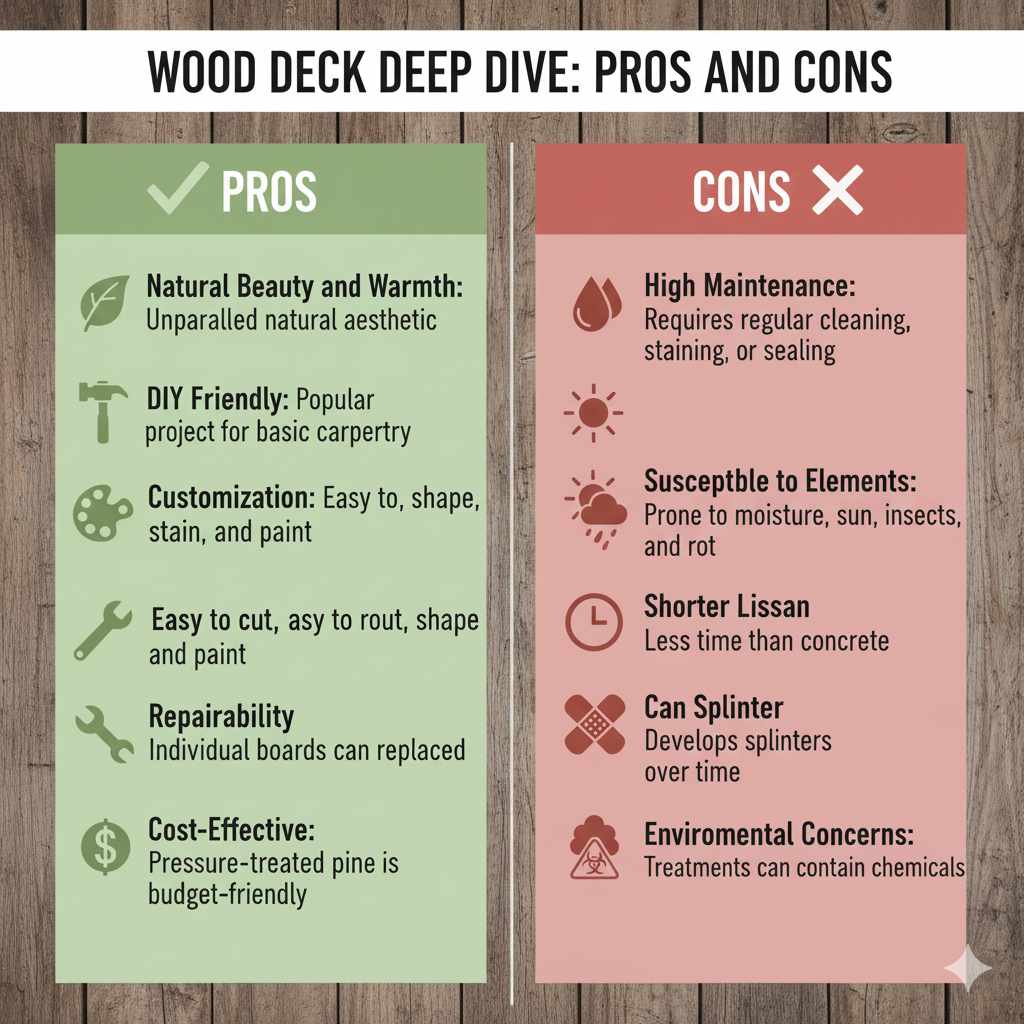
Wood Deck Deep Dive: Pros and Cons
Let’s zoom in on wood decks. They offer a unique charm and a hands-on building experience that many DIYers love.
Pros of Wood Decks:
- Natural Beauty and Warmth: Wood decks provide an unparalleled natural aesthetic that many find incredibly appealing.
- DIY Friendly: Wood decks are one of the most popular DIY projects for homeowners with basic carpentry skills.
- Customization: Easy to cut, shape, and install, offering immense flexibility in design. Staining and painting allow for endless color options.
- Repairability: Individual boards can be replaced if they become damaged, without needing to redo the entire surface.
- Cost-Effective (with some options): Pressure-treated pine can be a very budget-friendly material option.
Cons of Wood Decks:
- High Maintenance: Requires regular cleaning, sanding, staining, or sealing to prevent rot, warping, and fading.
- Susceptible to Elements: Prone to damage from moisture, sun, insects (like termites), and rot.
- Shorter Lifespan (compared to concrete): Even with good maintenance, wood typically lasts less time than concrete.
- Can Splinter: Over time, wood can develop splinters, posing a safety hazard.
- Environmental Concerns: Some wood treatments can contain chemicals.
Concrete Deck/Patio Deep Dive: Pros and Cons
Now, let’s look at what makes concrete a strong contender for your outdoor space. It’s known for its robustness and ease of care.
Pros of Concrete Decks/Patios:
- Exceptional Durability: Highly resistant to rot, insects, fire, and extreme weather conditions.
- Low Maintenance: Requires minimal cleaning and occasional sealing, saving time and effort.
- Long Lifespan: Properly installed concrete can last for decades with very little fuss.
- Versatile Aesthetics: Can be stamped, stained, or colored to mimic other materials or create custom designs.
- Stable Surface: Less prone to shifting or settling than some other outdoor materials.
Cons of Concrete Decks/Patios:
- Less Natural Feel: Can sometimes feel less warm or inviting than wood for those seeking a rustic or natural look.
- Difficult for DIYers: Pouring, finishing, and decorative techniques can be challenging for beginners.
- Potential for Cracking: Can crack over time due to ground movement, freeze-thaw cycles, or improper installation.
- Repairs Can Be Tricky: Patching cracks or stains can be noticeable and difficult to match perfectly.
- Hard Surface: Less forgiving if something fragile is dropped, and can be hard on feet and joints for extended periods.
Concrete vs. Wood Deck: A Comparative Table
To help you see the differences side-by-side, here’s a table laying out the key factors:
| Feature | Wood Deck | Concrete Deck/Patio |
|---|---|---|
| Aesthetics | Natural, warm, classic, customizable with stains/paints | Modern, versatile (can mimic stone, brick, wood), wide color options |
| Durability | Moderate; susceptible to rot, insects, warping (10-30 years with maintenance) | High; resistant to rot, insects, fire (30+ years) |
| Maintenance | High (cleaning, sanding, staining/sealing every 1-3 years) | Low (sweeping, occasional sealing every 2-5 years) |
| Initial Cost | Variable (widest range from affordable pine to expensive hardwoods/composites) | Mid-range (can increase with decorative finishes) |
| DIY Friendliness | High; popular DIY project for those with basic carpentry skills | Moderate to Low; requires more specialized skills/equipment for quality finish |
| Lifespan | 10-30 years (with excellent maintenance) | 30+ years (with proper installation) |
| Repairability | Good; individual boards can be replaced | Difficult; patching can be noticeable |
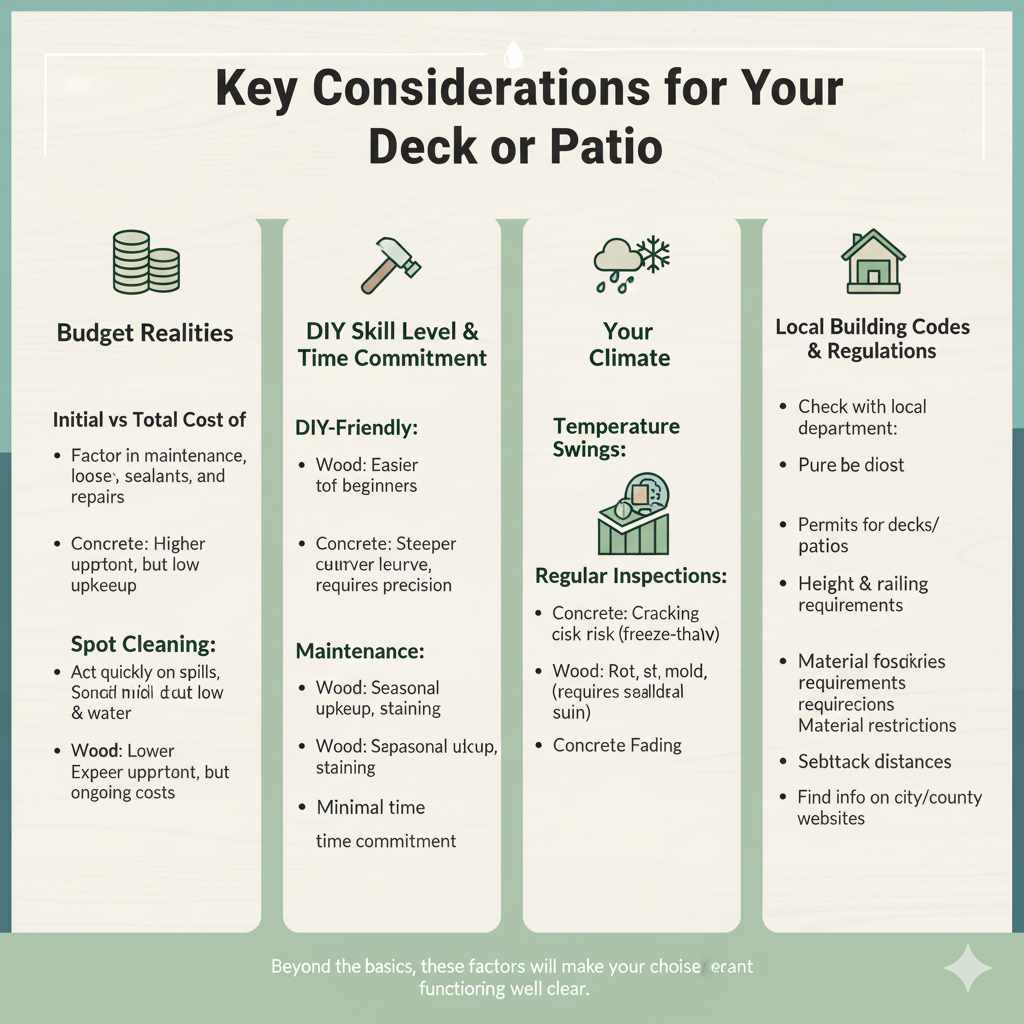
Key Considerations for Your Decision
Beyond the basic pros and cons, there are a few more things to think about that can make your choice crystal clear.
Your Budget Realities
Be honest with yourself about your budget. While a basic pressure-treated wood deck might seem cheaper upfront, factor in the annual cost of sealants, stains, and potential repairs. Concrete might have a slightly higher initial pour cost, but its longevity and minimal upkeep often make it more cost-effective over the decades. Think about the total cost of ownership, not just the price tag on day one.
Your DIY Skill Level and Time Commitment
If you’re new to DIY and want a project you can tackle relatively easily with basic tools, a wood deck is likely your best bet. If you enjoy hands-on work and are willing to learn new skills, concrete can be an option, but be prepared for a steeper learning curve and potentially higher risk of needing professional help for a perfect finish.
Consider how much time you’re willing to spend on maintenance. If weekends are precious and you prefer to relax rather than work on your deck, concrete’s low maintenance is a huge advantage. If you don’t mind the seasonal upkeep and find satisfaction in caring for natural materials, wood might be more rewarding.
Your Climate
Your local climate plays a significant role in how well each material will hold up. In areas with extreme temperature fluctuations or harsh winters, concrete can be prone to cracking if not installed with proper expansion joints and a solid base to manage freeze-thaw cycles. Wood decks in humid or rainy climates require extra diligence with sealing and drainage to prevent rot and mold. In very sunny, dry climates, wood can dry out and crack quicker, while concrete can fade over time without sealants.
Local Building Codes and Regulations
Before you even break ground (or start pouring!), it’s crucial to check with your local building department. They might have specific requirements for deck height, railing safety, material choices, or setback distances, especially for structures attached to your house. Understanding these rules from the start can save you a lot of headaches and potential rework. You can usually find this information on your city or county’s official website, often under planning or building permits. Some areas might require permits for decks, while patios might have different regulations.
Frequently Asked Questions (FAQ)
Here are some common questions beginner DIYers have about concrete versus wood decks:
Q1: Which is cheaper: a concrete deck or a wood deck?
A: A basic pressure-treated wood deck can sometimes be cheaper upfront than a concrete patio. However, when you factor in the cost of regular sealing, stain, and potential repairs over many years, concrete often becomes more cost-effective in the long run due to its durability and low maintenance.
Q2: Is a concrete deck slippery when wet?
A: Plain, smooth concrete can be a bit slippery. However, concrete can be finished with a textured surface, or you can use non-slip sealants and additives to improve traction. Stamped concrete also often has a more textured feel than a smooth finish.
Q3: Can I build a wood deck myself?
A: Yes! Building a wood deck is a very popular DIY project. With careful planning, the right tools, and by following detailed guides and safety practices, many homeowners can successfully build their own wood decks. There are tons of beginner-friendly resources available to help you.
Q4: Is concrete better than wood for a patio?
A: “Better” depends on your priorities. For longevity, minimal maintenance, and resilience to weather and pests, yes, concrete is often considered superior for a patio. If you prefer a natural look and the satisfaction of a DIY wood project, then wood might be preferable, despite requiring more care.
Q5: How long does a concrete patio last?
A: A properly installed and maintained concrete patio can last for 30 years or even much longer. Basic maintenance typically involves occasional cleaning and resealing every few years to protect it from stains and damage.
Q6: Can I stain concrete myself?
A: Yes, staining concrete is a very achievable DIY project. There are various types of stains (acid-based, water-based) and techniques to learn, but with preparation and patience, you can achieve beautiful, custom-colored results. Many tutorials are available online.
Q7: What are the best wood types for a deck?
A: For durability and resistance to rot and insects, pressure-treated pine is a common and affordable choice. Cedar and redwood offer natural resistance and a beautiful look but are more expensive. Composite decking materials are also an excellent, low-maintenance alternative to traditional wood, though they have their own set of pros and cons and are generally pricier upfront.
Conclusion: Making the Right Choice for Your Home
So, there we have it! When it comes to concrete versus wood decks, the “winner” really depends on what you value most for your outdoor living space. If your heart is set on that timeless, natural wood aesthetic and you enjoy the hands-on process of building and maintaining it, a wood deck can be an incredibly rewarding project. It offers warmth, character, and the satisfaction of a classic DIY build.
On the other hand, if you’re looking for a robust, incredibly long-lasting surface that requires minimal fuss and can be customized to look like anything from natural stone to modern art, concrete is a fantastic choice. Its durability and low maintenance make it ideal for busy families or anyone who wants to spend more time enjoying their backyard and less time caring for it. Remember to always consider your budget, your DIY comfort level, your local climate, and any building codes before you commit.
No matter which material you choose, approaching the project with good planning, safety in mind, and a clear understanding of the requirements will lead to a beautiful and functional outdoor space that you’ll enjoy for years to come. Happy building, and may your outdoor projects be successful!