Green Trex Decking Explained: Color Myth vs. Eco-Friendly Facts
“Green Trex Decking” isn’t an actual green-colored board — Trex’s lineup only ships in browns, grays, and reds, and “green” instead describes the material’s recycled content. Every board is made from up to 95% recycled plastic film and reclaimed wood fiber, and Trex has diverted more than 5 billion pounds of plastic from landfills since it started. This guide covers what “green” actually means, the real recycled-content numbers, which existing colors pair best with a green yard, and honest cost comparisons against wood.
Is “Green Trex Decking” Actually a Color?
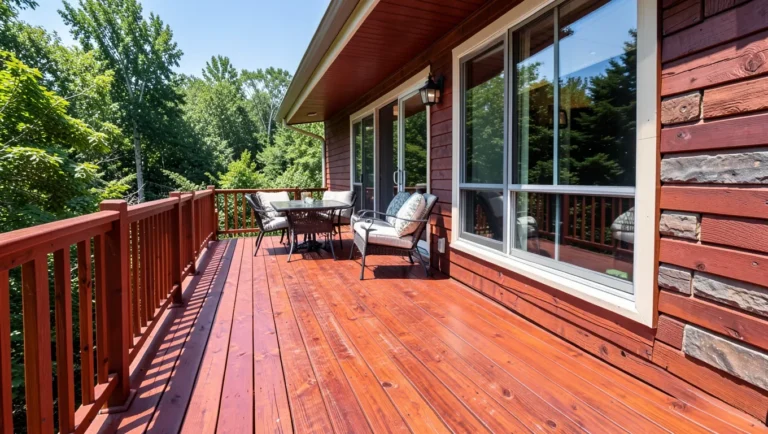
No. Trex composite decking is not sold in an actual green color. The Trex Transcend, Enhance, and Signature lines ship in three color families only: browns, grays, and reds — shades like Havana Gold, Island Mist, Lava Rock, Spiced Rum, Tiki Torch, and Rope Swing. There is no “green” swatch on Trex’s color selector.
“Green Trex decking” is marketing shorthand for the eco-friendly angle, not a paint chip. If you searched for this expecting a literally green-colored deck board to match siding or landscaping, the closest real options are the cooler gray tones (Island Mist) or the darker browns (Lava Rock), which read as neutral against grass and plantings rather than clashing with them.
What “Eco-Friendly” Actually Means: Recycled Content by the Numbers
Trex decking is made from up to 95% recycled and reclaimed materials — primarily reclaimed sawdust and wood fiber blended with recycled plastic film (the kind used for grocery bags, dry-cleaner bags, and shrink wrap). In 2025 alone, Trex sourced roughly 588 million pounds of reclaimed wood fiber and 379 million pounds of plastic film destined for landfills.
📊 Trex has diverted more than 5 billion pounds of plastic from landfills and waterways since the company’s founding — Source: Trex Company, eco-friendly decking overview
Not a single tree is cut down specifically to make Trex boards — the wood component comes from sawmill scraps, pallets, and agricultural waste that would otherwise be discarded. A standard 20×20-foot deck uses over 1,500 pounds of recycled and reclaimed wood and plastic.
“Not a single tree has ever been cut down to make Trex high-performance eco-friendly composite decking.”
Keeping a Trex Deck Looking Its Best
Trex decking needs less upkeep than wood, but “low maintenance” doesn’t mean “no maintenance.” Darker Trex colors show pollen, dust, and surface grime faster than grays and tans, especially through spring pollen season.
- Routine cleaning: Warm water, mild dish soap, and a soft-bristle brush handle most dirt and light grime.
- Grease and food stains: Rinse immediately; the longer a stain sits, the more it sets into the board’s capped surface.
- Tannin bleed and mold: A composite-specific cleaner lifts stains that soap and water leave behind, without stripping the board’s protective cap.
- Never use: Metal-bristle brushes, paint or solid stain (Trex boards can’t be painted or stained), or a pressure washer above 3,100 PSI at close range.
Best Composite Deck Cleaner Pick
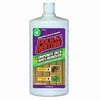 |
Pour-N-Restore Composite Deck Spot Remover – $23.99 A micro-extraction formula made specifically for composite boards like Trex — lifts grease, tannin bleed, and mold stains that a soap-and-water scrub described above won’t fully remove.
|
As an Amazon Associate we earn from qualifying purchases.
Trex Colors That Pair Best With a Green Yard
Since there’s no literal green Trex board, matching a green landscape comes down to picking a neutral that won’t fight with the grass and plantings around it. Cooler grays and darker browns generally read best against green lawns and hedges; warm golds can clash with cool-toned greens.
| Trex Color | Tone Family | Best For |
|---|---|---|
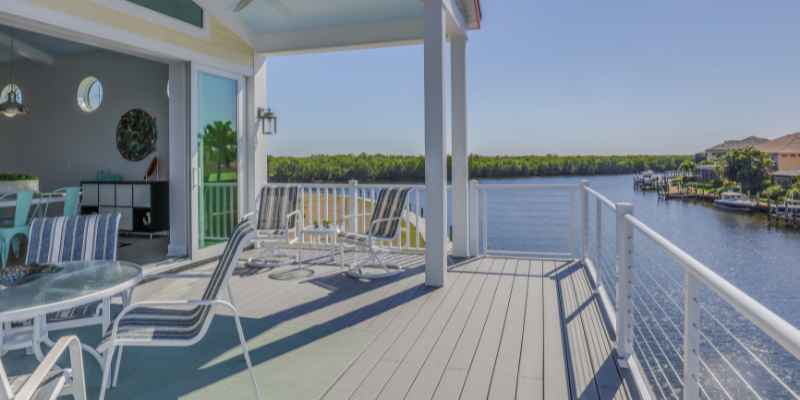
| Island Mist | Cool silver-gray | Green lawns, blue-toned siding, coastal-style homes |
| Lava Rock | Dark charcoal-brown | Modern homes, dense greenery, high-contrast landscaping |
| Rope Swing | Sandy taupe | Natural or cottage-garden landscaping |
| Havana Gold / Tiki Torch | Warm brown | Traditional homes; can clash with cool-toned green plantings |
Trex vs. Traditional Wood: Cost and Lifespan
Trex costs more upfront than pressure-treated wood but lasts roughly twice as long and needs far less annual upkeep. For a full board-by-board price breakdown, see our Trex decking prices guide.
| Item | Pressure-Treated Wood | Trex Composite |
|---|---|---|
| Material cost (per sq. ft.) | $15–$30 | $20–$40 |
| Typical lifespan | 10–15 years | 25–30 years (25-year limited warranty) |
| Annual maintenance | Staining/sealing, ~$250–$350/year | Occasional cleaning, ~$50–$100/year |
| Can be painted or stained? | Yes | No — color is embedded in the board |
Wood wins on upfront price and the ability to change color later. Trex wins on total cost over a 20-year span, since it skips repeated staining and typically doesn’t need board replacement mid-lifespan. For tool and fastener costs specific to a Trex install, see our Trex decking tools guide.

Installation Basics
Trex installs like wood but with a few composite-specific rules. Joists still need to be spaced correctly and boards need room to expand and contract with temperature.
- Space joists 16 inches on-center (12 inches for diagonal patterns or Trex Enhance boards).
- Leave a 1/8-inch gap between board ends and a 1/4-inch gap between boards laid end-to-end, for drainage and thermal movement.
- Use hidden fasteners designed for composite decking, not standard deck screws, to avoid visible screw heads and mushrooming.
- Pre-drill near board ends to prevent splitting the composite shell in cold weather.
- Follow Trex’s fastening schedule exactly — deviating can void the 25-year warranty.
Frequently Asked Questions
Is there an actual green color for Trex decking?
No. Trex decking ships only in brown, gray, and red tone families — colors like Island Mist, Lava Rock, and Havana Gold. There is no green board on Trex’s color selector; “green” refers to the recycled material content, not the color.
What is Green Trex Decking made of?
Trex decking is made from up to 95% recycled and reclaimed materials — primarily reclaimed sawdust and wood fiber combined with recycled plastic film such as grocery bags and shrink wrap. No trees are cut specifically to supply the wood component.
How long does Green Trex Decking last?
Trex composite decking typically lasts 25–30 years and is backed by a 25-year limited residential warranty against fading, staining, and structural defects, roughly double the lifespan of pressure-treated wood decking.
Can Green Trex Decking be painted or stained?
No. Trex decking’s color is embedded through the board rather than applied as a surface coating, so paint and stain won’t adhere properly and can void the manufacturer’s warranty. Regular cleaning is the only recommended way to maintain its appearance.
Is Trex decking really eco-friendly, or is that just marketing?
It’s backed by real numbers, not just marketing language. Trex boards use up to 95% recycled content, the company has diverted more than 5 billion pounds of plastic from landfills and waterways since its founding, and no trees are cut specifically to supply the wood fiber used.
Conclusion
“Green Trex Decking” describes recycled content, not a paint chip — the boards themselves come only in browns, grays, and reds. If the eco-angle is what drew you here, the numbers hold up: up to 95% recycled material, no trees cut for the wood fiber, and a 25-year warranty that outlasts most pressure-treated wood decks two to one. Pick a cooler gray or darker brown if you want the color to blend with a green yard, and budget for a composite-specific cleaner rather than paint or stain.
Sponsored / affiliate links. As an Amazon Associate I earn from qualifying purchases. I may earn additional commission from eligible campaigns.