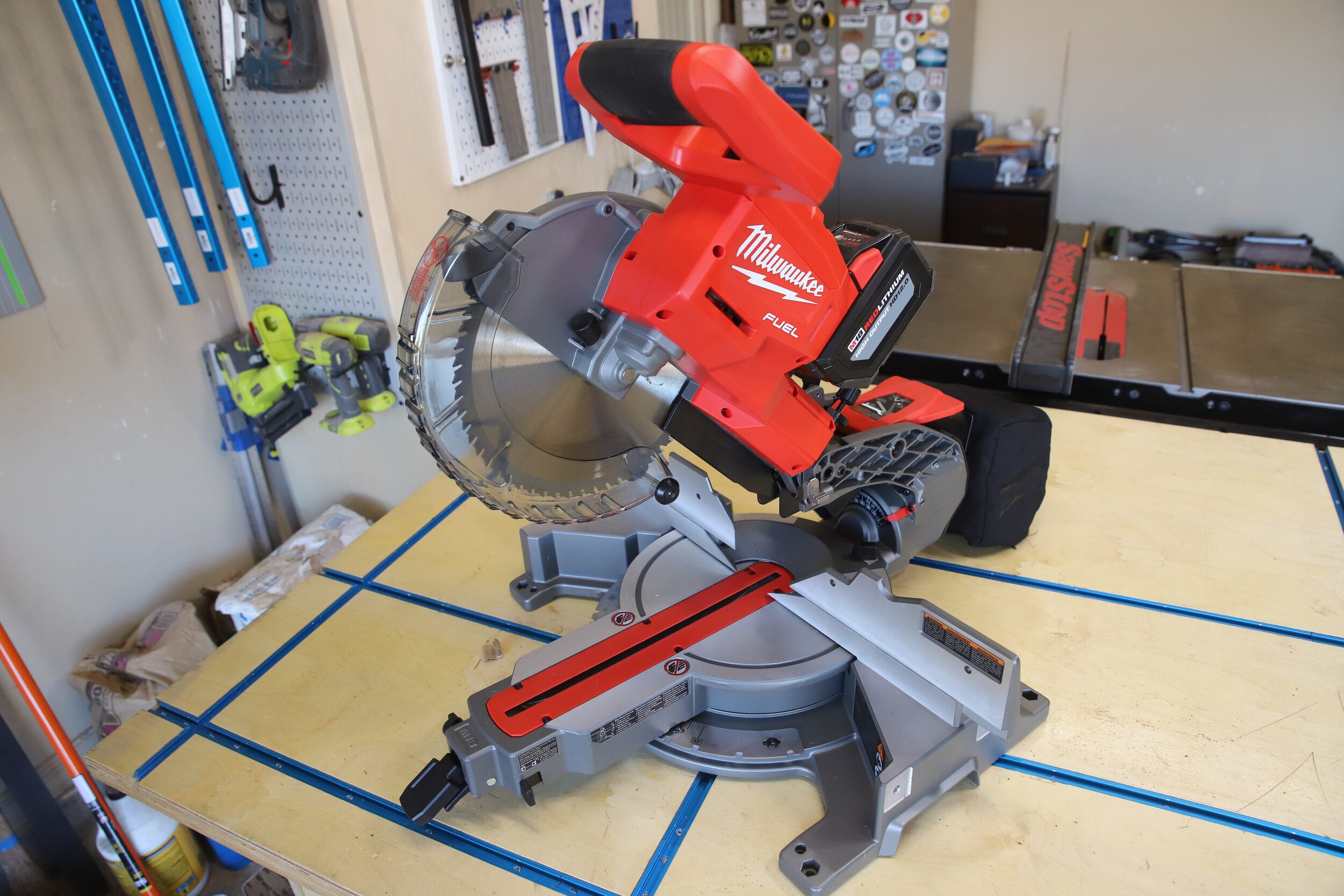
Corded vs Cordless Miter Saw: The Power-vs-Mobility Tradeoff Explained
A corded miter saw plugged into a wall outlet delivers full torque on cut number one and full torque on cut two hundred — the motor never knows the difference. A cordless miter saw can’t make that promise: as the battery discharges, output sags, and a saw that breezed through the first stack of boards can bog down by the last one. That’s the real tradeoff, and it isn’t a debate about which tool is “better” — it’s about which weakness you’re willing to live with.
This guide breaks down what actually changes between corded and cordless miter saws: how much power each one holds under load, how far a cordless battery really goes before it’s spent, what that mobility is genuinely worth on a job site, and which type fits the work you actually do.
Corded Miter Saws: Consistent Power for Demanding Cuts
Best Corded Pick for Power Consistency
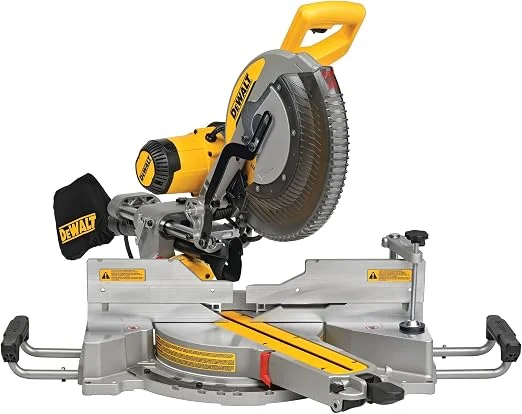 |
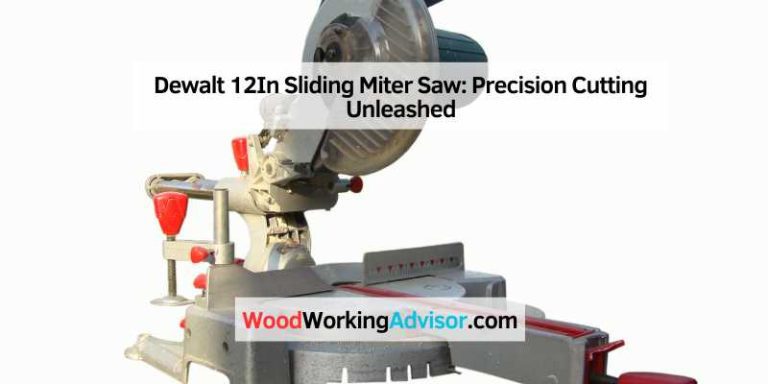
DEWALT DWS780 12″ Sliding Compound Miter Saw – $649 The corded pick we’d reach for when a job calls for holding full cutting power through a long run of hardwood, with no battery to watch.
|
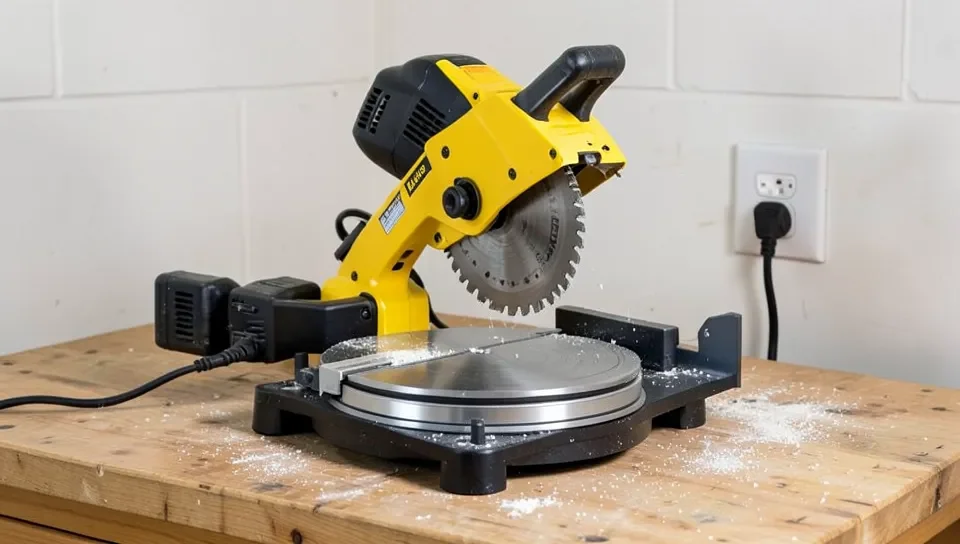
Every corded miter saw sold today runs off a standard 120-volt household circuit, and most draw a full 15 amps — the maximum a standard outlet and cord can safely deliver. That amperage doesn’t taper. Plug the saw in and the motor gets the same voltage on the fiftieth cut as it did on the first, whether you’re working through kiln-dried pine or a stack of dense red oak.
That matters most in two situations: repetitive cutting and dense hardwood. A framing crew cutting studs all day, or a trim carpenter running crown molding through a whole house, needs a saw that doesn’t slow down as the job goes on. Hardwoods like oak and hard maple sit in the 1,000–2,000 Janka hardness range, compared to roughly 400–800 for softwoods like pine and cedar — the motor has to work harder to hold blade speed through that denser material, and a corded saw has the continuous amperage to do it without any concern for a charge level. If you want more corded options at this size, our compact compound miter saw comparison covers several side by side.
The tradeoff is the cord itself. You’re tied to an outlet, and on some job sites — a bare-framed second floor, an outdoor deck mid-build — that means running an extension cord, which is its own hassle and a genuine tripping hazard underfoot.
Cordless Miter Saws: Real Mobility, Real Battery Tradeoffs
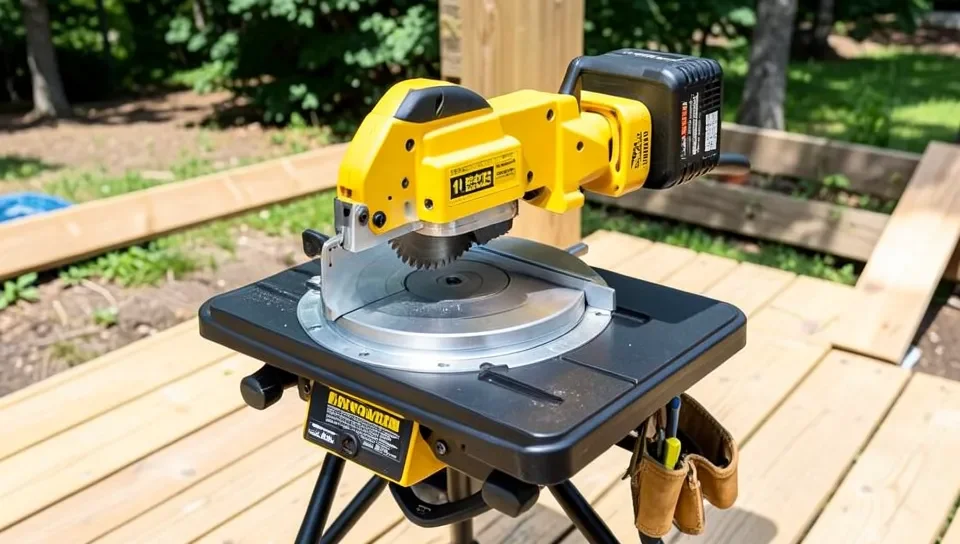
The appeal of a cordless miter saw isn’t marketing spin — it’s genuinely easier to move around a job site with no cord to manage, no extension cord to trip over, and no outlet to hunt for. Set it up on a job-site stand, make your cuts, and move to the next room or the other side of the deck without unplugging anything. A compact model like the DeWalt 7-1/4″ cordless miter saw is small and light enough to carry in one hand between stations.
But that mobility comes from a battery, and batteries have real limits a corded saw doesn’t share. Manufacturer testing gives a sense of scale: a Makita 18V cordless 10-inch miter saw is rated for roughly 334 crosscuts through 2×4 lumber on a single charge, while Milwaukee’s M18 platform with a 12.0Ah battery is rated for over 400. Those numbers sound generous until you factor in what you’re actually cutting. Softwood dimensional lumber like the 2×4s used in that testing draws relatively little current per cut. Dense hardwood draws more, because the motor needs more current to hold blade speed against denser material — so the same battery that handles 300-plus cuts in pine runs out meaningfully faster in oak or maple.
Battery cost is the other piece generic comparisons tend to skip. A replacement high-capacity battery pack for a large cordless miter saw platform — DeWalt’s 60V FlexVolt 9.0Ah pack, for example — runs roughly $110–150 on its own, and older or smaller packs like the 18V replacement packs common on compact saws add up the same way. If you want a second pack charging while the first is in use, that’s real money added on top of the saw’s price before you’ve made a single cut — a cost a corded saw’s owner never pays.
Cutting Power and Precision Side by Side
| Factor | Corded | Cordless |
|---|---|---|
| Power source | 120V wall outlet, ~15 amps continuous | 18V–60V battery pack |
| Power under load | Constant — no fade as the job goes on | Tapers as the charge drops (voltage sag) |
| Typical blade speed | 3,800–4,800 RPM, steady | Similar when fresh; drops as battery depletes |
| Best for | Long runs, dense hardwood, all-day shop use | Short jobs, moving between locations, no outlet nearby |
| Ongoing cost | None beyond electricity | Replacement battery packs, ~$110–150+ each |
Portability and Job-Site Practicality
Cordless is genuinely more portable in the sense that matters most on a job site: nothing tethers the saw to a wall. That’s a real advantage on a framed-but-not-wired addition, an outdoor deck, or any job where you’re setting up and breaking down in several spots in one day. It’s worth noting the weight claim gets oversold for the bigger saws, though — a 12-inch cordless sliding compound saw with a battery installed often weighs close to what its corded equivalent weighs, since the battery pack itself isn’t light. The real portability win is eliminating the outlet dependency, not shaving pounds off the tool.
Corded saws stay put more naturally, which is exactly right for a dedicated shop or garage setup where the saw lives in one place on a stand next to an outlet. If that describes your setup, the cord is a non-issue and you keep the power-consistency advantage with none of the mobility tradeoff.
Cost: Upfront Price vs Long-Term Battery Spend
Corded miter saws are usually the cheaper upfront purchase, and the saw itself is the last thing you’ll spend money on — there’s no battery platform to buy into. Cordless saws are frequently sold “tool only,” meaning the battery and charger are a separate purchase on top of the saw price, and that’s before you factor in a second pack for all-day use.
That said, if you already own batteries on a manufacturer’s platform from other cordless tools, a tool-only cordless miter saw can come out cheaper than buying a corded saw plus an extension cord setup. The real math is platform-specific: check what batteries you already own before assuming either type is the better deal.
Safety Considerations for Both Types
Both types share the same core safety features: a spring-loaded blade guard that retracts only as the arm lowers into the cut, a fence that holds the workpiece square, and a locking mechanism to secure the head when the saw isn’t in use. Keep hands well clear of the blade path, wear eye and hearing protection, and never remove or defeat the blade guard.
The one safety difference that’s actually specific to power source: a cordless saw with no cord underfoot removes one real job-site hazard — tripping over an extension cord snaking across a work area. It’s a genuine safety point, not just a convenience one, especially on a cluttered job site with multiple tools running at once.
Which Should You Actually Choose?
If your work happens mostly in one place — a home shop, a garage, a dedicated cut station — and involves long runs of trim, framing lumber, or hardwood, a corded saw is the more practical choice. You get full, consistent power for as long as the job takes, with no battery cost added to the tool’s price.
If you’re moving between rooms, floors, or outdoor locations without reliable outlet access — punch-list work, remodeling, deck building — a cordless saw’s mobility is worth the battery tradeoff, especially for lighter dimensional lumber and softwood where battery life holds up well. Many working pros split the difference: a corded saw anchored in the shop for volume cutting, and a compact cordless saw for on-site work where dragging a cord isn’t practical.
Frequently Asked Questions
Is a Corded or Cordless Miter Saw More Powerful?
A corded miter saw is more consistently powerful. It draws current directly from a 120-volt outlet at a steady 15 amps with no drop-off, while a cordless saw’s output tapers as its battery discharges — a phenomenon called voltage sag. A fresh, fully-charged high-capacity battery can briefly match a corded saw’s torque, but that output isn’t sustained the way wall power is.
How Many Cuts Can a Cordless Miter Saw Battery Make?
It depends heavily on the platform and what you’re cutting. Manufacturer ratings put a Makita 18V 10-inch cordless miter saw at roughly 334 crosscuts through 2×4 lumber per charge, and Milwaukee’s M18 saw with a 12.0Ah battery at over 400. Those figures are for softwood dimensional lumber; expect noticeably fewer cuts in dense hardwood.
Does Cutting Hardwood Drain a Cordless Miter Saw Battery Faster?
Yes. Hardwoods such as oak and hard maple (roughly 1,000–2,000 on the Janka hardness scale) require more motor current to maintain blade speed than softwoods like pine or cedar (roughly 400–800 Janka). That extra current draw shortens the number of cuts you’ll get from a single charge compared to cutting softer material.
Is It Better to Push or Pull a Sliding Miter Saw?
Push a sliding miter saw through the cut for better control. Pushing keeps the blade moving away from you into the material in a stable, predictable motion, which reduces the risk of kickback. See our full breakdown of sliding vs. standard miter saws for more on technique and when a sliding saw is worth the extra capacity.
Conclusion
The corded-vs-cordless choice really comes down to one question: is your work fixed in one place, or does it move? Corded miter saws win on power you can count on through the whole job, at a lower upfront cost. Cordless saws win on genuine mobility and eliminate the cord/outlet hassle entirely, at the cost of battery life that shrinks with denser wood and a real ongoing battery expense. Match the saw to where and what you actually cut, and either type will serve you well.
Sponsored / affiliate links. As an Amazon Associate I earn from qualifying purchases. I may earn additional commission from eligible campaigns.