Craftsman 7-1/4″ Compound Miter Saw: Corded vs Cordless V20
“Craftsman 7-1/4-inch compound miter saw” actually covers two different products — a corded, fixed (non-sliding) single-bevel saw (model CMXEMAX69434509, roughly $99-149) and a cordless V20 sliding version (CMCS714M1, roughly $199-298 as a kit) that runs on Craftsman’s battery platform. Confusing the two means comparing the wrong specs and crosscut capacity. This guide separates what each model actually does, so you buy the one that fits your job.
Two Different Craftsman 7-1/4″ Saws
Best Cordless Craftsman 7-1/4″ Pick
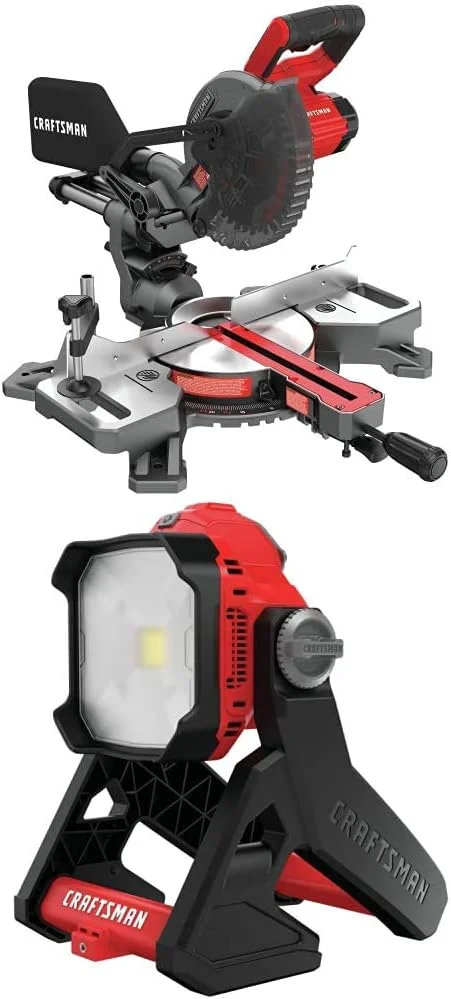 |
CRAFTSMAN V20 7-1/4″ Cordless Sliding Miter Saw Kit – $298.38 This is the real cordless Craftsman 7-1/4″ saw — a separate product line from the corded single-bevel model, not a battery version of the same tool.
|
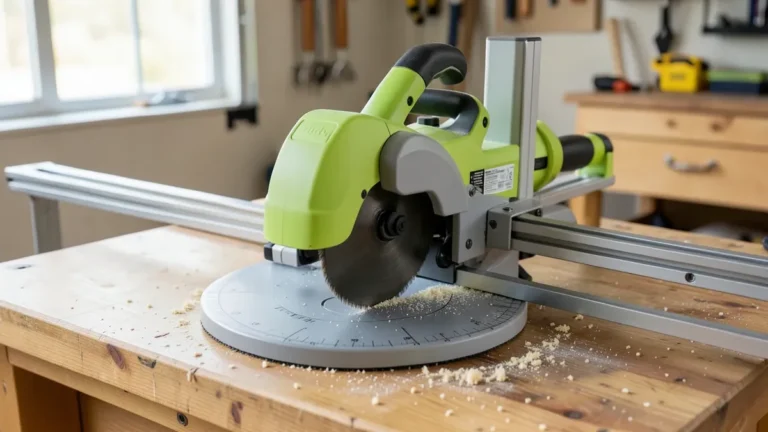
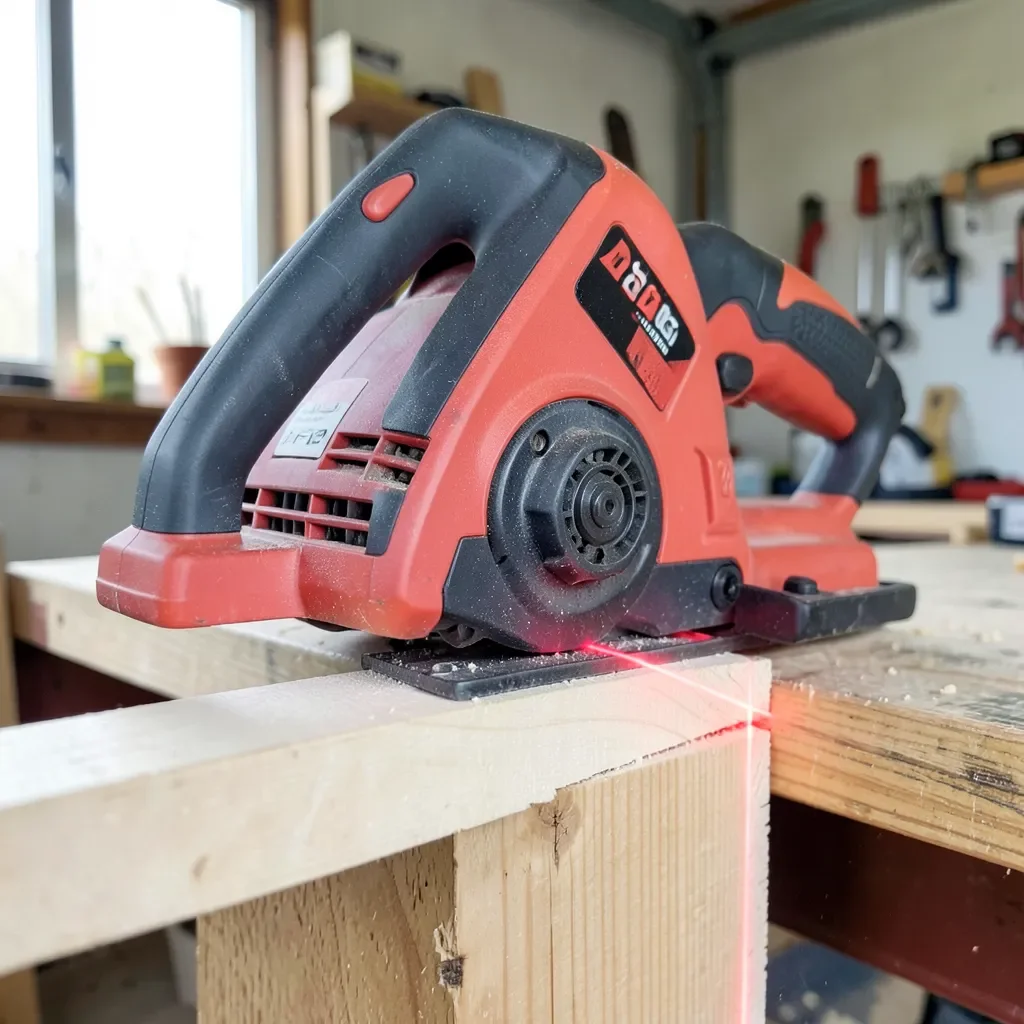
Craftsman’s corded 7-1/4″ line (model CMXEMAX69434509) is a fixed-head, single-bevel compound saw: a 9-amp motor at 5,800 RPM, 0-45° bevel, 9 miter detent stops from 0-47° left and right, and a laser guide. Because it doesn’t slide, its crosscut capacity tops out at 4-1/4 inches — fine for most trim and framing lumber, tight for wide baseboard in one pass.
Key Features of the Corded Model
- 9-amp motor, 5,800 RPM: enough power for framing lumber and most trim without bogging down.
- Single bevel, 0-45°: tilts one direction only — flip the workpiece to cut the opposite bevel.
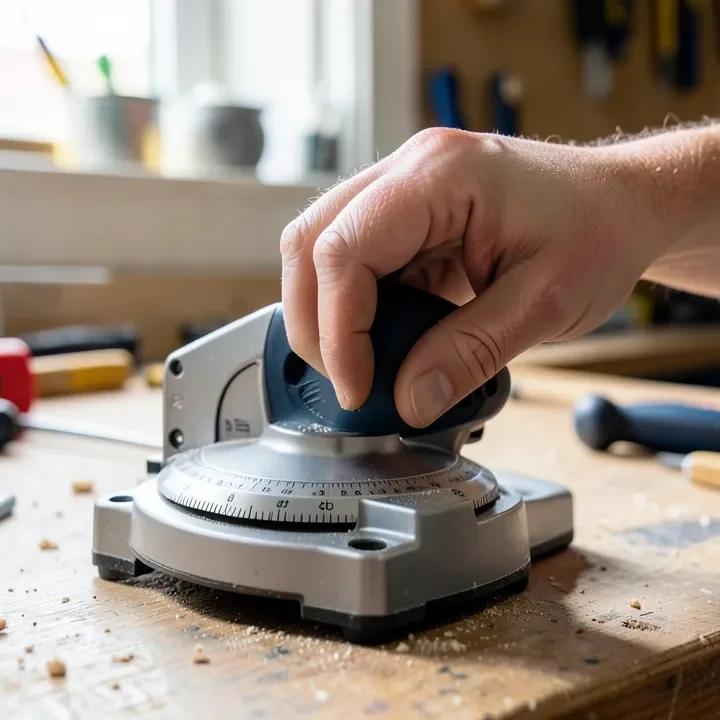
- 9 miter detent stops, 0-47° L/R: click-stop accuracy at common angles without a protractor.
- Laser guide: projects a visible line so you can align the cut before the blade touches the material.
- 1.5″ dust port: connects to a shop vac or standard dust collection hose.
Compound Cuts: Crosscuts, Miters, and Bevels
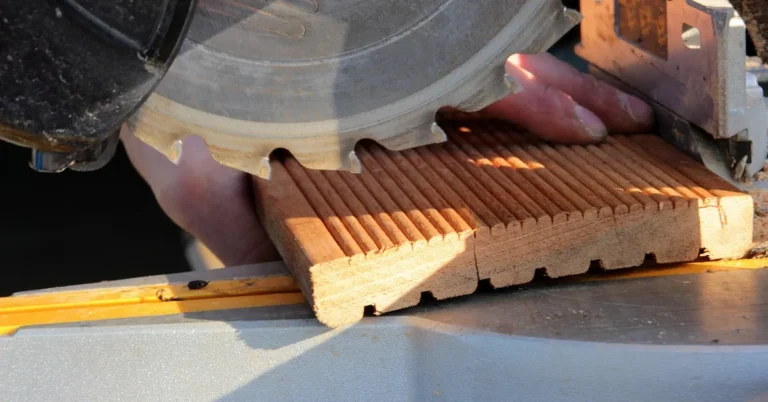
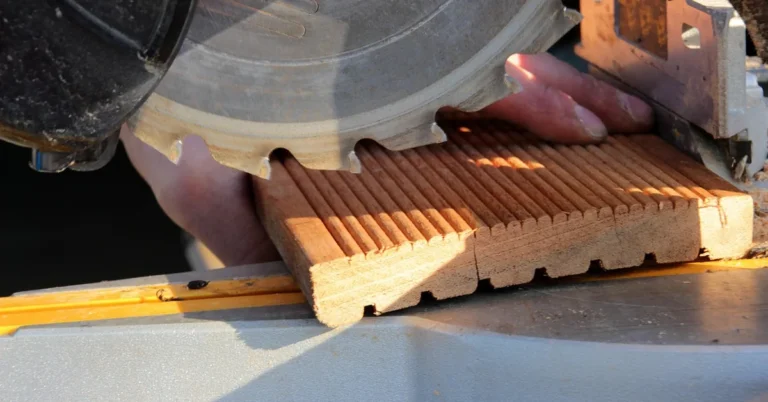
“Compound” means the saw can combine a miter angle (side to side) with a bevel angle (blade tilt) in a single cut — what crown molding and many trim joints require. A basic crosscut uses neither angle; a miter cut angles the workpiece; a bevel cut tilts the blade; a compound cut uses both together.
Choosing and Changing the Blade
A fine-toothed blade (60+ teeth) gives a cleaner edge on trim and molding; a coarser blade (24-40 teeth) clears material faster on framing lumber. To swap blades: unplug the saw, remove the blade guard, loosen the arbor bolt, swap blades with the teeth facing the correct rotation direction, and retighten fully before plugging back in.
Cordless V20 Sliding Model: What’s Different
The cordless CMCS714M1 shares the 7-1/4″ blade size and single-bevel design but adds sliding rails, which is where its 8-inch crosscut capacity at 90° comes from — nearly double the corded model’s fixed 4-1/4 inches. It runs on Craftsman’s V20 battery platform (20V max), which also powers the brand’s drills, saws, and other cordless tools, so the battery can double up across your other Craftsman cordless gear.
📊 The corded Craftsman CMXEMAX69434509 crosscuts up to 4-1/4 inches; the cordless V20 sliding CMCS714M1 crosscuts up to 8 inches at 90° and 5-1/2 inches at 45°. Source: Craftsman official product specifications
Where to Buy and What to Expect to Pay
The corded single-bevel model is typically sold through Lowe’s and Ace Hardware in the roughly $99-149 range depending on promotions. The cordless V20 sliding kit runs $199 for the bare saw with battery and charger, up to around $298 for bundles that add an LED work light or extra battery — available through Amazon, Lowe’s, and Ace Hardware. Prices fluctuate with sales, so check current listings rather than treating any single number as fixed.
Maintenance and Troubleshooting
- Clean the blade and vents: clear sawdust after every use to prevent buildup and keep the motor from overheating.
- Check alignment periodically: vibration can walk the miter detent plate out of true over time.
- Inspect the power cord (corded model): replace at the first sign of fraying or damage.
| Issue | Likely Fix |
|---|---|
| Blade wobbles or cuts rough | Check the arbor nut for looseness; inspect the blade for bends or missing teeth |
| Motor bogs down or overheats | Clear dust from vents; avoid feeding the cut faster than the blade clears chips |
| Cuts aren’t square | Check the miter detent plate and fence against a known-accurate square |
| Cordless model loses power mid-cut | Check battery charge; a partially depleted battery can bog down under load before it fully dies |
Frequently Asked Questions
How wide a board will a Craftsman 7-1/4-inch miter saw cut?
It depends which model. The corded single-bevel CMXEMAX69434509 crosscuts up to 4-1/4 inches. The cordless V20 sliding model (CMCS714M1) crosscuts up to 8 inches at 90 degrees and 5-1/2 inches at 45 degrees, since its sliding rails add reach the fixed corded model doesn’t have.
How much can a Craftsman 7-1/4-inch miter saw cut through?
The corded CMXEMAX69434509 is rated for 2×4 dimensional lumber at 90 degrees. Always check material thickness against the specific model’s spec sheet before cutting, since capacity varies between the corded and sliding cordless versions.
Why choose a 7-1/4-inch miter saw over a 10 or 12-inch model?
A 7-1/4-inch saw is lighter and more compact for hauling between jobsites or storing in a small shop, and it’s usually priced well under a comparable 10 or 12-inch saw. The tradeoff is less crosscut capacity for wide trim and baseboard.
What’s the difference between a miter saw and a compound miter saw?
A basic miter saw only pivots left and right for angled crosscuts. A compound miter saw adds a bevel tilt, letting you combine a miter angle and a bevel angle in one cut — needed for crown molding and other angled trim work.
Is the Craftsman 7-1/4-inch miter saw sliding or fixed?
Craftsman sells both versions under this blade size: the corded CMXEMAX69434509 is a fixed (non-sliding) single-bevel compound saw, while the CMXEMAX69434504 (corded) and CMCS714M1 (cordless V20) add a sliding rail system for wider crosscuts.
Final Thoughts
Pick the corded CMXEMAX69434509 for a lightweight, budget-friendly saw for trim and framing where 4-1/4″ crosscut capacity is enough. Pick the cordless V20 sliding CMCS714M1 for jobsite portability and the wider 8″ crosscut a sliding rail adds — just budget for the higher price and the battery ecosystem that comes with it.
Sponsored / affiliate links. As an Amazon Associate I earn from qualifying purchases. I may earn additional commission from eligible campaigns.