DeWalt Battery Reciprocating Saw: Which 20V Model to Buy (2026)
DeWalt sells four current cordless reciprocating saws, and the differences between them come down to three things: strokes per minute, weight, and whether the battery platform is 20V MAX or FlexVolt 60V MAX. Picking the wrong one usually means either paying for power you don’t need or running out of it halfway through a demo job.
What a DeWalt Battery Reciprocating Saw Actually Does
Best All-Around 20V Pick
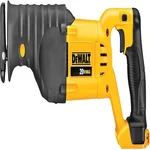 |
DEWALT 20V MAX Reciprocating Saw, Tool Only (DCS380B) – $129.00 3,000 strokes per minute with a keyless 4-position blade clamp, so you can flip the blade for flush or overhead cuts without extra tools – the model most owners land on for mixed wood-and-metal demo work.
|
A reciprocating saw drives a blade back and forth in a straight line rather than spinning it, which is what lets it cut flush against a wall stud, through a nail-embedded 2×4, or through a pipe in a spot a circular saw could never reach. Cordless models trade a small amount of raw power for the ability to work anywhere – no cord to run through a crawlspace or drag across a roof.
Why Battery Platform Matters More Than the Saw Itself
Every DeWalt cordless reciprocating saw is sold “tool only” as the default option, because DeWalt assumes most buyers already have batteries from a drill, impact driver, or another 20V MAX tool. If this would be your first 20V MAX tool, price out a battery-and-charger kit before comparing saw prices – the battery is often the larger part of the real cost.
Comparing the Current DeWalt Lineup
Here’s how the four current models stack up on the specs that actually change how a job goes, not the marketing copy:
| Model | Battery Platform | Best For |
|---|---|---|
| DCS387 (Compact) | 20V MAX | Tight spaces, one-handed pruning and light demo |
| DCS380 (Standard) | 20V MAX | General demo, framing, mixed wood/metal cutting – 3,000 SPM |
| DCS369 (Atomic) | 20V MAX | Brushless compact option where weight matters most |
| DCS389 (FlexVolt) | 60V MAX | Heavy demolition, thick timber, all-day contractor use |
For most homeowners tackling occasional demo, pruning, or repair work, the standard DCS380 hits the best balance of power and price. Contractors running the saw for hours at a stretch are usually the ones who see a real return from stepping up to the FlexVolt DCS389.
Picking the Right Blade
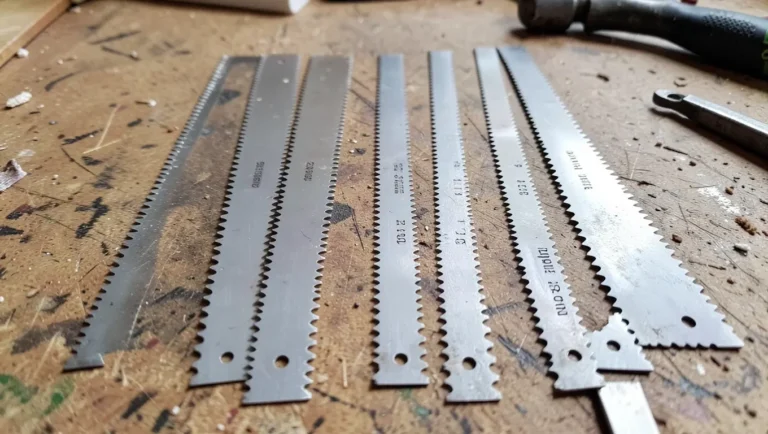
The saw matters less than most buyers assume – the blade decides whether a cut goes well. A coarse 6–10 TPI (teeth per inch) wood blade cuts fast through clean lumber but dulls almost instantly against a nail or metal fastener. A bi-metal blade in the 14–24 TPI range is built for metal, pipe, and nail-embedded demo material, and it’s what to reach for any time you’re not sure what’s hiding inside the material you’re cutting.
- Wood blade (6–10 TPI): Fast, clean cuts in lumber and plywood with no embedded metal
- Bi-metal blade (14–24 TPI): Pipe, nail-embedded framing, and general demo where you can’t see what’s inside the cut
- Pruning blade: Wider-set teeth designed for green wood and branches without binding on sap
Using It Safely and Effectively
- Match the blade to the material before you start – swapping mid-cut because you guessed wrong costs more time than checking first.
- Insert the blade fully into the keyless clamp until it seats; a partially-seated blade can walk loose under the saw’s own vibration.
- Confirm the battery is locked in – a saw that cuts out mid-stroke because a battery shifted is a common beginner surprise.
- Brace the shoe against the work surface rather than holding the saw away from it; this is what actually controls vibration, not gripping harder.
- Let the stroke speed do the cutting – forcing the saw forward faster than the blade wants to go is what snaps blades and burns motors.
Where a Reciprocating Saw Beats Other Tools
A circular saw or miter saw cuts a cleaner, straighter line, but neither can reach into a wall cavity, cut flush against a stud, or plunge into the middle of a board the way a reciprocating saw can. That’s why it’s the tool of choice for demo, rough plumbing and electrical work, and any cut where visibility or access – not precision – is the limiting factor. For cuts that need a clean, exact edge, a jigsaw or circular saw is still the better call.
Buying and Cost-Saving Tips
Buy tool-only if you already own a compatible DeWalt battery – it’s routinely $50–$80 cheaper than a kit with a battery and charger bundled in. If you already own DeWalt 20V MAX batteries from another tool, they’ll work here without any adapter. Blades are the real recurring cost, so buying a mixed multi-pack (wood and bi-metal) up front is cheaper than replacing them one at a time as they dull.
Conclusion
For most home shops and occasional job-site use, the standard 20V MAX DCS380 covers demo, framing, and pipe work without the added weight or cost of stepping up to FlexVolt. Buy tool-only if your battery drawer already has a charge, keep both a wood and a bi-metal blade on hand, and let the saw’s stroke speed – not your arm – do the cutting.
FAQs
What’s the best DeWalt battery reciprocating saw for beginners?
The DCS387 is the easiest to start with. It’s a compact 20V MAX saw that’s noticeably lighter than the DCS380 or the FlexVolt DCS389, which makes it easier to control one-handed in tight spaces like between wall studs. Since it’s sold tool-only, you’ll need a compatible 20V MAX battery if you don’t already own DeWalt tools.
How long does the battery last on a cut?
It depends far more on the material than the battery’s rated amp-hours. A 5.0Ah battery can run through dozens of quick pruning or nail-embedded demo cuts, but sustained cutting through thick metal pipe or dense lumber drains a pack much faster. Keeping a second battery charged and ready is standard practice for anyone doing a full afternoon of demo work.
Is a cordless reciprocating saw better than a corded one like the DWE305?
Cordless wins for mobility – you’re not tethered to an outlet or dragging a cord through a job site. A corded saw like the DWE305 wins when you need to run continuously for a long stretch without stopping to swap batteries. Most homeowners doing occasional demo or pruning are better served by cordless; contractors running the saw all day often keep both.
How do I change the blade on a DeWalt reciprocating saw?
DeWalt’s keyless clamp needs no tools. Rotate the collar (the exact direction is marked on the housing) to open the clamp, pull the old blade out, insert the new one until it seats, and release the collar to lock it. The 4-position clamp on newer models like the DCS380 also lets you mount the blade upside-down or sideways for flush and overhead cuts.
Can a DeWalt reciprocating saw cut metal?
Yes, with the right blade. A bi-metal blade with a higher TPI (teeth per inch) – typically 14-24 TPI – is built for metal, pipe, and nail-embedded demo lumber, while a coarser wood blade (6-10 TPI) is faster through clean lumber but will dull almost immediately on metal. Keeping one of each in the case is worth the few extra dollars.
Sponsored / affiliate links. As an Amazon Associate I earn from qualifying purchases. I may earn additional commission from eligible campaigns.