DeWalt Drill and Reciprocating Saw Combo Kit: Which One to Buy?
DeWalt does not sell just one drill-and-reciprocating-saw combo, and the saw inside each kit is not the same tool. The 5-tool DCK540D1 pairs a DCD777 drill with the compact DCS387 saw, while the standalone DCS380 saw adds a 1-1/8-inch stroke and 4-position blade clamp the compact version skips. This guide covers which pairing to buy, how the saws actually differ, and how to buy the pieces separately if the 2-tool bundle is out of stock. Open to other brands? See our guide to drill and reciprocating saw combo kits across DeWalt, Milwaukee, Ryobi, and Makita.
Quick Answer
The 5-tool DCK540D1 ($549) is the most reliable way to get a DeWalt drill and reciprocating saw together right now, since the standalone 2-tool DCK294P2 and DCK292L2 bundles are frequently out of stock. Already own one half? Add the DCS380P1 saw ($219.99) or the DCD996P2 drill ($489) on their own.
What’s Actually Inside a DeWalt Drill and Reciprocating Saw Combo Kit
Best Drill + Reciprocating Saw Bundle Pick
DEWALT 20V MAX 5-Tool Combo Kit (DCK540D1)
Pairs a DCD777 drill with a DCS387 compact reciprocating saw, plus an impact driver, circular saw, and oscillating tool on one 5Ah battery.
- Best for: Getting a real drill and reciprocating saw together in one in-stock kit
- Why we picked it: The only currently-live DeWalt bundle that includes both a drill and a reciprocating saw, plus three more tools on the same battery
- Main drawback: The included saw is the compact DCS387, not the higher-stroke DCS380 — fine for most cuts, not ideal for daily flush demolition work
Compare more DeWalt drill and reciprocating saw options
 Option 1 DCS380P1 Reciprocating Saw (Battery + Charger)
|
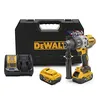 Option 2 DCD996P2 Hammer Drill Kit (2 Batteries)
|
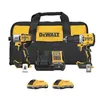 Option 3 DCK250QQ2 Impact Driver + Hammer Drill Combo
|
As an Amazon Associate we earn from qualifying purchases.
“DeWalt drill and reciprocating saw combo” is not one product — it is a category, and DeWalt has changed which drill and which saw it bundles together more than once. The 2-tool bundles most people picture (DCK294P2 and DCK292L2) pair a DCD996 brushless hammer drill with a reciprocating saw, but even those two kits do not use the same saw. DCK292L2 includes the full-power DCS380; other kits and multi-tool bundles ship the lighter DCS381 or the compact DCS367/DCS387 instead.
The table below compiles the real specs for each drill and saw DeWalt uses across its current combo kits, pulled from DeWalt’s own product listings and retailer spec sheets.
| Component | Model | Key Spec | Best For |
|---|---|---|---|
| Premium drill | DCD996 | 841 in-lbs torque, 3-speed (0-450/1,300/2,000 RPM), 1/2 in. ratcheting chuck | Heavy fastening, masonry bits |
| Standard drill | DCD777 | 340 unit watts out, single-speed, brushed motor | Everyday drilling and driving |
| Full-power saw | DCS380 | 0-3,000 SPM, 1-1/8 in. stroke, 4-position blade clamp, adjustable shoe | Flush cuts, daily demolition |
| Reduced saw | DCS381 | 1 in. stroke, one-direction blade clamp, fixed (non-adjustable) shoe | Occasional, light-duty cutting |
| Compact saw | DCS367 / DCS387 | 0-2,900 SPM, 1-1/8 in. stroke, ~5 lbs, brushless | Tight spaces, one-handed use |
Specs compiled from DeWalt product listings and retailer spec sheets, current as of this update.
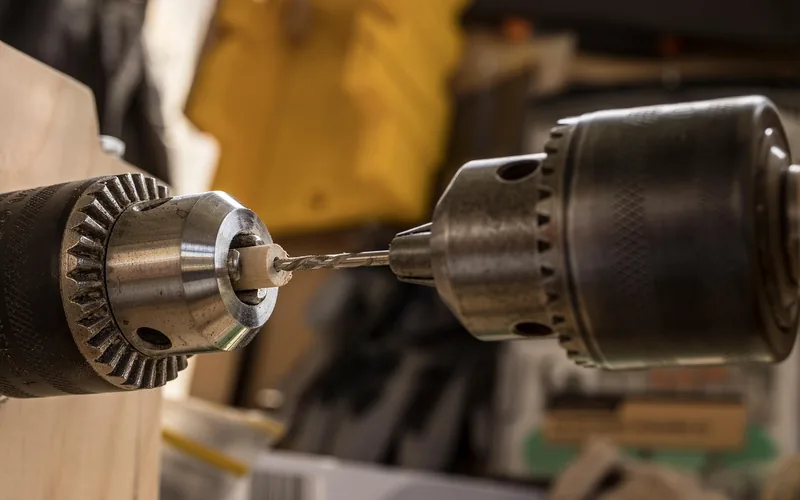
Compact vs Full-Size DeWalt Reciprocating Saw: Why It Matters
A DeWalt reciprocating saw is a straight-line cutting tool that drives a blade back and forth, and DeWalt sells it in two meaningfully different forms: a full-power version with a longer stroke and adjustable shoe, and a lighter version built for tight spaces. Picking the wrong one for your work is the single biggest regret buyers report with these kits.
The Full-Power DCS380
The DCS380 delivers a 1-1/8-inch stroke at up to 3,000 strokes per minute, with a 4-position keyless blade clamp that lets you angle the blade for flush cuts against a wall or floor, plus a pivoting adjustable shoe that extends blade life and controls depth of cut. This is the saw serious remodelers reach for.
The Reduced DCS381
The DCS381 trims the stroke to 1 inch, drops to a one-direction blade clamp, and removes the adjustable shoe entirely. It still cuts wood, PVC, and thin metal fine for occasional jobs, but flush cuts and heavy demolition are where it falls short of the DCS380.
The Compact DCS367 / DCS387
At roughly 5 lbs and about 14.5 inches long, the compact saw is built to fit between wall studs and other tight spots one-handed. It keeps the same 1-1/8-inch stroke as the DCS380 but tops out slightly lower at 2,900 SPM, and it is the saw bundled into the 5-tool DCK540D1 kit.
Is a DeWalt Combo Kit Actually Worth It?
Buying a combo kit almost always beats buying each DeWalt tool separately, because the batteries and charger are the expensive part. A single 5Ah 20V MAX battery runs $99 or more on its own, and a charger adds another $50-plus — costs a combo kit spreads across every tool in the box instead of charging you once per tool.
The catch is you only save money on tools you would have bought anyway. If you only need a drill, buying the DCK540D1 5-tool kit for the drill alone is not a bargain — buy the bare drill and add batteries you already own instead. Combo kits pay off specifically when you were already planning to buy two or more of the included tools.
Using the Combo for Demolition, Framing, and General Repairs
The reciprocating saw handles the rough, fast cuts: opening up drywall, cutting through embedded nails, trimming pipe, and pruning branches. The drill handles the precision side — driving screws, boring pilot holes, and running fasteners are where it earns its half of the kit. Blade changes on both current DeWalt saws are tool-free.
- Demolition: a coarse-tooth (3-6 TPI) wood blade clears studs and framing fast; switch to a bi-metal blade the moment you hit an embedded nail.
- Framing and renovation: the drill’s variable-speed trigger and multiple gear ranges let you match torque to fastener size instead of stripping screw heads.
- General repairs: a fine-tooth (14-24 TPI) blade in the saw is what actually cuts clean through metal pipe or conduit — a coarse wood blade will just grab and stall.
Maintenance Tips to Keep Both Tools Running
Both tools survive years of use if you keep dust out of the vents and store batteries partially charged rather than dead. Wipe sawdust off after every session — it is what clogs ventilation slots and causes the overheating cutoff to trigger mid-cut.
- Overheating: let the tool cool before continuing, and check the vent slots for packed sawdust first.
- Battery capacity dropping: lithium-ion batteries lose capacity when stored fully dead or fully charged for long periods — top off to roughly 50% for storage longer than a few weeks.
- Blade not seating: on the DCS380 and DCS367, pull the collar fully back before inserting a blade; a half-retracted clamp is the most common reason a blade will not lock.
- Chuck slipping: hand-tighten the drill’s ratcheting chuck until it clicks 2-3 times — a chuck that is snug but not ratcheted will slip under load.
Common Mistakes When Buying a DeWalt Combo Kit
Most buyer regret with these kits traces back to one of three mistakes, all avoidable by checking the exact model number before ordering.
- Assuming every combo kit includes a reciprocating saw. Several popular 2-tool DeWalt kits pair a drill with an impact driver instead — check the box contents, not just the “DeWalt combo kit” search result.
- Not checking which saw is inside. A listing that just says “reciprocating saw” without a DCS model number could be the full-power DCS380 or the reduced DCS381 — the difference is a real stroke-length and blade-clamp downgrade, not marketing.
- Buying a multi-tool kit for one tool. If you only need the saw or only need the drill, a 5-tool bundle is rarely the cheapest way to get it — price the standalone tool-plus-battery kit first.
Frequently Asked Questions
What’s included in a DeWalt drill and reciprocating saw combo kit?
At minimum, a drill and a reciprocating saw sharing one battery platform, plus two batteries, a charger, and usually a soft case or bag. Multi-tool kits like the DCK540D1 add an impact driver, circular saw, and oscillating tool on the same batteries.
What’s the difference between the DeWalt DCS380 and DCS381 reciprocating saws?
The DCS380 has a longer 1-1/8-inch stroke, a 4-position blade clamp for flush cuts, and an adjustable shoe. The DCS381 has a shorter 1-inch stroke, a one-direction clamp, and a fixed shoe. Both accept the same universal-shank blades, but the DCS380 cuts faster and handles flush cuts the DCS381 cannot.
Can you buy the DeWalt drill and reciprocating saw separately?
Yes. The DCS380P1 reciprocating saw and DCD996P2 hammer drill are both sold as standalone kits with their own battery and charger, and bare-tool versions (DCS380B, DCD996B) are available if you already own compatible 20V MAX batteries.
What does the “Type” number mean on a DeWalt drill?
It is a manufacturing revision code, not a power-source indicator — it does not mean corded versus cordless. DeWalt assigns a new Type number when a tool undergoes a production update, which matters mainly for finding the correct replacement parts, not for choosing which drill to buy.
Can you use any blade on a DeWalt reciprocating saw?
Yes, as long as the blade has a universal tang (shank) — the standard for reciprocating saw blades across brands. DeWalt’s keyless blade clamps accept blades from other manufacturers, not just DeWalt-branded ones.
What’s the difference between a reciprocating saw and a brushless reciprocating saw?
A brushless motor has no physical brushes to wear out, so it runs cooler, needs less maintenance, and typically delivers longer runtime per charge than a brushed motor of similar size. The DCS367 and DCS387 use brushless motors; older and budget DeWalt saws use brushed motors.
Conclusion
There is no single “DeWalt drill and reciprocating saw combo” — there is a lineup, and the saw inside each kit is the detail that actually decides whether it fits your work. Check the DCS model number before buying, favor the 5-tool DCK540D1 if the true 2-tool bundles are out of stock, and buy the DCS380 or DCD996 separately if you already own half the pair.
Sponsored / affiliate links. As an Amazon Associate I earn from qualifying purchases. I may earn additional commission from eligible campaigns.