Warrior 6 Amp Reciprocating Saw Review: Worth It at $30?
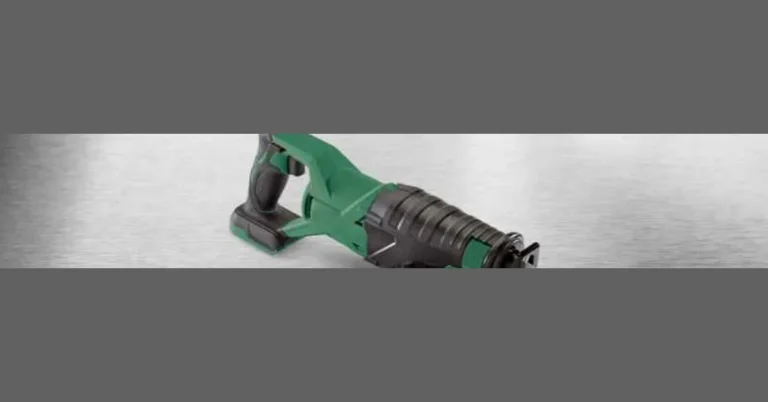
The Warrior 6 Amp Reciprocating Saw is Harbor Freight’s budget corded recip saw, and at roughly $30-40 it’s the cheapest way to get a rotating handle and variable-speed trigger in this tool category. It won’t out-cut a 12-amp DeWalt or Milwaukee on heavy demolition, but for trimming branches, cutting PVC, or tearing into an old shelf, it does the job at a fraction of the price.
Because it’s a Harbor Freight house brand, it isn’t sold through Amazon or other major retailers — you’ll only find it at Harbor Freight stores or harborfreight.com. What you can buy anywhere, including Amazon, are quality blades to pair with it, which matters more for cut quality than the saw itself in this price bracket.
What Is the Warrior 6 Amp Reciprocating Saw?
Blades That Actually Matter More Than the Saw
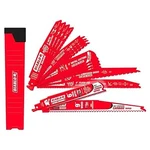 |
Diablo 14-Piece Bi-Metal Reciprocating Blade Set – $29.97 The Warrior saw ships with zero blades, so this is effectively part of the real purchase cost — a mix of 6″ and 9″ wood, metal, and demolition blades covers nearly every job this saw is suited for.
|
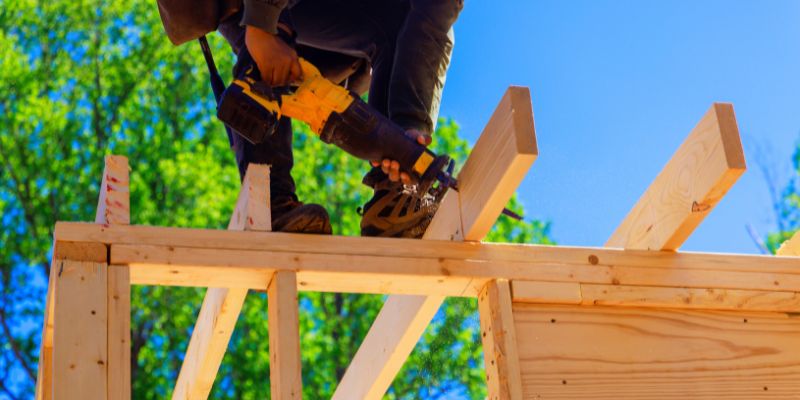
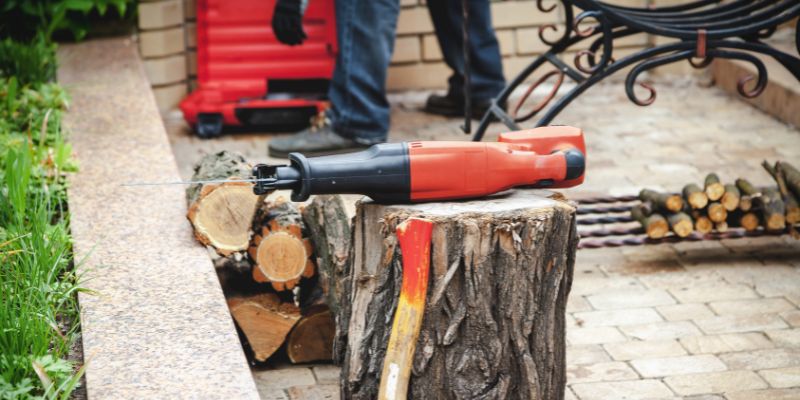
It’s a corded power tool that moves a blade back and forth at high speed — essentially a motorized hand saw. This one runs a 6-amp motor, has a 180-degree rotating handle for cutting at awkward angles, and a variable-speed trigger. At around 6 pounds it’s light enough to hold overhead or at odd angles without your arm giving out quickly, and it cuts wood, metal, PVC, and drywall with the right blade installed.
What You Need to Actually Use It
- The saw itself: $30-40 at Harbor Freight, tool only.
- Blades: not included — budget another $10-30 depending on the set, since you’ll want at least wood and metal options on hand.
- Safety gear: safety glasses, gloves, and ear protection; the motor is loud enough at full speed that hearing protection isn’t optional for extended use.
- A 12-gauge extension cord, at least 25 feet, for anything outdoors — being corded is this saw’s main practical limitation.
- A stable work surface like a sawhorse; a wobbly work piece is the single biggest cause of wandering, jagged cuts with any reciprocating saw.
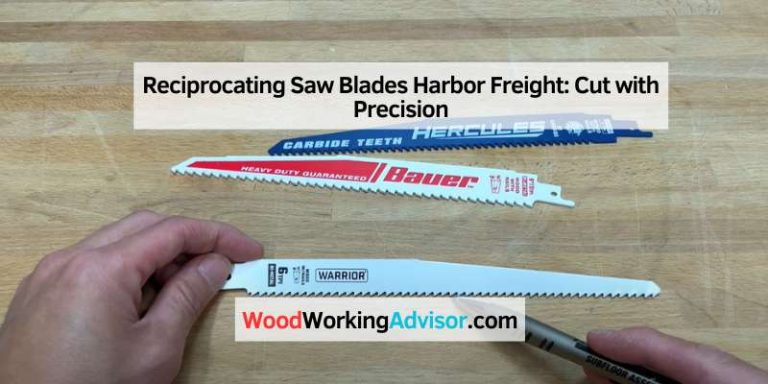
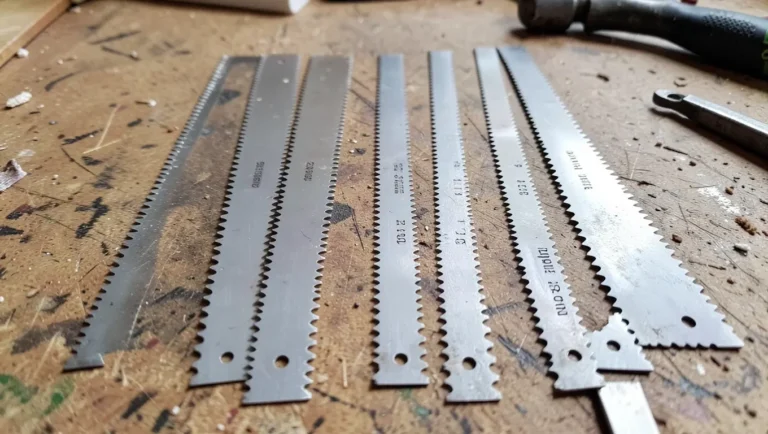
Blade choice matters more than most beginners expect. Wood blades run 6-10 TPI (teeth per inch) with larger, more aggressive teeth for fast material removal in lumber and branches. Metal blades run 14-24 TPI — more, finer teeth that won’t rip out on hard material. Using a wood blade on metal pipe (or vice versa) either stalls the saw or wrecks the blade within seconds.
| Blade Type | Best For | Teeth Per Inch (TPI) | Typical Cost |
|---|---|---|---|
| Wood blade | Lumber, branches | 6-10 TPI | $5-10 each |
| Metal blade | Pipes, nails | 14-24 TPI | $6-12 each |
| Multi-purpose blade | Mixed materials | 10-14 TPI | $8-15 each |
Two Beginner-Friendly Projects
Building a Simple Planter Box
- Measure and mark: four 12-inch pieces for the sides and four 14-inch pieces for the base and top frame, cut from 2×4 stock.
- Attach a wood blade, plug in the saw, and put on your safety gear.
- Cut along your marked lines at a light, steady trigger pressure — going slow gives a cleaner edge than forcing the saw through fast.
- Assemble with screws or nails into a box shape, then add soil and plants.
Trimming Overgrown Branches
With a wood blade installed, mark where you want to cut and use the rotating handle to find a comfortable angle before starting — that’s the actual advantage this feature gives you over a fixed-handle saw when reaching into a tree canopy or an awkward corner.
Benefits and Drawbacks
Benefits
- Affordable: a fraction of the cost of a comparable DeWalt or Milwaukee corded saw.
- Versatile: cuts wood, metal, PVC, and drywall with the right blade.
- Beginner-friendly: the rotating handle and variable-speed trigger make it easy to control.
- Lightweight: around 6 pounds, manageable for extended one-handed sections of a cut.
Drawbacks
- Corded: needs an outlet or extension cord, a real limitation for yard work far from the house.
- No blade included: budget for that separately from day one.
- Not built for heavy-duty work: a 12-amp saw handles thick metal and large timbers with far less strain on the motor.
| Feature | Warrior 6 Amp | DeWalt 12-Amp (DWE305) |
|---|---|---|
| Price | $30-40 | $100-120 |
| Weight | ~6 lbs | ~8.1 lbs |
| Power | 6 amps | 12 amps |
| Rotating handle | Yes | No |
Common Mistakes to Avoid
- Wrong blade for the material: a wood blade on metal (or the reverse) either stalls immediately or destroys the blade within a few strokes.
- Forcing the saw: let the motor and blade do the cutting; pushing hard causes wandering, jagged cuts and premature blade wear.
- Skipping safety gear: loose debris and blade kickback are real risks with any reciprocating saw — glasses and gloves are non-negotiable.
- Not checking blade tightness: a loose blade wobbles mid-cut and ruins accuracy fast.
Alternatives Worth Considering
| Option | Pros | Cons | Typical Cost |
|---|---|---|---|
| Warrior 6 Amp | Affordable, versatile | Corded, no blade included | $30-40 |
| Bauer 20V cordless | Portable, no cord | Battery life limited | $60-80 |
| DeWalt 12-amp corded | More power, name-brand support | Heavier, pricier | $100-120 |
Frequently Asked Questions
What can the Warrior 6 Amp Reciprocating Saw cut?
Wood, metal, PVC pipe, and drywall, provided you match the blade to the material. Wood blades run 6-10 TPI, metal blades run 14-24 TPI, and multi-purpose blades split the difference at 10-14 TPI for mixed jobs.
Is the Warrior 6 Amp saw good for beginners?
Yes. The rotating handle and variable-speed trigger make it easy to control even with no prior power-tool experience, and its lower power ceiling compared to a 12-amp saw actually makes it more forgiving to learn on.
Do I need to buy blades separately?
Yes, the saw ships with no blades included. Budget $10-30 for a starter set covering wood, metal, and mixed-material cutting, since you’ll typically need more than one blade type within your first few projects.
Can I use it for heavy-duty jobs?
It handles light-to-medium tasks like cutting 2x4s, small pipes, and drywall well. For thick metal stock or large timbers, a 12-amp saw puts far less strain on the motor and gets through the material faster.
Where can I buy the Warrior 6 Amp Reciprocating Saw?
Only at Harbor Freight stores or harborfreight.com — it’s a Harbor Freight house brand and isn’t sold through Amazon or other major retailers. Blades and accessories for it, however, are widely available from other brands like Diablo or Milwaukee.
Conclusion
The Warrior 6 Amp Reciprocating Saw is a solid budget pick for light-to-medium DIY cutting — wood, PVC, thin metal, drywall — at a fraction of what a name-brand saw costs. It won’t replace a 12-amp saw for heavy demolition, and since it ships without blades, a good starter blade set is really part of the real cost of getting started with it.
Sponsored / affiliate links. As an Amazon Associate I earn from qualifying purchases. I may earn additional commission from eligible campaigns.