Difference between 1/2 And 3/8 Drill: Key Facts You Must Know
When you’re picking a drill bit, choosing between a 1/2 inch and a 3/8 inch size might seem simple. But knowing the exact difference can save you time, effort, and even prevent damage to your project.
If you want your work to be precise and efficient, understanding which drill bit to use for your task is key. Keep reading, and you’ll discover what makes these two sizes unique and how to decide which one fits your needs perfectly.
Size Comparison
Understanding the size difference between 1/2 and 3/8 drills helps choose the right tool. These sizes refer to the drill bit diameter. The size affects the hole’s width and the drill’s use. Small changes in diameter can change the hole’s fit and strength.
Diameter Measurements
The 1/2 drill bit has a diameter of 0.5 inches. The 3/8 drill bit measures 0.375 inches in diameter. This means the 1/2 bit is larger by 0.125 inches. Even this small difference changes the size of the hole significantly.
Diameter size affects how much material the drill removes. A bigger diameter takes out more material. This makes the hole wider and deeper. A smaller diameter bit drills smaller, more precise holes.
Impact On Hole Size
The hole size depends directly on the drill bit diameter. A 1/2 drill bit makes a wider hole than a 3/8 bit. This matters for fitting screws, bolts, or anchors. Using a bit that is too big or small can cause problems.
For example, a 1/2 inch hole allows larger fasteners. A 3/8 inch hole fits smaller fasteners better. Choosing the right size ensures a secure fit and strong hold. It also helps avoid damage to the material.

Material Compatibility
Choosing the right drill size depends on the material you want to work with. The 1/2 inch and 3/8 inch drills serve different purposes based on material strength and thickness. Knowing which drill fits your project ensures cleaner holes and better results.
Different materials require different drill sizes for best performance. Harder materials often need larger drill bits to prevent damage. Softer materials can work well with smaller drills to avoid splitting or cracking.
Best Uses For 1/2 Drill
The 1/2 inch drill is strong and fits larger drill bits. It works well on thick wood, metal sheets, and dense plastic. This drill handles tough materials without overheating or breaking. It is good for heavy-duty tasks like building decks or metal frames.
Use a 1/2 inch drill for drilling holes in hardwood floors or steel pipes. Its power makes it ideal for construction and industrial jobs. It also performs well on thick masonry and concrete with the right drill bit.
Best Uses For 3/8 Drill
The 3/8 inch drill is lighter and easier to control. It suits softer woods, light metal, and plastic parts. This size is perfect for home repairs and small DIY projects.
Use a 3/8 inch drill for furniture assembly, hanging shelves, or drilling holes in drywall. It works well on thin metal sheets and soft plastics without causing damage. Its compact size fits tight spaces and delicate jobs.
Drill Bit Types
Drill bit types vary depending on the task and material. Choosing the right bit helps you drill smoothly and accurately. The size difference between 1/2 and 3/8 drill bits is clear, but the type also matters a lot. Different drill bits serve different purposes. Understanding their materials, coatings, and designs is key for good results.
Common Materials And Coatings
Drill bits come in many materials like high-speed steel (HSS), cobalt, and carbide. HSS is good for wood and soft metals. Cobalt bits are stronger and resist heat better. Carbide bits cut hard materials like concrete or tile.
Coatings improve bit life and performance. Titanium coating reduces friction and lasts longer. Black oxide coating prevents rust and improves durability. Each coating suits different jobs and materials.
Specialized Bit Designs
Drill bits have special shapes for certain tasks. Twist bits are the most common and work well on wood and metal. Brad point bits have a sharp tip for clean wood holes. Masonry bits have a strong tip for drilling bricks and concrete.
Spade bits create large holes in wood quickly. Step bits drill different hole sizes without changing bits. Each design fits a specific need and material type.

Power And Torque Needs
Power and torque needs play a key role in choosing between a 1/2 inch and a 3/8 inch drill. These two sizes demand different levels of motor strength and twisting force. Understanding these differences helps pick the right tool for your job.
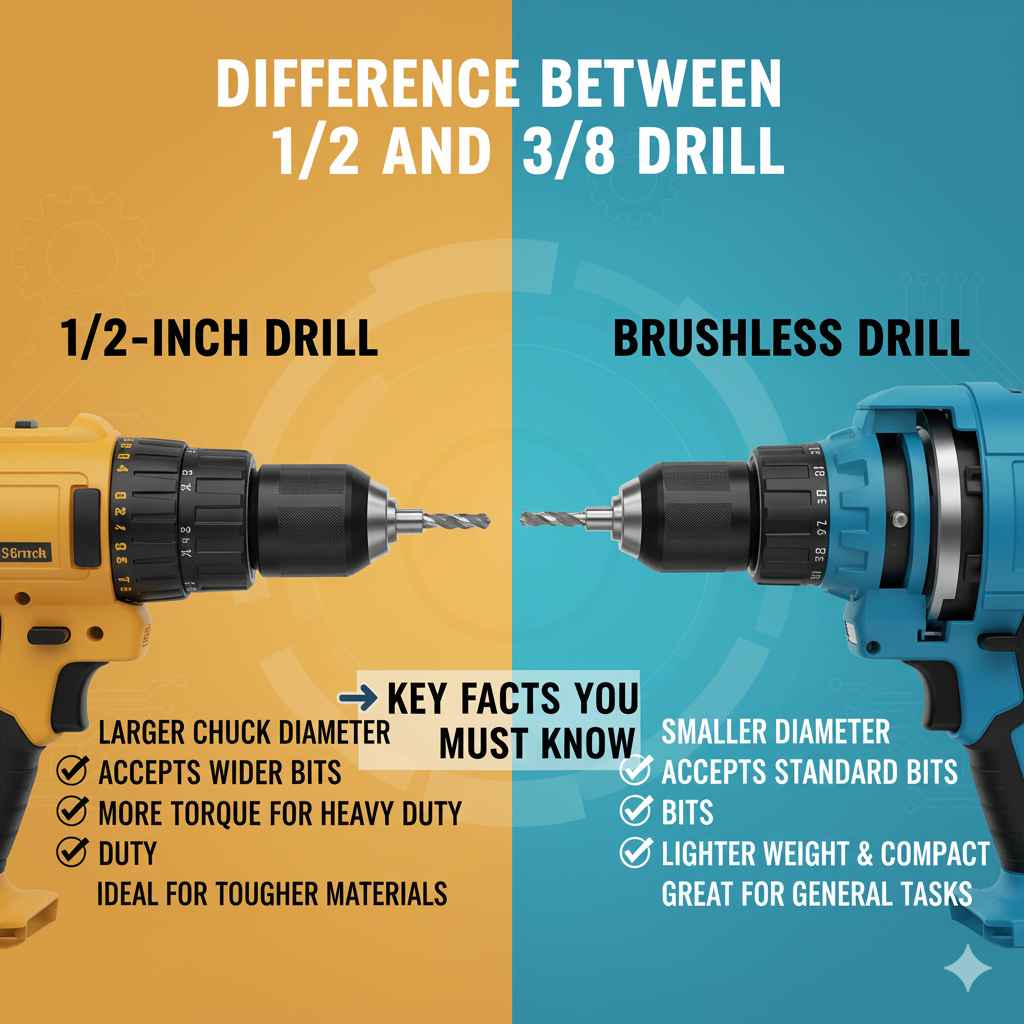
Drills with larger chucks generally require more power and torque to work efficiently. The 1/2 inch drill can handle bigger bits and tougher materials, but it needs a stronger motor. The 3/8 inch drill suits lighter tasks and smaller bits, needing less power.
Drill Motor Requirements
A 1/2 inch drill needs a motor that delivers higher power. This motor must provide enough torque to turn larger drill bits without slowing down. Strong motors prevent the drill from stalling during heavy work.
The 3/8 inch drill uses a smaller motor. It can work well with less power since it handles smaller drill bits. This makes it lighter and easier to control for simple tasks.
Effect On Drill Performance
The motor’s power and torque directly affect drilling speed and efficiency. A 1/2 inch drill with strong torque drills faster through thick materials. It offers better control and less wear on the tool.
The 3/8 inch drill performs well on soft materials and thin surfaces. It may struggle or slow down with heavy-duty jobs. Using the correct drill size improves overall work quality and tool life.
Cost And Availability
Cost and availability are key factors when choosing between a 1/2 inch and 3/8 inch drill. Both sizes serve different purposes and come with different price tags. Understanding these differences helps you pick the right tool for your needs without overspending.
Price Differences
Generally, 1/2 inch drills cost more than 3/8 inch drills. The larger size and higher power often mean a higher price. Small drills like 3/8 inch tend to be cheaper and lighter. This makes them ideal for simple jobs and home use. The price gap varies by brand and features. Still, expect to pay extra for the bigger drill.
Where To Buy
Both drill sizes are widely available in hardware stores and online shops. Local stores often stock popular brands and sizes. Online retailers offer more options and sometimes better deals. Check availability before you shop. Some specialty drills may be harder to find in small stores. Online stores provide quick delivery and reviews to help your choice.
Practical Applications
Understanding the practical uses of 1/2 and 3/8 drills helps you choose the right tool. Each size has strengths for different tasks. Using the correct drill size makes work easier and safer.
Household Projects
The 3/8 drill is perfect for small home projects. It handles light tasks like hanging pictures and assembling furniture. Its lighter weight makes it easy to use for longer periods.
The 1/2 drill is better for tougher jobs. It can drill larger holes and handle harder materials like wood and metal. Use it for building shelves or fixing fences.
Professional Use Cases
Professionals prefer 1/2 drills for heavy-duty work. Construction workers and mechanics use them to drill big holes quickly. They provide more power and durability.
3/8 drills suit electricians and plumbers. These trades need precision and control for smaller holes. The 3/8 drill is easier to handle in tight spaces.
Frequently Asked Questions
What Is The Main Size Difference Between 1/2 And 3/8 Drill Bits?
The 1/2 inch drill bit has a diameter of 0. 5 inches, while the 3/8 inch bit measures 0. 375 inches. This size difference affects the hole diameter and the drill’s application.
Which Drill Bit Is Better For Heavy-duty Tasks?
The 1/2 inch drill bit is better for heavy-duty tasks. It creates larger holes and is suited for tougher materials compared to the smaller 3/8 inch bit.
Can 1/2 And 3/8 Drill Bits Fit The Same Drill Chuck?
No, they usually require different drill chucks. A 1/2 inch bit needs a larger chuck capacity than a 3/8 inch bit for proper fitting.
How Does Drill Bit Size Affect Drilling Precision?
Smaller bits like 3/8 inch provide more precision for detailed work. Larger bits like 1/2 inch are ideal for bigger holes but less precise.
Conclusion
Choosing between a 1/2 and 3/8 drill depends on the task size. The 1/2 drill fits bigger bits and handles tougher jobs. The 3/8 drill is lighter and good for smaller tasks. Both drills have their place in your toolbox.
Pick the right size to work safely and easily. Knowing the difference helps you do better work. Keep these points in mind for your next project. Simple tools, smart choices.