DeWalt 20V vs 60V: How FlexVolt Auto-Switches Voltage
If you’ve looked at a DeWalt battery and seen both “20V MAX” and “60V MAX FlexVolt” printed on the same yellow label, that’s not two batteries badged together, and it’s not a typo. It’s one battery that changes its own output voltage depending on which tool you plug it into.
A lot of comparisons on this topic treat 20V and 60V as two separate, incompatible product lines you have to pick a side on. That’s the biggest misconception around DeWalt’s cordless lineup, and it’s backwards from how the batteries actually work. Below is what FlexVolt does inside the pack, which real tools run on each voltage, and how to decide what actually belongs in your shop.
DeWalt FlexVolt: One Battery, Not Two Separate Systems
The Battery This Article Is About
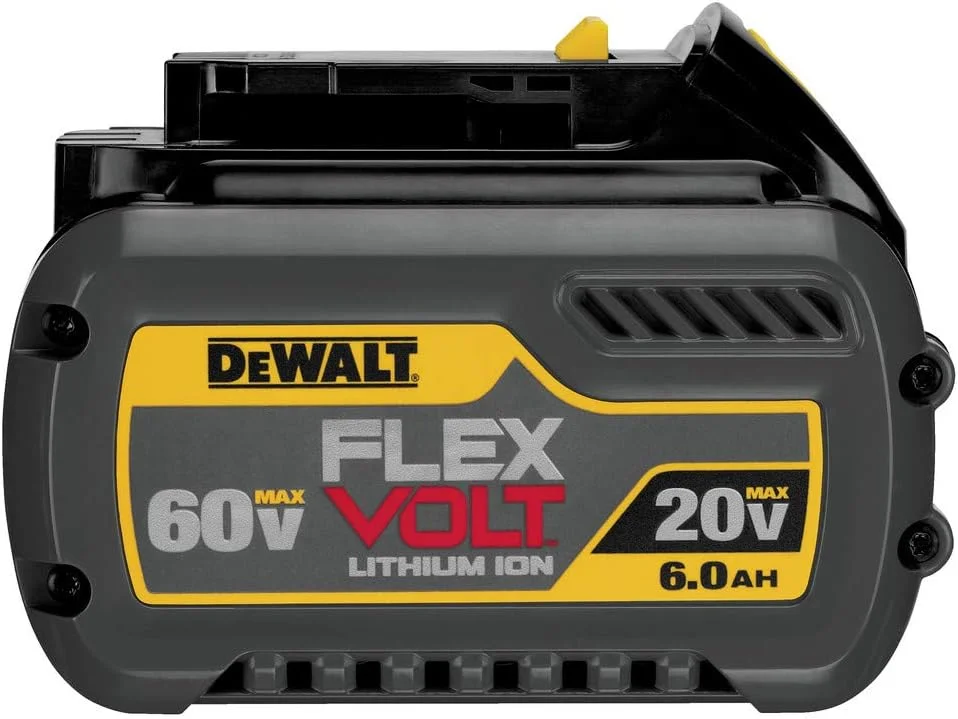 |
DEWALT FLEXVOLT 20V/60V MAX 6.0Ah Battery (DCB606) – $129.99 This is the actual battery that makes the “20V vs 60V” question a bit misleading – it runs both platforms from one pack.
|
The FlexVolt platform is the reason 20V and 60V aren’t really competing systems. A FlexVolt battery like the DCB606 above physically fits and fully powers any 20V MAX tool – drills, reciprocating saws, impact drivers, all of it – exactly the way a standard 20V-only battery would. Put that same battery into a 60V MAX FlexVolt tool, like a circular saw or miter saw, and it reconfigures itself internally to deliver 60V instead. The battery doesn’t change physically when you swap tools. The switch happens electronically, inside the pack, the instant it seats into a different tool’s contacts.
The compatibility only runs one direction, though. A standard 20V-only battery (DeWalt’s DCB205 or similar, without the FlexVolt label) will not power a 60V FlexVolt-only tool – it simply can’t produce the extra voltage those tools need. So a FlexVolt battery is backward-compatible with your existing 20V drawer, but a plain 20V battery isn’t forward-compatible with 60V tools. That asymmetry is the detail most “20V vs 60V” pages get wrong or skip entirely.
How the Auto-Switching Actually Works
The Cell Reconfiguration
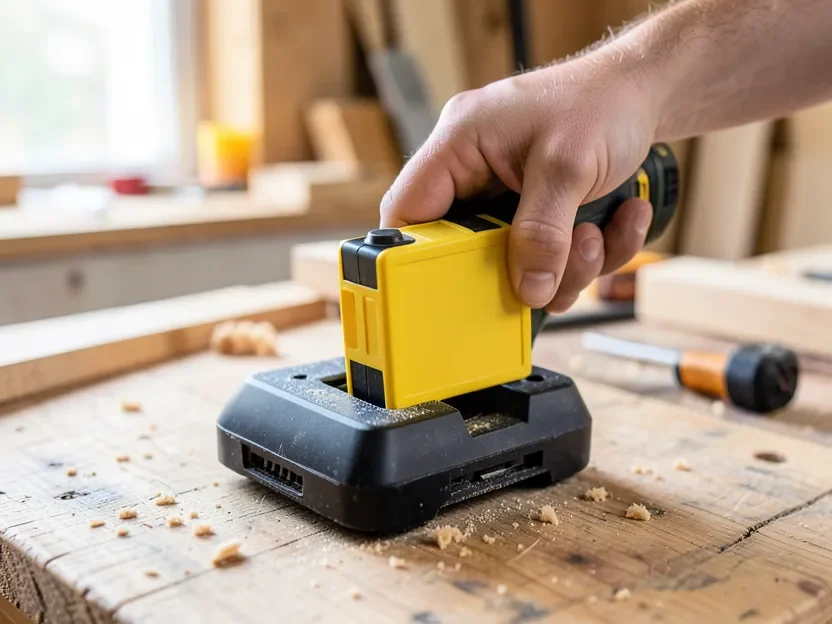
Inside a FlexVolt pack are 15 individual lithium-ion cells, wired in three groups of five. In a 20V MAX tool, internal circuitry wires all three groups in parallel, which gives you 20V output at a higher amp-hour rating – more total runtime at everyday tool voltage. In a 60V MAX FlexVolt tool, the same three groups get wired in series instead, which triples the voltage to 60V for tools that need real torque, at a lower amp-hour number since the same cells are now working differently. Sensors in the battery detect which tool socket it’s seated in and make the switch automatically – there’s no manual toggle or setting to change.
Backward Compatibility With 20V MAX Tools
This is the practical payoff: if you already own 20V MAX drills and impact drivers, buying a FlexVolt battery or two doesn’t mean starting a second, incompatible battery ecosystem. Those same FlexVolt packs charge in a compatible charger and drop straight into your existing 20V tools. You’re adding capability, not replacing what you already own.
120V MAX: Two Batteries, One Corded-Equivalent Tool
DeWalt takes this a step further with 120V MAX tools, which use two FlexVolt batteries at once, wired together in series to roughly match the output of a corded 15-amp tool. The DHS790AT2 12-inch sliding compound miter saw is the clearest real example – it runs on two FlexVolt batteries or an included AC adapter, giving it corded-level cutting power in a saw that doesn’t have to sit next to an outlet. It’s the same auto-switching cell logic, just doubled.
DeWalt 20V MAX: What It’s Actually Built For
Weight and Everyday Handling
20V MAX tools stay lighter because the batteries only ever need to supply 20V, so the cells and housing can be smaller. That matters more than it sounds like after the third hour of overhead work or a day spent carrying a drill from room to room. Most DIYers and a lot of trim carpenters never actually run into a job where 20V isn’t enough power.
Typical Jobs
Furniture assembly, deck fasteners, door hardware, hanging shelves, trim work, and most drilling and driving tasks around a home shop sit comfortably inside what a 20V MAX drill, impact driver, or 20V circular saw can handle. If your projects are measured in individual boards and trim runs rather than stacks of framing lumber, 20V MAX is very likely all the platform you need.
DeWalt 60V MAX FlexVolt: What It’s Actually Built For
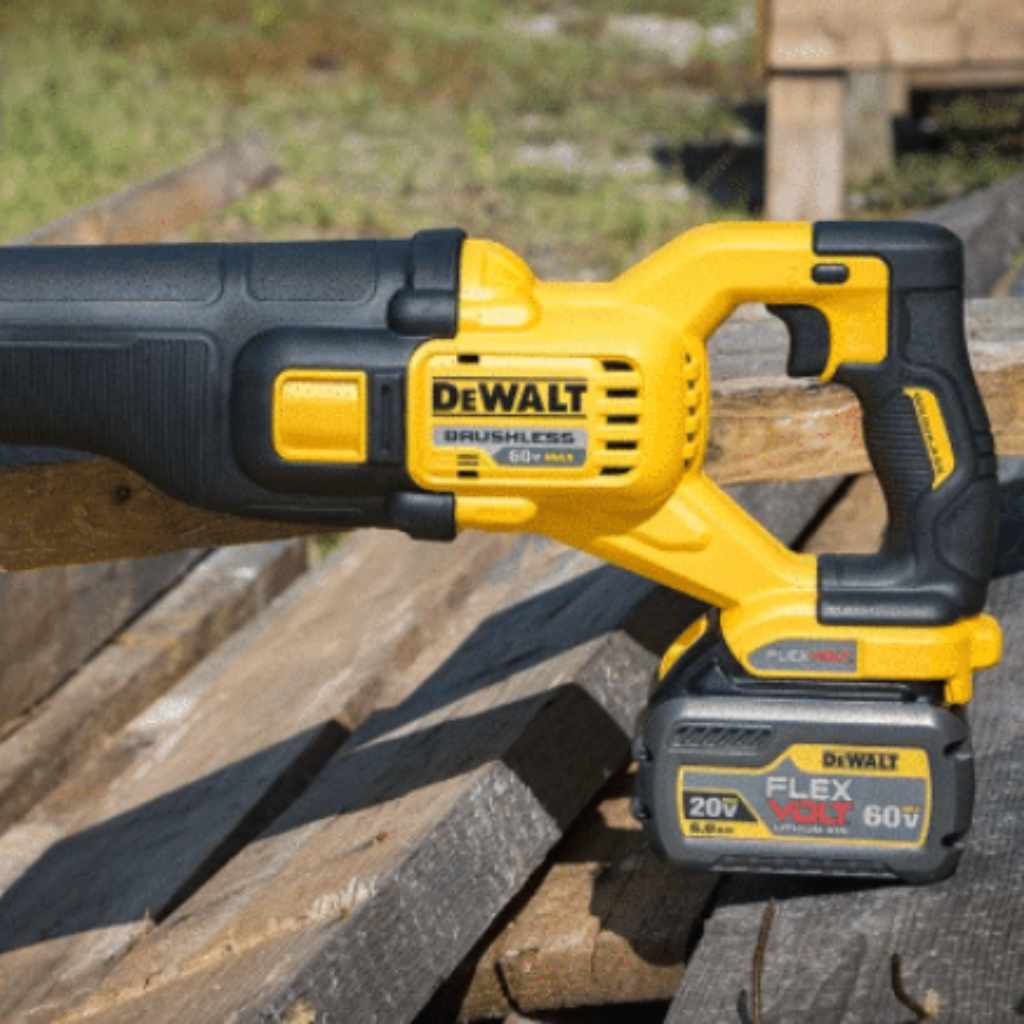
60V MAX FlexVolt tools trade portability for sustained power under load. Real examples on the market right now include the DCS578 7-1/4-inch brushless circular saw, the DCS7485 8-1/4-inch table saw, and the DHS790AT2 120V MAX sliding miter saw mentioned above. These aren’t just “20V tools with a bigger battery” – they’re built for cuts that would bog down a smaller motor: ripping thick stock repeatedly, cutting pressure-treated framing lumber all day, or running a table saw through a full sheet of plywood without the motor sagging halfway through. For a closer look at how this plays out on a specific tool, see our DeWalt XR vs FlexVolt circular saw comparison or our breakdown of DeWalt’s three cordless miter saw platforms.
20V vs 60V: Which One Do You Actually Need?
Skip the voltage number and ask what the tool has to do. If the honest answer is “drill some holes, drive some screws, cut a few boards to length,” a 20V MAX tool and battery will outperform a 60V setup on the only metric that matters for that work: how long you can comfortably hold it. If the honest answer involves a full day of framing, repeated cuts through thick or wet lumber, or a table saw that needs to keep pace with a corded one, a 60V MAX FlexVolt tool is worth the extra weight and cost.
A reasonable middle path, and the one most working shops actually land on: keep a set of 20V MAX tools for everyday tasks, and add one or two FlexVolt batteries alongside a single 60V tool for the specific heavy job that needs it. Since FlexVolt batteries work in your 20V tools too, you’re not maintaining two separate battery drawers – just one drawer with a couple of higher-capacity packs in it.
Same Technology, Different Name Outside the US
If you’re shopping DeWalt listings from the UK, EU, or Australia, you won’t see “20V MAX” or “60V MAX” at all. The identical FlexVolt technology is badged as 18V XR and 54V FlexVolt in those markets. The batteries, tools, and auto-switching mechanism are the same; the difference is that the US brands its cordless platforms by maximum (peak, unloaded) voltage, while other regions brand by nominal (average, under-load) voltage for the same cells. It’s a labeling convention, not a different product – worth knowing if you’re comparing specs against a UK or Australian retailer.
Price and Long-Term Value
20V MAX batteries and chargers cost less up front and are the most common DeWalt battery on the market, which keeps replacement and spare-battery costs down. FlexVolt batteries cost more – expect to pay a real premium over a same-capacity 20V-only pack – because you’re buying the auto-switching electronics along with the cells. 60V MAX tools themselves also carry a higher price tag than their 20V counterparts. The payoff is fewer total batteries to own: one FlexVolt pack replaces what would otherwise be a separate 20V battery and a separate 60V battery, and it keeps working across both if you upgrade your tool lineup later.
Frequently Asked Questions
What Are the Main Differences Between DeWalt 20V and 60V?
20V MAX tools are lighter and suited to everyday drilling, driving, and light cutting. 60V MAX FlexVolt tools deliver more torque and sustained power for heavy-duty work like framing or table saw cuts through thick stock, but weigh more. Both can run on the same FlexVolt battery, which is the part most comparisons leave out.
Can a DeWalt 60V FlexVolt Battery Power a 20V Tool?
Yes. A FlexVolt battery automatically switches down to 20V output when it’s plugged into a 20V MAX tool, and it works exactly like a standard 20V-only battery would. The reverse isn’t true – a plain 20V-only battery cannot power a 60V-only FlexVolt tool.
Which DeWalt Voltage Is Better for Home Use?
20V MAX covers the vast majority of home projects and is lighter to work with all day. 60V MAX FlexVolt makes more sense if you regularly tackle heavy outdoor or construction-style jobs, or if you already own a FlexVolt battery and want one tool that can use it at full power.
How Does Battery Life Compare Between DeWalt 20V and 60V?
In a 60V MAX tool, a FlexVolt battery generally delivers longer sustained runtime under heavy load than a 20V-only battery would in a comparable 20V tool, because the higher voltage keeps torque more consistent under strain. In a 20V MAX tool, that same FlexVolt battery still charges on a compatible charger and runs the full runtime you’d expect from its amp-hour rating – it isn’t penalized for being a FlexVolt pack.
Conclusion
DeWalt 20V and 60V aren’t two competing product lines to choose between once and live with. FlexVolt batteries bridge both, auto-switching voltage based on the tool you plug them into, and even combining in pairs to match corded 120V MAX output on the heaviest saws. Pick 20V MAX tools for everyday, lightweight work. Add 60V MAX FlexVolt tools when a job genuinely needs sustained torque. And if you’re investing in batteries either way, a FlexVolt pack is the one that keeps working no matter which tool line you add to your shop next.
Sponsored / affiliate links. As an Amazon Associate I earn from qualifying purchases. I may earn additional commission from eligible campaigns.