DeWalt Battery-Powered Miter Saw: 20V vs 60V vs 120V (2026)
DeWalt’s cordless miter saws run on three separate battery platforms — 20V MAX, 60V MAX FlexVolt, and 120V MAX (dual 60V) — and the right one depends on blade size and duty cycle, not just how much power you think you need. Buying the wrong platform means either paying for capacity you’ll never use on trim work, or running out of torque halfway through a stack of pressure-treated 2x8s. This guide compares the DCS361 (20V), DCS781 (60V FlexVolt), and DHS790AT2 (120V) by real cuts-per-charge, weight, and current pricing. If the 20V/60V/120V labeling itself is what is confusing, our DeWalt 20V vs 60V guide covers how FlexVolt batteries auto-switch voltage between those platforms.
DeWalt’s Three Cordless Miter Saw Platforms
Best 20V Cordless Miter Saw Pick
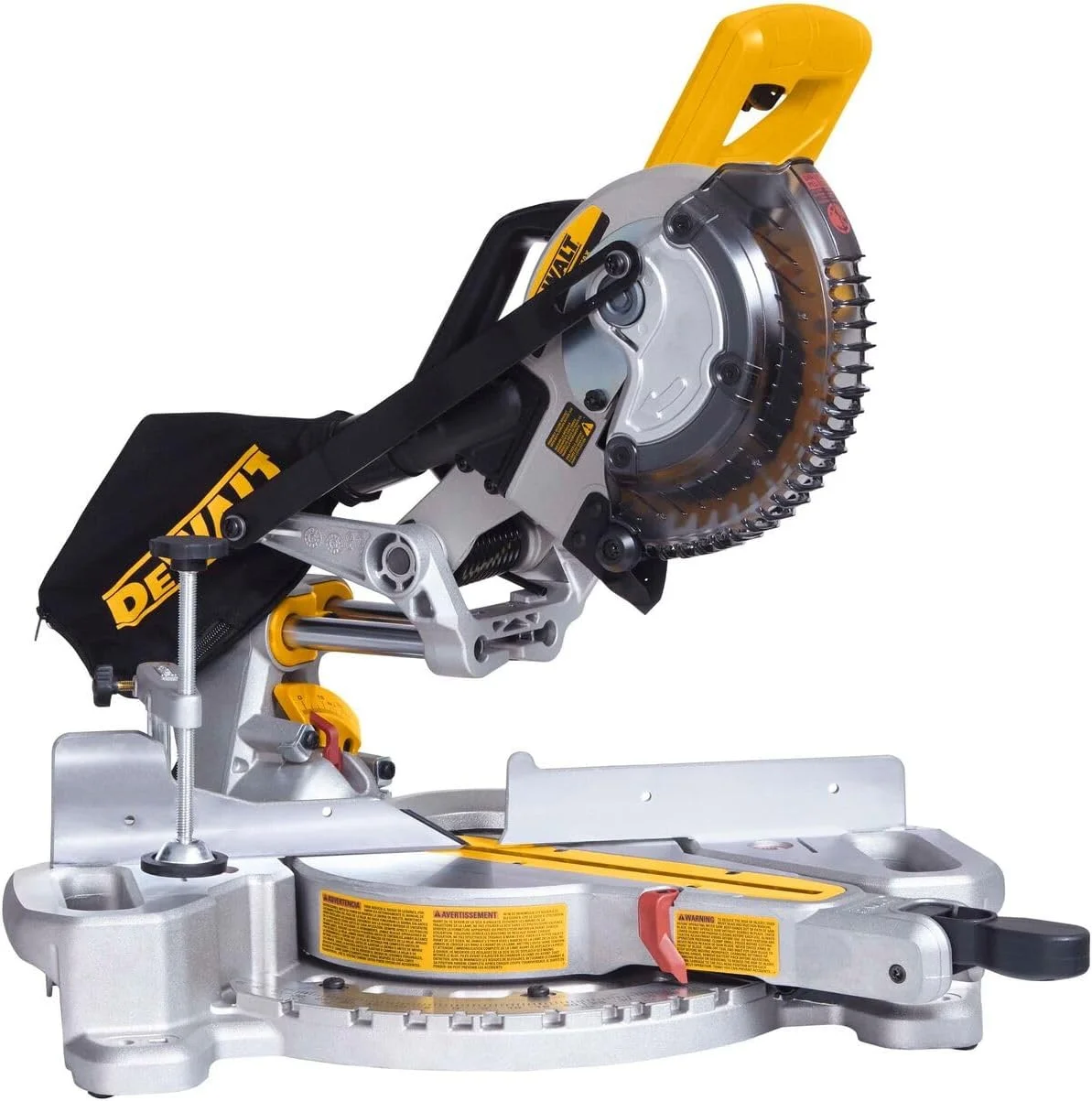 |
DEWALT 20V MAX 7-1/4 in. Cordless Miter Saw (DCS361B) – $296.65 The 20V MAX saw this guide covers for trim work and lighter stock — shares batteries with 20V drills and impact drivers so there’s no second battery ecosystem to buy into.
|
The 20V MAX platform powers the compact DCS361 7-1/4 in. saw — built for trim carpenters who already own 20V drills and impact drivers and don’t want a second battery ecosystem. The 60V MAX FlexVolt platform powers the DCS781 12 in. sliding double-bevel saw on a single battery, using cells that automatically switch voltage depending on the tool. 120V MAX saws like the DHS790AT2 run two 60V FlexVolt batteries in series (or an AC adapter) to match corded 15-amp output for the heaviest framing work. None of the three platforms are interchangeable with each other’s batteries — a 20V pack won’t fit the 60V or 120V saws.
If you already run 20V MAX tools — see our breakdown of which DeWalt 20V batteries are interchangeable — the DCS361 shares that same battery drawer. If you’re comparing cordless miter saws across brands rather than staying DeWalt-only, our cordless sliding compound miter saw comparison covers six models by max cut width and battery platform.
Key Features That Actually Affect Cut Quality
- Weight and portability: The DCS361 weighs 30 lbs, light enough to carry one-handed to a job site. The DCS781 (12 in., 60V) weighs 50.9 lbs — manageable, but not a one-trip carry with a stand.
- Rated cuts per charge: DeWalt’s own spec sheet rates the DCS361 for up to 183 cuts through 2×4 pine on a single 4.0Ah battery, and the DCS781 for up to 675 cuts through 3-1/4 in. MDF base molding on FlexVolt.
- CUTLINE positioning: Both saws project a shadow or LED line at the actual kerf location instead of a laser offset to one side, which is what actually prevents the “cut on the wrong side of the line” error common with laser-only guides.
- Miter detent plate: An 11-position stainless steel detent plate (both models) locks common angles — 0°, 15°, 22.5°, 31.6°, 45°, 60° — without needing to read the angle scale each time.
- Dust collection: DeWalt rates the 60V MAX DCS781 at up to 75% dust capture with the stock bag, rising toward 90%+ only when connected to a dedicated dust extractor — the bag alone is not the extractor-level number some listings imply.
DeWalt Battery-Powered Miter Saw Models Compared
Three models cover most use cases. Pricing below is bare-tool (no battery/charger included) as of this writing — check current listings before buying, since tool pricing shifts often.
| Model | Blade Size | Weight | Battery System | Max Cuts/Charge | Bare Tool Price |
|---|---|---|---|---|---|
| DCS361B | 7-1/4 in. | 30 lbs | 20V MAX | 183 (2×4 pine) | ~$296 |
| DCS781B | 12 in. | 50.9 lbs | 60V MAX FlexVolt | 675 (3-1/4 in. MDF) | ~$549–$699 |
| DHS790AT2 | 12 in. | 56 lbs | 120V MAX (dual 60V) | 289 (3-1/4 in. base molding) | ~$799–$899 |
The DCS361 fits trim work, crown molding, and jobs where you’re already carrying 20V batteries for other tools. The DCS781 handles framing lumber and thicker stock on one FlexVolt battery instead of two. The DHS790AT2 is the hybrid pick — it runs on two 60V batteries or plugs into AC, which matters on job sites with unreliable outlets or when you’d rather not buy a second battery just for the saw.

How Regenerative Braking Extends FlexVolt Runtime
The 60V MAX FlexVolt saws (DCS781, DHS790) use regenerative braking, not just a mechanical brake pad. When you release the trigger, the motor briefly reverses its role and acts as a generator for a fraction of a second, feeding some of the blade’s rotational energy back into the battery instead of dissipating all of it as friction heat. On a trim job with dozens of stop-start cuts per hour, this would meaningfully extend runtime compared to a saw that burns off every bit of that spin-down energy as waste heat — without adding battery capacity or weight to the tool.
📊 DeWalt rates the 20V MAX DCS361 for up to 183 cuts through 2×4 pine per charge, and the 60V MAX FlexVolt DCS781 for up to 675 cuts through 3-1/4 in. MDF base molding. — Source: DeWalt DCS361B product spec sheet, 2026
“Didn’t go cheap and use a bunch of plastic” on the DCS361’s build.
— Pro Tool Reviews, DeWalt 20V Max Miter Saw Review
Which Model Should You Buy?
A trim carpenter moving between job sites and already invested in 20V MAX tools gets the most value from the DCS361 — it’s light, shares batteries with drills and impact drivers, and the 7-1/4 in. blade covers crown and base molding without excess weight. Someone framing decks, building furniture from thicker stock, or cutting a lot of 2x lumber needs the DCS781’s larger blade and higher per-charge capacity. The DHS790AT2 makes sense specifically when a job site has unreliable power and buying two 60V batteries is cheaper than a generator. A dedicated home shop with a fixed power outlet is the one case where a corded saw can still make more sense — cordless buys you mobility, not raw torque you can’t already get corded.
Maintenance and Blade Tips
- Match the blade to the cut: DeWalt ships a 60-tooth carbide blade with most of these saws — fine for trim, but a 40-tooth blade cuts faster (with a rougher edge) on framing lumber where surface finish doesn’t matter.
- Carry a charged spare: A 4.0Ah 20V battery on the DCS361 will not last a full day of continuous trim cuts — keep a second battery charging while the first is in use.
- Pair with a stand: A rolling miter saw stand with roller supports (DeWalt’s own DWX724 or a folding miter saw stand) prevents long boards from tipping the saw mid-cut, which is a more common accuracy problem than the saw itself.
- Clean the detent plate: Sawdust packed into the miter detent plate’s stops is the most common cause of angle cuts drifting out of square over time — a quick brush-out after each session prevents it.
Frequently Asked Questions
Are DeWalt battery-powered miter saws powerful enough for heavy-duty framing?
Yes, for the 60V MAX and 120V MAX models. The DCS781 (60V FlexVolt) and DHS790AT2 (120V dual-battery) are rated to cut through 2×10 dimensional lumber and dense hardwoods. The 20V MAX DCS361 is sized for trim and lighter stock — it will cut 2x material but isn’t the pick for high-volume framing.
How long do the batteries last on a DeWalt miter saw?
It depends on the model and material. DeWalt rates the 20V MAX DCS361 for about 183 cuts through 2×4 pine on one charge, and the 60V MAX DCS781 for up to 675 cuts through 3-1/4 in. MDF base molding. Actual runtime drops on denser hardwoods or thicker stock, so keep a spare battery charged for full-day jobs.
Can I use my existing DeWalt batteries with these saws?
Only within the same platform. 20V MAX tool batteries work in the DCS361, and 60V MAX FlexVolt batteries work in the DCS781 and DHS790AT2. The platforms are not cross-compatible — a 20V battery physically will not fit a 60V or 120V saw, and vice versa.
Is a battery-powered miter saw worth it compared to a corded one?
For job sites and outdoor work without a reliable outlet, yes — the mobility outweighs any power tradeoff on the 60V and 120V models. For a fixed shop with a dedicated 15-amp circuit already in place, a corded saw costs less and never needs a battery swap, so cordless mainly buys convenience there, not extra capability.
How do I maintain a DeWalt battery-powered miter saw?
Brush sawdust out of the miter detent plate after each session — packed dust is the most common cause of angle drift. Check blade alignment periodically, swap to a 40-tooth blade for faster framing cuts or keep the stock 60-tooth blade for trim, and store batteries at room temperature rather than in a hot truck cab to preserve their charge cycles.
Across DeWalt’s lineup, the deciding factor isn’t which saw is “best” — it’s matching the battery platform to what you already own and the stock you cut most often. The 20V DCS361 covers trim and light framing, the 60V DCS781 covers most everything else, and the 120V DHS790AT2 exists for job sites where charging isn’t an option.
Sponsored / affiliate links. As an Amazon Associate I earn from qualifying purchases. I may earn additional commission from eligible campaigns.