Difference between Engineered Hardwood And Hardwood: Unveiled
When it comes to choosing the perfect flooring for your home, you might find yourself torn between engineered hardwood and traditional hardwood. Both options offer a timeless beauty that can enhance any space, but they come with distinct differences that could make all the difference in your home environment.
Are you curious about which one is more durable, affordable, or environmentally friendly? Understanding these differences can be the key to making a decision that aligns with your lifestyle and budget. Let’s unravel the mystery together, so you can confidently choose the flooring that best suits your needs and transforms your living space into the sanctuary you’ve always dreamed of.
Stay with me as we explore the unique characteristics and benefits of each type of wood, and find out which one is the right fit for you.
Credit: woodpeckerflooring.com
Material Composition
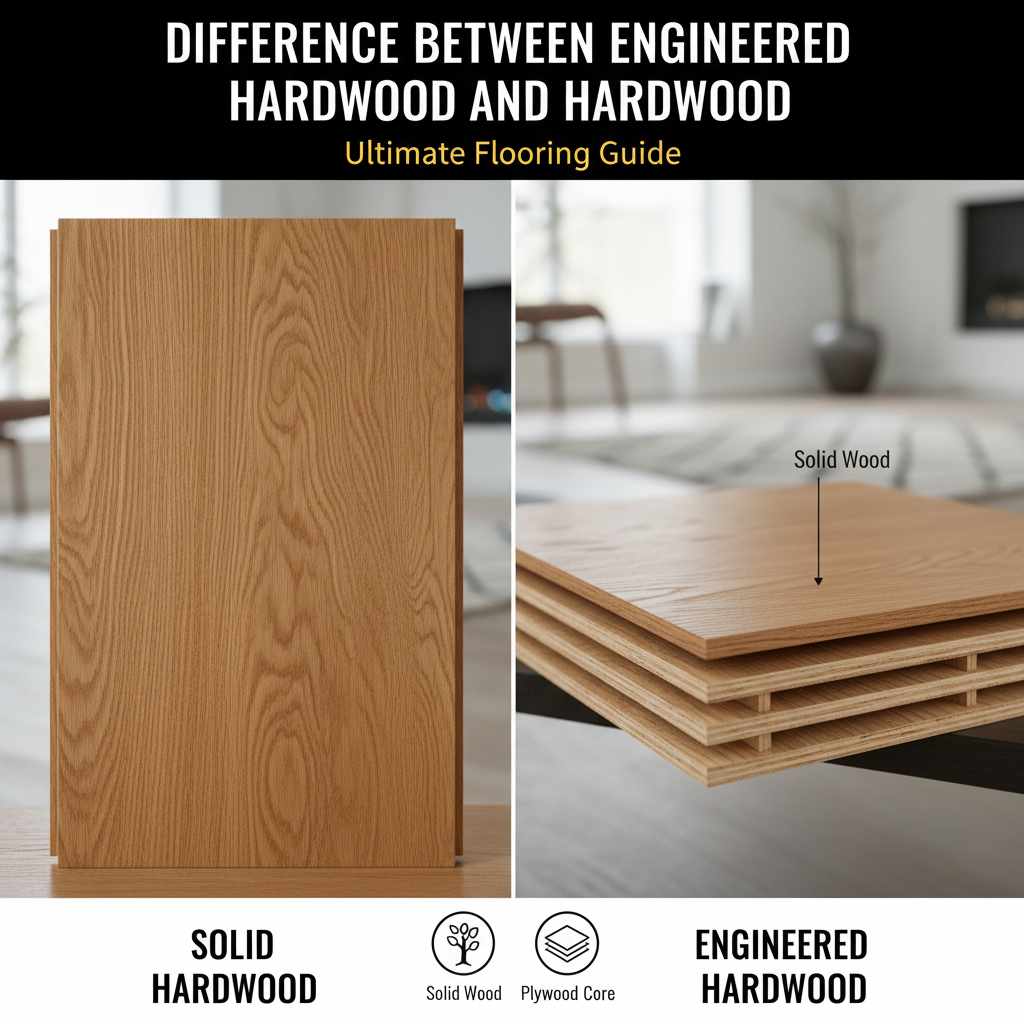
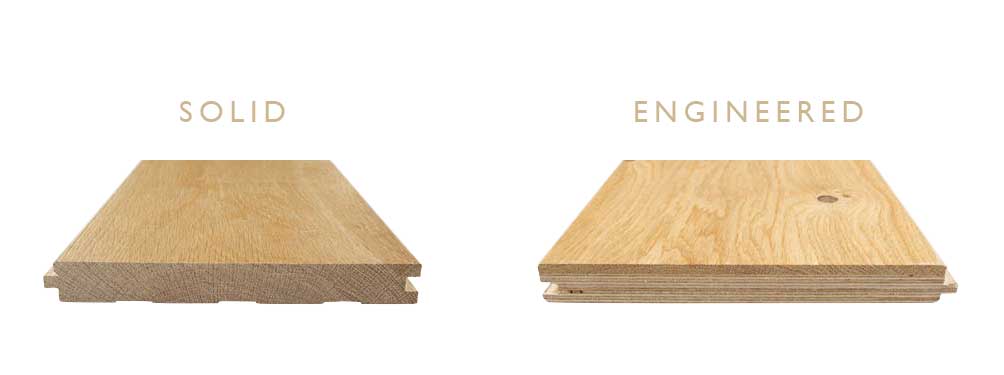
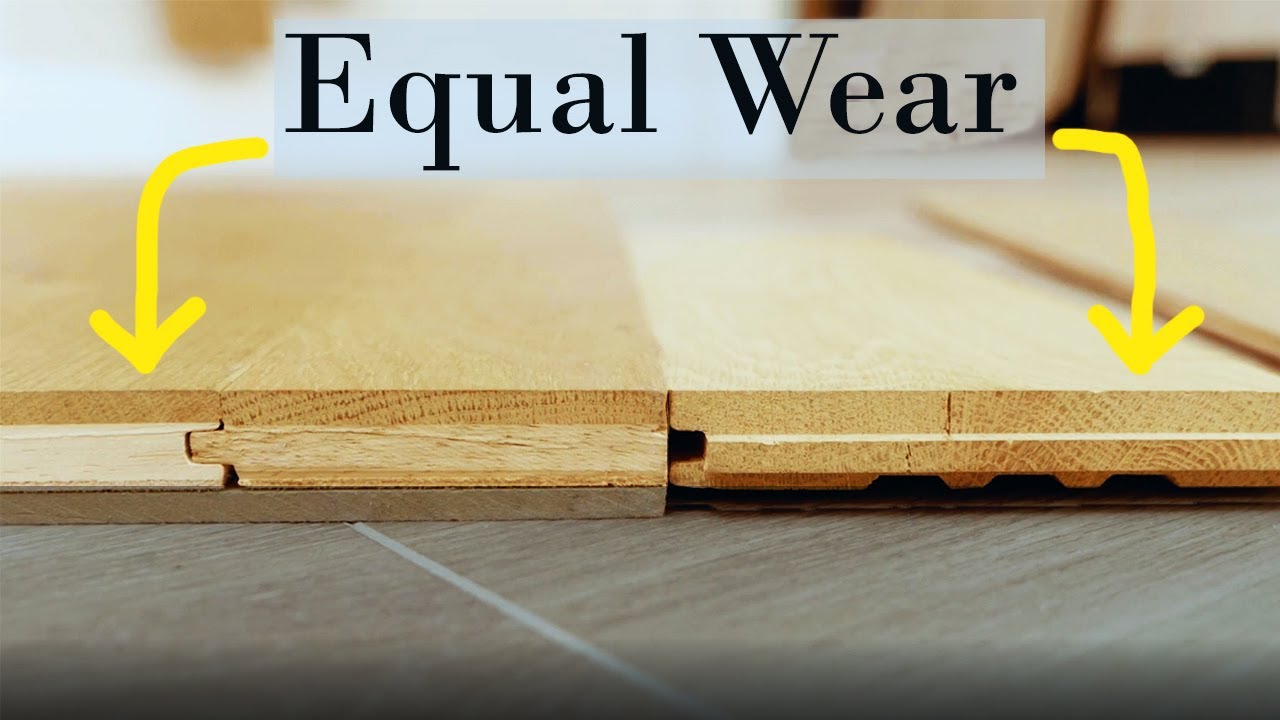
Engineered hardwood is made with multiple layers. The top layer is real wood. Underneath, there are thin layers of plywood. These layers are bonded together. This makes the flooring strong and stable. It can handle changes in temperature and humidity. Engineered hardwood is less likely to warp. It has a durable surface that looks beautiful.
Hardwood is made from solid wood. Each plank is a single piece. This gives it a classic look. Solid hardwood can be sanded and refinished. It lasts for many years. Hardwood is more sensitive to humidity. It can warp or expand in wet conditions. Solid wood offers a timeless beauty. It adds value to homes.
Credit: www.youtube.com
Appearance And Aesthetic
Engineered hardwood often has a smoother surface. It shows fewer flaws. This makes it look polished. Hardwood has a natural grain. It displays more knots and imperfections. These add character. They show the tree’s true beauty.
Engineered wood comes in many shades. It can be dyed easily. This allows for uniform color. Hardwood’s color varies naturally. Each plank has unique tones. This gives a rich texture. It feels warm. Touch it and feel the depth.
Durability And Longevity
Engineered hardwood has a strong top layer. It can resist scratches better than solid wood. Solid hardwood can scratch easily. It’s less resistant to wear. Kids playing or pets running can damage solid wood. Engineered wood is better for busy homes. It stays nice for longer. Solid wood needs more care.
Engineered hardwood uses less natural wood. This helps save trees. It’s made from layers of wood and glue. Solid hardwood uses whole pieces of wood. Cutting trees affects forests. Using less wood helps nature. Engineered wood is more eco-friendly. It’s better for the planet. Solid wood is less friendly to nature.
Installation Process
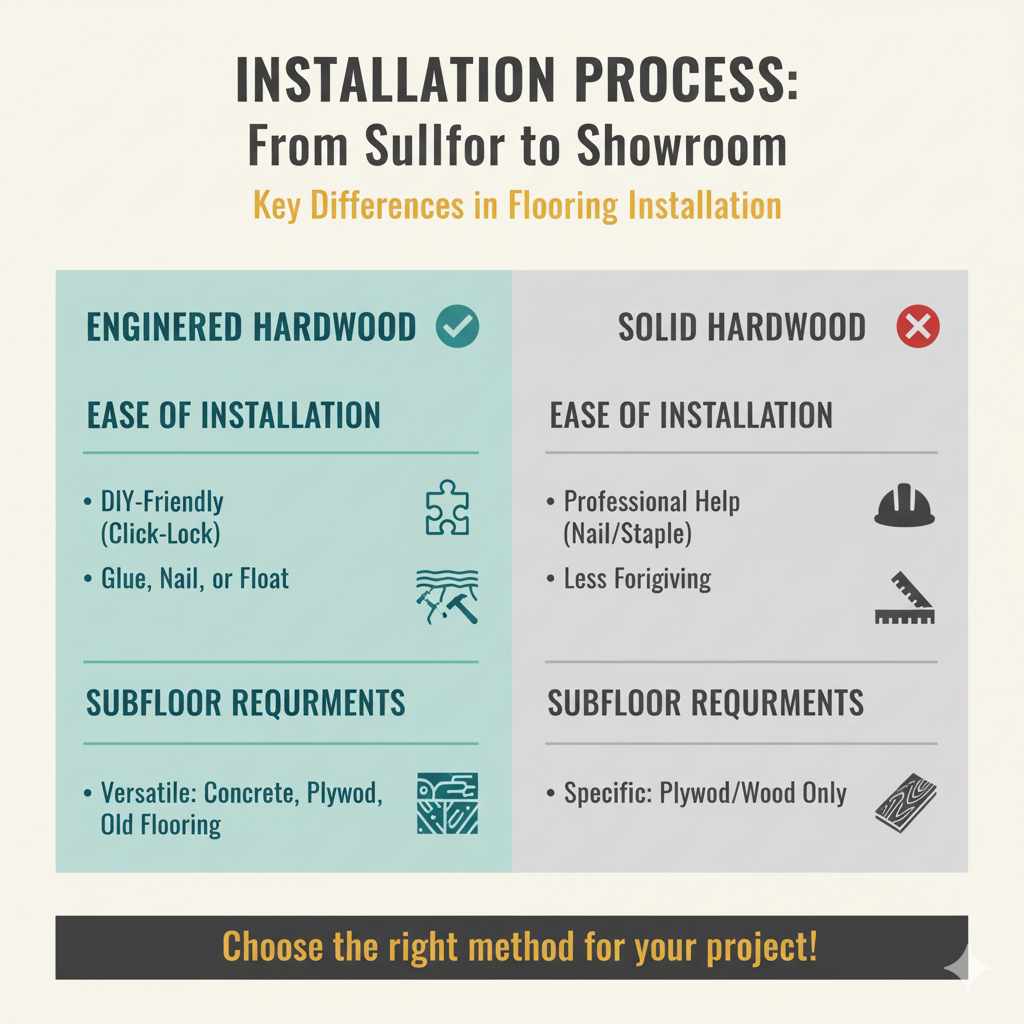
Installing engineered hardwood is generally easier than traditional hardwood due to its prefinished layers. Hardwood requires careful acclimation and sanding, making the process more labor-intensive. Both types offer unique benefits, but their installation methods differ significantly, influencing your decision based on time and skill level needed.
Ease Of Installation
Engineered hardwood is easier to install than solid hardwood. You can install engineered wood yourself. It often uses click-lock systems. Solid hardwood needs nails or staples. Professional help is usually needed. This makes it harder for beginners. Engineered wood can be glued, nailed, or floated. It offers flexibility in installation methods. Solid wood requires precise measurements. It needs careful handling to avoid damage. Engineered wood is less prone to warping. It handles moisture better. This makes installation simpler.
Subfloor Requirements
Engineered hardwood works on different subfloors. Concrete, plywood, and even old flooring are suitable. It’s versatile in installation locations. Solid hardwood needs specific subfloors. Plywood or wooden subfloors are preferred. The subfloor must be dry and clean. Any moisture can damage solid wood. Engineered wood is more forgiving with uneven surfaces. Solid wood needs a smooth, even base. Preparing the subfloor is crucial for both. Proper preparation ensures a long-lasting floor. Engineered wood offers more options for installation.
Cost Comparison
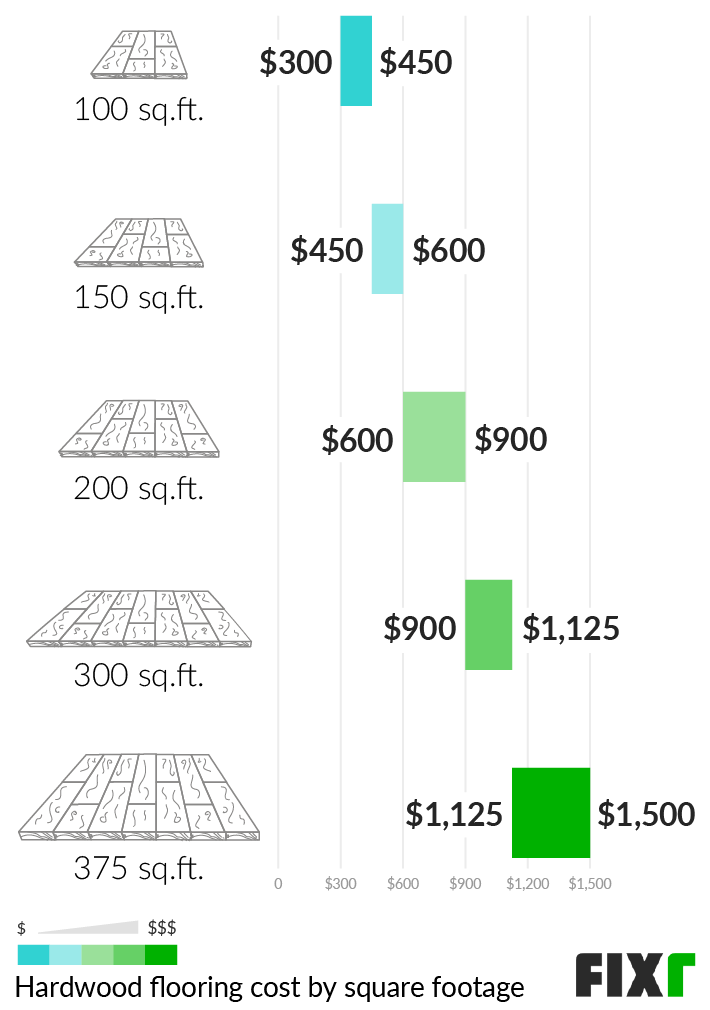
Engineered hardwood is often more affordable. Prices can start at $3 per square foot. Some premium types may cost $10 per square foot. This type of wood is a good option for many homes. It gives a nice look without a high price.
Hardwood is usually more expensive. Prices often start at $5 per square foot. Some types can be over $12 per square foot. This makes it a bigger investment. Many people love its natural beauty. It lasts for many years if cared for well.
Maintenance Needs
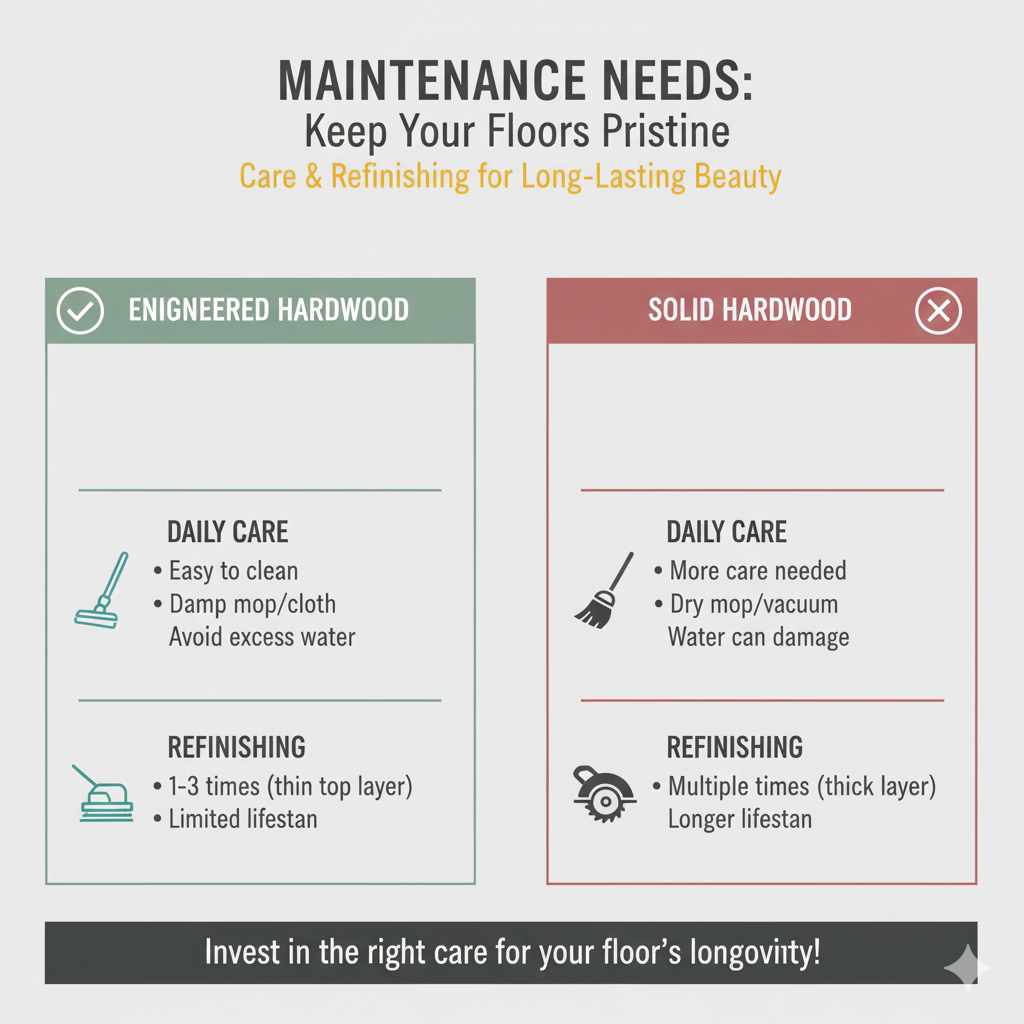
Engineered hardwood is easy to clean. Use a damp mop or cloth. Avoid soaking it in water. Hardwood needs special care. Use a dry mop or vacuum. Water can damage real wood. Both floors need regular cleaning. Dust and dirt can scratch the surface. Use gentle cleaners for both types.
Engineered hardwood can be refinished a few times. The top layer is thin. This limits the number of refinishes. Hardwood can be refinished many times. It has a thick surface layer. This makes it last longer. Refinishing helps to remove scratches. It also brings back the shine. Choose the best option for your home.
Environmental Considerations
Choosing between engineered hardwood and hardwood involves environmental considerations. Engineered hardwood often uses less wood, reducing deforestation. Traditional hardwood may impact forests more significantly, making it less eco-friendly.
Sustainability Of Materials
Engineered hardwooduses less wood. It often uses recycled wood. This makes it more sustainable. The top layer is real wood. The base layers are plywood or fiberboard. This means fewer trees are cut down. Hardwooduses solid pieces of wood. It needs more trees. This makes it less sustainable. Both have their own benefits. But engineered hardwood is often seen as better for the environment.
Impact On Indoor Air Quality
Engineered hardwoodmight have chemicals. These are used in glue. They can affect air quality indoors. It’s important to check for low VOCs. VOCs are chemicals. They can be in the air. Hardwoodusually has fewer chemicals. It’s safer for indoor air. Always check labels for safety. Your home’s air quality matters.
:max_bytes(150000):strip_icc()/engineered-hardwood-vs-solid-flooring-1821677_hero_0203-f8f7a371474d4e24b733fec5edfc46fc.jpg)
Credit: www.thespruce.com
Frequently Asked Questions
What Is Better, Engineered Hardwood Or Hardwood?
Engineered hardwood resists moisture and temperature changes better than solid hardwood. Solid hardwood offers greater longevity and can be refinished multiple times. Choose engineered hardwood for versatility and stability, or opt for solid hardwood for timeless beauty and durability. Consider your home’s environment and needs to decide which fits best.
What Are The Disadvantages Of Engineered Wood?
Engineered wood can be less durable than solid wood. It may warp or swell with moisture. The surface can be prone to scratches and dents. Resanding and refinishing options are limited. Off-gassing of adhesives can release VOCs. Overall, it might not match the natural beauty of solid wood.
Which One Is Better, Engineered Wood Or Solid Wood?
Engineered wood resists moisture and warping better. Solid wood offers durability and natural beauty. Choose based on your needs and budget.
What Is Engineered Hardwood?
Engineered hardwood is a composite flooring made of a real hardwood veneer. It’s layered over a base of high-quality plywood. This construction makes it more resistant to moisture and temperature changes than solid hardwood.
Conclusion
Choosing between engineered hardwood and hardwood depends on your needs. Engineered hardwood offers stability in humid areas. It’s a good choice for basements. Hardwood provides timeless beauty and can be refinished. Perfect for long-term value. Both options have their strengths.
Consider your home’s environment and budget. Think about durability and style preference. Each type has unique benefits. Make an informed decision based on your lifestyle. Both add warmth and elegance to spaces. Carefully weigh your options before purchase. Your choice will enhance your home’s charm.