Can You Use Dawn on Hardwood Floors? Safe Ratio and Limits
Dawn is safe on hardwood floors only as an occasional cleaner: about 1 teaspoon per gallon of warm water, a barely damp mop, and a plain-water rinse pass, and only on a sealed finish such as polyurethane. Too much soap leaves a film that dulls the floor and turns slippery when damp. This guide gives exact dilution numbers, a residue test, the finishes where Dawn fails, and what to use for routine cleaning (more in our hardwood flooring hub).
Can You Use Dawn on Hardwood Floors? It Depends on the Finish
Best Dose-Control Mop Pick | |
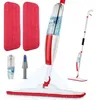 |
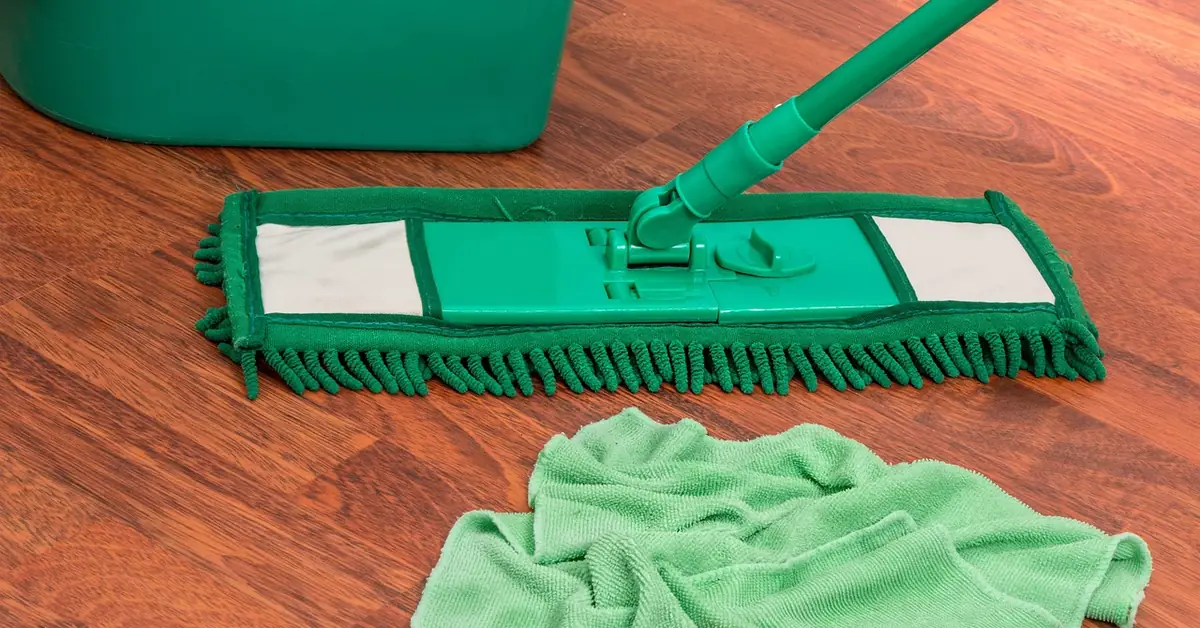
Wet Spray Mop for Floor Cleaning with 14 oz Bottle & 2 Microfiber Pads, $21.58 A refillable bottle lets you mist a 1 teaspoon per gallon Dawn mix onto a pad instead of dragging a wet mop through a bucket, which is the dose control the rinse method below depends on.
|
As an Amazon Associate we earn from qualifying purchases. | |
Dawn is a grease-cutting dish detergent, built to be rinsed off a plate under running water. A floor never gets that rinse, which is why the amount of soap and the rinse pass matter more than the brand. Whether Dawn is acceptable comes down to what is on top of the wood, so identify the finish first.
| Floor finish | How to spot it | Dawn? |
|---|---|---|
| Surface-sealed (polyurethane, aluminum-oxide prefinished) | A water drop beads up and sits for several minutes | Occasionally, tiny dose, with a rinse pass |
| Waxed | Dull glow; a white cloth rubbed hard picks up a waxy film | No. Soap and water cloud and strip wax |
| Oil or hardwax-oil finish | Matte; a water drop soaks in or darkens the wood | No. A degreaser works against an oil finish |
| Unfinished or worn through | Bare, thirsty wood in traffic lanes | No. See how to clean untreated hardwood floors |
| Engineered hardwood with a sealed top | Same bead test, thinner wear layer | Rarely. Water at the seams is the bigger risk; see engineered floor care |
Run the bead test in a closet or hidden corner, not mid-room. If you cannot tell which finish you have, treat the floor as unsealed and use the driest method that works.
How Much Dawn Per Gallon? The Dilution Table
Most online advice says “a few drops” or “a squirt” with no numbers, and those two phrases differ by a factor of dozens. The table below converts common measures into a concentration, so you can see what each one actually puts on the floor.
| Dawn per gallon of water | Volume (mL) | Concentration | Use it for |
|---|---|---|---|
| 3 drops | about 0.15 | about 0.004% | Too weak to cut grease; barely more than water |
| 1/4 teaspoon | about 1.2 | about 0.03% | Sticky spills, shoe scuffs, general film |
| 1 teaspoon | about 4.9 | about 0.13% | Greasy kitchen floor near the stove |
| 1 tablespoon | about 15 | about 0.4% | Too much: sudsy, needs two rinse passes |
| 1/4 cup | about 59 | about 1.6% | Never for a floor: heavy residue and slip risk |
1 teaspoon per gallon is about 0.13% soap by volume, roughly 30 times stronger than “3 drops” and one-third of the tablespoon mix. Source: our own calculation (1 US gallon = 3,785 mL, 1 teaspoon = 4.93 mL, 1 drop = about 0.05 mL), not a lab measurement.
The practical range is 1/4 to 1 teaspoon. Start at the low end, because you can always repeat the pass, but you cannot easily undo a film. Use warm water rather than hot; hot water makes more foam without cleaning better.
Step-by-Step: The Soap-Then-Rinse Method
The sequence below differs from most Dawn guides in one place: it always ends with a plain-water pass. Without it, the soap you mixed so carefully dries in place on the finish.
- Sweep or vacuum first: Remove grit with a soft-bristle head, because grit under a damp pad scratches the finish.
- Mix the solution: Add 1 teaspoon of Dawn to 1 gallon of warm water and stir gently so it does not foam.
- Wring the pad: Dip a microfiber pad and wring it until it stops dripping, with no beads of water left on the floor behind it.
- Mop in small sections: Work 3 to 4 feet at a time along the grain and flip the pad when it loads with dirt.
- Rinse with plain water: Go over the same area with a second pad dampened with plain water only to lift leftover soap.
- Dry and check: Wipe up any damp spots with a dry towel, then run the residue test once the floor is fully dry.
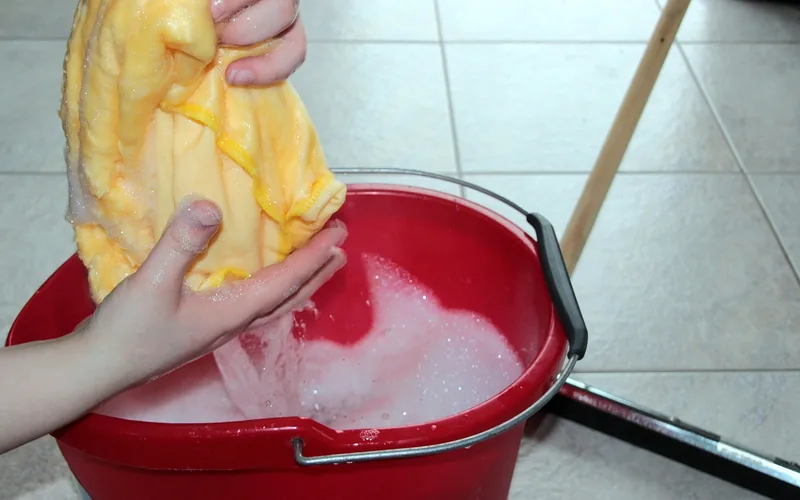
Keep the pad barely damp. Standing water is the real danger to hardwood, since water that reaches board seams can cause cupping, and soap in that water adds nothing but residue. If a damp patch has not dried within a minute or two, your pad was too wet; wipe it up and wring harder next time. A spray mop makes this easier because the mist is the only water the floor sees.
The Residue Test: How to Tell You Used Too Much
Soap film is hard to see while the floor is wet, so check once it is completely dry. These three checks take about two minutes and need no products.
- Low-angle light: crouch and look across the floor toward a window. Haze, streaks, or a cloudy trail in the shape of your mop strokes means leftover soap.
- Drag test: slide a clean dark microfiber cloth across a 2-foot patch. A cloth that skips or drags instead of gliding points to a tacky film.
- Bare-foot feel: a squeaky or slightly sticky feel under a dry foot is the same film. Check this one before anyone walks across in socks.
If you find residue, do not add more soap or switch to vinegar. Go over the area twice with a pad dampened with plain water only, drying as you go. If a film keeps coming back, move to a pH-neutral hardwood cleaner; our guide to Murphy’s Oil Soap versus wood cleaner explains why pH matters.
Slip Risk: Why a Soap Film Is a Safety Problem
A dry soap film feels fine, but it turns slick again when the floor gets damp from wet shoes, a spilled glass, or a pet’s wet paws. On a finished floor that can be enough to cause a fall, particularly for children, older adults, and anyone in socks. This is the main reason to run the rinse pass and the residue test every time, and the main reason not to use Dawn on a floor that gets daily wet traffic, such as an entry or kitchen sink area, without testing a small patch first.
Dawn Powerwash, Dawn Ultra, and “Power Washing”: Three Different Things
People search for “Dawn power wash” and mean different things. The first is the Dawn Powerwash spray sold for dishes. It is meant to be sprayed on a dish and wiped, so spraying it across a floor gives an uncontrolled dose that is far above the 0.13% in the table. Leave it for the kitchen sink. The second is regular Dawn liquid, which is fine when diluted as above. The third is a pressure washer, which forces water into seams and subfloor and should never be used on finished interior hardwood.
Scented or specialty versions are also best avoided. Extra dyes and fragrance are extra residue, so plain original Dawn in a tiny dose is the lowest-risk choice if you go this route.
Dawn Versus a pH-Neutral Hardwood Cleaner
| Dawn dish soap | pH-neutral hardwood cleaner | |
|---|---|---|
| Designed for | Cutting grease on dishes, rinsed under running water | Cleaning finished wood, usually sold as a no-rinse product |
| Residue risk | Higher, especially above 1 teaspoon per gallon | Lower when used as directed |
| Dose control | You measure it yourself | Premixed or labeled dilution |
| Best use | Occasional grease film or sticky spot | Weekly and monthly routine cleaning |
Dawn wins on a stubborn grease film and cost, while a dedicated cleaner wins on routine safety. For the full list of what to mop with, see our roundup of what you can and cannot use on hardwood, which also covers Pine-Sol, and our homemade wood floor cleaner recipes matched to your finish.
When Dawn Earns Its Place, and When to Pick Something Else
The case where Dawn really helps is grease. A film from cooking splatter near a stove, or a greasy footprint trail in a kitchen, often does not respond to water alone. For that, use the 1 teaspoon mix on a small area, wipe, then rinse with plain water. For general dust and light dirt, dry microfiber is better and uses no soap at all.
- Heavy buildup or years of grime: see how to clean very dirty hardwood floors before reaching for stronger soap.
- Pad-style quick cleaning: see whether Swiffer wet pads are safe for hardwood.
- Laminate rather than real wood: water at the seams is the main risk; read how to care for laminate wood floors.
- Painted or stone floors: the finish and coating differ from sealed hardwood. Test a hidden patch first and follow the paint or stone sealer maker’s guidance.
Frequently Asked Questions
Can you use Dawn dish soap on hardwood floors?
Yes, but only occasionally and only on a sealed floor with a surface finish such as polyurethane. Use about 1 teaspoon per gallon of warm water, mop with a barely damp microfiber pad, and follow with a plain-water rinse pass. Skip it on waxed, oiled, unfinished, or worn-through floors.
How much Dawn should I use per gallon of water for hardwood floors?
Use 1/4 to 1 teaspoon of Dawn per gallon of warm water. A quarter teaspoon is enough for a sticky spill, and a full teaspoon covers a greasy kitchen floor. Anything near a tablespoon per gallon makes a sudsy mix that leaves film and needs two rinse passes.
Will Dawn damage polyurethane on hardwood floors?
A single diluted mop is low risk on a cured polyurethane finish. The documented problem is repeated use: dish soap is not formulated to be left on a floor, so residue builds up and the surface goes dull or hazy over time. Flooring makers generally recommend a pH-neutral cleaner for routine mopping.
Can you use Dawn with a steam mop on hardwood floors?
No. Steam pushes heat and moisture into board seams, and soap adds residue on top of that. Most flooring manufacturers advise against steam mops on hardwood, so use a barely damp microfiber pad instead.
Can you use Dawn Powerwash on wood floors?
No. Dawn Powerwash is a dish spray, and spraying it straight onto a floor puts down far more soap per square foot than a diluted bucket mix and gives you no control over the dose. Dilute regular Dawn in water instead, and never use a pressure washer on interior hardwood.
How often can you clean hardwood floors with Dawn?
Use it only when there is a grease film or sticky patch that plain water and microfiber will not lift, not on a schedule. For weekly cleaning, dry microfiber plus a pH-neutral hardwood cleaner avoids soap buildup altogether.
The Short Version
Dawn works on a sealed hardwood floor when the dose is tiny, the pad is barely damp, and a plain-water rinse follows. Use 1/4 to 1 teaspoon per gallon, check for residue once the floor dries, and switch to a pH-neutral cleaner for routine care. If the finish is wax, oil, or bare wood, skip Dawn altogether.
Sponsored / affiliate links. As an Amazon Associate I earn from qualifying purchases. I may earn additional commission from eligible campaigns.