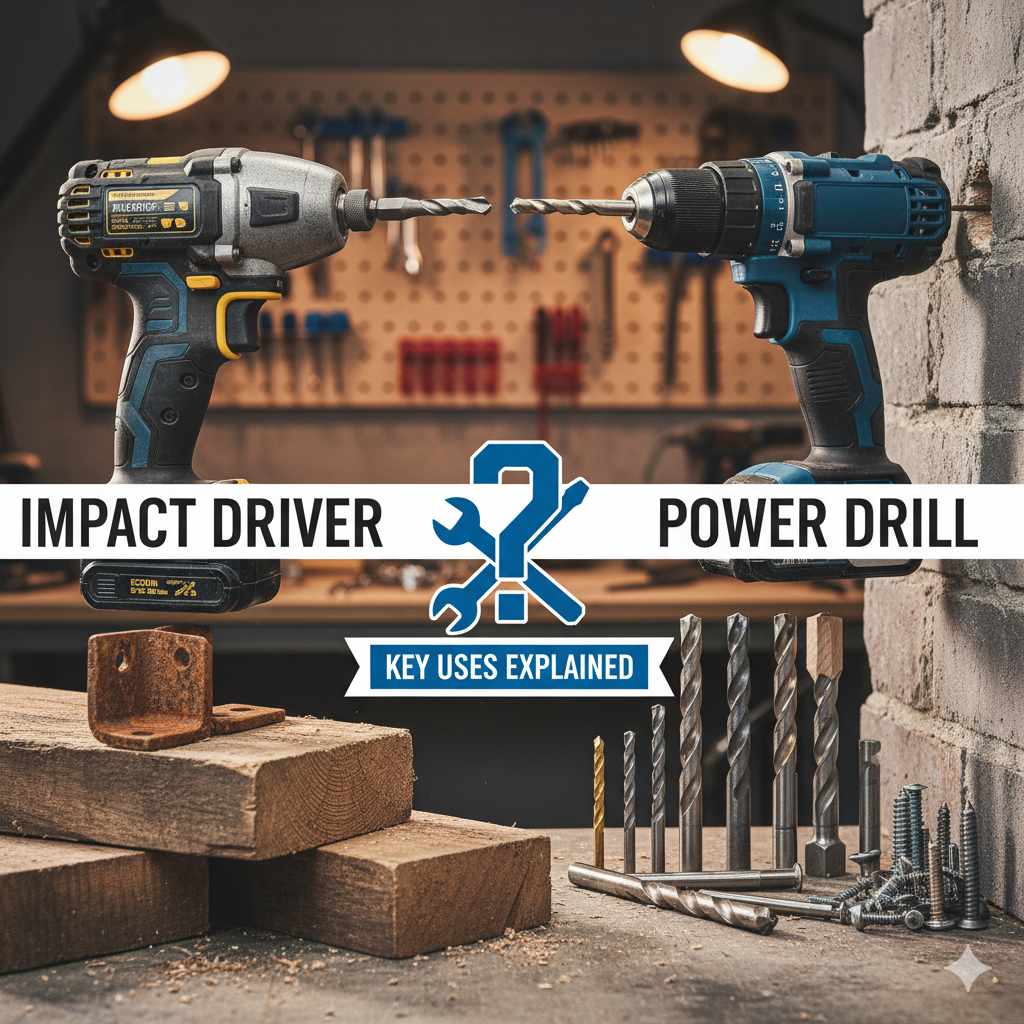
Difference between Impact Driver And Drill: Key Uses Explained
Are you confused about whether to use an impact driver or a drill for your next project? You’re not alone.
Both tools look similar and can seem interchangeable, but knowing the difference can save you time, effort, and frustration. You’ll discover exactly how each tool works, when to use one over the other, and which one fits your needs best.
By the end, you’ll feel confident picking the right tool for every job. Keep reading to unlock the secret that professionals don’t always share!
Impact Driver Basics
Impact drivers are powerful tools designed for tough jobs. They deliver strong force to drive screws and bolts with ease. Understanding their basics helps to choose the right tool for your tasks.
These tools work differently than regular drills. They use a special mechanism to add extra power. This makes them ideal for heavy-duty projects.
Design And Mechanism
Impact drivers have a compact, sturdy design. They use a hammering action that hits the screw rapidly. This action adds extra torque without much effort. The tool spins and hits the screw at the same time. This reduces the chance of stripping screws or slipping.
Power And Torque
Impact drivers provide more torque than drills. Torque means the twisting force needed to turn screws. These tools handle hard materials like wood and metal easily. They use bursts of power to drive screws deep. This reduces user fatigue and speeds up work.
Common Applications
Impact drivers are perfect for construction and home improvement tasks. They work well with long screws and large bolts. They are great for building decks, fences, and furniture. They also help in automotive repair and heavy fastening jobs. Their power makes them a favorite for tough projects.
Drill Essentials
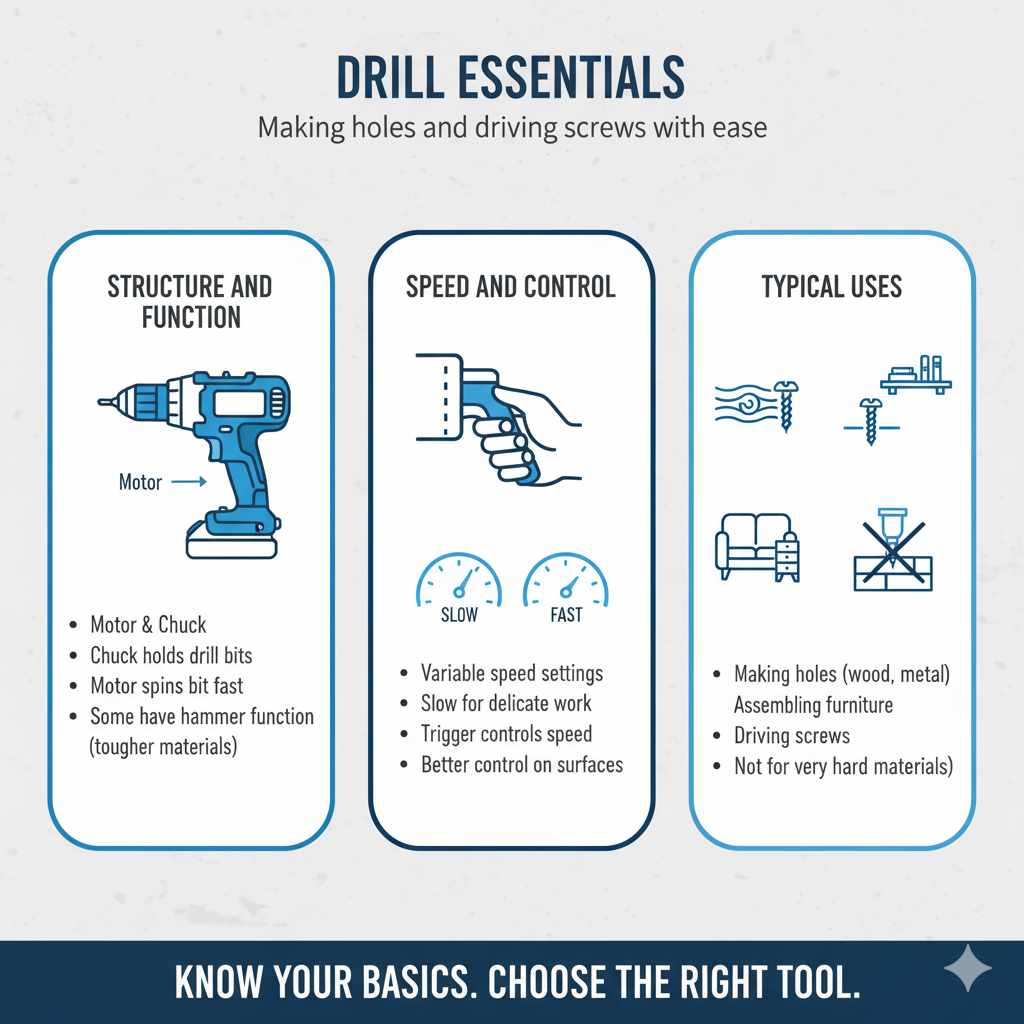
Understanding a drill is key to knowing how it works and where it fits. A drill is a common tool for many tasks around the home or workshop. It helps to make holes and drive screws with ease. Knowing its basics makes choosing the right tool easier.
Structure And Function
A drill has a motor and a chuck to hold drill bits. The chuck tightens around the bit to keep it steady. Inside, the motor spins the bit fast. Some drills also have a hammer function for tougher materials. The design is simple but very effective for drilling and screwing.
Speed And Control
Drills offer variable speed settings. You can go slow for delicate work or fast for drilling through wood or metal. Most drills have a trigger to control speed easily. This helps prevent damage to the material. It also gives better control when working on different surfaces.
Typical Uses
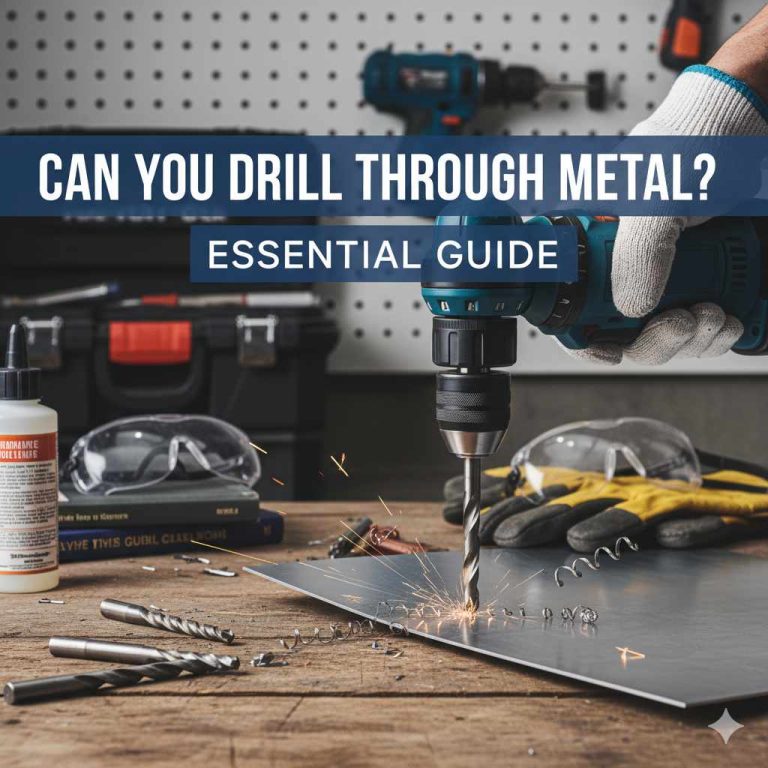
Drills work well for making holes in wood, metal, and plastic. They are perfect for assembling furniture and installing shelves. Drills also drive screws into surfaces without much effort. They are not ideal for very hard materials or heavy-duty tasks. For those, other tools might be better.
Performance Comparison
Comparing the performance of an impact driver and a drill helps you choose the right tool. Both tools serve different jobs and have unique strengths. Understanding their performance differences guides better decisions for your tasks.
Torque Output
Torque is the twisting force a tool delivers. Impact drivers provide much higher torque than drills. This makes impact drivers better for driving large screws and bolts. Drills offer moderate torque, suitable for drilling holes and light fastening.
Speed Variations
Drills usually have adjustable speeds for different tasks. They run slower for drilling and faster for driving screws. Impact drivers focus on high speed with rapid bursts of power. This helps them drive screws quickly and efficiently.
Handling Tough Materials
Impact drivers handle hard materials better than drills. Their high torque and impact action break through tough wood and metal. Drills can struggle with dense materials and may stall or slip. Impact drivers keep working smoothly under pressure.
Tool Versatility
Tool versatility matters a lot in choosing between an impact driver and a drill. It affects how many tasks each tool can handle. Both tools have strengths that suit different needs. Understanding their versatility helps pick the right tool for any project.
Attachment Compatibility
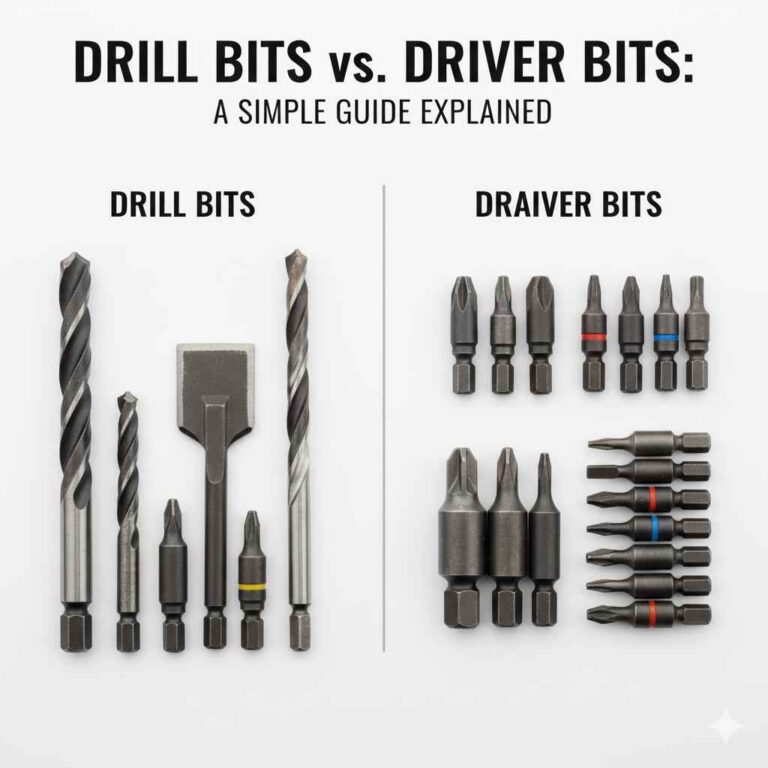
Drills work with many attachments like drill bits and sanding pads. They handle drilling, screwing, and even polishing. Impact drivers mostly use hex-shank bits. These bits are great for driving screws and bolts. Drills offer more options for various jobs. Impact drivers focus on tasks needing strong torque.
Corded Vs Cordless Options
Both drills and impact drivers come in corded and cordless versions. Corded tools provide constant power without battery limits. Cordless tools offer freedom to move anywhere. Cordless models depend on battery charge. Corded tools suit long, continuous work. Cordless tools are good for quick jobs and tight spaces.
Battery Life Considerations
Battery life varies between drills and impact drivers. Impact drivers often use less battery because of efficient motors. Drills may drain battery faster with heavy use. Battery capacity affects how long tools run. Extra batteries help avoid work breaks. Choosing a tool with good battery life saves time.
Choosing The Right Tool
Choosing the right tool is key for your project’s success. Both impact drivers and drills have their strengths. Knowing which one fits your needs saves time and effort. This section breaks down the choice into simple parts. You will learn how project needs, skill level, and budget affect your decision.
Project Requirements
Think about the job you want to do. Drills work well for drilling holes and light screwing. Impact drivers handle tough screws and bolts with ease. For heavy-duty tasks, an impact driver is better. For simple drilling or small projects, choose a drill. The type of material also matters. Hard materials need more power, which an impact driver provides.
User Skill Level
Consider your comfort with tools. Drills are easier to control and learn. They have steady speed and less force. Impact drivers have strong bursts of power and can be harder to handle. Beginners might find drills less intimidating. More experienced users may prefer impact drivers for tough jobs. Pick a tool that matches your skill to avoid frustration.
Budget Factors
Price is important for many buyers. Drills usually cost less than impact drivers. You can find good basic drills at affordable prices. Impact drivers tend to be pricier due to higher power. Also think about extra costs. Some tools need special bits or batteries. Choose a tool that fits your budget without cutting corners on quality.
Maintenance Tips
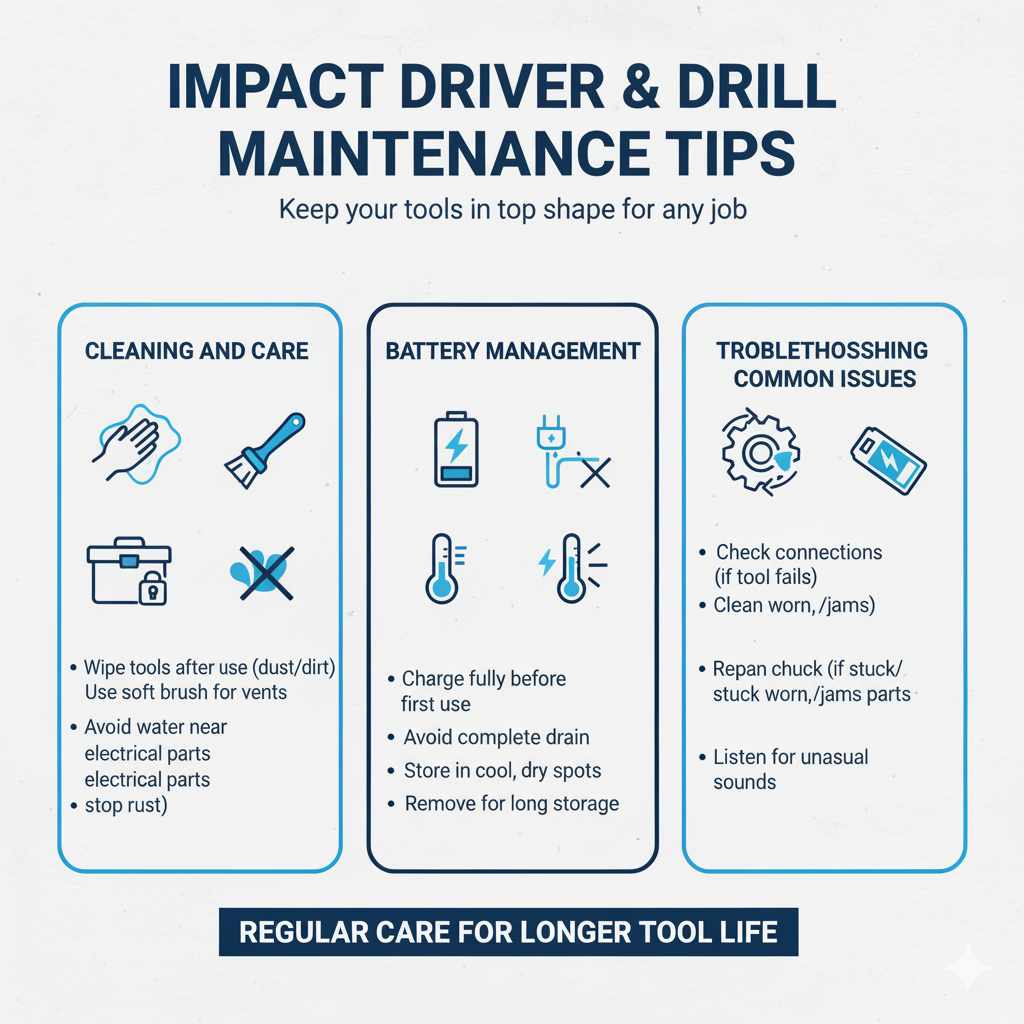
Maintaining your impact driver and drill helps them work better and last longer. Regular care prevents problems and saves money. Simple steps keep your tools ready for any job.
Cleaning And Care
Wipe the tools after use to remove dust and dirt. Use a soft brush for vents and crevices. Avoid water near electrical parts. Store tools in a dry place to stop rust.
Battery Management
Charge batteries fully before first use. Avoid letting batteries drain completely. Store batteries in cool, dry spots. Remove batteries from tools if not used for weeks.
Troubleshooting Common Issues
Check connections if the tool does not start. Clean the chuck if it sticks or jams. Replace worn-out parts to keep performance strong. Listen for unusual sounds indicating problems early.
Frequently Asked Questions
What Is The Main Difference Between An Impact Driver And Drill?
An impact driver delivers high torque with concussive blows, ideal for driving screws. A drill uses steady rotational force, perfect for drilling holes and light driving tasks.
Can An Impact Driver Replace A Drill?
No, impact drivers excel at driving screws but lack precision for drilling holes. Drills are more versatile for various hole sizes and materials.
Which Tool Is Better For Heavy-duty Fastening?
Impact drivers are better for heavy-duty fastening due to their high torque and impact mechanism. They reduce user fatigue and prevent stripping screws.
Are Drills Suitable For Woodworking And Metalworking?
Yes, drills are suitable for woodworking and metalworking. They offer precise control and variable speed for clean holes in different materials.
Conclusion
Choosing between an impact driver and a drill depends on your task. Drills work well for making holes and light screwing. Impact drivers handle tough screws and heavy-duty jobs. Each tool has its strengths and uses. Knowing the difference saves time and effort.
Pick the right tool to get the job done faster. Simple tools, smart choices.