Do Acorns Grow On Oak Trees? The Essential, Proven Truth
Yes, acorns absolutely grow on oak trees. In fact, acorns are the unique fruit of the oak tree, containing the seed needed to grow a new oak. If you find an acorn, you can be certain it came from an oak tree, as no other type of tree produces them.
Hello there! Md Meraj here, your friendly guide in the workshop and the great outdoors. It’s a question I hear from time to time, often from new homeowners or curious DIYers starting a project: “Do acorns really come from oak trees?” It sounds simple, but it’s easy to wonder when you see all sorts of nuts on the ground. You might feel a little unsure, and that’s perfectly okay!
Think of it like this: just as a beautiful oak tabletop starts with a single tree, that tree started with a single acorn. Today, we’re going to clear up any confusion. We will explore the simple truth about acorns, learn how they become mighty oaks, and even see how this connects to the beautiful wood we love to work with. Let’s get to the root of it together!
The Simple, Proven Truth: Acorns and Oak Trees
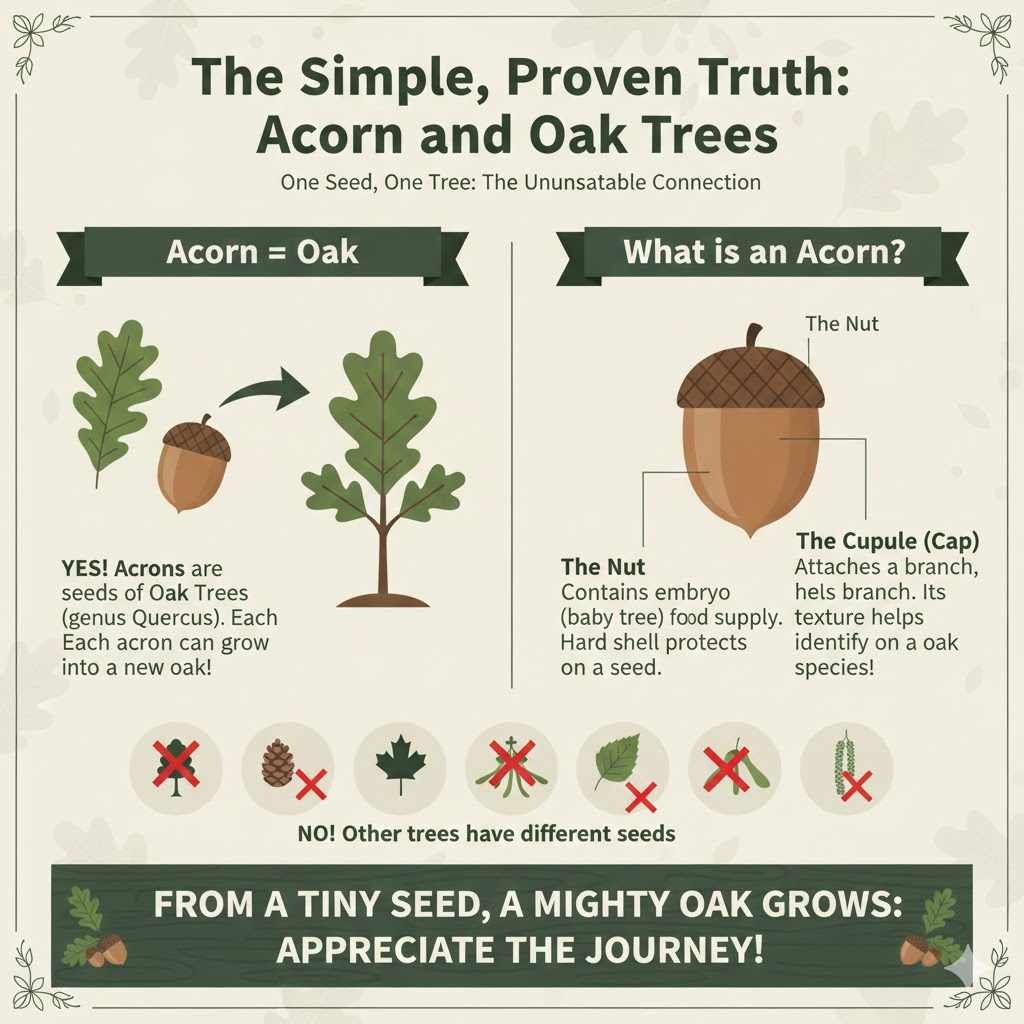
Let’s get straight to the point: Yes, acorns are the seeds of oak trees. It’s a one-to-one relationship. You will not find acorns growing on maple, pine, or birch trees. Only trees in the oak genus, known scientifically as Quercus, produce these distinctive nuts. So, if you’re holding an acorn, you’re holding the beginning of a potential oak tree.
But what exactly is an acorn? It’s more than just a seed. An acorn is technically the fruit of the oak tree. It has two main parts:
- The Nut: This is the main body of the acorn. Inside this hard shell is the embryo—the part that will sprout and grow into a new tree. It’s packed with all the food the baby tree needs to get started.
- The Cupule (or Cap): This is the scaly, cup-like top that sits on the nut. It’s what attaches the acorn to the tree branch. The look of the cap is often a great clue for identifying what kind of oak tree it came from!
Understanding this simple connection is the first step in appreciating the journey from a tiny seed to the strong, reliable lumber we use in our workshops.
From Little Acorn to Mighty Oak: The Incredible Life Cycle
The journey of an oak tree is a story of patience and strength. It all starts with that one little acorn. Seeing this cycle helps us appreciate the wood we work with even more. It didn’t just appear; it grew over decades, sometimes centuries.
- The Acorn is Born and Falls: In the late summer and fall, mature oak trees produce their acorns. When ripe, these acorns fall to the ground. A single large oak can drop thousands of acorns in a good year! Many of these become food for squirrels, deer, and birds.
- Finding the Right Spot (Germination): For an acorn to grow, it needs to land in a good spot. It needs soil, a little moisture, and some sunlight. Squirrels are actually fantastic gardeners—they bury acorns to save for later but often forget where they put them, effectively planting new oak trees.
- Sprouting Begins: Once the conditions are right, the acorn germinates. The first thing to grow is a root, called a taproot, which pushes deep into the soil to find water and anchor the new plant.
- The Seedling Emerges: After the root is established, a tiny stem with a few leaves pushes up through the soil toward the sunlight. This little plant is now called a seedling. It’s very fragile at this stage and needs plenty of sun and water to survive.
- Growing into a Sapling: Over the next few years, the seedling grows taller and stronger, developing more leaves and a thicker stem. It’s now called a sapling. It still has a long way to go and must compete with other plants for resources.
- Maturity and First Acorns: An oak tree needs many years before it’s old enough to produce its own acorns. This can take anywhere from 20 to 50 years, depending on the type of oak and its growing conditions. Once it reaches maturity, it starts the cycle all over again, providing acorns for wildlife and the next generation of trees.
Thinking about this long, slow process gives you a real respect for every piece of oak you measure, cut, and sand. It’s a piece of history.
Why Don’t All Oak Trees Have Acorns?
Have you ever walked past a big, beautiful oak tree and noticed there were no acorns on it or on the ground below? It’s a common sight, and there are several simple reasons why a healthy oak might not be producing acorns in a given year.
The Tree Is Still Too Young
Just like people, trees have a lifespan with different stages. An oak tree is considered a juvenile for a long time. Most oak trees won’t start producing acorns until they are at least 20 years old, and some species may take up to 50 years to reach full maturity. So, a young, healthy-looking oak may simply not be old enough yet.
It’s Not a “Mast” Year
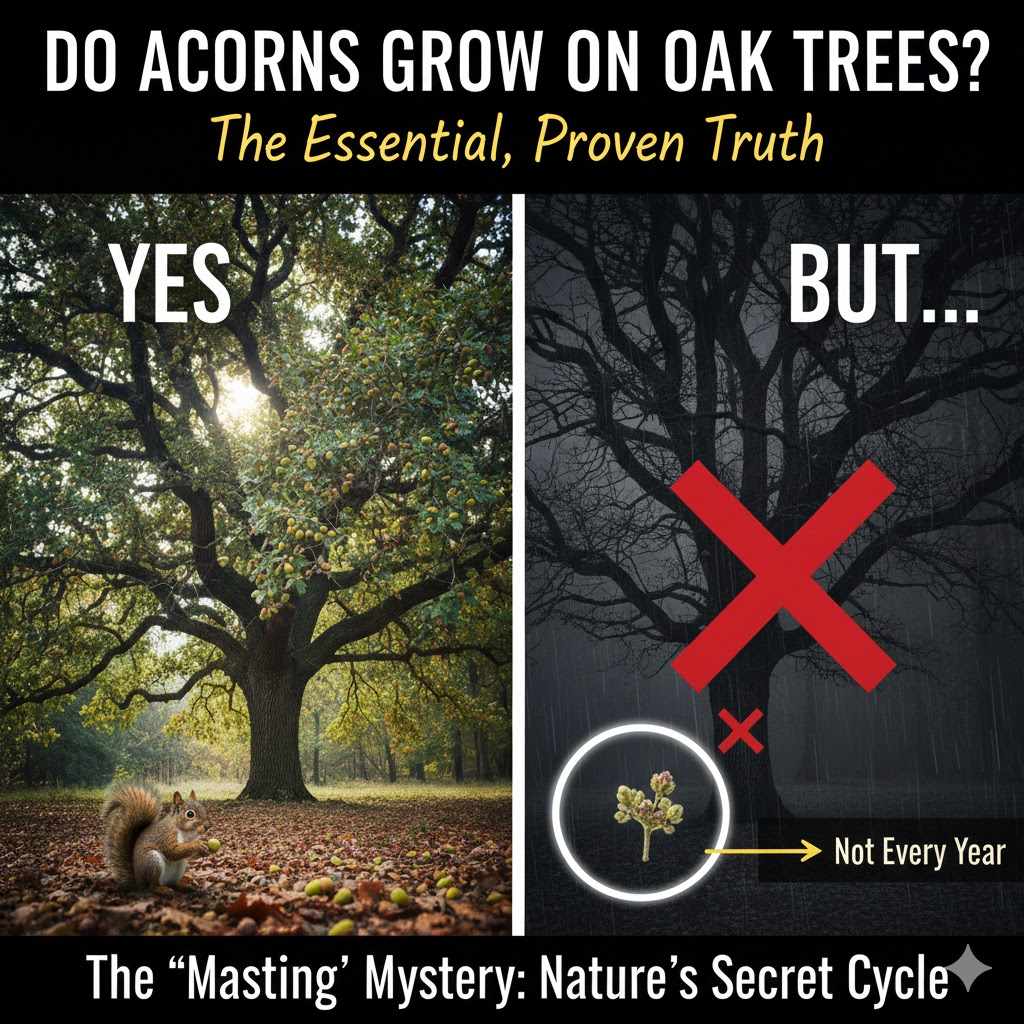
Oak trees have a fascinating survival strategy called “masting.” This means they don’t produce the same amount of acorns every single year. Instead, they produce a massive crop of acorns every 2 to 5 years. In the years in between, they might produce very few or even none at all. This cycle helps ensure the survival of new oak seedlings. How? In low-acorn years, animal populations (like squirrels) that eat acorns can’t grow too large. Then, during a mast year, the trees produce so many acorns that the animals can’t possibly eat them all, leaving plenty left over to sprout.
Weather Can Get in the Way
The weather plays a huge role in acorn production. Oak trees produce small, unassuming flowers in the spring. If a late frost hits, it can freeze and kill these delicate flowers, meaning no acorns will develop that year. A severe drought or extremely wet conditions during the pollination period can also prevent acorns from forming.
Pests and Diseases
Sometimes, the issue isn’t the tree itself but something attacking it. Insects like acorn weevils can damage the developing acorns on the tree. Various tree diseases can also stress the oak, causing it to conserve energy and stop producing fruit. A healthy tree is much more likely to produce a healthy crop of acorns.
A Woodworker’s Guide to Oak Types and Their Acorns
As a woodworker, knowing your materials is key. One of the best ways to understand oak is to start with its seed. The acorns can tell you a lot about the tree and the wood it will produce. Oak trees are generally split into two main groups: Red Oaks and White Oaks. Their acorns are a great way to tell them apart.
Here’s a simple table to help you identify some common oak trees just by looking at their acorns. This is a handy skill when you’re out for a walk or even identifying lumber from a local source.
| Oak Group | Common Tree Name | Acorn Characteristics | Woodworking Note |
|---|---|---|---|
| White Oak Group | White Oak (Quercus alba) | Oblong nut (1 inch long), bumpy and warty cap covering about 1/4 of the nut. Tastes less bitter than red oak acorns. | Highly water-resistant due to closed cell structure (tyloses). Perfect for outdoor furniture, barrels, and boats. |
| White Oak Group | Bur Oak (Quercus macrocarpa) | Very large, rounded nut (up to 2 inches!). Cap is huge and has a distinct mossy fringe, covering over half the nut. | Strong, heavy, and durable, similar to White Oak. Often used for flooring, cabinetry, and furniture. |
| Red Oak Group | Northern Red Oak (Quercus rubra) | Wide, roundish nut (about 1 inch). The cap is flat and saucer-like, covering only the very top, like a small beret. | Porous and not water-resistant. Stains very well due to its open grain. A classic choice for indoor furniture and trim. |
| Red Oak Group | Pin Oak (Quercus palustris) | Small and round (about 1/2 inch) with faint stripes. The cap is very thin and saucer-like, barely covering the top. | Often used for general construction and pallets. Wood is heavy and strong but can be knotty. Not a top choice for fine furniture. |
| Southern Oak | Live Oak (Quercus virginiana) | Dark, small, and tapered, about 1 inch long. The cap covers about 1/3 of the nut and has a long stalk (peduncle). | Extremely hard, heavy, and strong. Historically used in shipbuilding. Difficult to work with but incredibly durable. |
What These Differences Mean for Your Projects
Why should a woodworker care if an acorn cap is bumpy or fringed? Because it hints at the properties of the wood. The two main groups, Red Oak and White Oak, have fundamental differences that impact your projects.
The U.S. Forest Service has extensive resources on identifying different oak species, which can be a great help if you’re interested in learning more. For example, their page on the Northern Red Oak provides in-depth details about its life cycle and characteristics.
Let’s break down the practical differences for your workshop:
| Feature | Red Oak | White Oak |
|---|---|---|
| Water Resistance | Poor. The wood has an open-celled grain that acts like tiny straws, soaking up moisture. | Excellent. The wood has closed cells called tyloses that block water from penetrating. |
| Best Use | Indoor projects only: furniture, cabinets, flooring, and interior trim. | Indoor and outdoor projects: outdoor furniture, boats, barrels, and kitchen cabinets. |
| Color | Typically has a reddish or pinkish tint. The grain patterns can be very bold. | Lighter in color, with hues of beige, tan, or even greyish-brown. |
| Staining | Takes stain very well and evenly due to its porous structure. | Can sometimes be blotchy when stained due to its closed grain. Using a pre-stain conditioner is recommended. |
| Hardness (Janka Scale) | Around 1290 lbf. Hard and durable, but slightly softer than White Oak. | Around 1360 lbf. Very hard and resistant to dents and scratches. |
So, the next time you see an acorn, pick it up! Look at its cap and shape. You’re not just looking at a nut; you’re looking at a clue that tells a story about strength, water resistance, and the potential for a beautiful, handcrafted project.
The Acorn’s Vital Role in Nature
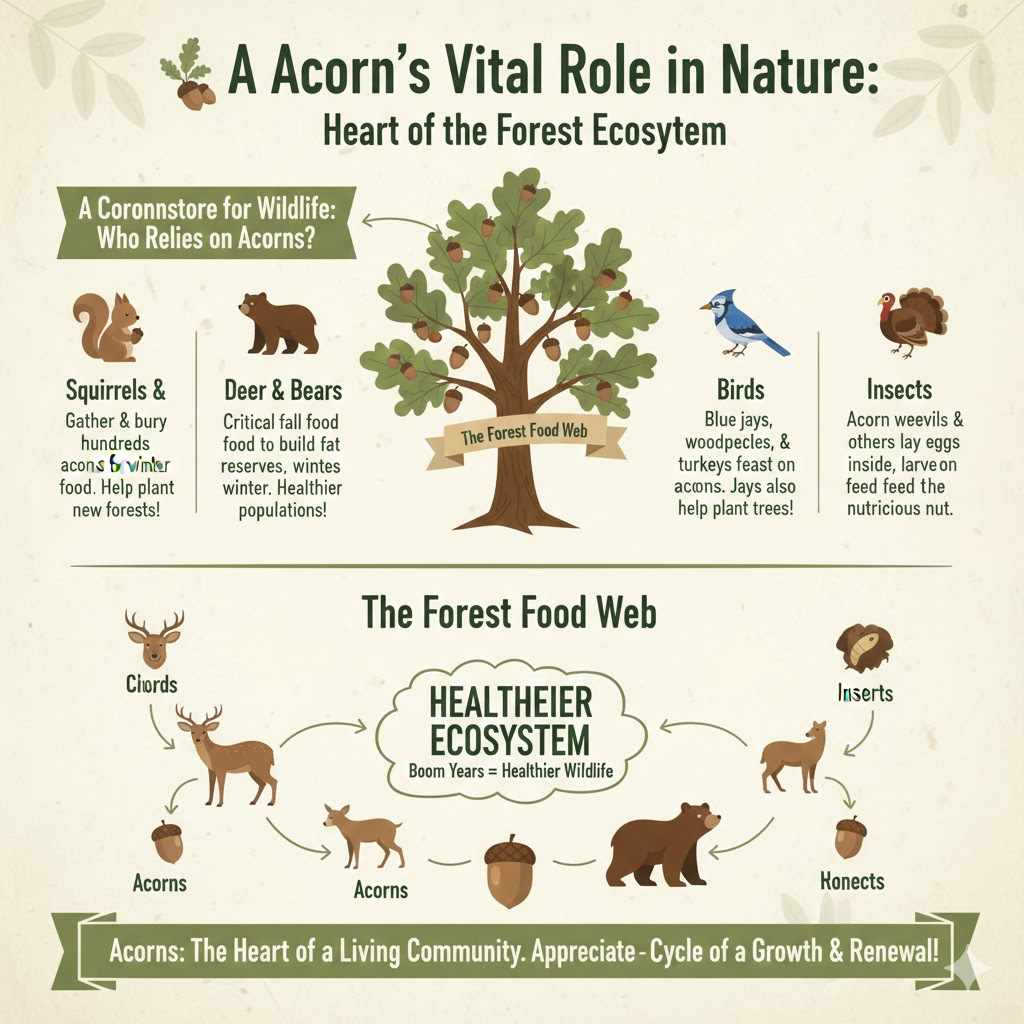
While we admire acorns as the start of our favorite hardwood, their importance extends far beyond our workshops. Acorns are a cornerstone of the forest ecosystem. They are a superfood for wildlife, packed with fats, proteins, and carbohydrates needed to survive the winter.
Here’s a quick look at who relies on the mighty acorn:
- Squirrels and Chipmunks: These are the most famous acorn collectors. They gather and bury hundreds of acorns, creating a food stash for the cold months.
- Deer and Bears: For larger animals, acorns are a critical food source in the fall, helping them build up fat reserves for winter. A good acorn crop can mean a healthier deer population.
- Birds: Blue jays, woodpeckers, and wild turkeys all feast on acorns. Blue jays, like squirrels, often hide acorns, contributing to the planting of new forests.
- Insects: A host of insects, like the acorn weevil, lay their eggs inside acorns, where their larvae hatch and feed on the nut meat.
Without acorns, the entire forest food web would be disrupted. The “mast” years—those years of massive acorn production—are a boom time for wildlife, often leading to healthier animal populations in the following spring. By understanding this, we see the oak tree not just as a source of lumber, but as the heart of a living community.
Frequently Asked Questions (FAQ)
1. Do acorns grow on all oak trees?
Yes, all species of oak trees produce acorns, though they may look very different in size, shape, and color depending on the type of oak. However, an individual tree might not have acorns if it’s too young, it’s not a mast year, or it’s been affected by weather or pests.
2. How long does it take for an oak tree to produce acorns?
It takes a long time! Most oak trees need to be at least 20 years old before they can produce their first acorns. Some species can even take up to 50 years to mature. Peak acorn production usually occurs when a tree is between 70 and 80 years old.
3. Can I eat the acorns I find on the ground?
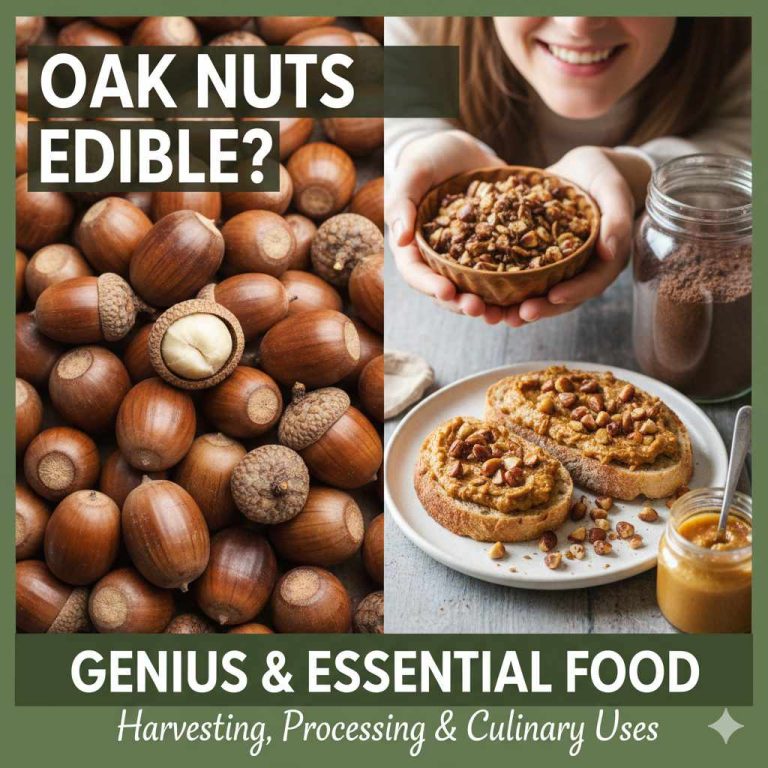
While acorns are edible, you can’t just eat them raw. They contain high levels of tannins, which are very bitter and can upset your stomach. To make them edible, they must be shelled and then leached in water to remove the tannins. White oak acorns have fewer tannins and are generally considered more palatable than red oak acorns.
4. What is the difference between an acorn and a nut?
An acorn is a specific type of nut. The term “nut” is a broad category for a fruit with a hard shell and an edible seed. An acorn is simply the specific name for the nut produced by an oak tree. Think of it this way: all acorns are nuts, but not all nuts are acorns.
5. How can I grow an oak tree from an acorn?
You certainly can! First, collect fresh acorns in the fall (choose ones that are plump and free of holes). You’ll need to test their viability by dropping them in water—the ones that sink are good. Some acorns (from the red oak group) need a cold period (stratification) to germinate, so you can store them in a plastic bag in your fridge for a month or two. Then, plant the acorn about an inch deep in a pot with good soil, and keep it moist. Be patient, as it can take time to sprout!
6. Why do some acorns have holes in them?
A small, perfect hole in an acorn shell is usually the work of an acorn weevil. The female weevil drills a hole, lays an egg inside, and the larva hatches and eats the nutmeat as it grows. It then chews its way out, leaving the telltale hole behind. These acorns will not sprout.
Conclusion: The Humble Seed of Greatness
So, we’ve come full circle. The answer to “do acorns grow on oak trees?” is a clear and simple yes. They are the beginning, the blueprint, and the promise of every oak that stands tall in our forests and provides the beautiful lumber for our workshops.
From the moment an acorn falls to the ground, it embarks on an incredible journey—one of patience, resilience, and potential. It nourishes wildlife, regenerates forests, and, after a century of slow and steady growth, it can become the raw material for a piece of furniture that we build with our own hands, a piece that can last for generations to come.
The next time you’re out on a walk and see an acorn, I hope you’ll see more than just a nut. I hope you see the start of a story. A story of strength, life, and the amazing connection between nature and the craft we love. Keep building, keep learning, and always appreciate the mighty oak.