How Do Termites Eat Wood? Gut Microbes That Digest Cellulose
Termites eat wood by scraping off cellulose fibers with their mandibles, then relying on gut protozoa and bacteria to actually digest what their own bodies cannot – a partnership called symbiosis. Kill those gut microbes with borates or heat, and the termite starves even while it is sitting inside solid lumber. This guide covers the mandible-to-hindgut feeding sequence, why termites target sapwood over heartwood, and what happens inside a termite’s gut when it eats a 2×4.
The Termite Appetite: Understanding Why They Target Your Wood
Termites are not eating wood out of curiosity – they need cellulose to survive, the same way we need food. As DIYers and homeowners, understanding that core need is what lets you actually stop them instead of just patching the damage.
Termites are sometimes called “silent destroyers,” but they are really just efficient engineers working around the clock. Every bite is driven by the colony’s constant demand for energy, not by any interest in your furniture specifically.
Cellulose: The Termite’s Only Real Food Source
The secret to how termites eat wood comes down to one word: cellulose.
Cellulose is the main building block of plant cell walls – the tough, fibrous structure that makes up wood, paper, and cardboard. To us, it is just fiber. To a termite, it is the primary source of energy and nutrition.
The catch: extracting energy from cellulose’s long chains of glucose molecules requires enzymes termites do not naturally produce themselves. That gap is the real story behind how termites eat wood at all.
The Symbiotic Relationship: Termites’ Gut Microbes Do the Digesting
Termites cannot digest wood on their own. They are almost entirely dependent on microorganisms living inside their hindgut – a relationship called symbiosis.
Meet the Microbe Team
A termite’s digestive system is packed with specialized protozoa and bacteria. When the termite chews wood and swallows it, the cellulose moves into the hindgut, where these microbes get to work.
1. Breaking the bonds: The microbes carry enzymes called cellulases that break the chemical bonds holding cellulose together.
2. Creating digestible sugars: This breakdown converts cellulose into short-chain fatty acids like acetate.
3. Feeding the termite: The termite absorbs those acids through its gut wall, fueling itself and, eventually, the rest of the colony.
📊 In lower termite species, the protozoa that break down cellulose cannot make the cellulase enzyme themselves – bacteria living inside the protozoa’s own cells produce it for them, and digestion finishes in the hindgut as short-chain fatty acids the termite absorbs directly. Source: University of Connecticut, Noll Lab – Termite Gut Microbes
Without these gut microbes, a termite might as well be eating a rock. This is exactly why a termite that encounters treated wood or a borate-based poison stops feeding entirely: the poison collapses its internal digestive ecosystem, not just the termite itself.
Best Borate Wood Treatment Pick
 |
Bora-Care with Mold-Care Concentrate – $146.72 This is the same borate chemistry this article explains above: it disrupts the gut microbiome termites depend on to digest cellulose, so treated wood becomes indigestible rather than just distasteful.
|
Which Termites Are Eating Your House? A Quick Look
Not all termites feed the same way or in the same environment. Knowing the species helps you figure out where the attack is actually happening. Here are the three main groups you are likely to encounter:
| Termite Type | Primary Habitat | Feeding Style |
|---|---|---|
| Subterranean Termites (SOT) | In soil; enter structures from below | Highly aggressive, build mud tubes |
| Drywood Termites (DRY) | Inside wooden structures (no soil contact) | Leave small, hard fecal pellets (frass) |
| Dampwood Termites | Decaying, moist wood | Usually attack moisture-damaged lumber |
Where Termites Target: Sapwood vs. Heartwood
Termites are not eating every part of a piece of lumber equally – they are picky eaters, even within the same board.
A tree trunk has two parts that matter here:
1. Heartwood: the denser, darker, central part of the wood. In many species it is rich in natural resins and extracts that resist decay and pests, so termites often avoid it.
2. Sapwood: the outer, lighter layer that transports water and nutrients. It has fewer defense compounds and more of the soft starches termites crave – which makes it their main target.
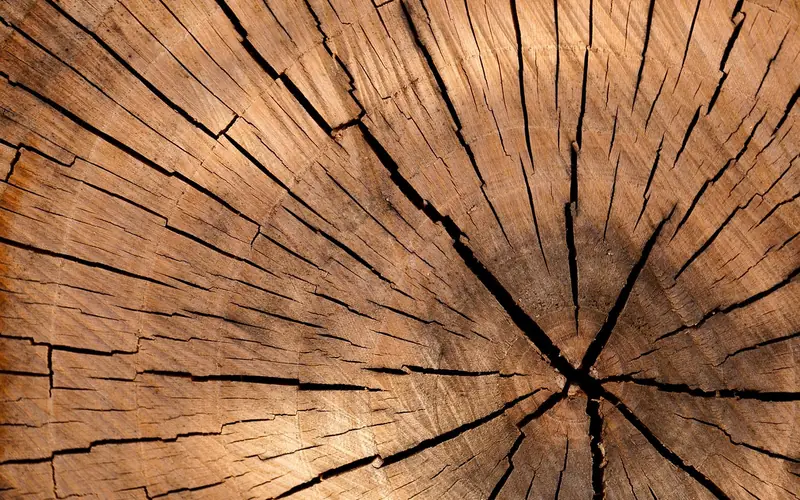
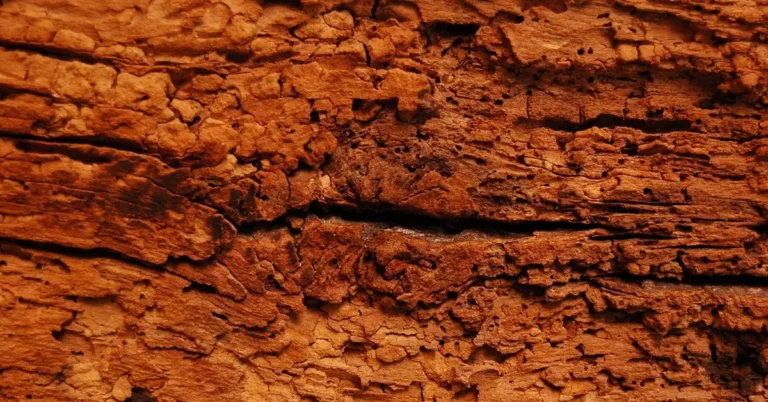
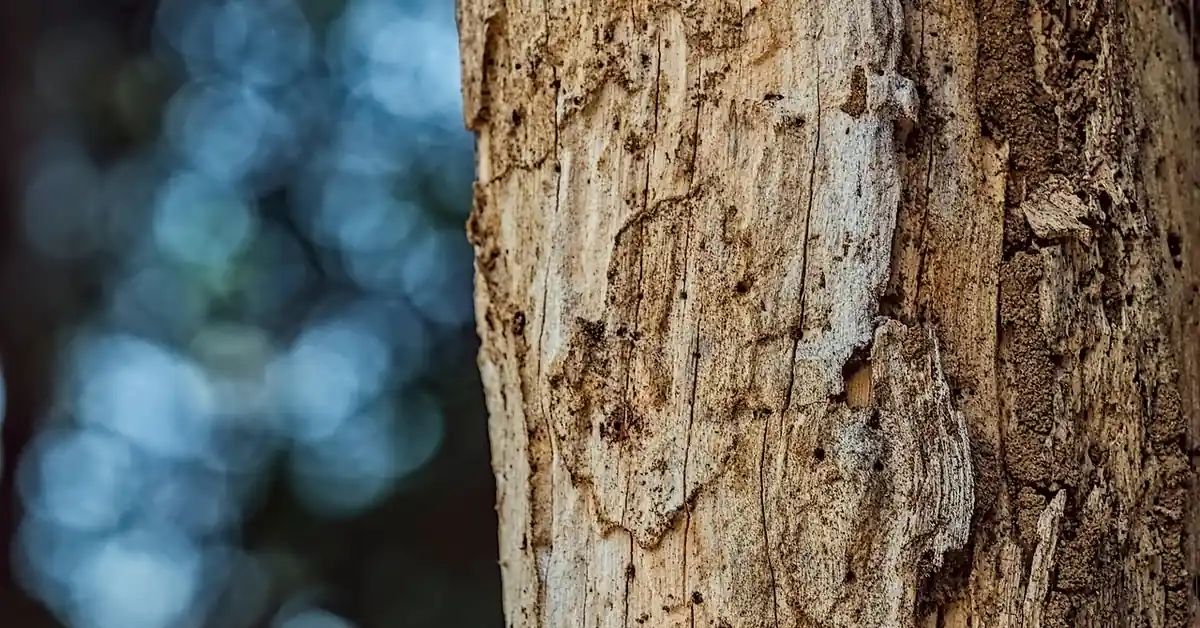
If you ever see a beam eaten out, notice how the darker central lines are often left untouched while the lighter surrounding wood is hollowed out. Termites go where the food is easiest to reach.
The Step-by-Step Process: How Termites Tunnel and Feed
Now that we know what they want (cellulose) and how they digest it (gut microbes), here is the physical act of consumption. It is a precise, team-based effort.
Step 1: Entry and Exploration
Subterranean termites in particular start by sensing moisture and cellulose gradients – they are extremely sensitive to changes in humidity.
- Tunneling through soil: subterranean termites move through soil searching for food sources.
- Finding the access point: they enter homes through foundation cracks, gaps around plumbing, or moist soil touching wooden sill plates.
- Building mud tubes: to hold humidity and avoid predators like ants, they build mud tubes connecting the soil to the wood above. Pencil-sized mud trails on concrete mean Step 1 is complete.
Step 2: Chewing and Collection (The Foraging Workers)
Worker termites do the excavating. They are the most numerous caste in the colony and are solely responsible for feeding everyone else.
A worker’s mandibles work like tiny shears. Rather than biting off large, noisy chunks that would expose the colony, workers scrape off very fine particles of wood fiber.
Why you rarely see the damage coming: termites feed from the inside out, leaving a thin veneer of surface wood behind. Tapping on a beam or baseboard might sound solid when there is nothing but air and tunnels underneath.
Step 3: Internal Transport and Pre-Digestion
Unlike humans, termites do not digest food the moment they eat it.
Regurgitation feeding: workers do not store cellulose in their stomachs. They chew the wood fibers, mix them with saliva and moisture in their mouthparts, and then either eat the paste themselves or regurgitate it to feed colony members who cannot forage – soldiers, the queen, and developing young.
This method ensures every termite in the nest gets the cellulose paste it needs, even the ones that never leave the tunnels.
Step 4: Microbial Digestion in the Hindgut
Once a worker swallows the mixture, the real digestion begins in the hindgut. The symbiotic microbes described above go to work breaking down the wood fiber’s complex structure.
Under a microscope, a termite hindgut shows countless protozoa moving constantly, chemically dismantling cellulose into the short-chain fatty acids the termite absorbs through its intestinal wall. The process is energy-intensive and runs nonstop.
Step 5: Excretion (The Proof You See)
After nutrients are absorbed, the remaining waste is excreted.
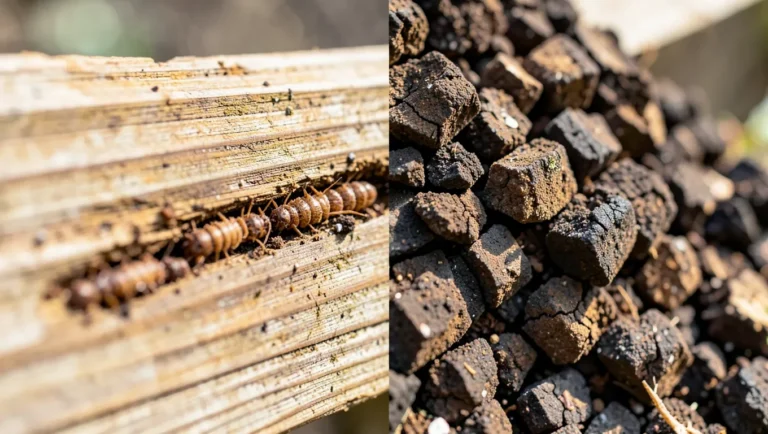
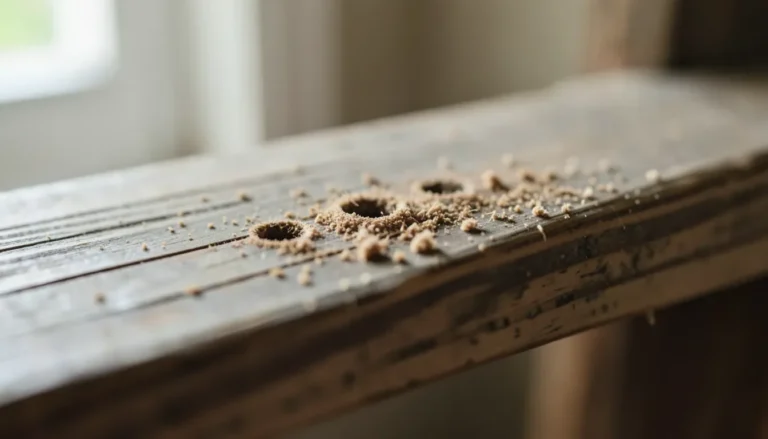
Subterranean termites reuse this frass as building material to reinforce tunnels and mud tubes. Drywood termites push tiny, uniform, six-sided pellets out of small “kick-out” holes, leaving small piles outside the feeding area.
Seeing sawdust-like piles or hexagonal pellets is a strong sign of wood-destroying insects even if you never see the insects themselves.
Dispelling Myths: What Termites Do Not Do
Understanding what termites are not doing can save you a lot of worry over the wrong signs.
Myth 1: Termites Eat Paint or Finishes First
Termites ignore paint, varnish, and polyurethane finishes – they are not interested in synthetic materials, only cellulose. They will chew straight through paint covering edible sapwood, which is why damage often shows up on painted trim first. The paint just sits on top of the hollowed-out area like a skin.
Myth 2: Termites Eat Wood for Water
They need moisture, especially subterranean termites, but they are not eating wood for its water content – they eat it for energy. Subterranean termites seek out moist soil because that is where they live; the wood is food. Drywood termites actually prefer very dry wood and pull the moisture they need from the metabolic process of breaking the wood down.
Myth 3: All Termites Work Together on the Same Piece
Colonies are massive, but castes have specific roles. Workers eat and forage. Soldiers defend the colony. The king and queen reproduce. A worker might never feed the queen directly – it feeds other workers, who pass the nutrients up the line. It is an organized system, not a free-for-all.
Visualizing the Damage: How Different Species Eat
The physical evidence left behind often reveals which termite is responsible.
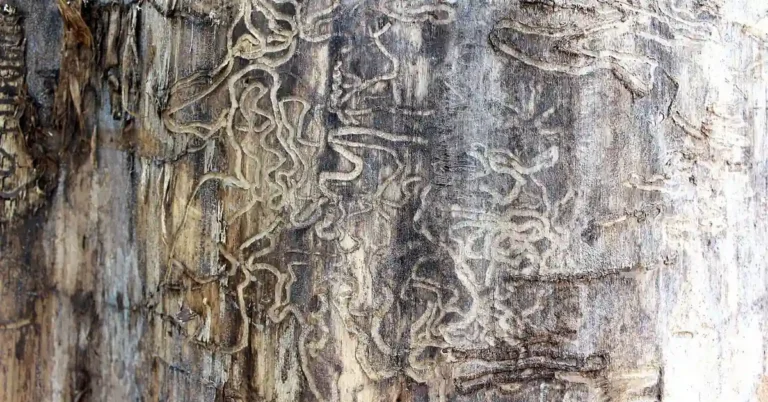
- Subterranean feeding pattern: mud residue in the tunnels; feeding runs along the grain, hollowing out the center while the surface veneer stays intact. Listen for hollow-sounding wood near the ground.
- Drywood feeding pattern: feeding crosses the grain with smooth galleries and no soil contamination. Look for piles of tiny pellets nearby.
- Sound difference: drywood-infested wood often taps with a dry, papery sound; subterranean damage can sound more muffled from residual soil and moisture.
Protecting Your Projects: Prevention Based on the Science Above
Knowing how they eat is half the battle. The best defense is making your lumber less appetizing and harder to reach.
Controlling the Food Source
If termites cannot access cellulose, they cannot thrive.
- Remove decaying wood: do not let scrap lumber, old firewood, or diseased stumps sit near your home or shed.
- Keep foundation clearance: keep soil, mulch, or wood debris off the wood framing of your house – aim for a clear 6-inch gap between soil and any wood structure.
- Fix leaks immediately: subterranean termites in particular are drawn to moisture, so fix leaky plumbing, bad gutters, and condensation issues right away.
Making Wood Inedible (Termite-Resistant Building)
DIYers may not always have access to industrial treatments, but knowing what resists termites can guide buying decisions for high-risk spots like decks or outdoor framing.
Pressure-treated wood: uses chemical preservatives, often copper-based, forced deep into the wood to prevent microbial growth. This disrupts the termite’s gut biome, making the wood toxic or indigestible to them. Look for lumber rated for “Ground Contact” near your home’s base.
Naturally resistant woods: redwood, cedar, and some tropical hardwoods have natural extractives that repel or kill termites, though they usually cost more than standard pine or fir.
Creating Physical Barriers
This tactic blocks their microscopic pathway to your lumber entirely.
Soil treatments: professional termiticide applications create a chemical barrier around the foundation that poisons or deters foraging workers.
Physical barriers: in new construction, a layer of fine sand or stainless steel mesh under the slab can deter subterranean termites, since their soft bodies struggle to tunnel through material that tightly packed or smooth.
Life Cycle Connection: Why They Never Stop Eating
How termites eat is directly tied to their life cycle. Colonies have overlapping generations that need feeding constantly, so a colony requires a steady stream of cellulose just to maintain its size.
A quick look at colony needs shows why feeding never really stops:
| Colony Member | Primary Role | Food Requirement |
|---|---|---|
| Workers | Forage, excavate, feed others | High – they are the engine |
| Soldiers | Defend tunnels | Medium – fed by workers |
| Queen/King | Reproduction | High – must produce eggs constantly |
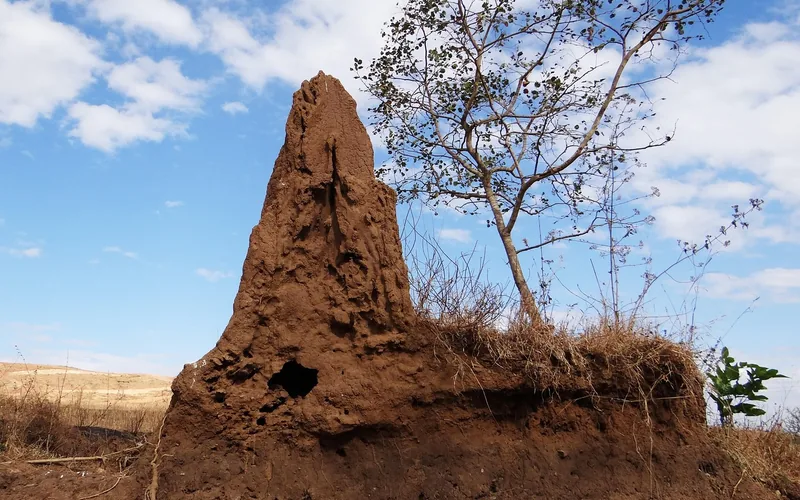
Because a queen can lay thousands of eggs a day, the demand for energy from digested cellulose is relentless – and that constant demand is what drives the ongoing damage you eventually notice.
FAQ: Beginner Questions About Termite Feeding Habits
Here are some common, practical questions about how termites actually eat wood.
Q1: Can termites eat wood that has paint on it?
Yes. Termites are only interested in the cellulose underneath. If they find an access point, they chew through the paint to reach the soft wood, leaving the paint looking intact over an empty space.
Q2: Do termites prefer soft wood or hard wood?
Termites strongly prefer softer sapwood over denser heartwood, especially where the heartwood has natural resins or has been pressure-treated. Softwoods like pine are generally easier for their gut microbes to break down.
Q3: How fast do termites actually eat wood?
A single termite is slow, but a large colony can consume wood surprisingly fast – some colonies can eat through a foot of 2×4 framing in as little as seven months, depending on colony size and species. For the full breakdown by species and conditions, see our guide on how fast termites eat wood.
Q4: Why don’t I hear termites eating my wood?
Their feeding is fine scraping, not crunching, and most of it happens underground or deep inside structures where mud tubes and framing muffle the sound.
Q5: What kills the tiny microbes that help termites digest wood?
Termiticides designed for wood or soil work by disrupting the gut microbiome or killing the termite outright before it can pass its internal microbes on. Borates specifically poison that internal digestive process, which is why they are common in wood preservatives.
Q6: If I see termites, does that mean the whole house is gone?
Not at all. Seeing termites usually means a small, localized foraging party found a food source and an entry point. Early detection is your biggest advantage – small, localized issues are far cheaper to fix than long-term infestations.
“In lower termites, the protozoa doing the cellulose digestion cannot make their own cellulase enzyme – that enzyme actually comes from bacteria living inside the protozoa’s cells. It’s a partnership within a partnership, and losing either partner leaves the termite unable to get energy from wood at all.”
Dr. Kenneth Noll, termite gut microbiology researcher, University of Connecticut
Conclusion: The Mechanism Behind the Damage
How termites eat wood is not mindless munching – it is a specialized biological process built entirely around gut microbes unlocking the energy locked inside cellulose. Termites target soft sapwood, feed in complete darkness and humidity, and pass a nutrient-rich paste through the whole colony.
For DIYers and wood lovers, that mechanism translates directly into defense: protect the areas where soil meets wood, fix moisture problems immediately, and use rated or borate-treated materials in vulnerable spots. Remove either half of a termite’s requirements – cellulose or the moist, sheltered environment its gut microbes need – and you take away its ability to operate in your woodwork at all.
Sponsored / affiliate links. As an Amazon Associate I earn from qualifying purchases. I may earn additional commission from eligible campaigns.