Do Termites Eat Cedar Wood? Yes, But It’s More Resistant Than Most
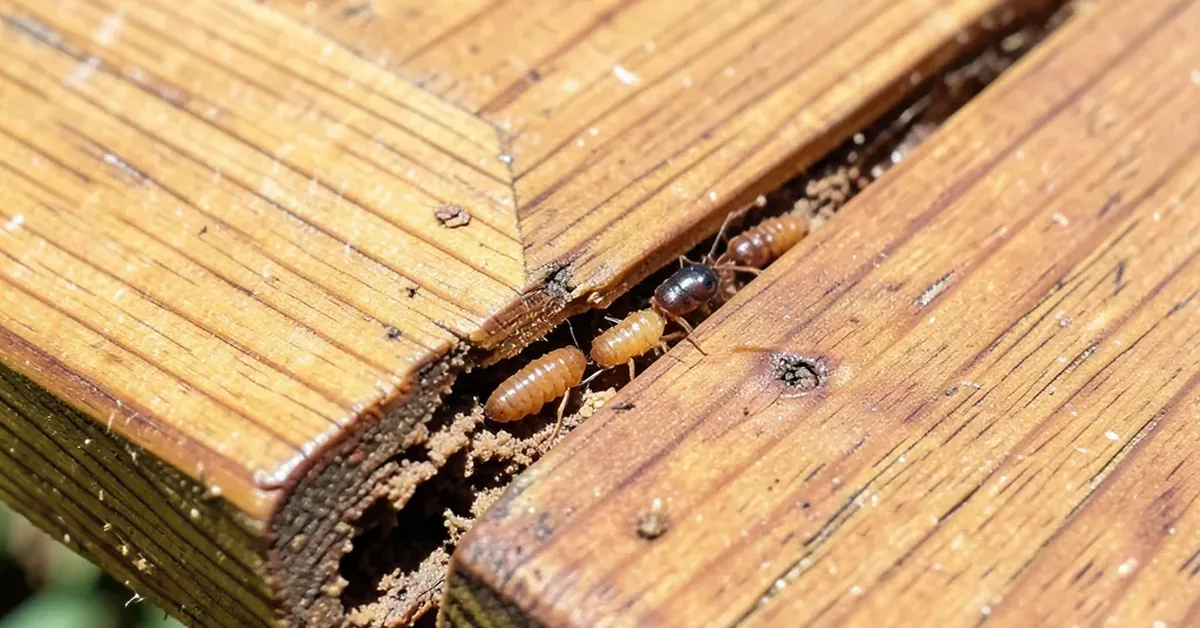
Yes, termites do eat cedar wood — but its heartwood contains natural compounds called thujaplicins that make it far more resistant than pine or fir, not termite-proof. Weathering, cut ends, and sapwood all bypass that protection. This guide covers why cedar resists termites, when that resistance fails, and how to treat the weak points yourself.
Why Termites Eat Wood — and Why Cedar Is Different
Best Borate Wood Preservative Pick
 |
PenaShield Penetrating Wood Preservative & Termiticide (1 Gal) – $40.19 A ready-to-use termiticide/fungicide for exactly the cut-end and cedar-siding gaps this guide flags as cedar’s real weak points.
|
As an Amazon Associate we earn from qualifying purchases.
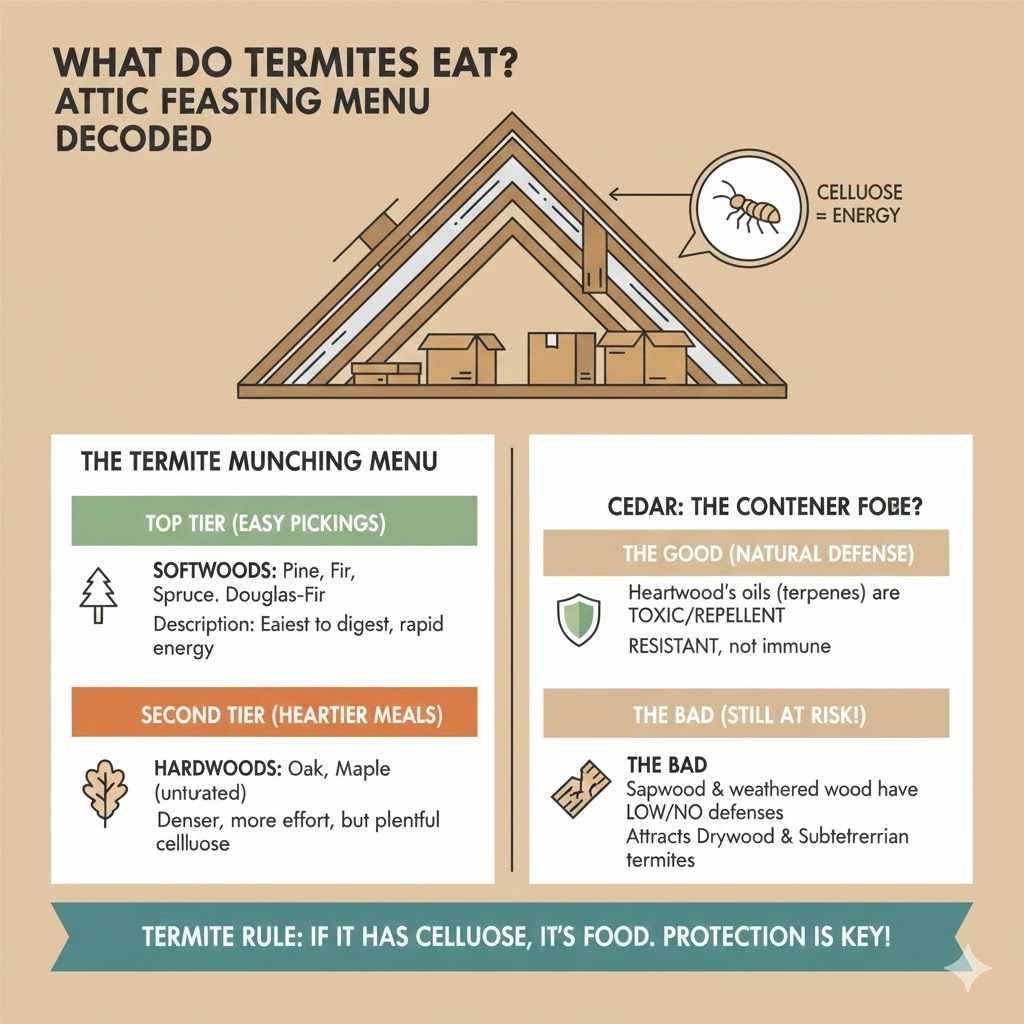
Termites don’t eat wood for the wood itself — they’re after cellulose, the carbohydrate that makes up plant cell walls. Microorganisms in a termite’s gut break that cellulose down into usable energy. Any wood with accessible cellulose is a potential food source.
Not all wood ranks equally on a termite’s menu:
- Softwoods like pine, fir, and spruce: easiest to excavate and digest, and termites’ clear first choice.
- Untreated hardwoods like oak or maple: tougher structurally, but still plentiful in cellulose.
- Cedar: naturally defended, but not off the menu — the reason this question keeps coming up.
The Science Behind Cedar’s Termite Resistance
Western Red Cedar and Eastern Red Cedar owe their resistance to natural compounds in the heartwood called thujaplicins, along with related lignans — not to any physical toughness that keeps insect jaws out. Termites can chew cedar just as easily as pine; what stops them is that these compounds are toxic to the fungi and organisms termites rely on, and act as a feeding deterrent on their own.
📊 Western Red Cedar heartwood is rated “resistant to very resistant” to decay and insect attack by the USDA Forest Products Laboratory, due to fungicidal compounds concentrated in the heartwood — sapwood carries almost none of this protection. Source: USDA Forest Products Laboratory, Western Redcedar Technical Sheet
Heartwood vs. Sapwood: The Difference That Matters Most
A single cedar board can contain both. Heartwood, the darker red-brown wood from the center of the trunk, carries the concentrated defensive compounds. Sapwood, the pale band near the bark, has almost none.
| Wood Section | Appearance | Termite Resistance | Why |
|---|---|---|---|
| Heartwood | Deep red-brown, dense | High — natural resistance | High concentration of thujaplicins and related extractives |
| Sapwood | Pale, creamy yellow | Low — behaves like softwood | Lacks the protective compounds almost entirely |
A budget bundle that’s mostly sapwood offers little more resistance than construction-grade pine. Paying for all-heartwood boards is where cedar’s reputation actually comes from.
What Actually Attracts Termites to Cedar
If cedar is naturally resistant, why do termite tunnels sometimes run straight through untreated cedar decking? Because that natural defense weakens over time and has clear gaps.
Weathering Leaches Out the Protective Oils
The extractives responsible for cedar’s resistance are water-soluble. Years of rain, dew, and UV exposure gradually leach them out. Once weathered enough, termites treat the wood as ordinary cellulose rather than cedar.
Not All Termite Species Behave the Same
Subterranean termites, the most destructive species in North America, build mud tubes from the soil to reach wood and are the ones most likely to bypass cedar’s defenses by exploiting moisture at ground contact points. Drywood termites live entirely inside dry wood with no soil contact and more often show up in interior cedar trim in drier climates like the Southwest. Check with a local extension office to know which species is the real regional threat before choosing a treatment plan.
Cut ends are the weakest point on any cedar board. Cutting exposes raw, untreated cellulose and removes the protective layer that took the tree years to build — this is where subterranean termites most often gain entry once soil moisture reaches the wood.
How to Boost Cedar’s Termite Defense Yourself
Cedar’s natural resistance is a head start, not a guarantee. Three layers of protection close the gaps weathering and cutting create.
1. Choose Pressure-Treated Cedar for Ground Contact
For deck posts, fence boards touching soil, or anything near grade, buy lumber rated for ground contact under AWPA standards — look for the retention/rating tag. Ground-contact-rated wood is treated to resist both moisture and termite feeding better than “above ground” rated lumber.
2. Treat Every Cut End With a Borate Preservative
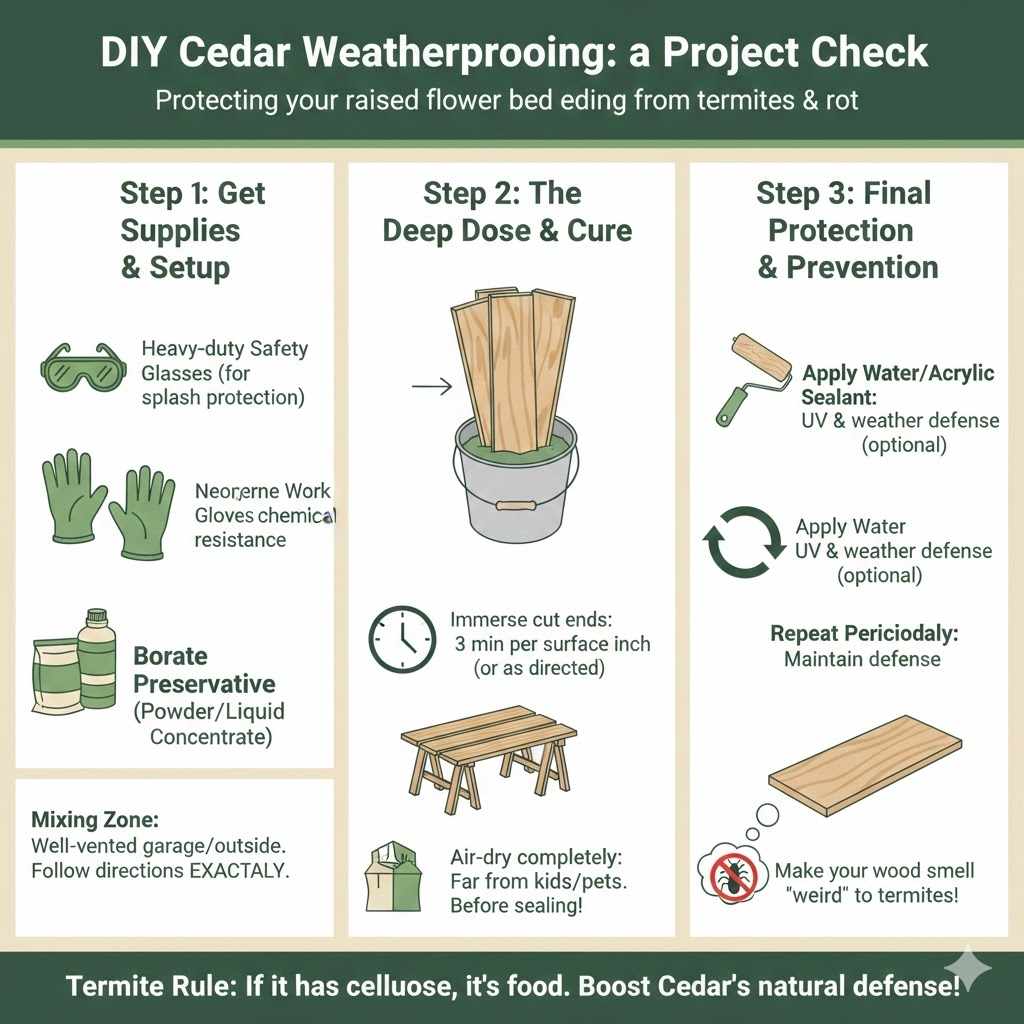
Cutting pre-treated or naturally resistant cedar exposes untreated cellulose at the cut face. Brush or soak a borate-based wood preservative (sold as concentrate or ready-to-use) onto every fresh cut, drilled hole, or notch before installing the board. Borates aren’t fungicides in the traditional sense — they disrupt the digestive process of insects that ingest treated cellulose, which is exactly the point of entry cut ends create.
3. Seal and Stain Exposed Cedar
A water-repellent exterior stain or sealer slows the weathering that leaches out cedar’s protective extractives in the first place, and keeps the wood drier — termites are drawn to moisture as much as to food. Resand and recoat exterior cedar decking or siding every three to five years to keep this barrier intact.
Moisture Matters More Than the Wood Species
Subterranean termites need consistent moisture to survive outside the soil — more than they need any specific wood. Removing standing moisture near a structure does more to prevent an infestation than the wood species choice alone:
- Grade soil and gutters so water drains away from the foundation instead of pooling against it.
- Fix plumbing leaks inside wall voids immediately — standing moisture there is a bigger draw than any cedar sapwood.
- Keep space under decks and behind siding ventilated; trapped condensation rots the wood first, then invites termites into the softened material.
FAQ: Termites and Cedar Wood
Does buying the most expensive Western Red Cedar guarantee termites stay away?
No. Premium heartwood gives a real head start because it’s denser and richer in protective oils, but subterranean termites still reach wood through nearby moisture and soil contact regardless of price. Pair good lumber with sealed cut ends and proper drainage rather than relying on wood choice alone.
Is old, weathered cedar siding more or less at risk than freshly cut cedar?
Weathered cedar has lost more of its protective extractives to sun and rain, so it offers less chemical deterrence. However, it also holds less moisture initially than a fresh, unsealed cut, which can slightly offset the risk. Neither state is safe without sealing and monitoring.
Will subterranean termites eat cedar faster than pine?
No. Given a choice, subterranean termites go for untreated pine near moist soil first because it’s easier to digest and closer to their moisture source. They’ll eat dried cedar heartwood when nothing else is available, but it’s rarely their first choice.
What’s the cheapest way to protect cedar cut ends before installing it?
A borate/boric-acid wood preservative applied to every cut end, drilled hole, and notch is the most affordable, effective option. Follow the label’s coverage and cure-time instructions, especially on ledger boards and any wood touching a moisture-prone structural connection.
Can termite damage from something like a woodpecker hole spread faster on cedar?
Yes, indirectly. Physical damage lets in fungi and bacteria that cause decay first; once decay softens the cellulose, that spot becomes an easy entry point for termites regardless of the wood’s natural resistance elsewhere.
The Bottom Line
Cedar isn’t termite-proof — nothing organic is. Full heartwood cedar with sealed cut ends and good moisture management outperforms most other softwoods by a wide margin. Weathered, sapwood-heavy, or unsealed cedar loses most of that advantage and becomes an accessible meal like any other softwood. Related reading: what wood termites won’t eat, how to kill termites already in wood, and whether cedar rots for the moisture side of this same question.
Sponsored / affiliate links. As an Amazon Associate I earn from qualifying purchases. I may earn additional commission from eligible campaigns.