Does Stain Warp Wood? The Real Cause Explained (Not What You Think)
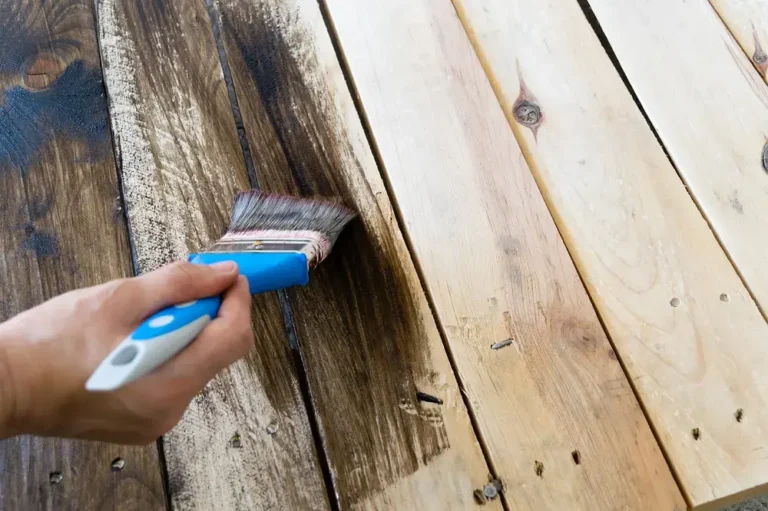
If you’ve ever seen a stained board cup, bow, or crack after finishing, it’s easy to blame the stain. That’s mostly a myth. The pigments, dyes, and binders in wood stain don’t have any mechanical ability to bend solid lumber on their own. What actually causes stain-related warping is more specific: water in some stains makes wood fibers swell, and if only one face of a board gets wet while the other stays bare, the two sides gain and lose moisture at different rates. That imbalance – not the stain’s color – is what pulls a board out of flat. Here’s what’s really going on, and how to stain wood without ever running into it.
Does Stain Actually Warp Wood? The Short Answer
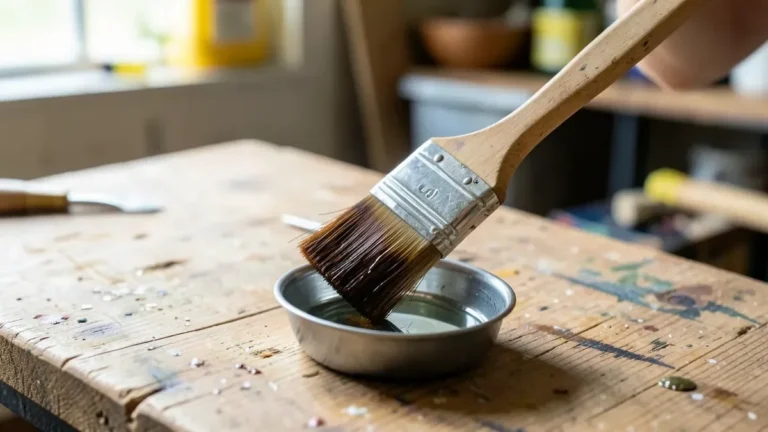
No, not directly. Stain’s pigment or dye is suspended in a carrier liquid, and it’s the carrier that matters here, not the color. Oil-based stains use mineral spirits as a carrier, which evaporates with minimal free water reaching the wood fibers. Water-based stains use water itself as the carrier, and that water does get absorbed into the top layers of the wood before it evaporates. That absorption can cause the wood fibers to swell temporarily, a normal reaction called grain raising, and in thin or unevenly finished stock it can contribute to warping. So the honest answer is: the pigment never warps wood, but the moisture some stains carry can play a real role, especially combined with poor prep or one-sided finishing.
Best Low-Moisture-Risk Stain Pick
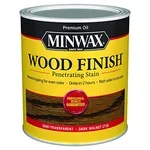 |
Minwax Wood Finish Oil-Based Stain, 1 Quart – $13.88 An oil-based penetrating stain that carries almost no free water into the wood, the exact property that makes oil-based formulas the lower-warp-risk choice discussed in this guide.
|
Why the “Stain Warps Wood” Myth Exists
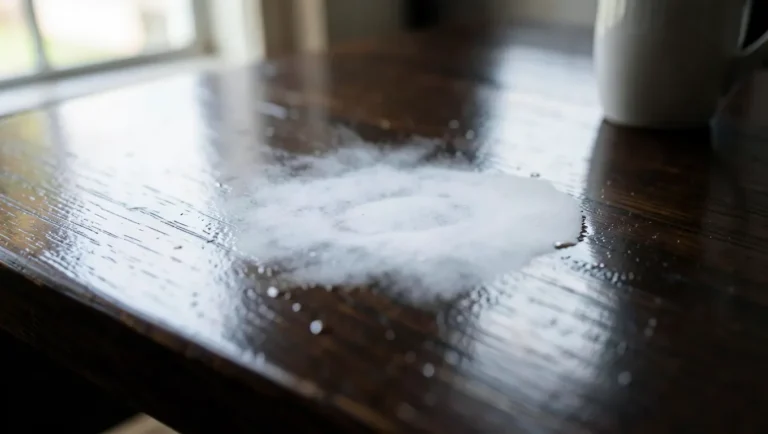
The myth persists because something real does happen when a water-based stain hits bare wood: the surface fibers absorb moisture and swell, making the board feel rough or slightly raised once it dries. Woodworkers call this grain raising, and it’s a surface-level reaction, not structural warping. It’s also completely normal and expected with water-based products – the standard fix is a light pass with 220-grit sandpaper between coats. The confusion happens because grain raising and true warping both trace back to the same root cause, moisture entering the wood unevenly, so people lump them together as “the stain did it” when only one of the two is actually about the stain’s chemistry.
Water-Based vs. Oil-Based Stain: Comparing the Real Moisture Risk
Water-based stains are mostly water by volume, with the pigment and acrylic binder suspended in it. That water sits in contact with the wood surface for several minutes before you wipe off the excess, long enough for the outer fibers to absorb some of it. Oil-based stains replace that water with mineral spirits or naphtha, solvents that carry pigment into the wood pores but evaporate off with almost no residual moisture left behind. In practice, this means water-based stains raise grain more and, on thin or improperly sealed stock, carry a higher risk of contributing to moisture-imbalance warping. Oil-based stains raise grain far less and are the safer default for solid-wood panels, tabletops, and anything under about 3/4 inch thick, where a board has less mass to resist moisture-driven movement.
Does a Pre-Stain Wood Conditioner Change This?
Pre-stain conditioner is usually sold as a fix for blotchy stain absorption on woods like pine, cherry, and birch, which have uneven grain density that soaks up pigment unevenly. It’s worth mentioning here because it also touches the moisture question: most pre-stain conditioners are oil-based, and applying one first partially seals the wood’s pores before the stain goes on. That can actually reduce how much moisture a water-based stain deposits into the surface fibers afterward, since less of the stain penetrates deeply. It’s not a substitute for finishing both faces of a board, but on blotch-prone species it’s a reasonable extra step that helps with color evenness and, as a side effect, slightly limits moisture uptake on the treated face.
The Real Cause of Warping: One Finished Face, One Bare Face
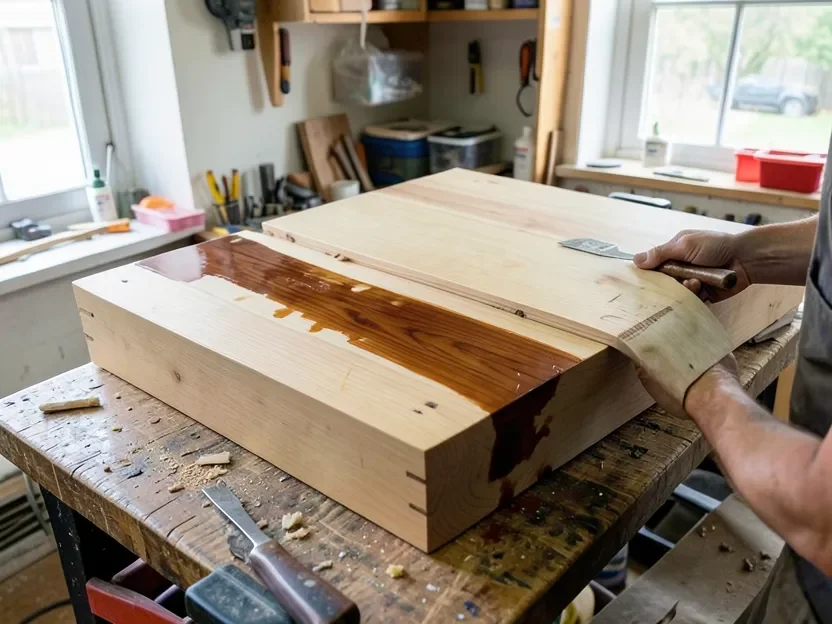
This is the part most guides skip. The single biggest cause of stain-related warping isn’t the stain’s chemistry at all – it’s finishing only one side of a board. Wood constantly exchanges moisture with the air around it, expanding slightly as humidity rises and contracting as it drops. A layer of stain and finish slows that exchange on whatever face it covers. If you stain and seal the top of a tabletop or door panel but leave the underside completely bare, the two faces respond to humidity swings at different speeds: the sealed face changes slowly, the bare face changes quickly. Over weeks and months, that mismatch is a well-documented cause of cupping and warping in solid wood – unrelated to whether you used stain at all. Plywood and veneered panels resist this better because of their cross-grain layering, but solid boards are genuinely vulnerable to it. It shows up most often on wide solid panels – a tabletop, a shelf, a cutting board, a raised door panel – anywhere a single piece of wood spans a wide surface with one face exposed to a room’s air and the other tucked against a wall, a cabinet interior, or nothing at all. Species with lower density and higher shrinkage, like pine and poplar, tend to move more from this imbalance than denser hardwoods like oak or maple, but no solid wood is fully immune.
How to Stain Wood Without Warping It
- Finish both faces, not just the visible one. Even a single coat of stain, sanding sealer, or clear finish on the back and edges of a board balances moisture exposure between the two sides. This is the standard shop practice for tabletops, doors, and panels, and it matters more than which stain you choose.
- Let the wood acclimate before staining. Give lumber several days in the room where it will live so its moisture content stabilizes before you seal one face – staining wood that’s still adjusting locks in an imbalance that shows up later.
- Wipe excess stain promptly, especially with water-based products. Leaving a heavy wet coat sitting on the surface longer than the label recommends increases how much moisture the fibers absorb.
- Choose oil-based stain for thin or warp-prone stock. Stock under about 3/4 inch thick, narrow slats, and glued-up panels have less mass to resist moisture-driven movement, so the lower-water carrier makes a real difference.
- Work in a stable, moderate-humidity space. Staining in a damp garage or a bone-dry heated shop in winter exaggerates whatever moisture imbalance the stain itself introduces.
What to Do If a Board Already Warped After Staining
Mild cupping in solid wood can sometimes be corrected: lightly dampen the concave face with a cloth, then weight the board flat (or clamp it between cauls) while it dries slowly over a few days, letting the fibers on that face rebalance with the rest of the board. This works best on thicker solid stock with moderate cupping, not severe twist or bow. Once it’s flat again, seal both faces before using it so the same imbalance doesn’t return. Plywood, MDF, and severely warped thin stock generally can’t be corrected this way and are usually more practical to replace than to fight. Either way, the fix for next time is the same: finish both sides of the board, not just the one people will see.
Frequently Asked Questions
Does stain warp wood?
Not directly. Stain pigment has no structural effect on wood. The moisture carried in some stains, particularly water-based formulas, can cause grain raising and, if only one face of a board is finished, can contribute to warping over time.
Does water-based stain warp wood more than oil-based stain?
Yes, in practical terms. Water-based stains introduce more free moisture into the wood surface than oil-based stains, which use mineral spirits as a carrier instead of water. That makes oil-based stains the lower-risk choice for thin stock and moisture-sensitive projects.
Do you need to stain both sides of a board to prevent warping?
For solid wood exposed to changing humidity, yes. Sealing only one face lets that side absorb and release moisture at a different rate than the bare side, and that imbalance – not the stain’s color – is the real, well-documented driver behind most stain-related cupping and warping.
Can a warped stained board be fixed?
Mild cupping in solid wood can often be corrected by dampening the concave face and clamping the board flat while it dries slowly. Severe warping, and warping in plywood or MDF, usually cannot be reversed and the piece is more practical to replace.
Sponsored / affiliate links. As an Amazon Associate I earn from qualifying purchases. I may earn additional commission from eligible campaigns.