How Long Does Wood Stain Take to Dry? (Dry vs. Cure Times)
Most wood stains feel dry in 1 to 2 hours according to maker data sheets, but the wait before a topcoat runs from 1 hour to 24 hours depending on the stain and the finish going over it, and full cure takes 24 to 72 hours. Touch-dry is not cured: topcoating early traps solvent under the film. This guide compares six data sheets side by side, plus outdoor and temperature limits.
How Long Does Wood Stain Take to Dry? What the Data Sheets Say
Best Fast-Dry Stain Pick
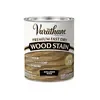 |
Varathane Premium Fast Dry Wood Stain, Golden Oak, 1 Quart: $15.97 The shortest times in the table below: 1 hour to touch, 1 hour to recoat and 24 hours to full cure on its data sheet, with polyurethane allowed within 1 hour.
|
As an Amazon Associate we earn from qualifying purchases.
Every maker publishes its own numbers, and they disagree more than most guides admit. The table pulls touch-dry, second-coat, topcoat and cure times straight from six technical data sheets, so you can look up your stain instead of trusting one generic range. For the wider picture of stains, oils and sealers, see our wood finishing guide.
| Stain (data sheet) | Touch dry | Second coat | Topcoat wait | Cure or ready for use |
|---|---|---|---|---|
| Varathane Classic Water Based (VAR-89) | 90 minutes | 2 hours | 3 hours before oil-based or water-based polyurethane | 48 hours full cure |
| Varathane Premium Fast Dry, oil-based (VAR-09) | 1 hour | 1 hour | Polyurethane can go on within 1 hour; darker colors may need slightly longer | 24 hours full cure |
| Minwax Wood Finish, oil-based (MWX132) | 2 hours | 1 hour in the table, 2 hours in the instructions | 8 hours before Minwax Water-Based Oil-Modified Polyurethane; at least 24 hours before Polycrylic | Dry to use at 6 hours |
| Minwax Gel Stain | Not stated | 6 to 8 hours on wood | 24 hours before a protective clear finish | Allow 24 hours to dry |
| Sherwin-Williams Wood Classics Interior Oil Stain 250 | 1 hour | 12 hours | 12 hours before solvent-based finishes, 24 hours before water-based clears | Not stated |
| Behr Semi-Transparent Waterproofing Stain and Sealer (No. 5077, exterior) | Not stated | 1 to 2 hours | Not stated | Light foot traffic 24 to 48 hours; full cure 72 hours |
Times are quoted at 77°F and 50% relative humidity, except the Varathane Fast Dry sheet, which uses 70°F; the Minwax Gel Stain sheet does not state its conditions. The sheets also differ in age: Varathane Water Based is a 2023 revision, Varathane Fast Dry 2018, Minwax Wood Finish 2026, Minwax Gel Stain 2006, Sherwin-Williams 2008 and Behr 2017. An old sheet may not match what is printed on today's can, so the label in your hand wins. The Minwax topcoat waits come from the Minwax polyurethane pages, not the stain sheet.
Two things stand out. First, water-based is not automatically faster. Varathane's water-based stain needs 90 minutes to touch, 2 hours to recoat and 48 hours to cure, while its oil-based Fast Dry stain needs 1 hour, 1 hour and 24 hours, so the oil-based product wins on every line. Second, the touch-dry column barely predicts the topcoat wait: Sherwin-Williams lists 1 hour to touch but 12 to 24 hours before a topcoat.
Dry Time vs. Cure Time: Why They're Not the Same
Dry time is the point at which the surface no longer feels tacky, usually within 1 to 2 hours on the sheets above. Cure time is how long the stain needs to harden fully, and the sheets put it at 24 hours (Varathane Fast Dry), 48 hours (Varathane Water Based) and 72 hours (Behr exterior). Minwax separates the two on its Wood Finish sheet as well: 2 hours to touch, but 6 hours before the surface is dry enough to use. A stain can feel finished while still hardening underneath, which is why a topcoat, foot traffic or rain too soon causes trouble.
How Long to Wait Before Adding Polyurethane, Varnish, or Shellac
The topcoat wait depends on the pairing of stain and finish, not on the stain alone. Here is what each maker publishes:
- Varathane Water Based stain: 3 hours before oil-based or water-based polyurethane (VAR-89).
- Varathane Premium Fast Dry: polyurethane can be applied within 1 hour of the stain, and darker colors may need a little longer (VAR-09).
- Minwax Wood Finish: 8 hours before Minwax Water-Based Oil-Modified Polyurethane and at least 24 hours before Polycrylic. The stain's own page only says to let it dry completely before a protective topcoat.
- Minwax Gel Stain: 24 hours before a protective clear finish.
- Sherwin-Williams Wood Classics oil stain: 12 hours before solvent-based finishes and 24 hours before water-based clears.
📊 Over the same Minwax Wood Finish stain, Minwax asks for 8 hours before its Water-Based Oil-Modified Polyurethane and at least 24 hours before Polycrylic. Source: Minwax Oil-Modified Polyurethane page and Minwax Polycrylic page, checked October 2026.
The pairing matters. Sherwin-Williams asks for twice as long before a water-based clear coat as before a solvent-based one, and Minwax's two water-based topcoats want 8 hours and at least 24 hours over the same stain. A flat "wait 24 hours" rule is safe for every product in this list but wastes a day with Varathane Fast Dry.
One number that circulates needs correcting, and an earlier version of this page repeated it: the 4 to 6 hours quoted for Minwax Fast-Drying Polyurethane is the dry time between coats of polyurethane, per the Minwax product page, not the wait after staining. For the stain step, that page points back to the stain's own dry times.
Shellac does not appear on any of these data sheets, so there is no maker figure to quote for it. Use the stain can's topcoat wait, do the scrap-board test below, and when two numbers conflict, take the longer one. To choose the topcoat itself, see how to seal stained wood; the coat-by-coat sequence is in after staining wood: how to finish it, and drying times for other finishes are collected in our drying and curing times reference.
What Changes the Numbers: Temperature, Humidity and Heavy Coats
Every sheet above carries a warning that its times stretch in the wrong conditions. These are the limits the makers give:
- Temperature: Varathane Fast Dry is applied at 60 to 90°F, Varathane Water Based not below 55°F, and Sherwin-Williams above 50°F. Minwax says its times depend on temperature, humidity and film thickness. For the cold-weather limits see what temperature is too cold to stain wood.
- Humidity: Varathane Fast Dry and Sherwin-Williams both set a ceiling of 85% relative humidity, and Varathane says to allow longer dry times on damp, humid days.
- Leftover stain: the Varathane Fast Dry sheet calls removal of all excess essential for proper dry time and topcoat adhesion. The wipe-off window for each brand is in the table on why your stain is still tacky.
- Damp wood: Sherwin-Williams says new wood should be stored indoors for at least 24 hours before staining, and that stain applied over wood that has not dried thoroughly can blotch, discolor or crack.
If a stain is still wet long after the times in the table, that is a troubleshooting problem rather than a waiting problem, and why your stain is not drying covers the causes. Planning a darker color? how long to wait between coats of stain goes deeper on coat timing, and how to dry wood stain faster covers airflow and heat.
Staining Outdoors: Rain, Foot Traffic and Cure
Behr's exterior sheet lists 1 to 2 hours to recoat, 24 to 48 hours before light foot traffic and 72 hours to full cure at 77°F and 50% humidity, and it says not to apply if rain is expected within 24 hours. It also warns that over-applying stain leads to surface failure such as peeling and cracking.
Do not borrow the interior times for a deck. The Varathane Fast Dry sheet says the stain is not recommended for exterior wood such as floors, decks or siding, and the Varathane Water Based and Minwax Wood Finish sheets are interior-only. Cold or damp weather stretches every figure, and the walk-on timeline by stain type is in how long deck stain should dry before walking on it.
How to Tell Stain Is Ready for a Topcoat
We did not run our own timed trials for this guide: every number above comes from the maker sheets named, so check the can in your hands first. Beyond the label, this routine is a sensible safety margin:
- Read two labels: the stain's topcoat wait and the topcoat's own stain wait. Use the longer one.
- Check for tack: press a clean finger on a hidden spot. It should feel dry with no stickiness, and a clean white rag should pick up no color.
- Smell it: a strong solvent odor on an oil-based stain means it is still releasing solvent.
- Test a scrap: stain a scrap board the same day, topcoat one corner, wait 24 hours and look for cloudiness, bubbles or a soft film before topcoating the real piece.
Fire safety: the Varathane Fast Dry sheet warns that rags, brushes or other waste soaked with the stain may spontaneously catch fire if improperly discarded. Place them in a sealed, water-filled metal container immediately after use.
Frequently Asked Questions
How Long Does Wood Stain Take To Dry?
To the touch, 1 to 2 hours on the data sheets we checked: 1 hour for Varathane Fast Dry and Sherwin-Williams, 90 minutes for Varathane Water Based and 2 hours for Minwax Wood Finish. Full cure is 24 hours for Varathane Fast Dry, 48 hours for Varathane Water Based and 72 hours for Behr exterior stain. Minwax Gel Stain asks for 24 hours.
How Long After Staining Can You Apply Polyurethane?
It depends on the stain and the polyurethane: 1 hour for Varathane Fast Dry, 3 hours for Varathane Water Based, 8 hours for Minwax Wood Finish under Minwax Water-Based Oil-Modified Polyurethane, 12 hours for Sherwin-Williams oil stain under solvent-based finishes, and 24 hours for Minwax Gel Stain, Polycrylic over Wood Finish and Sherwin-Williams water-based clears. When unsure, wait 24 hours.
Can I Apply A Second Coat Of Stain?
Yes, if you want a darker color. Wait 1 hour for Varathane Fast Dry, 2 hours for Varathane Water Based, 6 to 8 hours for Minwax Gel Stain on wood, 12 hours for Sherwin-Williams Wood Classics and 1 to 2 hours for Behr exterior stain. Minwax and Varathane both say not to sand between stain coats.
How Can I Tell If Wood Stain Is Dry?
Press a clean finger on a hidden spot: it should feel dry with no tack, and a clean white rag should pick up no color. That only confirms touch-dry. The topcoat still has to wait for the longer topcoat time on the label.
Is Wood Stain Dry or Cured After 24 Hours?
Dry, yes, for every stain in the table. Cured depends on the product: Varathane Fast Dry lists 24 hours, Varathane Water Based lists 48 hours and Behr exterior stain lists 72 hours. Minwax Gel Stain asks for 24 hours before a clear finish, and Sherwin-Williams asks for 24 hours before water-based clears.
How Long Should Wood Stain Dry Before It Rains?
Behr says not to apply its exterior stain if rain is expected within 24 hours, and lists 24 to 48 hours before light foot traffic. The Varathane and Minwax stains in our table are interior-only and give no rain time, so check the can of any exterior stain you use.
What Does It Mean When Wood Stain Is Still Outgassing?
Outgassing is solvent vapor leaving the stain as it dries and cures, so a strong smell means the process is not finished. Sealing it early risks a soft, cloudy or tacky topcoat. Ventilate the room, and use the cure times on the can as your guide.
Sponsored / affiliate links. As an Amazon Associate I earn from qualifying purchases. I may earn additional commission from eligible campaigns.