Does Termite-Damaged Wood Need to Be Removed? Repair vs. Replace
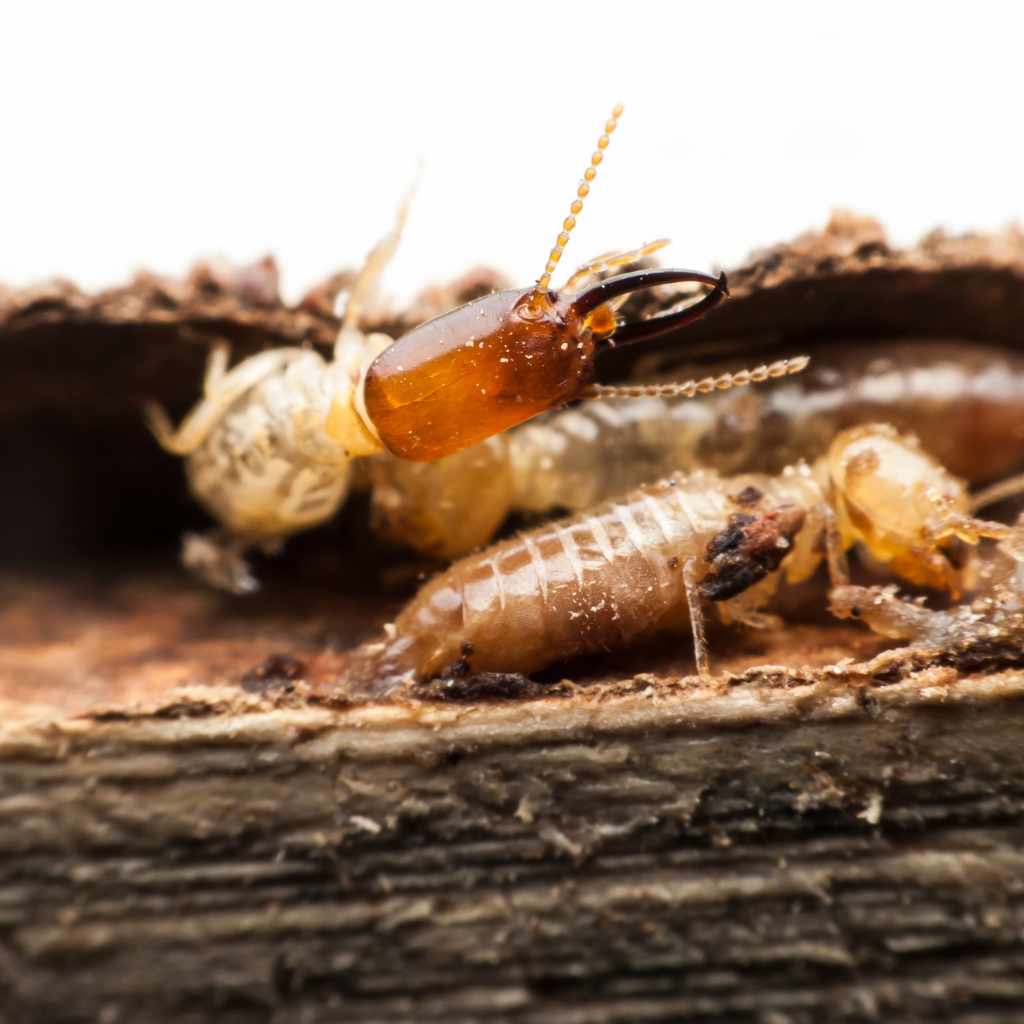
No, termite-damaged wood does not always need to be removed. The real question isn’t “is there damage” – it’s whether that damage sits in a load-bearing member (a floor joist, wall stud, or roof rafter) or in non-structural trim, and whether the infestation is actually dead. Get either part of that wrong and you either tear out a beam that only needed filling, or you patch over termites that are still alive inside the wood.
This guide walks through both parts of that decision: how to tell structural damage from cosmetic damage, and why the treatment step has to happen before any repair step – not after, and not skipped.
Treat First, Then Decide: Why Sequencing Matters
Before you touch a caulk gun or a saw, confirm the infestation is actually gone. Patching or painting over wood that still has active termites in it is one of the most common – and most expensive – mistakes homeowners make. The filler seals in moisture and hides the colony’s activity, so the damage keeps spreading invisibly underneath a repair that looks finished from the outside.
Best Borate Treatment Before Repair
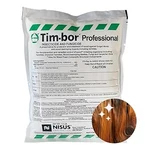 |
Nisus Tim-BOR Professional Insecticidal Dust, 1.5 lbs – $19.99 A water-soluble borate powder you mix and brush or inject into exposed, bare wood to kill remaining termites and wood-decay fungi before any filler or new lumber goes in.
|
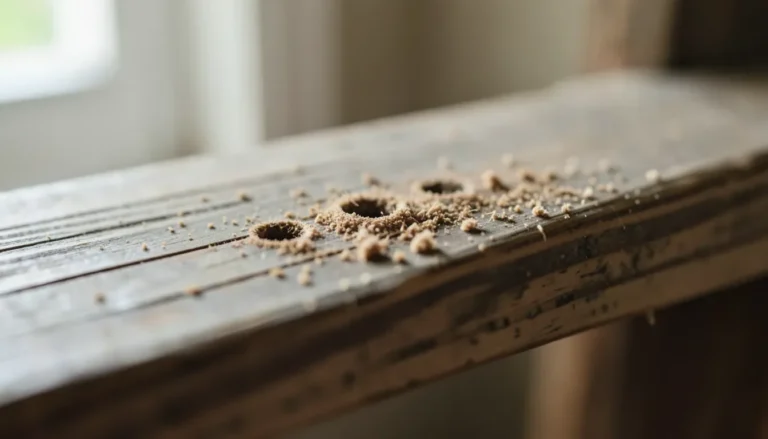
The correct order is: identify the extent of the damage, treat any wood that will remain in place, confirm the treatment took, and only then repair or replace. If you haven’t dealt with the colony itself yet, see our guide to getting termites out of wood first. A pest control professional can confirm the colony is inactive with a follow-up inspection; for a DIY check, look for fresh frass (termite droppings that look like tiny pellets or coarse sawdust) or soft, damp-feeling galleries, both of which point to ongoing activity rather than old damage.
Load-Bearing vs. Cosmetic Damage: How to Tell the Difference
This is the distinction that actually decides whether wood comes out or stays in. Most generic advice skips it and just says “remove all damaged wood,” which is overkill for a chewed baseboard and dangerously inadequate advice if applied to a hollowed-out floor joist without a strength check.
Load-bearing members: floor joists, wall studs, beams, rafters
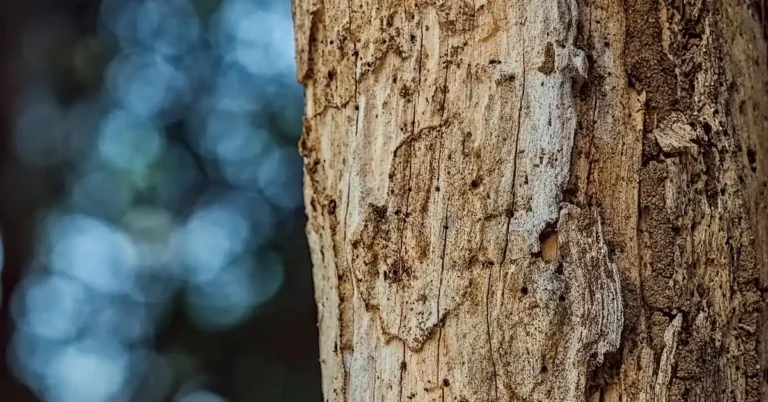
Termites hollow wood from the inside, so a joist or stud can look intact on the surface while carrying a fraction of its original strength underneath. If termite tunneling has removed a significant portion of the cross-section of a load-bearing piece, filler cannot restore its strength – epoxy consolidants bond to what wood fiber remains, they don’t replace missing wood. In that case the damaged section needs to be sistered (a new piece fastened alongside the old one to share the load) or fully cut out and replaced, and on anything holding up a floor, wall, or roof, that call should involve a structural engineer or licensed contractor, not a guess.
Cosmetic or non-structural damage: trim, baseboards, fascia, siding
Surface damage on a piece of trim, a baseboard, decorative fascia, or window casing isn’t holding up your house, so it doesn’t need the same standard. Once the wood is confirmed treated, tunnels and soft spots can be dug out, filled with an epoxy wood consolidant or filler, sanded, and repainted. As a rough guideline, damage affecting less than about 30% of the wood’s thickness in a non-structural piece is usually a good candidate for filling rather than replacing.
How to Assess the Damage Before You Decide
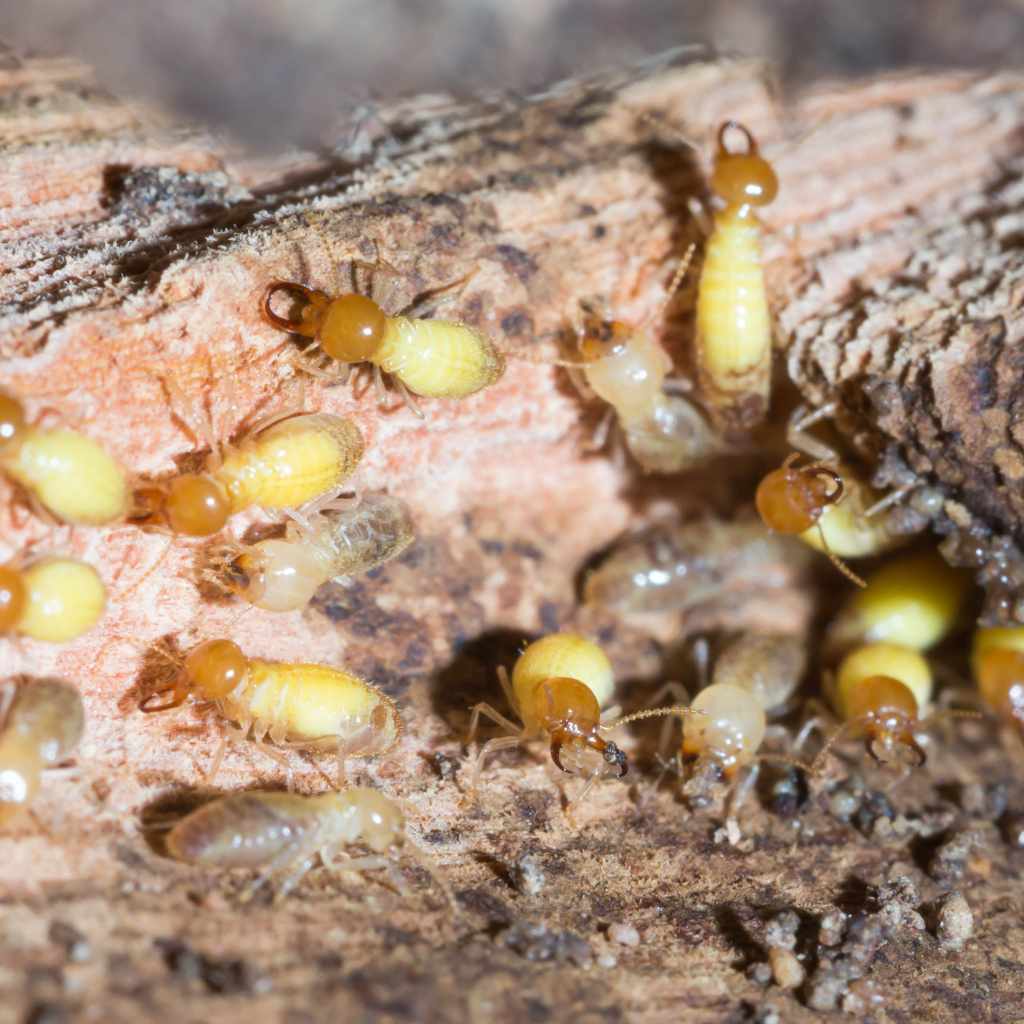
A few checks, done in order, tell you which category you’re dealing with.
- Tap test: tap along the wood with a screwdriver handle or hammer. A dull, hollow sound means the interior has been eaten out even if the surface looks fine.
- Probe test: press an awl or screwdriver tip into the wood at a low angle. If it sinks in easily with little resistance, the wood fiber is compromised at that spot.
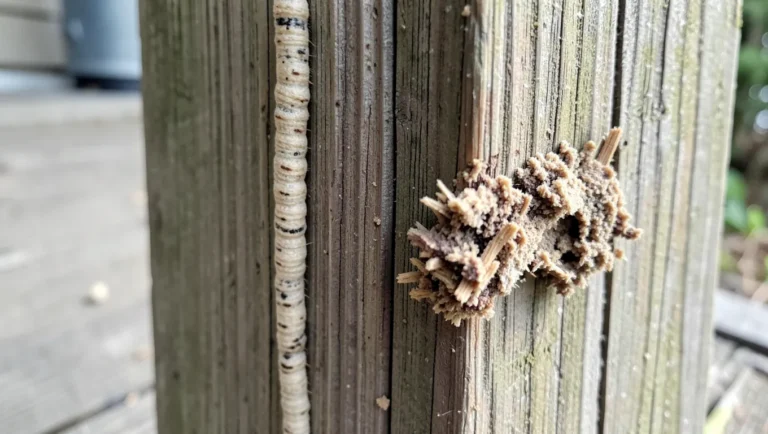
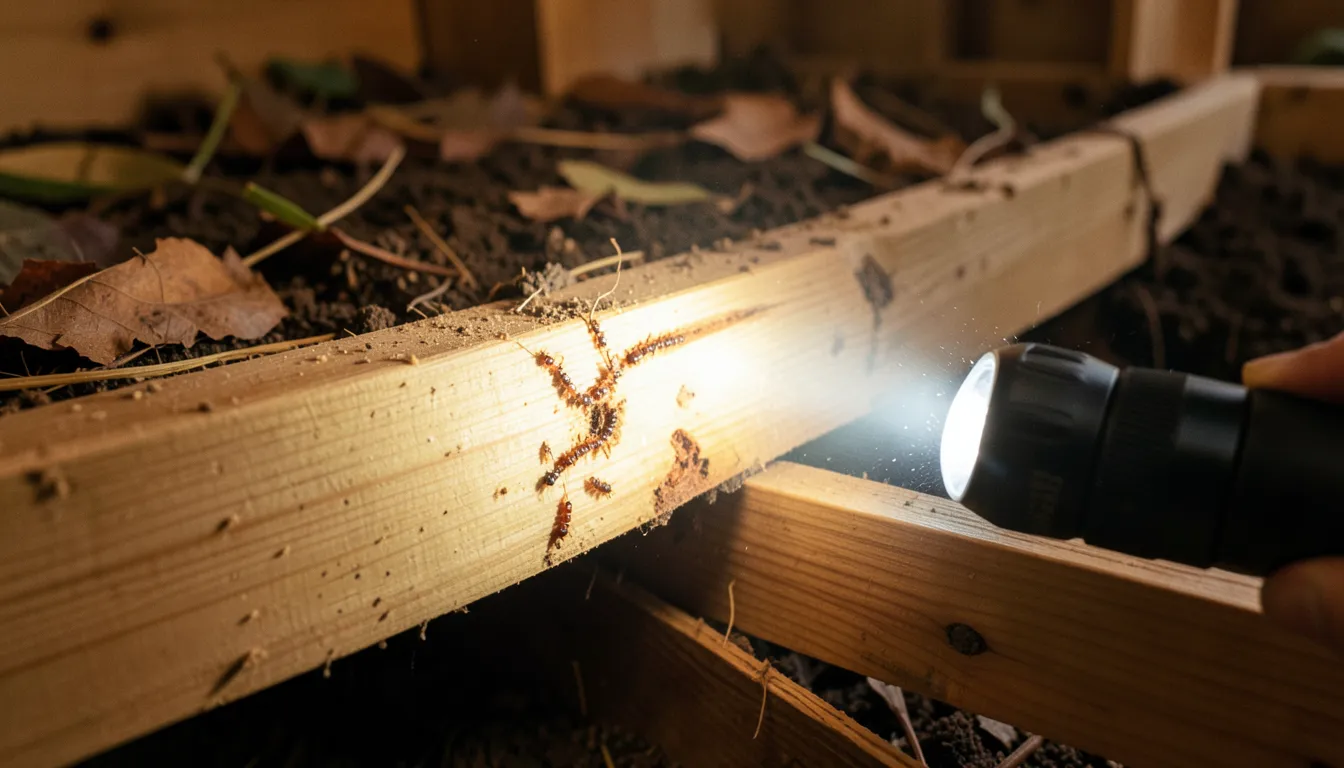
- Visual check for frass and mud tubes: pencil-thin mud tubes running up a foundation wall to the wood point to active subterranean termites; small pellet-like frass piled below a wood surface points to active drywood termites.
- Load context: note whether the piece is carrying weight (joist, stud, beam, ledger board, stair stringer) or is purely decorative (trim, molding, fascia).
If the tap and probe tests suggest damage more than roughly a third of the way through a piece that is load-bearing, treat that as a professional-inspection situation rather than a weekend repair. A licensed pest inspector or structural contractor can confirm the depth of damage with tools like a moisture meter or a resistance drill, which give a more precise read than tapping alone.
Repairing Wood Instead of Removing It
Once you’ve confirmed the infestation is treated and the damage is cosmetic rather than structural, repair is usually faster and cheaper than replacement.
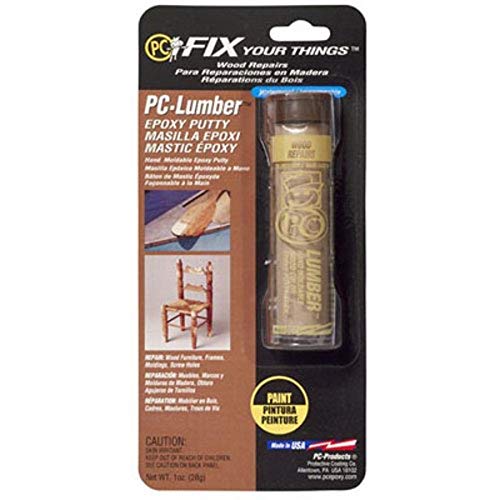
For minor surface tunneling: dig out the loose, damaged wood fiber with a small pick or screwdriver until you reach solid wood, then fill with an epoxy wood filler or two-part consolidant. Consolidants soak into the surrounding fiber first to firm it up, then the filler paste rebuilds the missing shape; both can be sanded, primed, and painted or stained to match once cured. Our full epoxy wood repair guide covers the consolidant-then-filler process step by step.
For deeper but still non-structural damage: a section of the trim or board can be cut out and spliced with new, treated wood rather than replacing the entire run – this keeps the repair cheaper without leaving compromised wood in place.
For anything structural: repair isn’t the right category at all – that’s a sistering or full-replacement job, done after treatment, ideally with a contractor confirming the fix restores the original load rating.
When Removal and Replacement Is the Right Call
Removal is the correct answer, not the default one, when any of these are true:
- The wood is load-bearing and has lost a significant portion of its cross-section to tunneling.
- The wood sounds hollow or crumbles under light pressure across a large section, not just a small localized spot.
- Moisture damage or rot has accompanied the termite activity, since decayed and hollowed wood together lose strength faster than either problem alone.
- You can’t confirm the treatment reached the full extent of the damage, particularly in enclosed wall cavities or sealed, painted wood that borate treatments can’t penetrate.
Preventing the Next Round of Damage
Whether you repaired or replaced, the goal afterward is the same: keep new termites from starting the cycle over.
- Keep soil-to-wood contact to a minimum – sill plates, posts, and structural wood should sit above grade or on a concrete or metal standoff.
- Fix moisture sources first: leaking gutters, poor grading, and crawlspace humidity all attract both termites and the wood-decay fungi that soften wood for them.
- Apply a borate treatment to any newly exposed bare wood in framing, crawlspaces, or sill plates as a preventive layer, not just a reactive one.
- Schedule a yearly professional termite inspection, especially in regions with subterranean termite pressure, so any new activity is caught while it’s still cosmetic-level damage.
Frequently Asked Questions
Does all termite-damaged wood need to be removed?
No. Non-structural, cosmetic damage on trim or baseboards can often be treated, filled with epoxy, and repainted. Removal is reserved for load-bearing wood that has lost significant structural strength, or damage so extensive that repair can’t reliably restore it.
Can you repair termite damage without removing the wood?
Yes, for minor and non-structural damage, once the infestation is confirmed treated. Epoxy wood consolidants and fillers can rebuild tunneled or soft wood on trim, sills, and other non-load-bearing pieces. Structural members with major damage still need sistering or replacement.
Why can’t you just patch termite damage without treating it first?
Filling or painting over wood with an active infestation traps the termites inside and hides new damage from view. The colony keeps eating while the surface looks repaired, so the problem gets worse and more expensive before it’s noticed again.
How do you know if termite damage is structural?
Structural damage is on load-bearing pieces – floor joists, wall studs, beams, and rafters – and typically involves hollowing across a large portion of the wood’s cross-section. A hollow sound over a wide area, visible sagging, or wood that gives way under a probe are signs it’s time for a structural engineer or licensed contractor, not a DIY filler job.
Bottom Line
Termite-damaged wood doesn’t automatically mean tear-out. Treat any active infestation first, then judge the wood by what it’s holding up: cosmetic damage on trim and non-structural pieces is usually a fill-and-repaint job, while load-bearing damage that has eaten into a joist, stud, or beam’s strength needs sistering or replacement, confirmed by a professional where the stakes are structural.
Sponsored / affiliate links. As an Amazon Associate I earn from qualifying purchases. I may earn additional commission from eligible campaigns.