How Much Does Termite Damage Repair Cost for Wood Furniture?
Termite damage repair for wood furniture usually runs about $50–$150 for minor surface repair, about $150–$500 for joint or frame repair, and about $300–$1,000+ for part replacement; if the structure is badly eaten, replacement may cost less than repair. Hidden damage can leave a chair unsafe, turn a small split into a full break, and waste money on repairs that fail after treatment. This guide breaks costs down by damage pattern and helps you decide repair versus replacement after inspection and termite treatment.
Typical cost range


For furniture, the cost question starts with damage pattern, not purchase price. Surface repair can be modest, but once termites reach legs, aprons, rails, or hidden joints, labor rises fast. Termite damage repair cost ranges from $600 to $3,000 in broad home estimates, and the national average cost is $1,800; for single pieces, the furniture-specific bill often falls into the smaller bands above unless the piece needs major replacement.
Typical cost bands by damage level
Minor surface damage usually means filling exit holes, hardening soft fibers, and touching up finish. Mid-level repair adds disassembly, joint regluing, replacement of short sections, and more finish work. Severe damage can require new legs, rails, panels, or full part replacement, especially when the wood around a joint has lost strength.
| Damage level | Typical repair tasks | Likely cost drivers | Repair vs replace |
|---|---|---|---|
| Minor surface damage | Fill holes, apply wood hardener, sand, spot-stain, seal finish | Finish matching, small-area labor, hardware removal and reset | Repair if the piece is sound and original wood remains solid |
| Structural joint failure | Disassemble, clean joints, reglue, clamp, reinforce rails or aprons, patch veneer | Joinery access, hidden voids, refinishing, time to align parts | Repair if load-bearing members are mostly intact |
| Part replacement | Cut out damaged sections, fit new wood, rebuild legs, stretchers, or panels | Custom milling, stain matching, hardware restoration, finish blending | Replace if wood loss is extensive or the part is unsafe |
What drives labor and materials costs
The biggest cost drivers are damage depth, hidden voids, joint failure, veneer loss, and finish restoration. A chair seat with a few holes is one job. A dining table apron with eaten-out tenons is another. If the repair needs stripping, stain matching, or reattaching veneer, labor can exceed the price of the wood patch itself.
Inspection and treatment should come first. A licensed termite inspector should evaluate the problem, provide a written report, and note the extent of damage before repair starts. That report matters because active infestation, old damage, and moisture problems can look similar from the outside.
📊 This Old House says drywall repair averages $50 to $80 per square foot. Source: Thisoldhouse.
What termites do to furniture
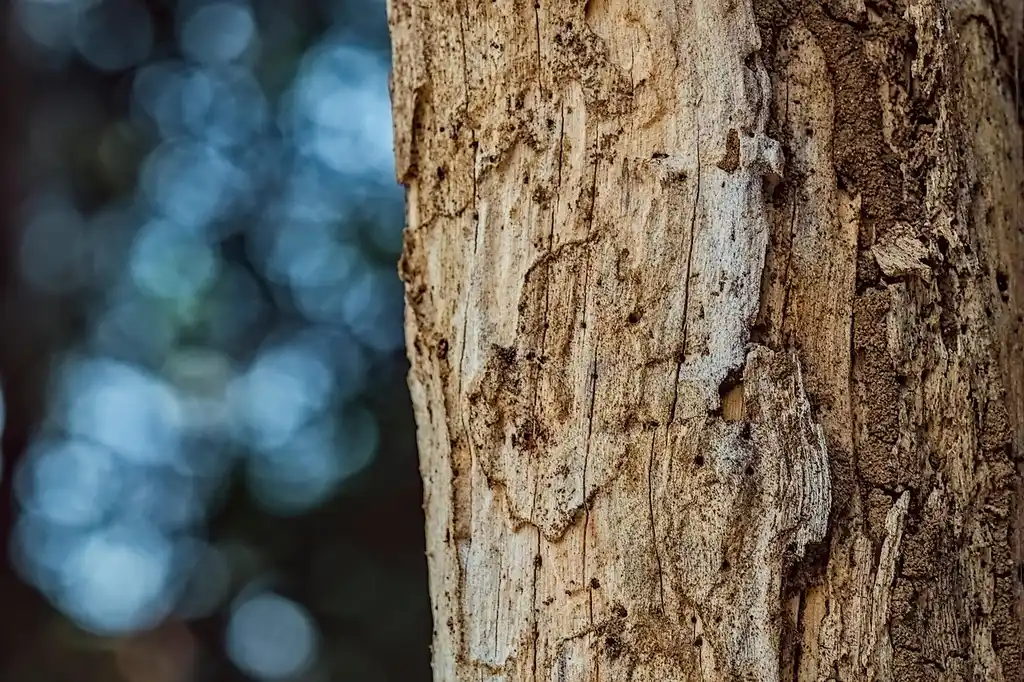
Termites can damage chairs and tables if given the opportunity. In furniture, they often leave hollowed wood, blistered finish, small exit holes, loose joints, and soft spots near load-bearing parts. Signs on their own do not confirm active termites, but they do mean the piece needs closer inspection before repair money is spent.
Subterranean, drywood, and dampwood damage patterns
Subterranean termites often feed with less visible early warning because they travel through hidden moisture paths and can hollow wood from the inside. Drywood termites often leave localized damage and pellet-like frass near exit holes. Dampwood termites prefer wetter wood, so the furniture may also show moisture damage, swelling, or decay.
How fast the damage spreads depends on the termite species, the wood’s moisture level, and the wood’s condition. Subterranean termites can turn severe quickly in favorable conditions, while drywood and dampwood termites also cause plenty of damage but may leave different clues. For a single chair or cabinet, the more useful question is how much strength remains, not how long the colony has been present.
Surface damage versus structural damage
Surface damage affects appearance first: finish blisters, pinholes, minor edge loss, or shallow tunneling in non-load-bearing panels. Structural damage reaches parts that hold weight or keep the piece square. That includes legs, aprons, stretchers, rails, corner blocks, and the joints that tie them together.
Picture a four-chair set with only one loose rung and a few finish blisters. That is a different repair job than a dining table with a soft apron and one leg that rocks because the mortise-and-tenon joint is eaten away. Same pest. Very different bill.
Common warning signs in furniture
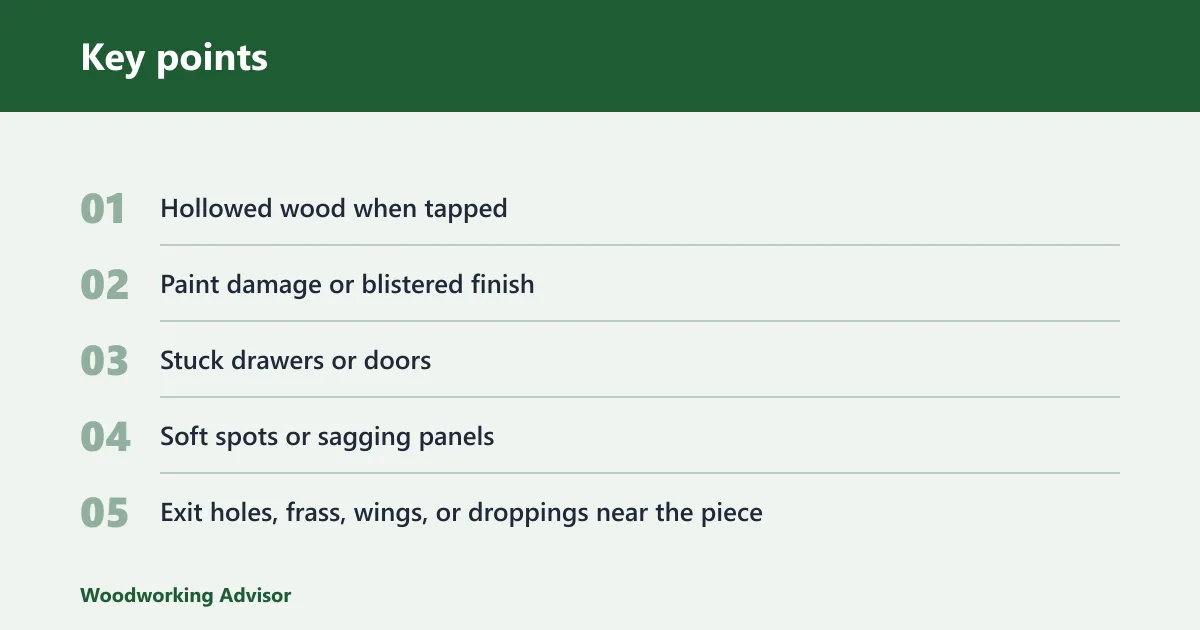
- Hollowed wood when tapped
- Paint damage or blistered finish
- Stuck drawers or doors
- Soft spots or sagging panels
- Exit holes, frass, wings, or droppings near the piece
- Loose legs, rails, or aprons
Stuck windows and doors are also listed warning signs in broader termite guidance, and the same swelling or warping can show up in built-in or furniture-grade wood. The clue matters because moisture and termites often overlap.
How do you tell if the damage is structural?
Damage is structural when the piece can no longer carry load, stay aligned, or hold joints together without reinforcement. Cosmetic damage affects the surface only. If a leg wobbles, a rail crumbles under finger pressure, or a joint opens after gentle movement, the problem is more than cosmetic and needs structural repair or replacement.
Signs a part can be repaired
A damaged section can often be repaired if the wood outside the affected area is still hard, the joint surfaces can be cleaned and reglued, and most of the original part remains intact. Small holes, shallow surface loss, and localized veneer damage usually fit this category.
Signs a part should be replaced
Replace the part if the wood has lost too much thickness, the joint cannot hold alignment, the piece flexes under normal use, or the damaged section is part of the primary load path. A leg, apron, or stretcher that has become crumbly is not a filler job. It needs new material.
Damage at the joints matters most because those connections transfer weight. On cabinets and drawer units, the carcass corners and drawer runners carry that load. On tables and chairs, the legs and aprons do.
Furniture repair decision table
This table breaks the decision down by damage pattern and furniture type. The right answer depends on how much original wood remains, how visible the repair will be, and whether the part carries weight. Antique value changes the math, but safety comes first.
| Item | Minor surface damage | Structural joint failure | Part replacement |
|---|---|---|---|
| Chair | Usually repair: holes, hardener, filler, touch-up finish | Repair if only one or two joints are loose and wood is sound | Replace if a leg, rung, or seat support has lost strength |
| Dining table | Repair if the top is mostly cosmetic and the underside is sound | Repair if aprons or corner blocks need regluing or patching | Replace if a leg or apron is badly hollowed or warped |
| Cabinet | Repair if damage is limited to veneer, doors, or side panels | Repair if carcass joints or shelves need reinforcement | Replace sections if the case has major voids or distortion |
| Drawer unit | Repair if drawer faces or runners show shallow damage | Repair if slides, runners, or front joints are loose | Replace drawer boxes if bottoms or sides are badly eaten |
| Antique piece | Repair if work can stay reversible and finish loss is minor | Repair only if original material and joinery can be preserved | Replace only when safety or structure demands it |
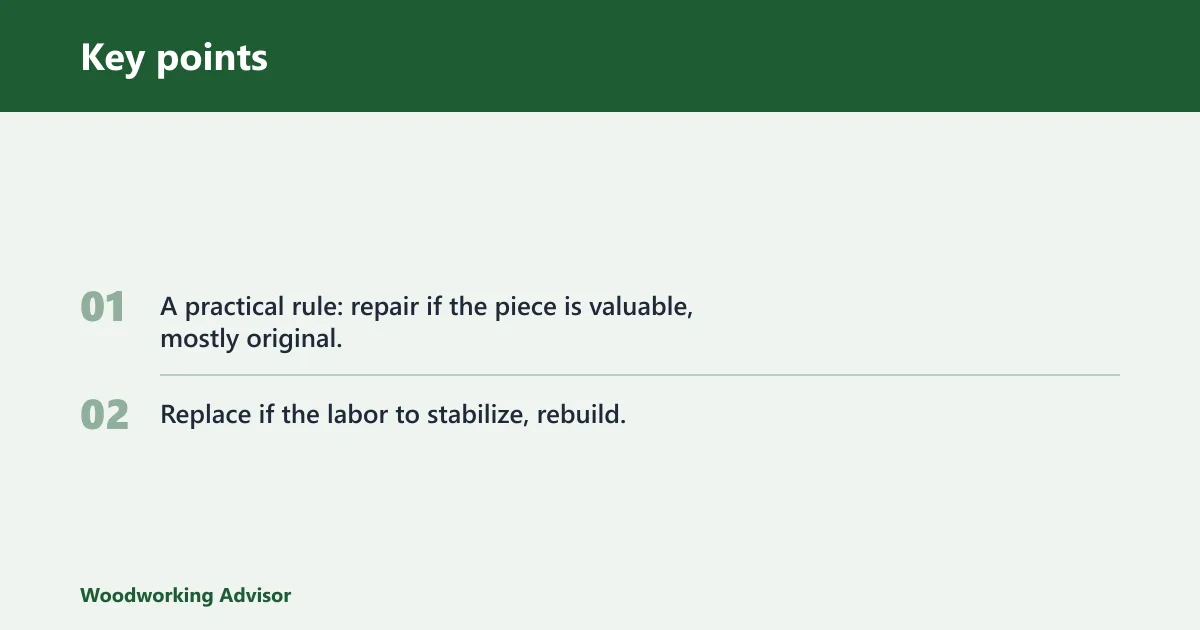
A practical rule: repair if the piece is valuable, mostly original, and still structurally sound after treatment. Replace if the labor to stabilize, rebuild, and refinish approaches the cost of a comparable sound piece.
What a termite inspection should include
Before repair, a licensed termite inspector should assess active infestation versus old damage, estimate damage extent, and note likely entry points. Homeowners should request a written report and recommended course of action. That report should mention whether the problem is isolated or likely part of a broader infestation.
Active infestation versus old damage
Old damage may look rough but stay dry and inactive. Active damage can include fresh frass, soft new tunnels, or signs that the infestation is still feeding. The distinction matters because repairing before treatment can trap termites inside repaired areas or send them into adjacent wood.
For furniture, the inspector should identify which parts are compromised, where hidden voids exist, and whether the damage reaches joints or load-bearing members. Colony size can matter to the building as a whole, but for a single chair or cabinet, the extent of damage and the construction style usually drive the repair budget more than the colony count.
Repair methods for termite-damaged wood
Small damage can often be stabilized. Larger damage needs carpentry. The method depends on whether the wood is soft, hollow, split, or missing altogether. Repair should stop short of hiding a weak part under filler alone.
Hardeners, fillers, and veneer patches
Wood hardeners can help stabilize lightly damaged fibers before filling. Fillers work for shallow holes and edge loss. Veneer patches are useful when the damage is mostly cosmetic on veneered surfaces, cabinet doors, or tabletops. These repairs are best when the underlying substrate is still strong.
Cut-and-replace sections and joint repair
When termites remove too much wood, cut out the damaged section and fit new wood in its place. Loose chair rungs, table aprons, and cabinet rails often need joint cleaning, glue removal, and clamping before reinforcement. Hidden fasteners may need to come out for the repair to hold.
When full replacement is the better choice
Full replacement is often better when the part is unsafe, too thin to save, or too visible to disguise after repair. It is also the better option when a repair would require so much new wood that the original piece loses most of its character. A worst-case termite problem can require demolition and rebuild in a structure; furniture can reach a smaller version of that point.
Should treatment come before repair?
Yes. Termite treatment should happen before woodworking repair so the damage is not rebuilt around an active infestation. Common options include liquid termiticide injection, foam application, bait stations, and heat treatment where appropriate. If the source remains active, the repair can fail or new damage can appear nearby.
Why unfinished treatment wastes repair money
A patched chair seat or cabinet side does not stop termites from moving into adjacent wood. Repairing first can also hide the path of damage and make later inspection harder. Treat first, then stabilize, then rebuild.
Moisture checks before rebuilding or refinishing
Moisture matters because termites and dampness often overlap. Before refinishing, check that the wood has dried to a stable condition and that soft spots are not spreading. If the piece still feels damp or smells musty, stop and find the source before closing it up with finish or veneer.
Suppose a small oak drawer unit has six pinholes on one side panel, but the drawer fronts, runners, and corners are still firm after treatment. That piece may only need hardener, filler, and finish touch-up. Change one variable, and the answer shifts: if the bottom rail is soft and the carcass twists, replacement work becomes more likely.
Can antiques be worth repairing?
Antiques can be worth repairing when the piece has strong market value, original joinery, and enough sound wood to keep the repair reversible. They are not automatic repair jobs. If termite damage has destroyed major original parts, replacement may protect value better than a heavy rebuild that changes the character of the piece.
Value, originality, and repair reversibility
On antiques, the goal is often stabilization rather than making the piece look new. Reversible repairs, careful patching, and matched finish touch-ups usually preserve more value than aggressive replacement. If the wood species, tool marks, or old finish are part of the value, keep replacements minimal and documented.
Hidden costs from finish and hardware work
Antique repair often costs more because the labor is slower. Matching stain, preserving patina, stripping only where needed, and restoring old hardware all add time. Those hidden costs can outweigh the savings from keeping the original shell.
A common first-timer mistake is assuming a small cluster of holes means a cheap fix. On an antique side table, those holes may be the easy part; the real cost comes from rebuilding a bowed apron, blending the patch into old finish, and keeping the repair visually quiet.
How much does repair cost compared with replacing damaged furniture?
For minor damage, repair is usually cheaper than replacement because the job may stay under a few hundred dollars. Once the damage reaches structural members, replacement can win on cost and safety. If the repair would require new legs, major joinery work, and a full refinish, compare that total with the price of a sound replacement piece.
Practical repair-vs-replace threshold
Repair tends to make sense when the piece is valuable, antique, hard to match, or still mostly original. Replace when the cost approaches or exceeds the value of a comparable sound item, or when the damaged part is load-bearing and too compromised to trust. If the furniture is sentimental but unsafe, preserve what you can and replace what you must.
Frequently asked questions
How much does termite damage repair cost for wood furniture?
The final number depends on how deep the termites went, whether joints failed, and how much finish and hardware work the repair needs.
Can termite-damaged furniture be repaired or does it need replacement?
It can often be repaired if the damage is shallow, the wood is still firm, and the piece can be stabilized after treatment. Replacement is the better choice when load-bearing parts are hollowed, the frame no longer stays square, or the repair would cost close to a sound replacement.
What factors make termite furniture repair more expensive?
Deep damage, hidden voids, loose joints, veneer loss, stain matching, finish repair, and hardware restoration raise the price fast. Furniture with more carved detail or veneered surfaces usually takes more labor than simple flat pieces. The need to disassemble and reassemble also adds cost.
How do you tell if termite damage is cosmetic or structural?
Cosmetic damage affects only the surface. Structural damage affects legs, aprons, rails, stretchers, or joints that carry weight. If a part is soft, flexes, or will not hold alignment, treat it as structural damage even if the outside still looks mostly intact.
What does a pest inspector look for before furniture repair starts?
A licensed termite inspector should check for active infestation, old damage, entry points, hidden voids, and the extent of wood loss. Homeowners should ask for a written report and a recommended course of action. That report helps separate current risk from repaired or inactive damage.
Can small termite holes in wood furniture be filled and strengthened?
Yes, if the surrounding wood is still sound. Small holes can often be stabilized with wood hardener, then filled, sanded, and finished. If the holes are near a joint or the wood feels spongy, filler alone is not enough and a stronger repair method is needed.
Sponsored / affiliate links. As an Amazon Associate I earn from qualifying purchases. I may earn additional commission from eligible campaigns.