Does Wood Glue Work on Wet Wood? Moisture Guide for Repairs
No—standard PVA wood glue holds only on wood near 12% moisture content or less; above that, bond strength drops fast, and on visibly wet wood it usually fails. Bad timing means glue joints creep, peel, or starve, and you end up rebuilding a repair that should have held. This guide gives a moisture-threshold decision chart and tells you when to use wood glue, polyurethane, CA, or epoxy on damp, fresh-cut, treated, or water-damaged wood.
This guide is part of our Wood glue essentials: types, uses, and cure times series.
Does wood glue work on wet wood?
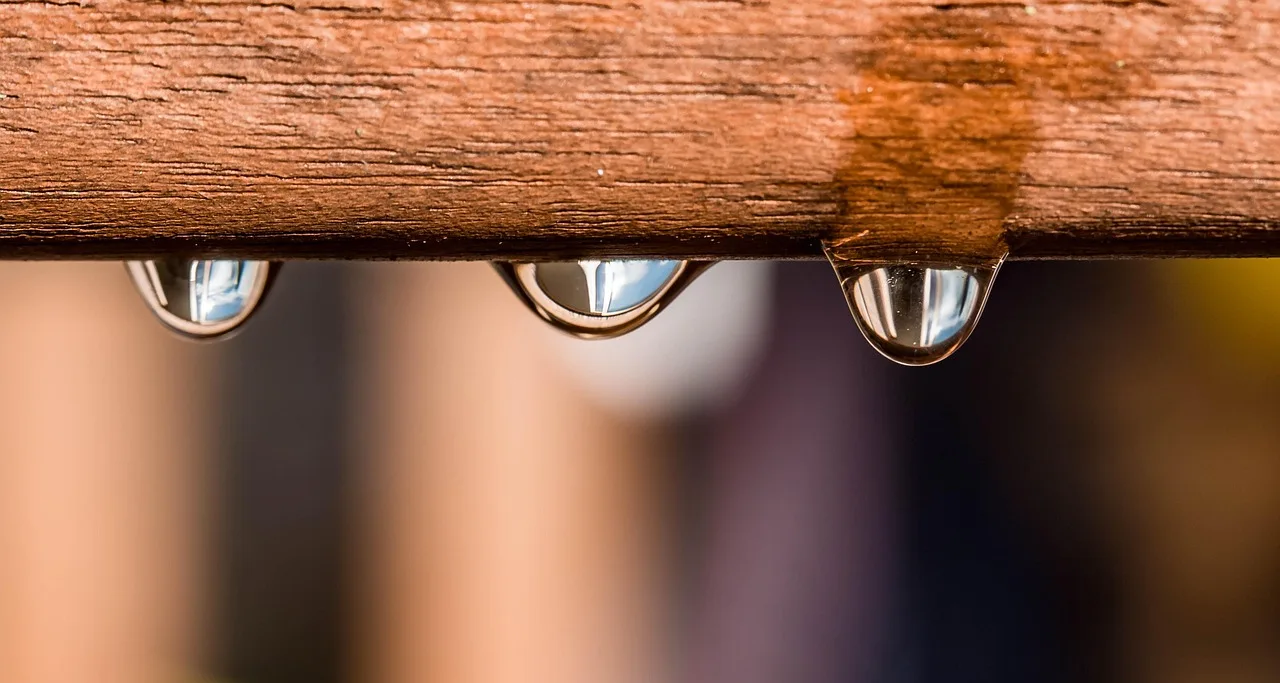


Only in a narrow sense. Standard interior PVA wood glue needs dry wood for dependable bond strength, while polyurethane, CA, and epoxy can handle more moisture. On surface-damp lumber, some adhesives may still hold. On soaking-wet stock, the odds fall sharply and the bond line usually fails.
When the answer changes from yes to no
The real dividing line is moisture content, not appearance. A board can feel dry and still be too wet inside. For most glue-ups, 12% MC or lower is the safer zone for standard PVA; for indoor furniture, 6% to 8% is a better target, and outdoor projects often sit closer to 12% to 15%.
Wet wood changes the glue line in three ways. Water blocks penetration into the fibers, slows curing, and can contaminate the bond line. If the stock is only lightly damp on the surface, some repairs are still possible. If it is green or soaked through, wood glue is the wrong bet.
How wet is too wet for wood glue?
Anything above the usual dry range is suspect, but “too wet” depends on the adhesive and the joint. Surface damp wood may be workable with the right product. High-MC lumber is risky with PVA. Green lumber and soaking-wet stock are poor candidates for standard wood glue and often need a different adhesive or more drying time.
Surface damp wood
Surface damp means the outside feels cool or slightly wet, but the wood is not saturated through the section. That is the gray area. A small repair may succeed after wiping, drying, and light sanding, but structural glue-ups still belong in the dry category. A moisture meter beats hand feel every time.
High moisture content wood
High-MC lumber often looks ordinary and still misses the mark internally. Treated lumber sold wet can sit well above 20% moisture content, and the treated-lumber guidance says to let it dry first because bonding to soaking-wet wood is unreliable. A meter reading at 19% or lower is a better checkpoint for that material.
Green lumber and soaking-wet stock
Green lumber has not reached a stable moisture level. It keeps shrinking as it dries, and that movement can break a joint even if the initial glue line set. Soaking-wet stock is worse. In both cases, the safer move is to dry the wood first or switch to a moisture-tolerant adhesive only when the joint design supports it.
Which glue works best on damp wood?
No single adhesive is best for every wet-wood repair. PVA is the default for dry stock. Polyurethane handles more residual moisture. CA glue cures in the presence of moisture and is handy for small, fast repairs. Epoxy is the strongest option when the joint is irregular or gap-prone and moisture is still part of the problem.
PVA wood glue
PVA is the common interior-grade choice, and it bonds wood fibers through absorption, evaporation, and interlocking. That process needs dry wood to work well. Titebond Original is a classic PVA glue for indoor furniture and cabinetry, and its ASTM D-905 shear strength is around 3,600 psi, but that number does not apply when the wood is too wet.
Polyurethane glue
Polyurethane glue tolerates some moisture and cures with moisture present. It can be useful when the wood is only slightly damp, especially on repairs where the stock cannot be fully dried quickly. It foams as it cures, though, so cleanup matters and excess foam can make a neat joint harder to achieve.
Cyanoacrylate glue
CA glue sets fast and cures in the presence of moisture. That makes it useful for wet turning blanks, edge touch-ups, and temporary bonding where speed matters more than long open time. It is not the normal choice for large structural joints, but for a wet walnut blank at 30% to 31% MC, it can be the practical answer.
Epoxy adhesive
Epoxy is a two-part resin and hardener system that can help on irregular surfaces and can fill small voids. It is often the strongest option when the wood is wet, rough, or uneven, provided the joint design is sound. It is still not a cure for rotten fibers or moving stock.
Moisture-based adhesive decision table
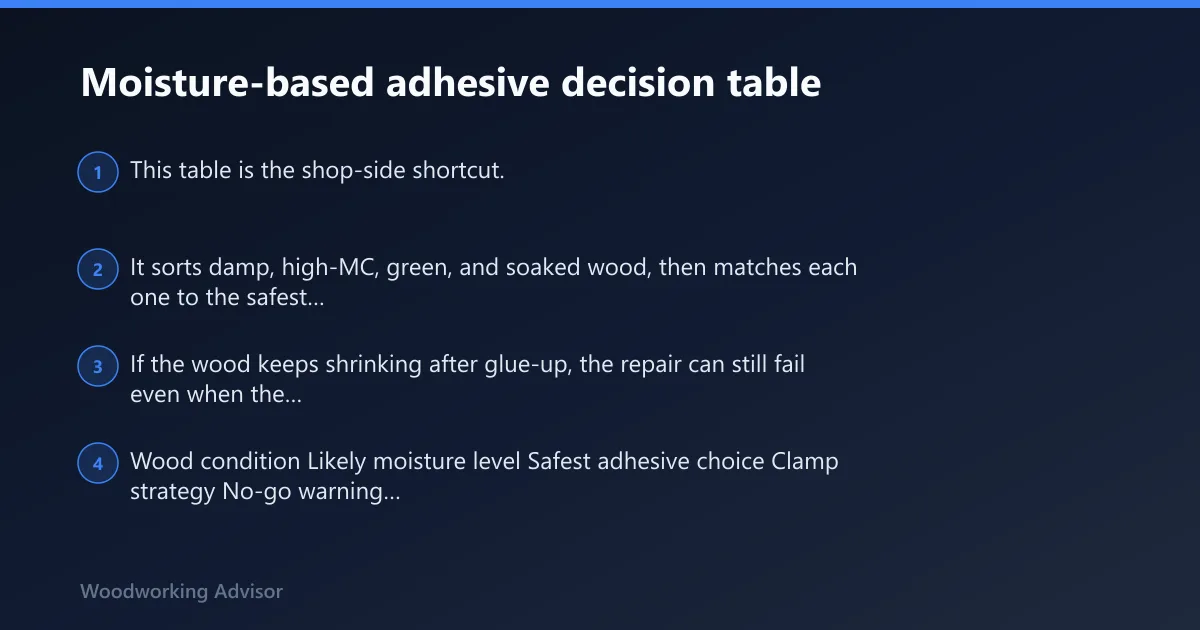
This table is the shop-side shortcut. It sorts damp, high-MC, green, and soaked wood, then matches each one to the safest adhesive, clamp approach, and stop sign. If the wood keeps shrinking after glue-up, the repair can still fail even when the initial bond seemed fine.
| Wood condition | Likely moisture level | Safest adhesive choice | Clamp strategy | No-go warning |
|---|---|---|---|---|
| Surface damp wood | Low surface moisture, core unknown | Dry it first; if the repair must happen now, use epoxy or CA for small work | Light, even clamping; do not use clamp pressure to “force” a cure | Do not trust appearance alone |
| High-MC lumber | Above the dry range, often over 12% MC | Wait and dry, or use epoxy if the joint design allows | Clamp only after prep and fit are correct | Do not assume PVA will hold |
| Green lumber | Actively drying, unstable | Delay glue-up if possible; epoxy only for limited repairs | Clamp for alignment, not for moisture control | Do not expect long-term joint stability |
| Wet turning blank | Often very high MC, can be 30%+ in turning stock | CA glue for small repairs; epoxy for filled voids | Minimal clamp pressure or hand pressure, depending on repair | Yellow or white glue is a poor fit here |
| Treated lumber | Often wet or above 20% MC when sold | Let it dry first; after drying, use exterior-rated or Type I PVA as appropriate | Standard clamping after drying and cleaning | Do not glue against wet treatment residue |
How do I know if wood is dry enough to glue?
A moisture meter is the best quick check. It is far more reliable than color, touch, or a “feels dry” guess. For many glue-ups, 12% MC or lower is the practical ceiling for standard PVA. For indoor furniture, 6% to 8% is a better target; for outdoor work, 12% to 15% is more realistic.
Using a moisture meter
Check more than one spot. End grain, center area, and both faces can read differently. If the meter shows one side dry and the core still high, wait. Treated lumber is especially worth checking because it can arrive wet, and the treatment residue can interfere with bond quality even after the surface feels dry.
Reading equilibrium moisture content
Wood should match its final service conditions. That is the purpose of equilibrium moisture content, or EMC. A cabinet installed in a heated room should not be glued at outdoor moisture levels. If the joint will live indoors, gluing at indoor EMC reduces later shrinkage, swelling, and stress on the bond line.
Quick field checks that are worth trusting
- Wipe the surface and look for fresh darkening after a minute or two.
- Use a meter on multiple spots, not only the face you can see.
- Check end grain, where moisture often lingers.
- Compare readings to the target for the project, not to a guess.
- If the board feels cool and heavy for its size, keep drying it.
What happens if you glue wood before it dries?
The bond can fail in several ways. Moisture can stop the adhesive from penetrating the fibers, so the joint fails at the glue line. The wood may also shrink later and tear the bond apart. On some repairs, the glue holds briefly and then peels, creeps, or fractures when the stock moves.
Bond failure from trapped moisture
Trapped moisture weakens curing and can leave a starved bond line. With PVA, the adhesive wants dry wood to absorb and interlock properly. On wet stock, the glue can stay weak even if the clamp time looks correct. Polyurethane and epoxy do better, but neither fixes rotten or contaminated fibers.
Movement, shrinkage, and joint stress
Even a strong initial bond can lose to wood movement. As the moisture content drops toward equilibrium, the piece shrinks. If the joint was assembled too wet, that shrinkage puts the bond under stress and can split the glue line or loosen the fit. This is common in fresh-cut stock and treated lumber that dries after assembly.
When a repair may still be acceptable
Some emergency fixes are worth doing even when the wood is not ideal. A small CA repair on a wet turning blank, or an epoxy patch on a damp, irregular edge, can be acceptable when the goal is stabilization rather than a permanent structural joint. For load-bearing work, waiting is usually the safer choice.
Frequently asked questions
will wood glue dry on wet wood
Standard PVA wood glue usually will not dry or bond properly on wet wood because moisture blocks fiber penetration and slows curing. It may skin over and look set, but the joint often stays weak. Moisture-tolerant options like polyurethane, CA, or epoxy are better choices when drying is not possible.
can wood glue get wet
After cure, some wood glues tolerate moisture better than others. Interior PVA is meant for dry indoor use, while exterior-rated or Type I PVA is made for wetter service conditions on dry wood. Even then, a joint can fail if the wood later swells, shrinks, or the glue line was contaminated.
does glue work on wood
Yes, wood glue works well on dry, properly fitted wood because it bonds the fibers through absorption, evaporation, and interlocking. Good fit and correct moisture content matter more than clamp pressure. If the wood is too wet, the same glue can fail even though the surfaces look ready.
can you glue wet wood
Yes, but only with the right adhesive and the right expectations. Polyurethane, CA, and epoxy can work on damp or wet wood in certain repairs. Standard PVA is much less dependable. For structural joints, the safer move is usually to dry the wood first rather than gamble on the bond.
What moisture content is too wet for wood glue?
For standard PVA, anything above the low moisture range becomes risky, and under 12% MC is the usual ceiling. For indoor furniture, 6% to 8% is a better target. Treated lumber above 20% MC is especially suspect, and soaking-wet stock is generally a no-go for normal wood glue.
Is Titebond III good for wet lumber?
Titebond III is a Type I waterproof PVA for exterior use, but it is not a cure for wet lumber. It still needs reasonably dry wood for a dependable bond. If the stock is wet, dry it first or consider epoxy or another moisture-tolerant adhesive when the repair must happen sooner.
Sponsored / affiliate links. As an Amazon Associate I earn from qualifying purchases. I may earn additional commission from eligible campaigns.