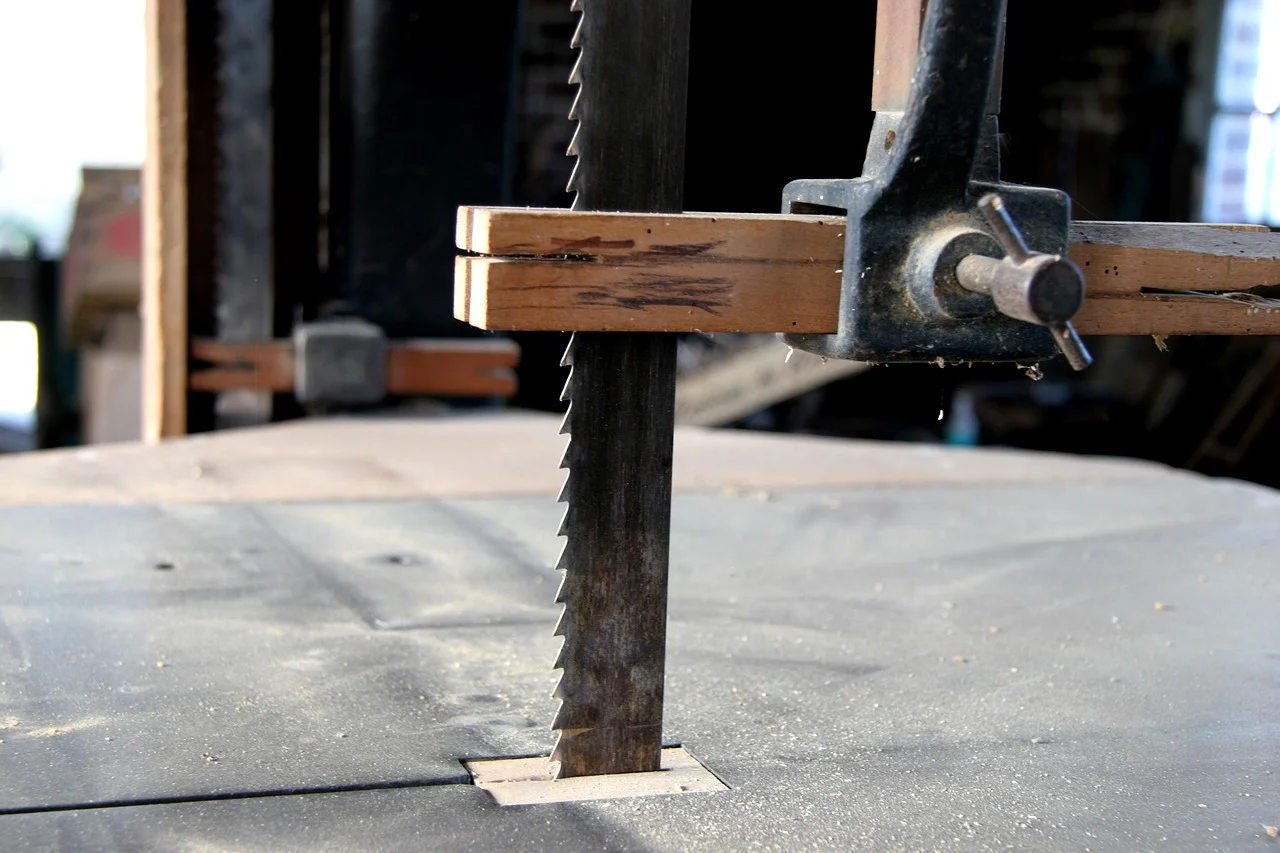
Enco Band Saws: Buying and Maintaining a Discontinued Brand
Enco was a major machine tool retailer that closed its doors in the mid-2010s, so there are no new Enco band saws being sold – any review or buying guide has to be about the secondhand market, not a current product line. Used Enco band saws still show up regularly on the used-tool market and can be solid machines, but OEM replacement parts are increasingly hard to source since the brand no longer operates.
What to Check on a Used Enco Band Saw
Best Current-Production Alternative
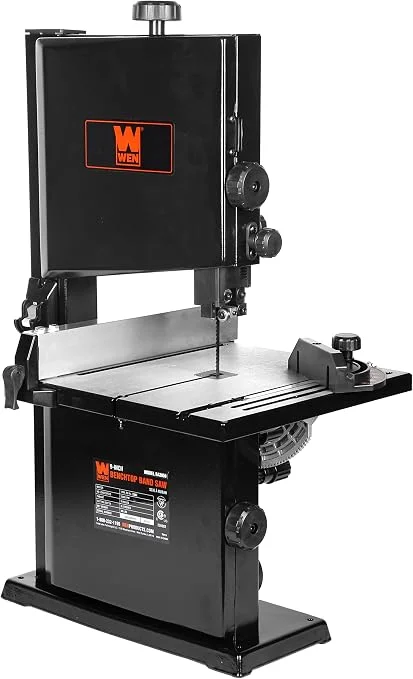 |
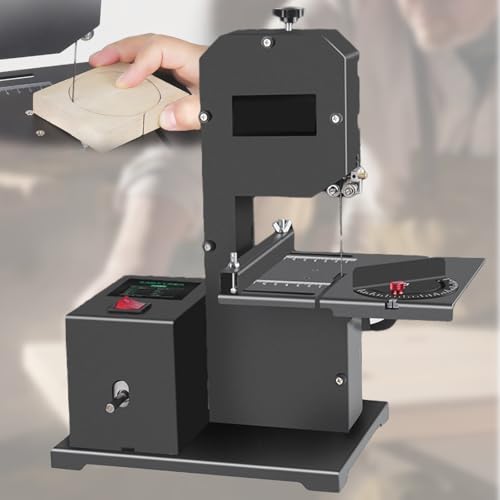
WEN 9-Inch Benchtop Band Saw (BA3959) – $143.66 For the production or dependable-use case this guide flags as the weak point of a discontinued brand, a currently manufactured band saw with an active parts supply is the safer long-term choice.
|
Since these are older machines by definition now, check the tires (the rubber/urethane bands the wheels ride on) for cracking or glazing – this is the most common wear part and a $20-40 fix if it’s the only issue. Check blade tracking and the tension spring for consistency, and test the motor under load, not just at idle, since a struggling motor is a bigger red flag on an unsupported legacy brand than on a currently-manufactured saw with available parts.
Replacement Parts Now Mean Generic, Not OEM
Band saw tires, blades, and bearings are largely standardized sizes across brands, so a generic urethane tire or bi-metal blade cut to the correct wheel diameter and blade length usually fits an Enco saw fine even without an official Enco part number. Measure the wheel diameter and blade length directly off the machine rather than searching for an “Enco” branded part, since that search will mostly return discontinued listings.
Is a Used Enco Band Saw Worth Buying Today?
For a light-duty hobby shop, yes, if the price reflects its age and the tires/motor check out – these were generally solid mid-range machines in their day. For anything you’re depending on for regular production work, a currently-manufactured band saw with an active parts supply chain and warranty is the safer long-term bet, since a failed part on an unsupported brand can mean a much longer search than ordering a current model’s part.
What Enco Actually Made
Enco’s band saws spanned benchtop hobby models up to larger floor-standing units aimed at small production shops, mostly sold under Enco’s own house brand alongside rebadged imports from the same Taiwanese and Chinese factories that supplied several other tool retailers of that era. That matters for parts sourcing today: a machine that looks unique to Enco may share a wheel size, motor mount, or table casting with a machine sold under a completely different brand name from the same factory, widening the pool of compatible donor parts beyond just other Enco units.
Realistic Pricing on the Used Market
A functional benchtop Enco band saw in decent condition typically sells for $75-200 depending on region and demand, while larger floor models can run $200-500. Price the machine on its actual mechanical condition, not its original retail price or a nostalgia premium – a clean-running saw with fresh tires is worth paying more for than one requiring immediate repair, regardless of what a similar model cost new decades ago.
Testing Before You Buy
If buying in person, ask to run the saw under an actual cutting load, not just an idle spin – listen for grinding or knocking from the wheel bearings, and watch the blade track to confirm it stays centered on the wheels without wandering. A saw that sounds fine at idle but bogs down, smokes, or throws the blade under real cutting resistance has a motor or bearing problem that’s a bigger repair than tires or a blade, and on a discontinued brand, sourcing a replacement motor mount or bearing housing specific to that model can be a genuine treasure hunt.
Common Failure Points on These Older Machines
Beyond tires, the thrust bearings behind the blade (which keep the blade from being pushed backward off the wheels during a cut) wear out on machines that have seen decades of use, showing up as a blade that flexes noticeably under moderate feed pressure. The blade guide blocks or bearings above and below the table also wear unevenly over time, which shows up as a wandering cut that gets worse as a board gets thicker, since the guides lose their grip on the blade over a longer unsupported span.
Rewiring and Electrical Safety on a Vintage Machine
A machine this old may still have its original power cord and switch, both of which are reasonable to replace preemptively even if they still work – insulation on decades-old cord jacketing can crack invisibly, and an old toggle switch doesn’t have the safety interlocks (a paddle that cuts power if bumped) that became standard on newer equipment. This is a cheap upgrade relative to the machine’s overall value and closes a real safety gap that has nothing to do with whether the saw cuts well.
Where to Actually Find One for Sale
Facebook Marketplace, Craigslist, and local classified groups for woodworking or machinist tools turn up used Enco equipment more reliably than eBay, since the saw’s weight and shipping cost make local pickup the more common sale format. Machinery-specific forums and Facebook groups for vintage/industrial tools are also worth checking – sellers and buyers there often know the specific model quirks and fair pricing better than a general marketplace listing would suggest.
Comparing to a Currently-Manufactured Budget Band Saw
A new entry-level band saw from an active brand typically costs $150-300, comes with a warranty, and has a manufacturer-supported parts pipeline for years to come – directly comparable in price to a well-maintained used Enco once you factor in likely near-term repairs. The used Enco wins if it’s mechanically sound and priced well below that range; the new machine wins if the used unit needs immediate work whose parts availability is uncertain.
Blade Selection Still Matters More Than the Saw’s Age
Regardless of the machine’s vintage, blade tooth count and width still drive cut quality the same way they would on a brand-new saw – a narrow, higher-TPI blade for tight curves, a wider, lower-TPI blade for resawing thick stock. Don’t assume a mediocre cut on an old Enco is the machine’s fault before checking whether the blade currently mounted actually matches the cut you’re trying to make.
Documentation and Manuals
Original Enco manuals for specific models can sometimes be found through vintage machinery forums or archived PDF collections maintained by hobbyists, even though Enco itself no longer has a support site. A manual is worth tracking down before attempting any disassembly beyond basic tire and blade replacement, since it documents the specific tensioning and alignment procedure for that model rather than relying on generic band saw setup instructions that may not match the exact mechanism.
Frequently Asked Questions
Are Enco band saws still made?
No. Enco closed as a company in the mid-2010s. Any Enco band saw available today is a used, secondhand machine.
Can you still get parts for an Enco band saw?
Not official OEM parts, but generic tires, blades, and bearings sized to match the machine’s actual dimensions work fine as substitutes.
What should you check before buying a used Enco band saw?
The wheel tires for cracking, blade tracking consistency, and the motor’s performance under actual cutting load, not just at idle.
Sponsored / affiliate links. As an Amazon Associate I earn from qualifying purchases. I may earn additional commission from eligible campaigns.