Best Bandsaw Blade for Resawing: 6 Picks by TPI & PSI (2026)
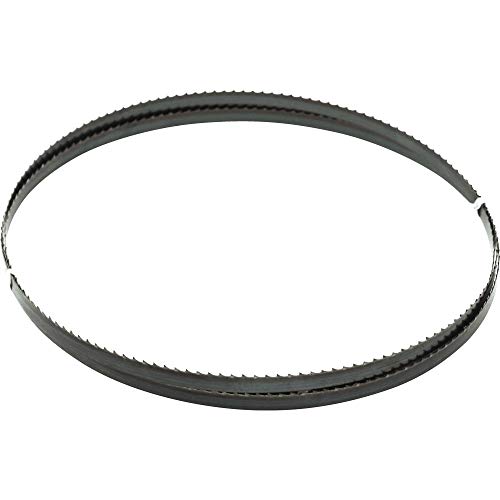
For most home shops, the Timber Wolf 3/4″ x 3 TPI positive-claw blade is the best bandsaw blade for resawing. It needs only 13,000–16,000 PSI of tension — about 20% less horsepower than a typical blade this width, per the manufacturer’s own published tension chart — so it tracks straight on saws that struggle to fully tension a heavier blade. If your saw has a riser block, or you want carbide edge life instead, five more picks below cover those cases with the same real numbers.
Resawing is a narrower job than general bandsaw cutting: you’re ripping thin sheets from thick stock, which puts real weight on tooth pitch, blade width and tension in a way that curve-cutting or crosscutting never does. Our general bandsaw blade comparison covers the full range of jobs a bandsaw does; this guide narrows in on the resaw-specific blades and the specs (tension especially) that decide whether one actually tracks straight through a deep cut.
Every number below came from the blade’s own Amazon listing (width, TPI, length, price) or from Timber Wolf manufacturer PS Wood Machines’ own published Blade Tension Guide for the tension column — the only tension spec any brand in this comparison actually publishes. Cost per inch uses each blade’s own length, since resaw blades come in at least three incompatible lengths (93.5″ for a bare 14″ saw, 105″–111″ once a 6″ riser block is added), so a raw sticker-price comparison would be misleading.
| Blade | Width | TPI | Length | Price | $/Inch | Min–Max Tension (PSI) | Verdict |
|---|---|---|---|---|---|---|---|
| Timber Wolf 3/4″ x 93-1/2″ 3 TPI Positive Claw | 3/4″ | 3 | 93-1/2″ | $46.95 | $0.50 | 13,000–16,000 | #1 Best Overall |
| Laguna Resaw King 3/4″ Carbide | 3/4″ | 2–3 (variable) | 93.5″ | $186.48 | $1.99 | Not published | Best Premium (Best for Glass-Smooth Veneer Cuts) |
| FOXBC 3/4″ x 93-1/2″ 3 TPI | 3/4″ | 3 | 93-1/2″ | $19.99 | $0.21 | Not published | Best Value |
| Timber Wolf 3423VPC 105″ x 3/4″ Low Tension | 3/4″ | 3 | 105″ | $31.99 | $0.30 | 11,000–14,000 | Best for Riser-Block Saws |
| SUPERCUT 105″ x 1/2″ Gold Carbide Impregnated | 1/2″ | 3 | 105″ | $43.99 | $0.42 | Not published | Best Carbide Option Under $50 |
| Timber Wolf 1/2″ x 93-1/2″ 3 TPI Positive Claw | 1/2″ | 3 | 93-1/2″ | $37.15 | $0.40 | 10,000–13,000 | Best for Benchtop / Low-HP Saws |
Prices are Amazon buy-box prices retrieved 3 August 2026 via the Amazon Creators API. Tension figures are Timber Wolf’s own published minimum/maximum PSI by width and gauge. Where a cell reads “Not published,” that brand does not publish a tension spec at all — tension that blade the same way PS Wood recommends checking any blade without a spec sheet: the “flutter test” described in the setup section below, not a gauge reading.
The one fact worth remembering from this table: Timber Wolf is the only brand here that publishes how much tension its blade actually needs, and its low-tension 3423VPC line needs 11,000–14,000 PSI against 13,000–16,000 PSI for a standard 3/4″ blade of the same width — a real, manufacturer-stated ~20% reduction in the horsepower your saw’s motor and tensioner have to supply.
Best Bandsaw Blades for Resawing
1. Timber Wolf 3/4″ x 93-1/2″ 3 TPI Positive Claw — #1 Best Overall
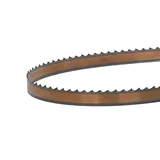
Check price on Amazon — $46.95
- Width: 3/4″ · TPI: 3, positive claw
- Length: 93-1/2″ (fits 14″ saws with no riser block)
- Material: high-silicon, low-carbon steel
- Tension: 13,000–16,000 PSI (PS Wood tension guide)
Pros:
- Milled (not stamped) teeth per the manufacturer, which Timber Wolf states run 50% sharper out of the package than a stamped or crush-ground edge
- Needs roughly 20% less tensioning horsepower than a standard 3/4″ blade of comparable width, per PS Wood’s own chart
- Fits the most common home-shop bandsaw size (93-1/2″, no riser block needed)
- Thin kerf keeps waste down on expensive hardwood
Cons:
- Not resharpenable — once the edge dulls, the blade is replaced, not touched up
- Positive-claw steel still needs more feed pressure through dense exotics than a carbide-tipped blade
This is the blade most home shops should default to. A true 3 TPI resaw pitch clears sawdust from a deep gullet instead of packing it (the failure mode of a general-purpose 6 TPI blade forced into a 6″ cut), and the width is the largest most 14″ saws without a riser block can track straight.
The tension number is the real differentiator. A saw that maxes out its spring tensioner below the 13,000–16,000 PSI a standard 3/4″ blade wants will never cut straight, no matter how good the steel is — and that ceiling is common on lower-cost 14″ saws with a single spring rather than a heavy-duty tensioning assembly.
Real-world feedback on Timber Wolf is mixed once it is compared directly against Highland Woodworking’s Wood Slicer, a resaw blade not sold through Amazon. In side-by-side comparisons discussed on LumberJocks and FineWoodworking’s own forums, some woodworkers report Timber Wolf needing noticeably more feed pressure through hard maple and oak than a same-width Wood Slicer, while others describe Timber Wolf performing “flawlessly.” Worth knowing before ordering, since it is the kind of trade-off a spec sheet alone will not show.
Main drawback: it’s not resharpenable, so total cost of ownership over years of resawing is higher than the sticker price alone suggests — budget for replacement, not touch-up.
2. Laguna Resaw King 3/4″ Carbide — Best Premium (Best for Glass-Smooth Veneer Cuts)
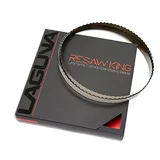
Check price on Amazon — $186.48
- Width: 3/4″ · TPI: 2–3 variable pitch
- Length: 93.5″
- C4 carbide teeth, triple vari-tooth design
- Resharpenable 4–5 times per Laguna
Pros:
- Carbide holds an edge through resin-heavy and abrasive exotic hardwoods far longer than any steel blade in this comparison
- Resharpenable up to 4–5 times, which meaningfully changes the cost-per-cut math over the blade’s real service life
- Triple vari-tooth geometry is built to reduce vibration and harmonics, which shows up as a smoother cut face that needs less post-resaw planing
Cons:
- At $1.99 per inch of blade, nearly 4x the Timber Wolf standard blade’s per-inch cost
- Brazed carbide teeth are less forgiving of an accidental nail or staple strike than a steel blade — a hit can chip a tooth instead of just dulling it
- Laguna does not publish a tension spec for this blade
This is the pick for someone resawing hardwood often enough that edge life, not sticker price, is the real cost driver. Carbide teeth stay sharp through the abrasive, resin-heavy species (teak, rosewood, osage orange) that dull steel blades in a handful of cuts.
The resharpening option is the part a raw price comparison misses. A blade that can be reground 4–5 times and still cut is not really a $186 blade if you use it enough to need that — it is closer to a $37–$40 blade amortized over its full life. For occasional resawing, that math doesn’t pencil out; for a shop resawing weekly, it usually does.
Main drawback: the $186 price only makes sense against real, regular resaw volume. For a handful of boards a year, the Timber Wolf or FOXBC picks above and below do the same job for a fraction of the cost.
3. FOXBC 3/4″ x 93-1/2″ 3 TPI — Best Value
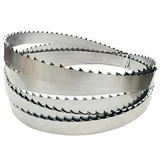
Check price on Amazon — $19.99
- Width: 3/4″ · TPI: 3
- Length: 93-1/2″
- Material: SK8 Japanese carbon steel, induction-hardened teeth
- Fits 14″ Delta, Grizzly, Jet, Rikon, Steel City, Ridgid and older Craftsman saws
Pros:
- At $0.21 per inch, under half the Timber Wolf standard blade’s per-inch cost and the cheapest genuine 3 TPI resaw pitch in this comparison
- A real resaw-pitch blade, not a general-purpose blade relabeled for the category
- Widely compatible with the most common 14″ saw frames on the market
Cons:
- No published tension spec — as a budget import brand, tensioning is trial-and-error via the flutter test, not a gauge reading
- Buyer reports on woodworking forums describe shorter tooth life in hardwood than Timber Wolf under similar use
FOXBC earns Best Value on pitch and price alone: a genuine 3 TPI resaw tooth, correct width, and less than a quarter of the per-inch cost of the Resaw King. For someone testing whether resawing is a technique they’ll use regularly before spending more, this is the low-risk way to find out.
Main drawback: expect to replace it more often than a name-brand steel blade in regular hardwood use — the low price buys the right pitch, not the same tooth life as Timber Wolf’s induction-hardened steel.
4. Timber Wolf 3423VPC 105″ x 3/4″ Low Tension — Best for Riser-Block Saws
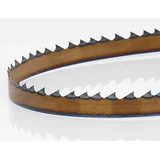
Check price on Amazon — $31.99
- Width: 3/4″ · TPI: 3, silicon steel
- Length: 105″ (fits 14″ saws with a 6″ riser block)
- Gauge: 0.025″ (Timber Wolf’s dedicated low-tension line)
- Tension: 11,000–14,000 PSI — the lowest of any 3/4″ blade published by any brand here
Pros:
- Sized specifically for riser-block saws (105″), the exact upgrade most home resawers make to get more cutting height
- Lowest published tension requirement of any 3/4″ blade in this comparison, which matters more once a riser block adds length to the blade loop and makes full tension harder to reach
- Same silicon-steel low-tension design as the standard Timber Wolf pick, so the ~20% horsepower saving carries over
Cons:
- Only useful if your saw actually has a riser block installed — measure your blade length before ordering
- Not carbide; same replace-don’t-resharpen wear profile as the standard Timber Wolf blade
A riser block is the standard way to add resaw height to a 14″ saw, and it lengthens the blade loop from roughly 93.5″ to 105″ or 111″ depending on the saw. That longer loop needs more total tension to reach the same PSI, which is exactly where a saw already at the edge of its tensioner’s range starts to struggle. This blade’s 11,000–14,000 PSI spec is the lowest 3/4″ number in the whole table, which gives a riser-block saw the best odds of actually reaching it.
Main drawback: it’s a wasted purchase on a saw without a riser block installed — the standard 93-1/2″ Timber Wolf blade (pick #1) is the correct length for a bare 14″ saw.
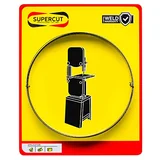
5. SUPERCUT 105″ x 1/2″ Gold Carbide Impregnated — Best Carbide Option Under $50
Check price on Amazon — $43.99
- Width: 1/2″ · TPI: 3
- Length: 105″ (riser-block length)
- Carbide-impregnated steel, not brazed-tooth carbide
- Made in USA, limited lifetime weld warranty per SUPERCUT
Pros:
- Carbide-impregnated steel adds real edge life over plain carbon steel at a fraction of the Resaw King’s price
- Narrower 1/2″ width works on smaller-wheel saws that can’t safely track a full 3/4″ blade
- USA-made with a stated lifetime weld warranty
Cons:
- Carbide-impregnated is a different, lower grade of carbide than the Resaw King’s brazed-tooth teeth — don’t expect the same edge retention
- No published tension spec
This is a genuine middle ground between the $19.99 FOXBC steel blade and the $186 Resaw King, not a budget imitation of either. Carbide-impregnated construction fuses hard particles into the steel itself rather than brazing on separate teeth, which raises edge life over plain carbon steel without the Resaw King’s brazed-carbide price or its vulnerability to a chipped tooth on impact.
Main drawback: treat it as an upgrade over standard steel, not a budget substitute for the Resaw King — carbide-impregnated steel is a genuinely different, less durable technology than brazed carbide teeth.
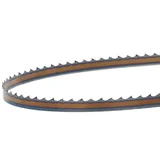
6. Timber Wolf 1/2″ x 93-1/2″ 3 TPI Positive Claw — Best for Benchtop / Low-HP Saws
Check price on Amazon — $37.15
- Width: 1/2″ · TPI: 3, positive claw
- Length: 93-1/2″
- Material: high-silicon, low-carbon steel
- Tension: 10,000–13,000 PSI — the lowest of any blade in this comparison
Pros:
- Lowest PSI requirement of any blade here, making it the safest resaw-pitch choice for a 10″ benchtop saw (Rikon 10-305, WEN, 10″ Craftsman) that physically cannot reach the tension a 3/4″ blade needs
- Still a genuine 3 TPI resaw pitch, not a general-purpose blade mislabeled for the category
- Same low-tension silicon steel as the other Timber Wolf picks
Cons:
- A narrower blade tracks less true in a deep cut than 3/4″ — expect more drift correction past 4″ of cut depth
- Not carbide, same wear profile as the other steel picks
Most resaw-blade advice assumes a full-size 14″ saw with 1–1.5 HP. A 10″ benchtop saw with a 1/3 HP motor and a small spring tensioner often cannot reach the PSI a 3/4″ blade needs at any width, and forcing the attempt just produces a blade that wanders under load. This 1/2″ blade’s 10,000–13,000 PSI spec is within reach of most benchtop tensioners, at the cost of some tracking stability in a deep cut.
Main drawback: on a full 14″ saw with real horsepower, a 3/4″ blade will out-track this one on every metric that matters — buy width for your saw’s frame, not your budget.
How We Picked These Resaw Blades
Every spec in the comparison table above came from three places gathered for this article: each blade’s own Amazon listing (width, TPI, length, price), Timber Wolf manufacturer PS Wood Machines’ own published Blade Tension Guide for the tension numbers, and Olson Saw’s own published resaw guidance for the buying-criteria section below.
We did not physically mount and test these six blades. There are no cut times, no board-foot counts, and no first-person “we found” claims anywhere in this article. Where a spec wasn’t published anywhere we could verify — tension on the FOXBC, SUPERCUT and Resaw King blades, specifically — the table says “Not published” rather than a guessed number.
Where real buyer or reviewer experience is cited, it’s attributed to the specific source it came from (forum threads on LumberJocks and FineWoodworking, in the Timber Wolf vs. Wood Slicer comparisons discussed below), never presented as this site’s own hands-on testing.
What to Consider When Buying a Resaw Blade
Blade Width and What Your Saw’s Wheels Can Handle
Olson Saw, a blade manufacturer, publishes 1/2″ to 3/4″ as the practical width range for resawing: wide enough to track straight through a deep cut, narrow enough to flex around most 14″-and-under bandsaw wheels without excessive stress. Going wider than 3/4″ is rarely useful on a home shop saw — the wheel diameter itself becomes the limit before the extra width helps. Guitar building is the one common exception to that 1/2–3/4-inch range: builders resawing their own tonewood sets often need to switch down to a 1/8-inch blade for cutaway and headstock curves on the same saw, so the resaw capacity and blade-width range covered in our guitar-building band saw comparison matter more than the general resawing rule of thumb above.
TPI and Gullet Clearance in a Deep Cut
Per Olson’s published guidance, 2 to 3 TPI is the range that matters for resawing, because a low tooth count creates a larger gullet between teeth to carry sawdust out of a deep cut. A general-purpose 6 TPI blade forced into a 6″-deep resaw cut fills its gullets with dust before they clear the workpiece; the cut slows, the blade heats, and the kerf can close behind it. Every dedicated resaw blade in this comparison sits at 2–3 TPI.
Gauge (Thickness) and Beam Strength
Olson recommends 0.025″ to 0.032″ blade thickness for resawing: thick enough to resist deflection under a deep cut’s side load, thin enough to keep kerf loss reasonable on expensive stock. Every steel blade in the table above sits at or near 0.025″; the Resaw King’s carbide backing is listed at 0.024″ (0.6mm).
Tension: Why PSI Matters More Than the Spec Sheet Suggests
A resaw blade under-tensioned for its width will wander mid-cut no matter how good its steel or carbide is. Timber Wolf is the only brand in this comparison that publishes a PSI target at all, and its own guide states plainly that its silicon steel blades run at 3,000–5,000 PSI less tension than what “is normally recommended by most saw manufacturers and other blade manufacturers” — which it states saves roughly 20% of the horsepower a saw’s motor and tensioner have to deliver. For every other brand here, plan to tension by feel using the flutter test in the setup section below.
Tooth Geometry: Positive Claw, Hook and Skip
Olson’s guidance recommends skip-tooth or hook-tooth geometry for resawing. Skip-tooth clears sawdust most efficiently; hook-tooth adds a roughly 10-degree rake angle that bites into dense hardwood faster. Timber Wolf’s “positive claw” design (used on three of the six picks above) is a variable-pitch hook variant intended to reduce the resonance a single fixed tooth spacing can set up in a long cut.
Blade Material: Silicon Steel vs. Carbide vs. Carbide-Impregnated
Plain high-carbon steel is cheapest and dulls fastest in abrasive or resinous hardwood. Timber Wolf’s silicon steel is stated to run cooler and hold an edge longer than plain carbon steel at the same price tier. Carbide-impregnated steel (the SUPERCUT pick) fuses hard particles into the blade body for a step up in edge life over plain steel. Brazed carbide teeth (the Resaw King) go furthest: individually ground carbide teeth that can be resharpened, at several times the price of any steel blade here.
Riser Blocks and Your Real Maximum Resaw Height
A riser block is a spacer kit that raises a 14″ saw’s upper wheel and frame, typically adding about 6″ of cutting height and lengthening the blade loop from roughly 93.5″ to 105″–111″ depending on the saw. Buying a resaw blade without checking whether your saw has a riser block installed is the single most common ordering mistake — the wrong length simply won’t mount.
Cost per Inch vs. Total Blade Life
The comparison table’s $/inch column ranges from $0.21 (FOXBC) to $1.99 (Resaw King) — nearly a 9x spread for blades doing the same job. That spread only makes sense once resharpening enters the picture: a carbide blade resharpenable 4–5 times, per Laguna, is not really priced against a single steel blade’s life, it’s priced against 4–5 steel-blade replacements over the same span of use.
How to Set Up Your Bandsaw for Resawing
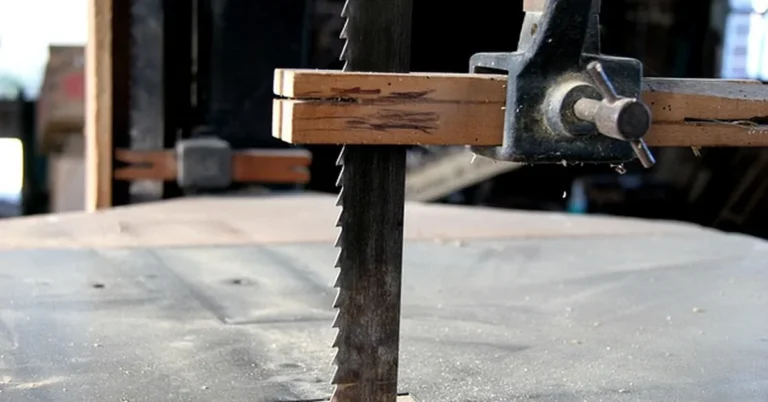
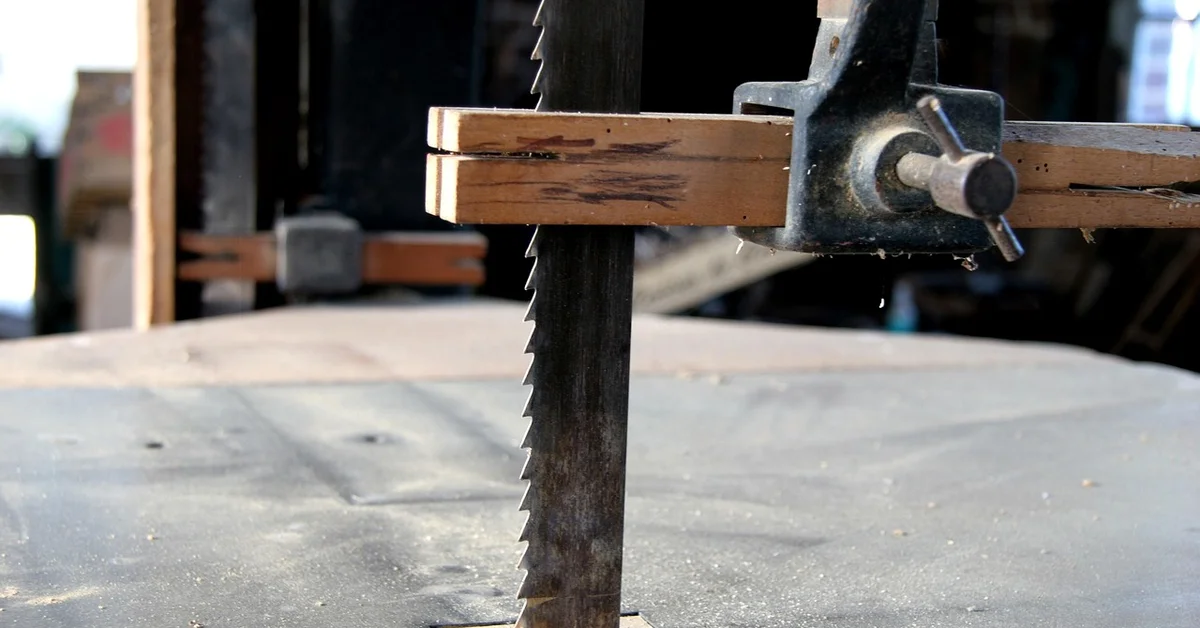
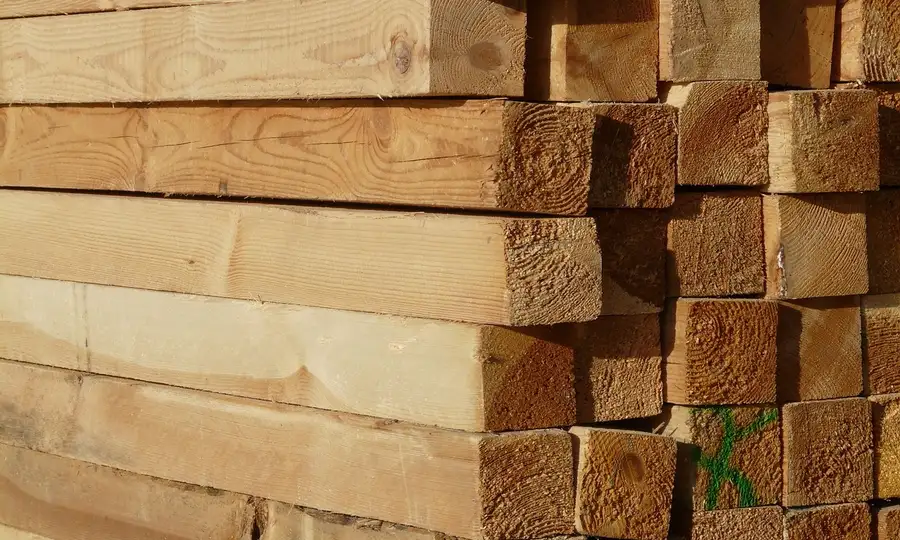
- Install the resaw blade with the teeth pointing down toward the table, and confirm the blade sits centered on the wheels by turning them by hand before power is applied.
- Tension to the blade’s published PSI if you have a tension gauge, or use PS Wood’s flutter test if you don’t: slowly reduce tension from the saw manufacturer’s default until the blade develops a constant flutter between the wheels, then add tension back until the flutter narrows to about 1/16 inch, then add roughly another 10%.
- Set the upper and lower blade guides and thrust bearing close to the blade body without touching it, and readjust the upper guide height for the actual board thickness.
- Install or clamp a tall resaw fence (or a shop-made auxiliary fence) sized to the board’s height, since a standard low rip fence won’t support tall stock through a deep cut.
- Make a short test cut and check for drift — if the cut wanders away from the fence line, adjust the fence angle to match the blade’s natural feed direction rather than fighting it by hand.
- Feed at a steady, moderate rate. Forcing the cut heats the blade and can close the kerf behind it, which is what produces the bowed or tapered resaw cuts most drift complaints actually trace back to.
Frequently Asked Questions
What TPI is best for resawing hardwood on a bandsaw?
2 to 3 TPI, per Olson Saw’s published guidance. A lower tooth count opens a larger gullet to carry sawdust out of a deep cut; a general-purpose 6 TPI blade packs its gullets with dust before they clear the workpiece and slows down or overheats.
How wide should a bandsaw blade be for resawing?
1/2″ to 3/4″, per Olson Saw. Wider blades track straighter through a deep cut, but going past 3/4″ is rarely useful on a home-shop bandsaw because the wheel diameter becomes the limiting factor before the extra width helps.
Do I need a riser block to resaw wide boards?
Not to resaw at all, but you do need one to resaw past your saw’s stock cutting height — typically around 6″ on a bare 14″ saw. A riser block adds roughly 6″ of height and changes the required blade length from about 93.5″ to 105″–111″, so check your saw’s specs before ordering a longer blade.
Why does Timber Wolf need less tension than other bandsaw blades?
Per PS Wood Machines’ own Blade Tension Guide, Timber Wolf’s silicon steel blades are engineered to run stable at 3,000–5,000 PSI less tension than what “is normally recommended by most saw manufacturers and other blade manufacturers,” which the company states saves roughly 20% of the horsepower a saw’s motor and tensioner need to supply.
Is a carbide-tipped resaw blade worth the price?
It depends on how often you resaw. A brazed-carbide blade like the Laguna Resaw King costs close to 4x a standard steel blade per inch, but Laguna states it can be resharpened 4–5 times — for regular resaw work, that changes the real cost-per-cut math. For occasional resawing, a steel blade’s lower upfront cost is hard to beat.
What horsepower bandsaw do I need to resaw 6-inch stock?
Most published shop guidance puts the practical minimum around 1 to 1.5 HP for resawing 6″ hardwood at a reasonable feed rate, though the real constraint is whether the saw’s tensioner can reach the blade’s required PSI at all — a low-horsepower saw with a weak tensioner will struggle before the motor itself runs out of power.
Final Thoughts
The Timber Wolf 3/4″ 3 TPI positive-claw blade is the best bandsaw blade for resawing for most home shops, and the one number worth remembering is the tension spec behind that pick: Timber Wolf publishes 13,000–16,000 PSI for a standard 3/4″ blade and 11,000–14,000 PSI for its low-tension 3423VPC line, a manufacturer-stated ~20% reduction in the horsepower a saw has to deliver — a spec no other brand in this comparison discloses at all. If your saw already struggles to tension a wide blade, that number matters more than any other spec on this page.
Related Guides
- Best Bandsaw Blades for Woodworking — the full all-purpose blade comparison, for curve-cutting and general ripping picks alongside resaw options
- How to Adjust Bandsaw Blade Tracking
- How Tight Should a Bandsaw Blade Be?
- How to Measure a Bandsaw Blade
- How to Sharpen Bandsaw Blades
- How to Store Bandsaw Blades
- How to Use a Bandsaw
Sponsored / affiliate links. As an Amazon Associate I earn from qualifying purchases. I may earn additional commission from eligible campaigns.