What Are Portable Band Saws Used For? A Jobsite Cutting Guide
A portable band saw is a handheld tool built to bring the cut to the material instead of the other way around – its main jobs are slicing metal pipe, conduit, rebar, and threaded rod on a jobsite, trimming lumber or plumbing lines in tight spaces, and making cleaner, cooler cuts than a chop saw or angle grinder. Electricians, plumbers, HVAC installers, and metal fabricators reach for one specifically because it clamps onto stock that can’t be carried to a stationary saw and cuts it in place, with less heat and far fewer burrs than an abrasive wheel leaves behind.
What Exactly Is a Portable Band Saw?
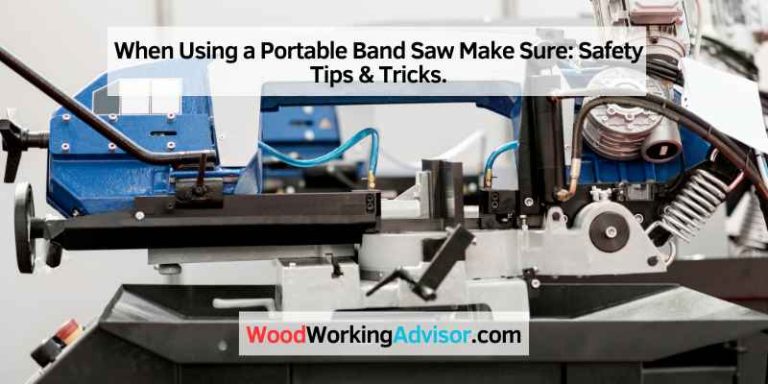
A portable band saw uses the same continuous toothed-blade loop as a full-size shop band saw, wrapped around two small pulley wheels inside a compact, C-shaped body you clamp directly onto the workpiece. Most deep-cut models handle round stock up to about 4–5 inches in diameter and run the blade at variable speeds – DEWALT’s DCS374B, for example, tops out around 490 SFPM, slow enough to control and fast enough to get through structural steel without stalling. Because the blade teeth shear material in a continuous loop rather than grinding it with friction, the cut stays cool and leaves a clean, low-burr edge that’s ready to thread or weld without extra cleanup.
Best Cordless Pick for Jobsite Pipe & Conduit
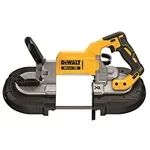 |
DEWALT DCS374B 20V MAX Band Saw – $274.99 A brushless, cordless deep-cut band saw built for exactly the jobsite pipe, conduit, and rebar cuts this guide covers.
|
What Portable Band Saws Are Actually Used For
Cutting Metal Pipe, Conduit, and Rebar on the Jobsite
This is the job the tool was designed around. Electricians use a portable band saw to trim EMT and rigid conduit to length without deforming the round profile the way a hacksaw or pipe cutter can. Plumbers do the same with threaded rod and copper or steel pipe. On framing and remodel sites, the deep-cut capacity handles angle iron, channel, and square tubing in one pass instead of rotating the stock and cutting from four sides like you’d have to with a circular saw fitted with a metal blade.
Woodworking in Tight Spaces
A portable band saw isn’t a substitute for a bench band saw when you’re cutting curves or resawing boards – it’s not built for that kind of controlled feed. What it’s genuinely good for is trimming a stud, joist, or post that’s already installed and can’t be brought to a stationary saw, or cutting through nail-embedded reclaimed lumber where you don’t want to risk a blade on a table saw.
Plumbing and Electrical Rough-In Work
During rough-in, pipe and conduit runs rarely come pre-cut to the exact length a wall cavity needs. A cordless portable band saw lets a plumber or electrician cut in place, mid-run, without dragging a bench saw between floors or shutting down a chop saw’s dust and noise inside an occupied space.
Demolition and Renovation Cuts
Cutting through embedded bolts, old plumbing stubs, or structural steel that’s still fastened in place is where a portable band saw earns its keep during a renovation – it clamps onto material an angle grinder would send sparks flying off of, which matters when you’re working near insulation, wiring, or other flammable debris.
DIY and Hobby Projects
Outside of trade work, a portable band saw shows up in home metalworking projects – trimming bike frames, cutting down bar stock for a welding project, or sizing scrap steel for a garage build – anywhere you’d rather bring the saw to the material than wrestle a heavy piece onto a bench saw.
Portable vs. Shop Band Saws: Which One Do You Actually Need?
These are two different tools for two different jobs, even though the name overlaps. A portable band saw is built to be carried to fixed, immobile material and cut it in place – pipe, conduit, and structural steel on a jobsite. A stationary shop band saw stays on a bench and is built for the opposite: feeding wood through a fixed blade to resaw thick stock into thinner boards, cut tight curves, or rip veneer. If your work is mostly curve-cutting, resawing, and joinery in a woodshop, a bench band saw is the right tool – our guide on what a band saw is used for covers those shop-based uses in detail. If you’re cutting pipe, conduit, or steel that has to stay where it is, a portable model is the one built for that job.
Key Features to Look For When Buying One
Blade Speed and Variable Speed Control
Most deep-cut portable band saws run somewhere between 100 and 350 SFPM on the low end for stainless and harder alloys, up toward 400–500 SFPM for mild steel and aluminum. Variable speed matters more than a single fixed setting – it’s what lets one saw switch between thin-wall conduit and solid bar stock without burning through blades.
Cutting Capacity
Deep-cut models handle round stock up to roughly 4–5 inches and rectangular profiles a bit larger on the flat side. If you regularly cut larger structural tubing, check the throat depth against your actual stock size before buying – undersized capacity means repositioning the material and cutting from multiple sides, which defeats the point of a portable saw.
Blade Type and Tension
Bi-metal blades are the standard for mixed metal cutting because they resist stress fractures better than plain carbon blades. A tool-less tension lever is worth paying for – swapping blades between a fine-tooth blade for thin conduit and a coarser one for solid bar takes seconds instead of tools.
Weight and Ergonomics
You’re holding this saw at odd angles – overhead on conduit runs, low against a pipe under a floor joist. A saw in the 8–11 lb range with a front handle you can brace against is noticeably easier to control one-handed than a heavier corded model.
Power Source: Corded vs. Cordless
Cordless models built on an existing battery platform (like DEWALT’s 20V MAX line) are the practical choice for most jobsite work – no cord to manage on a ladder or crawlspace, and the battery already fits other tools on the truck. Corded saws still make sense for continuous, high-volume metal fabrication where you don’t want to stop and swap batteries.
Safety Tips for Using a Portable Band Saw
Clamp the material firmly before starting the cut – a loose workpiece is the most common cause of blade binding and kickback. Keep gloves on for handling stock but be aware that loose glove fabric near a moving blade is a real hazard, so keep hands well clear of the blade path once the cut starts. Let the saw’s own weight and blade speed do the cutting instead of forcing it – pushing too hard heats the blade, dulls the teeth faster, and increases the odds of it wandering off-line. Support the offcut so it doesn’t drop and pinch the blade as the cut finishes.
Portable Band Saw vs. Other Saw Types
Pros and Cons of Portable Band Saws
Pros: Cuts in place without repositioning material, cooler and cleaner than abrasive cutoff tools, low burr means less deburring before threading or welding, handles round and rectangular metal stock well.
Cons: Slower than an abrasive chop saw for straight, high-volume cuts, limited by its throat depth on oversized stock, bi-metal blades cost more than abrasive wheels over time, and it’s the wrong tool for wood curves or resawing – that’s a bench band saw’s job.
Maintaining Your Portable Band Saw
Clear metal shavings from the wheel housing after every use – built-up debris throws off blade tracking over time. Check blade tension before each session; a loose blade wanders in the cut and wears the guide bearings faster. Keep a spare bi-metal blade on hand since blades dull faster on stainless and hardened fasteners than on mild steel or conduit, and wipe down the guide rollers periodically so they keep turning freely instead of dragging on the blade.
Frequently Asked Questions
Can a portable band saw cut wood as well as it cuts metal?
It can cut wood with a wood-rated blade, but it’s not built for controlled curve-cutting or resawing the way a bench band saw is. For straight trim cuts on lumber that’s already in place, it works fine; for shop woodworking joinery, a stationary band saw is the better tool.
Are portable band saws safe for beginners?
Yes, with basic precautions – clamp the material securely, keep hands clear of the blade path, and start on a slower speed setting until you’re comfortable with how the saw tracks through the cut. The enclosed blade guard and lower blade speed compared to a circular saw make it one of the more forgiving power saws for a first-time user.
Do I need a corded or cordless portable band saw for jobsite work?
Cordless is the better fit for most jobsite use – ladders, crawlspaces, and roof work don’t leave room for a cord, and a battery you already own for other tools cuts the extra cost. Corded saws are worth it only for shop-based, continuous fabrication work where battery swaps would slow you down.
Sponsored / affiliate links. As an Amazon Associate I earn from qualifying purchases. I may earn additional commission from eligible campaigns.