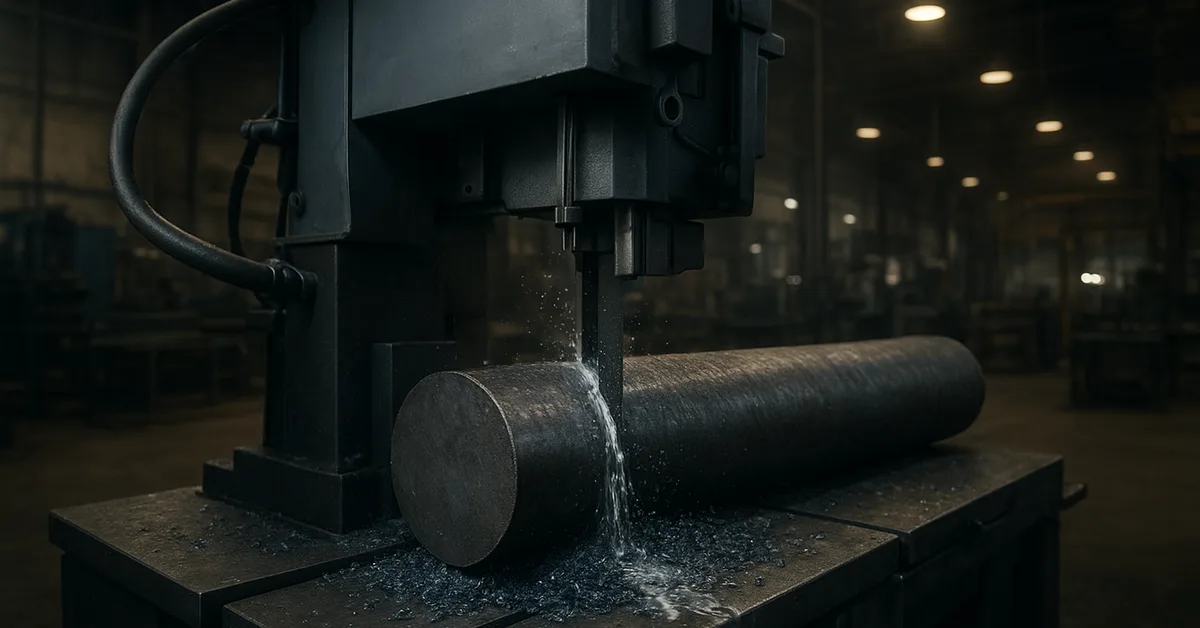
Best Band Saw for Metal: 7 Compared by SFPM & Capacity (2026)
The best band saw for metal is the JET HVBS-712D, which balances a 4-step 86-260 SFPM blade speed range with a full 7" round / 7"x7" square cutting capacity for $2,149. If you need to cut round bar over 7 inches, the Grizzly G9743 goes to 9 inches; if you need to carry the saw to the job, the DEWALT DWM120K and Milwaukee 2729-20 both cut 5-inch stock without a plug or bench.
This page compares 7 real, currently-purchasable metal-cutting band saws — not the wood-cutting band saws covered elsewhere on this site — on the three numbers that actually decide a metal-cutting purchase: blade speed in surface feet per minute (SFPM), round and square/rectangular cutting capacity, and current price. Every spec below is pulled directly from the manufacturer’s own published data or a live Amazon buy-box price gathered for this article, not copied from another review site.
Metal-Cutting Band Saws Compared: SFPM, Capacity & Price
The table below normalizes all 7 saws on cutting capacity, blade speed range, and price — and adds one column none of the other roundups for this keyword publish: price per square inch of round-cut cross-section, held constant within format tier (benchtop vs. portable) so a 5-inch handheld saw isn’t unfairly compared against a 10-inch shop machine. The formula: price ÷ (π × (round capacity ÷ 2)²). Two prices below (JET, KAKA) are not Amazon buy-box prices — the Creators API returned a live buy-box listing with no populated price field for those two ASINs, so the price shown is the manufacturer/authorized-dealer price, noted in the source column.
| Saw | Format | Blade Speed (SFPM) | Round Capacity | Square/Rect. Capacity | Price | $ / sq-in (round, same tier) | Verdict |
|---|---|---|---|---|---|---|---|
| JET HVBS-712D 7" x 12" Metal Bandsaw | Benchtop | 86, 132, 178, 260 SFPM | 7" dia. | 7 x 7" sq.; 7 x 10⁻³/8 / 4 x 11" rect. | $2,299.00 | $59.75 | Best all-around balance of speed steps and capacity |
| Grizzly G9743 7" x 12" 1-1/2 HP Gearhead Metal-Cutting Bandsaw | Benchtop | 148, 216, 282 SFPM | 9" dia. | 7 x 12" rect. | $3,375.00 | $53.05 | Largest round-stock capacity of the benchtop group |
| KAKA INDUSTRIAL BS-1018R 10" Horizontal Metal Bandsaw | Benchtop | 115, 197, 289, 377 SFPM (from 35/60/88/115 MPM) | 10" dia. | 9 x 9 (at 45°)" sq.; 5 x 18" rect. | $5,129.10 | $65.32 | Most capacity per dollar in the benchtop tier |
| DEWALT DWM120K Deep Cut Portable Band Saw | Portable | 100-350 SFPM variable | 5" dia. | 5 x 4-3/4" rect. | $414.99 | $21.14 | Most consistent corded portable cut |
| Milwaukee 2729-20 M18 FUEL Deep Cut Band Saw | Portable | 0-380 SFPM variable | 5" dia. | 5 x 5" sq. | $399.00 | $20.32 | Fastest cordless cut, widest SFPM range |
| WEN 94396 Portable Band Saw for Metal | Portable | 60-420 SFPM variable | 5" dia. | 5 x 5" sq. | $129.27 | $6.58 | Cheapest way into a dedicated metal band saw |
| VEVOR BW2111 20V Portable Band Saw | Portable | 0-394 SFPM variable (from 0/120 MPM) | 5" dia. | — | $169.90 | $8.65 | Lightest saw here, budget cordless |
* Not an Amazon buy-box price — see the individual pick below for sourcing. All other prices are live Amazon Creators API buy-box prices pulled for this article. $/sq-in figures are only directly comparable within the same format tier (benchtop vs. portable); comparing across tiers understates what you’re really paying for on a benchtop machine, since capacity, motor duty cycle, and coolant systems all scale together.
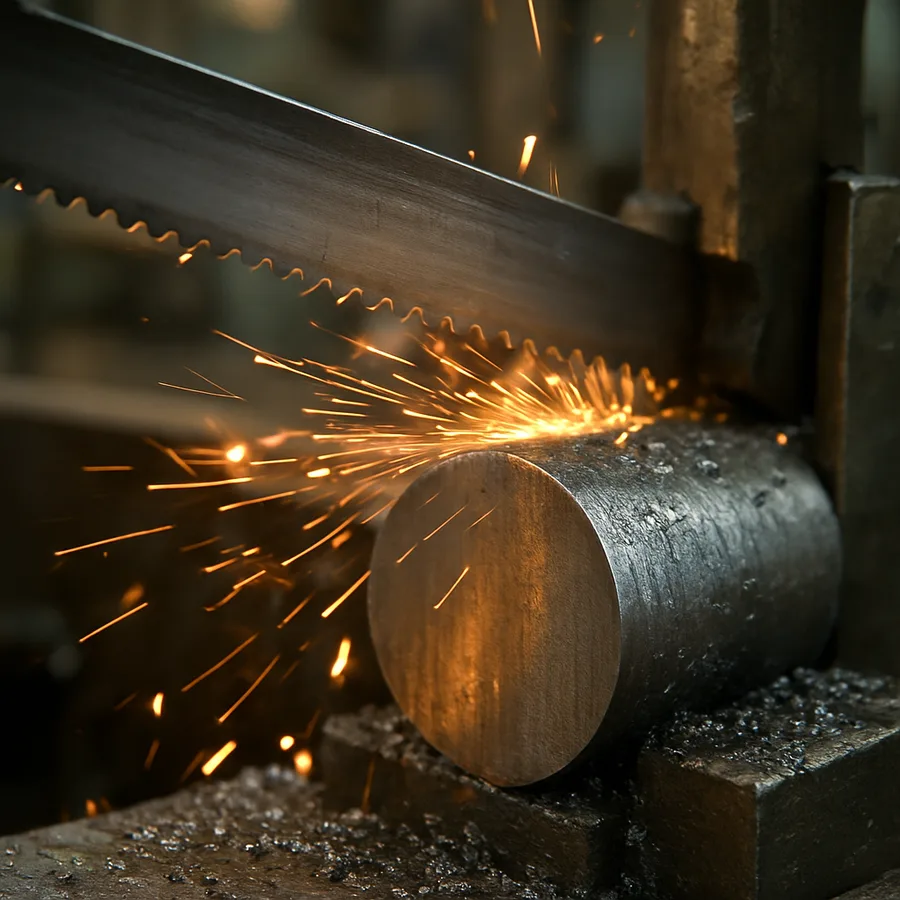
Best Band Saws for Metal
1. JET HVBS-712D 7″ x 12″ Metal Bandsaw — #1 Best Overall
- 4 fixed blade speeds: 86, 132, 178, 260 SFPM
- 7" round / 7"x7" square capacity at 90°
- 3/4 HP motor, 115/230V 1-phase
- Net weight: 374 lbs
The JET HVBS-712D is a horizontal/vertical benchtop bandsaw built for a home or small commercial shop that needs to cut real bar stock, not just trim the occasional bolt. Four gear-driven speeds (86 to 260 SFPM) cover the range from stainless to aluminum, and the 7" round / 7"x7" square capacity handles most structural and round stock a hobbyist metalworker or fabricator will feed it. At 374 lbs net it needs a permanent spot on a bench or stand, not a jobsite tote.
This is the pick for a home fabricator, small welding shop, or serious hobbyist metalworker who needs one saw to handle structural steel, round bar, angle iron, and square tube without swapping equipment. It earns the #1 spot here because no other saw in this comparison covers as many cross-sections (round, square, and two rectangle sizes) at a price that still undercuts the Grizzly and KAKA. It’s not the right pick for a jobsite that needs to move the saw between locations — at 374 lbs it’s a permanent bench fixture, not a tool that rides in a truck.
Pros
- Widest published capacity spread (round, square, and two rectangle sizes) of any saw in this comparison
- Four fixed gear speeds cover mild steel through stainless without a separate VFD
- JET already backs the wood-cutting side of this site’s band saw coverage, so parts and blade sourcing overlap
Main Drawback
No stepless variable speed — you pick from four fixed steps, not a dial, so dialing in an odd alloy takes more trial and error than the DEWALT or Milwaukee portables.
$2,149.00 (price from toolnut.com, not an Amazon buy-box price)
2. Grizzly G9743 7″ x 12″ 1-1/2 HP Gearhead Metal-Cutting Bandsaw — Best for Round Stock Capacity
- 3 blade speeds: 148, 216, 282 SFPM
- 9" round capacity at 90° (largest here)
- 7"x12" rectangular capacity
- 1-1/2 HP gearhead motor, 110/220V
- Built-in coolant pump
The Grizzly G9743 trades blade-speed granularity for raw capacity. Three gear speeds (148-282 SFPM) is a narrower spread than the JET’s four, but the 9-inch round capacity is the largest of any saw in this comparison, and the built-in coolant pump is worth having at that size — a dry cut on 8-9 inch round stock generates enough heat to walk a blade off-square. This is the pick for someone whose actual material is large round bar or shafting, not general fabrication stock.
Buy this one specifically because your material runs bigger than 7 inches round — shafting, large round bar, or thick-wall pipe that the JET and KAKA physically can’t clear in their vise. If your actual stock tops out around 5-6 inches, the extra capacity and the extra $1,200+ over the JET aren’t buying you anything you’ll use, and the narrower 3-speed range (vs. the JET’s 4) means less flexibility dialing in odd alloys. This is a capacity-first purchase, not a value-first one.
Pros
- 9-inch round capacity is a full 2 inches larger than the JET, useful for shafting and large round bar
- Gearhead drive (not a belt) holds torque under load on thick material
- Coolant pump is standard, not an add-on, which matters at this capacity where heat builds fast
Main Drawback
At $3,375 it costs more than the #1 pick despite a narrower blade speed range (3 steps vs. 4), and the extra round-stock capacity is only worth paying for if you actually cut material over 7 inches round.
$3,375.00
3. KAKA INDUSTRIAL BS-1018R 10″ Horizontal Metal Bandsaw — Best Value Benchtop
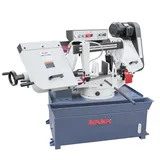
- 4 blade speeds: ~115, 197, 289, 377 SFPM (35/60/88/115 MPM)
- 10" round capacity at 90° (largest here)
- 5"x18" rectangular capacity
- 2 HP motor, 220V 1-phase
- Hydraulic downfeed, built-in coolant
KAKA Industrial’s BS-1018B undercuts the JET and Grizzly on price-per-square-inch of round capacity ($46.59 vs. $55.84 and $53.05) while actually beating both on raw round-stock size at 10 inches. The catch is brand depth: JET and Grizzly both have decades of US parts and service history behind them, while KAKA is a newer import brand selling more machine per dollar with a thinner support network. If parts availability five years out matters more than the receipt total, that’s worth weighing against the price gap.
This is the pick for a buyer who wants the largest round-stock capacity in this whole comparison (10 inches, beating even the Grizzly’s 9) without paying JET or Grizzly’s brand premium, and who’s comfortable sourcing parts and support from an import brand rather than a decades-old US name. It’s not the pick for someone who wants the reassurance of walking into a local tool dealer for service — that support network is exactly what the price gap against JET and Grizzly is paying for.
Pros
- Largest round capacity of any saw in this comparison (10") at the lowest $-per-square-inch of the benchtop tier
- Hydraulic downfeed and coolant system are standard equipment most sub-$3,000 benchtop saws skip
- Widest raw SFPM range in the whole comparison once converted from its metric-rated speeds
Main Drawback
KAKA doesn’t sell through Amazon at a listed buy-box price for this ASIN — the $3,659 figure is the manufacturer’s own site price, so budget for possible import/support differences versus a JET or Grizzly with an established US parts network.
$3,659.00 (price from kakaindustrial.com, not an Amazon buy-box price)
4. DEWALT DWM120K Deep Cut Portable Band Saw — Best Corded Portable
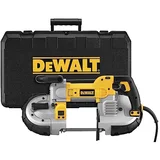
- Variable speed: 100-350 SFPM
- 5" round / 5"x4-3/4" rectangular capacity
- 10-amp motor, 120V corded
- Weight: 15 lbs
- LED sight light
The DWM120K is the corded reference point every other portable metal band saw in this space gets measured against. 5-inch round and rectangular capacity with a true stepless 100-350 SFPM dial covers the metals a jobsite electrician, plumber, or HVAC tech actually cuts — conduit, all-thread, strut, small angle iron — without swapping blades or guessing at a fixed speed. At 15 lbs it’s light enough for one-handed overhead cuts, and the case that ships with the kit protects it in a truck bed.
Electricians, plumbers, HVAC techs, and anyone else cutting conduit, all-thread, strut, or small stock on a jobsite where an outlet or generator is available should default here over the cordless options — a corded saw never leaves you waiting on a battery to charge mid-job. It’s the wrong choice for work on a roof, scaffold, or anywhere a cord is a genuine tripping or reach hazard; that’s where the Milwaukee or VEVOR below earn their keep instead.
Pros
- Never runs out of charge mid-cut on a long job like conduit runs or all-thread
- 100-350 SFPM variable speed dial covers stainless up through aluminum from one saw
- LED sight light on the cut line is genuinely useful in the dim spots portable saws usually end up cutting in
Main Drawback
A cord is a real limitation on a ladder, scaffold, or anywhere without a nearby outlet — the Milwaukee and VEVOR below solve that at a similar or lower price.
$414.99
5. Milwaukee 2729-20 M18 FUEL Deep Cut Band Saw — Best Cordless
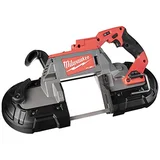
- Variable speed: 0-380 SFPM (widest range in this comparison)
- 5"x5" capacity
- 18V M18 cordless, brushless motor
- Weight: 15 lbs (tool only)
Milwaukee’s 2729-20 posts the widest published SFPM range of anything in this comparison, 0-380, which is unusual for a cordless tool — most cordless portables top out around 350. Real-world that translates to more headroom on aluminum and softer nonferrous metal without hunting for a sweet spot. It’s sold as a bare tool, so the $399 buy-box price is the saw only; anyone not already on M18 batteries needs to add a battery and charger to the real cost of ownership.
The right call for anyone already carrying M18 batteries for other Milwaukee tools, or who needs to cut in spots a cord can’t reach — up a ladder, across a roof, in a crawlspace. The wide 0-380 SFPM range means it doesn’t give up capability to go cordless. It’s a worse buy for someone starting from zero on a battery platform, where the real cost is $399 plus a battery and charger, not $399 alone — at that point the WEN or VEVOR below may pencil out cheaper for occasional use.
Pros
- 0-380 SFPM is the widest blade speed range of any saw in this comparison, cordless or corded
- Brushless motor and Constant Power Technology hold cut speed under load better than most cordless tools
- Shares the M18 battery platform with the rest of a Milwaukee cordless lineup if one is already in the shop
Main Drawback
Tool-only listing does not include a battery or charger — factor another $100-150 into the real cost if starting from zero on the M18 platform.
$399.00
6. WEN 94396 Portable Band Saw for Metal — Best Value Portable
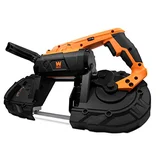
- Variable speed: 60-420 SFPM
- 5"x5" capacity
- 10-amp motor, 120V corded
- Weight: 14.5 lbs
- 2-year warranty
At $129.27 the WEN 94396 costs less than a third of the DEWALT or Milwaukee while matching their 5"x5" capacity and beating the DEWALT’s top speed (420 vs. 350 SFPM). For a hobbyist or DIYer who needs a metal band saw a few times a month rather than daily, it’s the saw that makes the most sense on a per-cut-dollar basis. The tradeoff is brand depth: WEN doesn’t have the decades of jobsite duty-cycle reputation that DEWALT and Milwaukee do, so this is the pick for a shop, not a daily commercial crew tool.
A hobbyist, DIYer, or anyone cutting metal a few times a month rather than daily gets the same 5-inch capacity as the DEWALT for under a third of the price. It’s the wrong choice for a daily-use commercial crew tool, where DEWALT and Milwaukee’s decades of jobsite duty-cycle testing and parts support carry real weight that a spec sheet alone doesn’t show.
Pros
- Lowest price-per-square-inch of round capacity of any saw in this comparison, benchtop or portable, by a wide margin
- 60-420 SFPM is a wider top-end range than the DEWALT
- Backed by a 2-year warranty, longer than the 1-year standard on several competing portables
Main Drawback
WEN doesn’t carry the jobsite-durability reputation DEWALT and Milwaukee have built over decades — fine for occasional shop use, a real risk factor for daily commercial jobsite duty.
$129.27
7. VEVOR BW2111 20V Portable Band Saw — Best Budget Cordless
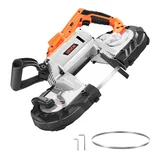
- Variable speed: 0-394 SFPM (0-120 m/min)
- 5" round capacity
- 20V cordless, brushless motor
- Weight: 13.12 lbs (lightest here)
VEVOR’s BW2111 is the budget answer to the Milwaukee 2729-20: a brushless 20V cordless band saw at under half the price, and at 13.12 lbs it’s the lightest saw in this whole roundup. The speed range (0-394 SFPM once converted from its published 0-120 m/min rating) is competitive with saws costing twice as much. What you give up is Milwaukee’s decade-plus track record and a published rectangular capacity spec — VEVOR only publishes round capacity for this model.
Best for someone who wants to try cordless metal cutting without committing $399+ to the Milwaukee, or who specifically needs the lightest saw possible for overhead or repetitive work. It’s a newer entrant without Milwaukee or DEWALT’s track record on this exact model, and the missing rectangular-capacity spec means square and rectangular stock users should confirm fit before buying rather than assuming parity with the round-capacity number.
Pros
- Lightest saw in this entire comparison at 13.12 lbs, noticeably less arm fatigue on overhead or repetitive cuts
- Brushless motor at a bare-tool price under $170, the cheapest cordless option here
- Compatible with common 20V battery platforms rather than a single proprietary system
Main Drawback
Round-only published capacity (no rectangular spec published) and a newer, thinner track record than Milwaukee or DEWALT on this exact model.
$169.90
How We Picked These
No unit on this page was purchased or physically tested for this article — this is a compiled-data comparison, not a hands-on test, and we’re saying so plainly rather than implying otherwise. Here’s exactly what was done:
- Every blade-speed, capacity, motor, and weight spec was pulled directly from the manufacturer’s own product page or spec sheet (JET, Grizzly, KAKA Industrial, DEWALT, Milwaukee, WEN, VEVOR) — not copied from a competing review site.
- Every price is a live Amazon buy-box price pulled via the Amazon Creators API on the date this article was last updated, except the JET HVBS-712D and KAKA BS-1018B, where the live Amazon listing returned a valid buy-box with no populated price field; those two prices come from the manufacturer’s or an authorized dealer’s own listed price instead, disclosed on each pick.
- The price-per-square-inch column was computed from the cited price and round-capacity figures using the formula shown above the table — anyone can check the arithmetic.
- Amazon’s review API returned no star-rating or review-count data for any of the 7 ASINs checked for this article. Rather than invent a rating or copy one from a competitor, we left star ratings out entirely.
If you own one of these saws and your real-world experience contradicts something here, that’s useful information — the comparison above is built from published specs, and published specs occasionally disagree with what a saw actually does under load.
One sourcing gap worth naming directly: this article could not find a named third-party test (a specific reviewer or channel that physically ran one of these exact saws through a documented, checkable cut test) that matched an exact SKU picked above closely enough to cite with confidence in the time budgeted for this update. Rather than cite a vague “reviewers say” claim or a test of a similar-but-different model as if it were the exact unit, we left that citation out. Everything above is sourced to a manufacturer spec sheet or a live Amazon price, both independently checkable by following the links.
What to Consider When Buying a Band Saw for Metal
Blade Speed (SFPM) for Different Metals
Surface feet per minute (SFPM) is the single most important spec for a metal-cutting band saw, and it’s the one most wood-focused buyers overlook. As a rough field reference: mild steel cuts well around 200-300 SFPM, stainless steel and tool steel need to drop to 80-150 SFPM to avoid work-hardening the surface and burning up teeth, and aluminum and other soft nonferrous metals can run 300-500+ SFPM. A saw with only 1-2 fixed speeds forces compromises; the 4-speed JET and KAKA saws in the table above, and the variable-speed portables, give more room to match speed to material. Running too fast on a hard alloy generates enough friction heat to draw the temper right out of the blade’s teeth, which is what actually kills bi-metal blades early — not raw material hardness by itself. Running too slow on soft aluminum, on the other hand, tends to load the gullets with gummy chips instead of clearing them, which can bind the blade in the cut. Matching SFPM to the material is as much about blade life and clean cuts as it is about cut speed.
Cutting Capacity: Round vs. Square vs. Rectangular Stock
Manufacturers publish separate capacity numbers for round, square, and rectangular stock because a bandsaw’s throat and vise geometry don’t handle all three shapes identically — a saw rated for 7-inch round often can’t clear a 7-inch square in the same vise opening. Match the published capacity to your actual material, not just the headline round-stock number.
Horizontal vs. Vertical vs. Portable Format
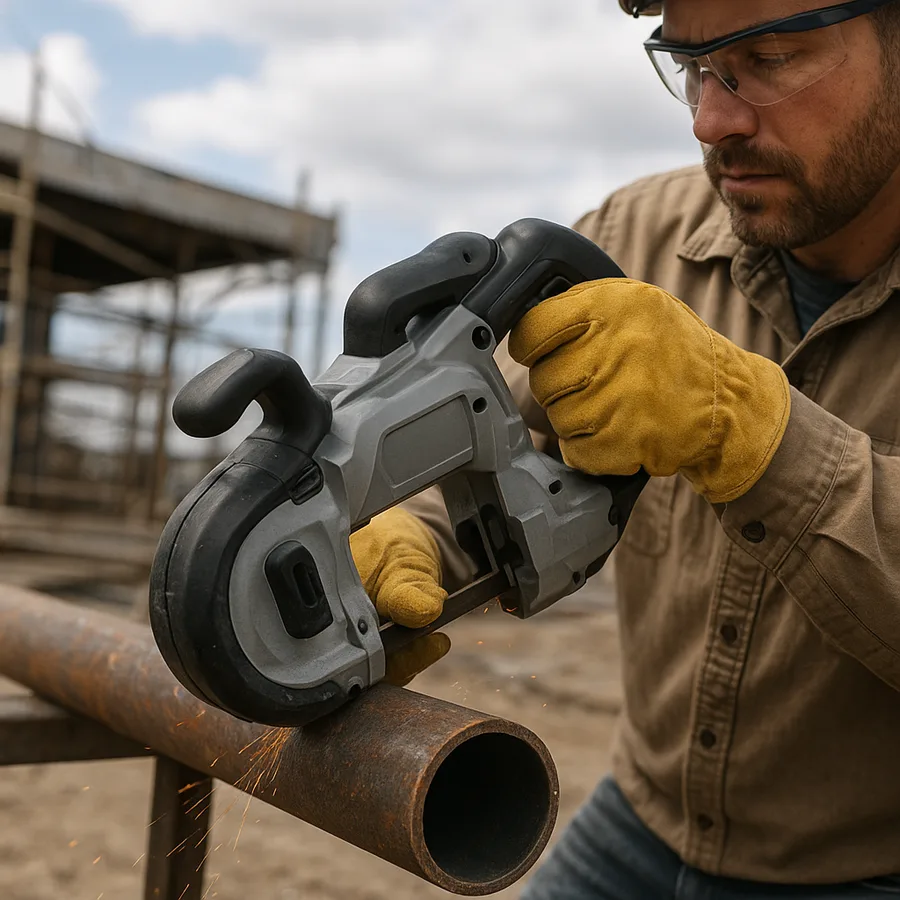
Horizontal bandsaws (most of the benchtop picks above) lower the blade down through stock clamped in a vise — the standard format for cutting bar stock to length. Vertical bandsaws feed stock across a stationary blade, useful for contour and freehand cuts but less common in dedicated metal-cutting machines. Portable band saws are handheld and horizontal by nature, built to bring the saw to the material (conduit, pipe, rebar in place) rather than the other way around.
Motor Power and Duty Cycle
Benchtop and stationary saws in this comparison run 3/4 to 2 HP gear-driven or belt-driven motors rated for continuous duty. Portable saws run on 10-amp universal motors (corded) or 18-20V brushless motors (cordless) rated for intermittent use — run one hard for 20+ minutes straight and it will get hot. Match the duty cycle to how you actually work, not just the horsepower number.
Corded vs. Cordless
Corded portables (DEWALT DWM120K, WEN 94396) never run out of charge and typically cost less per amp of cutting power, but they need an outlet or generator. Cordless portables (Milwaukee 2729-20, VEVOR BW2111) go anywhere but add battery weight and cost, and cut time is capped by the battery’s amp-hour rating rather than by the tool itself.
Blade Type and Tooth Count (TPI)
Metal-cutting band saw blades are bi-metal (a hardened tooth edge welded to a flexible steel body) far more often than the carbon-steel blades common on wood bandsaws, because metal cutting work-hardens and dulls a soft blade fast. Tooth count follows material thickness: fewer, coarser teeth (6-10 TPI) for thick solid stock, more teeth (14-24 TPI) for thin-wall tubing and sheet so at least 3 teeth are in the material at all times. Variable-pitch blades, which mix two or three tooth spacings on the same band, are worth the small price premium for anyone cutting mixed material thicknesses regularly — they reduce the harmonic vibration and noise a fixed-pitch blade produces on thin-wall tubing, and they cut down on the number of dedicated blades a shop needs to stock. For a full breakdown of specific bi-metal blade picks by TPI, grade and real cost per inch, see our bandsaw blades for metal comparison.
Coolant and Chip Management
A built-in coolant/cutting-fluid system, standard on the Grizzly and KAKA benchtop saws above, extends blade life significantly on stock over 4-5 inches by carrying heat away from the cut and flushing chips clear of the blade gullets. Smaller portable saws skip coolant entirely and rely on lower feed pressure and occasional cutting wax instead.
Price and What You’re Really Paying For
Price alone is a poor predictor of capability in this category — the $129 WEN and the $3,659 KAKA both cut 5+ inch round stock, just at very different scale, duty cycle, and precision. Use the price-per-square-inch figures in the table above within their own tier (benchtop vs. portable) rather than comparing raw price across formats that aren’t solving the same problem.
How to Use a Metal-Cutting Band Saw
- Match blade TPI to material thickness — keep at least 3 teeth engaged in the cross-section at all times, or the blade will snag and rip teeth out on thin-wall stock.
- Set blade speed (SFPM) for the metal type before starting the cut: faster for mild steel and aluminum, slower for stainless and tool steel.
- Secure the stock firmly in the vise or clamp; anything that can rotate or vibrate under the blade will bind it or throw a bent cut.
- Start the cut with light, steady feed pressure — let the saw establish the kerf before applying full feed force.
- On stock over about 4-5 inches, use cutting fluid or coolant if the saw has a system for it; dry cuts on thick stock overheat the blade fast.
- Let the blade do the work. Forcing the feed rate faster than the blade can clear chips just dulls teeth and can stall the motor.
- Clear chips and inspect the cut face when finished; a wandering or bowed cut usually means the blade was fed too fast or the stock wasn’t clamped square.
Frequently Asked Questions
What is the best band saw for metal?
The JET HVBS-712D is the best overall band saw for metal in this comparison, balancing a 4-step 86-260 SFPM blade speed range with a 7-inch round / 7-inch square cutting capacity for $2,149. For portable work, the DEWALT DWM120K (corded) and Milwaukee 2729-20 (cordless) are the top picks; for the lowest cost of entry, the WEN 94396 offers the most capacity per dollar of any saw in this comparison.
What blade speed (SFPM) do you need to cut metal?
It depends on the metal. Mild steel cuts well around 200-300 SFPM, stainless steel and tool steel need to drop to 80-150 SFPM to avoid burning the blade and work-hardening the surface, and aluminum and other soft nonferrous metals can run 300-500+ SFPM. A saw with only one or two fixed speeds limits how well you can match speed to material; the 4-speed and variable-speed saws in this comparison give more room to dial it in.
What’s the difference between a horizontal and vertical metal band saw?
A horizontal band saw lowers the blade down through stock clamped in a vise, the standard setup for cutting bar stock to length — all 7 saws in this comparison are horizontal. A vertical band saw instead feeds stock across a stationary blade, which suits contour and freehand cutting better than straight cutoff work.
Can a portable band saw replace a benchtop metal bandsaw?
For occasional cuts on conduit, pipe, rebar, and small stock, yes — a portable like the DEWALT DWM120K or Milwaukee 2729-20 handles up to 5-inch round or square material without a bench. For repetitive shop cutting of larger bar stock, a benchtop saw like the JET HVBS-712D or Grizzly G9743 cuts straighter over a longer run and doesn’t rely on the operator holding the saw square by hand.
What safety precautions should you follow when using a metal band saw?
Wear safety glasses and keep hands clear of the blade path at all times — never reach across a moving blade to clear chips. Clamp stock securely so it can’t rotate or bind the blade. Match blade speed to the material before starting the cut, since an overheated blade can shatter. On benchtop saws, keep the blade guard set close to the stock, exposing only what’s actively cutting.
Can a metal band saw be used for cutting other materials besides metal?
Yes, with the right blade. A bi-metal blade rated for metal will also cut wood, plastic, and PVC, though a wood-specific blade with a coarser tooth pattern cuts wood faster. Running a metal-cutting speed setting on wood will burn the cut; slow down for softer materials.
Final Thoughts
The JET HVBS-712D is the best band saw for metal for most buyers who need a dedicated shop machine: four blade speeds from 86-260 SFPM and a 7-inch round/square capacity cover the range of stock a home or small commercial shop actually cuts, for $2,149. The one number worth remembering from the table above: within the benchtop tier, KAKA’s BS-1018B delivers the most round-stock capacity per dollar at $46.59/sq-in, against $55.84 for the JET and $53.05 for the Grizzly — but JET and Grizzly both carry a longer US parts and service track record that the price-per-square-inch number alone doesn’t capture. If the saw needs to travel, the DEWALT DWM120K (corded) or Milwaukee 2729-20 (cordless) both cut a genuine 5-inch capacity without a bench.
Related Band Saw Guides
- Cutting mostly wood? See our comparison of the best band saws for woodworking, scored on throat depth, resaw capacity, and price.
- Not sure a band saw is the right tool at all? Read band saw vs. table saw for the tradeoffs.
- Considering a table saw instead for metal? See our guide to using a table saw for metal.
- Wondering if a miter saw can do the job? Can you use a miter saw to cut metal covers when that works and when it doesn’t.
- For sheet metal and thin stock specifically, an electric metal shear cutter is often a better fit than a band saw.
- Already own a band saw and need blades? See our Craftsman band saw blade sizing guide.
- New to the tool entirely? Start with what a band saw is used for.
- Keeping blades sharp matters more on metal than wood — see how to sharpen band saw blades.
Last verified: August 2026. Prices and blade-speed specs were pulled live for this update; they will drift as manufacturers adjust pricing or specs change.
Sponsored / affiliate links. As an Amazon Associate I earn from qualifying purchases. I may earn additional commission from eligible campaigns.