Best Wood Preservatives for Outdoor Furniture: We Compared
The best wood preservative for outdoor furniture is a system, not a single product: choose penetrating oil or epoxy for thirsty, rot-prone wood, then add a UV-blocking exterior finish such as spar varnish or maintenance oil based on sun and rain exposure. Wrong pairings cause checking, graying, mildew, and early rot. This guide shows you how to choose by species, exposure level, and likely failure mode.
Quick comparison
| Product | Badge | Best for | Price | ||
|---|---|---|---|---|---|
 |
RMP Finishes Outdoor Defense Oil, Wood Finish forRMP CO Finishes | Our pick | 1 gallon · outdoor oil finish · matte | $109.99
Price as of 24 Oct 2026
|
View |
 |
WOCA Exterior Wood Oil Teak, Deck Oil & Wood Stain, 84.5 flWOCA | Also great | 84.5 fl oz · teak tone · UV filter | $123.00
Price as of 24 Oct 2026
|
View |
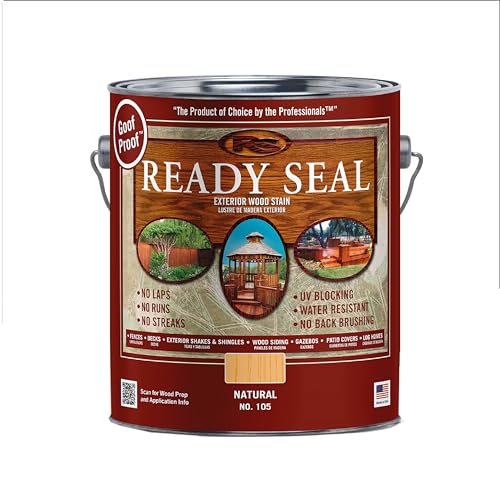 |
Ready Seal Exterior Wood Stain & Sealer, Natural Light Oak,Ready Seal | Budget pick | 1 gallon · semi-transparent · oil-based | $40.98
Price as of 24 Oct 2026
|
View |
Use this comparison to narrow the chemistry before you shop. The best choice depends on whether the piece needs penetration, a clear water barrier, or a coating that can handle stronger sun exposure.
How we chose
We compared products by wood species fit, exposure level, maintenance burden, and whether the finish type matches the failure mode. Outdoor furniture faces rain, humidity, sunlight, insects, mold, and temperature swings, so the right product has to do more than add color.
We also weighed coverage rate, recoat timing, cleanup, and the risk of common mistakes such as film buildup on moving parts or weak protection on end grain. On a table used for meals, that matters more than a broad claim of “outdoor use.”
Wood species and prior finish
Teak and exotic hardwoods usually reward penetrating oils. Softwoods such as pine and cedar need stronger moisture control and better end-grain protection. Previously finished pieces need compatibility checks before you add anything new.
Sun, rain, and touch-point wear
Horizontal tabletops, armrests, and bench seats fail faster than vertical slats because they hold water and take more UV. Covered porches can tolerate a simpler system. Full-sun patios need better UV blockers and a tighter maintenance schedule.
Look, cleanup, and recoat timing
If you want visible grain and easier spot maintenance, a penetrating oil or oil-based stain-and-sealer is usually the cleaner path. Water-based products simplify cleanup with soap and water. Recoat intervals commonly run 2 to 8 hours, which affects same-day completion.
Teak oil: best for teak and exotics
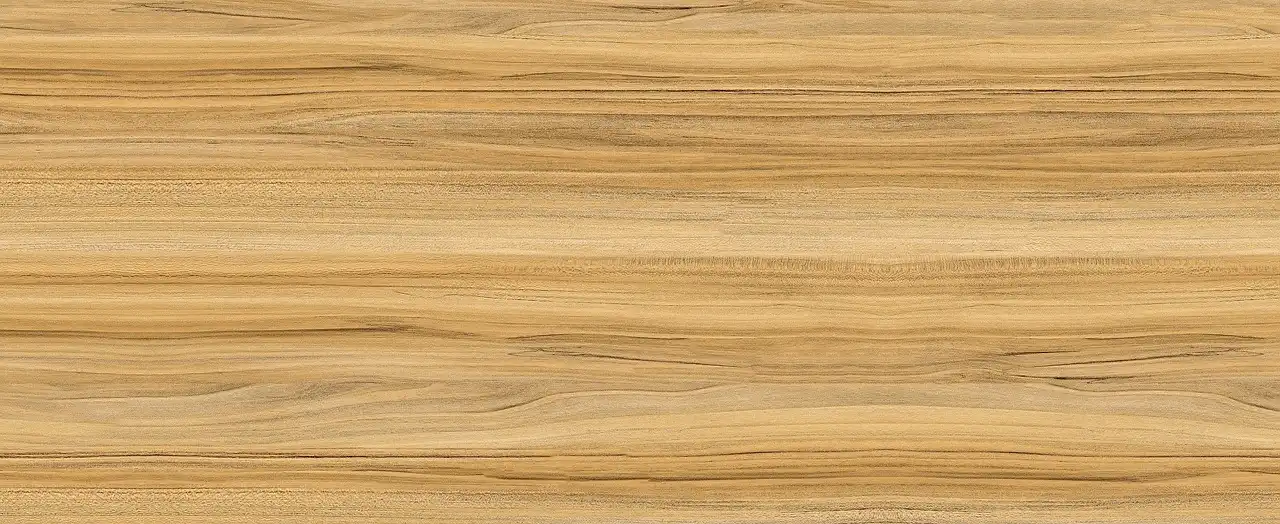
WOCA Exterior Wood Oil Teak is the best fit when you want teak and other exotic hardwoods to keep a warm tone without a heavy surface film. It includes a UV filter, works on new or previously oiled wood, and suits furniture that needs a penetrating approach rather than a thick coating.
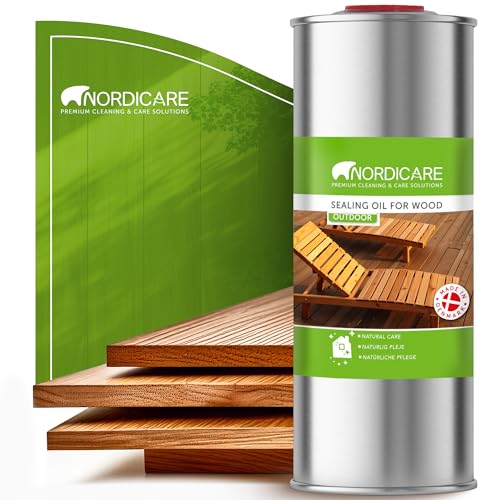
Teak oil is the right call when the goal is to restore weathered color and add a water-resistant finish while keeping the grain open. Nordicare Teak Oil is another teak-specific example in this category: it uses a brush-or-cloth application, excess is wiped off after about an hour, and drying time is around 24 hours.
The drawback is maintenance. Penetrating teak oils do not build the hard shell that some owners expect, so you may need more frequent upkeep on sun-baked chairs, tables, or benches than you would with a film-forming finish. They also will not fix badly worn end grain by themselves.
When teak oil is the right match
Use teak oil on teak, ipe, acacia, and similar dense woods when you want to keep a natural look and do not want a glossy shell. It is especially sensible for furniture with frequent hand contact, where a thick coating would wear unevenly on arms and edges.
It is also the better choice when the wood has already weathered and you want to bring back color without hiding the grain. On dining furniture near meals, a penetrating finish is usually easier to keep looking even than a brittle film.
What it does and what it does not do
Teak oil restores appearance and helps slow moisture uptake. It does not offer the same surface armor as a film-forming varnish, and it does not stop graying forever. UV blockers help, but horizontal furniture in direct sun still needs planned reapplication.
It also will not correct structural decay. If end cuts or hidden joints are already compromised, you need a preservative strategy for those areas first.
Application and drying time
Apply with a brush or cloth, then wipe off the excess so the surface does not stay sticky. A drying time around 24 hours is common for teak oils like Nordicare, though temperature and airflow can extend that. Keep food-contact surfaces out of service until fully cured.
Suppose a teak bench sits under open sky and starts turning gray on the seat but stays sound elsewhere. That points to UV wear, not failure of the whole piece, so a teak oil system with a UV filter is a better fit than a hard clear film.
Water-based wood sealer: best for fast cleanup
Water-based wood sealer fits owners who want lower odor, quick soap-and-water cleanup, and a clear finish that still offers UV and moisture resistance. It is a strong practical choice for furniture, decks, and fences when you want protection without a heavy oil smell or slow solvent cleanup.
The drawback is that clear water-based products can show wear sooner on horizontal furniture in full sun than pigmented systems. Clear films also tend to give less UV shielding than tinted products, so they are best when the piece is shaded or you are prioritizing ease of use over maximum sun resistance.
Where low-VOC formulas make sense
Seal-Once Marine Premium Wood Sealer is described as low VOC and as resisting water, mold, decay, UV, and abrasion. That profile makes sense for homeowners who want a cleaner application process and a lower-odor product around patios, dining areas, and pets.
Eco Wood Treatment is marketed as a non-toxic eco wood preservative for all outdoor wood surfaces, and Smart BioHemp Wood Sealer is presented as 100% plant-based and hemp-derived. Those claims matter most when low-toxicity positioning is a priority, but the label still needs to match the exposure level.
Clear finish limits in full sun
Clear sealers slow moisture entry, but they do not always stop sun damage on their own. UV blockers slow lignin breakdown and reduce graying and fading, and they are especially important on horizontal, sun-exposed furniture. Tinted or film-forming products often carry stronger UV protection than clear ones.
A common first-timer mistake is choosing a clear sealer for a table that sits in direct afternoon sun, then expecting it to stay the same color for years. The surface may stay water-resistant while still fading or turning gray.
Best uses for chairs, tables, and benches
Water-based sealers suit chairs, side tables, and covered-porch benches where cleanup matters and the finish is not expected to take heavy weather abuse. They are also practical when you need to finish a set quickly and want less odor during application.
For furniture used near meals, the short answer is that a fully cured clear sealer is usually easier to live with than a tacky oil layer. Still, you should keep any food-contact surface out of service until the label’s cure time has passed.
Oil-based stain and sealer: best for grain visibility
Ready Seal Exterior Wood Stain & Sealer is the best pick when you want visible grain, simple application, and one product that stains and seals at the same time. It is oil-based and self-blending, so it suits outdoor furniture that needs penetration without a fussy multi-step process.
This type works well on rougher or more absorbent wood because it self-levels better than many thicker coatings and often needs no primer. It also helps when you want a natural look rather than a glossy surface film.
The drawback is dry-time management. Oil-based products usually take longer to dry than water-based formulas, and over-application can leave a surface oily or uneven. That risk is higher on dense hardwoods or on pieces where the old finish was not fully removed.
Why penetrating formulas suit rougher wood
Penetrating stain-and-sealer products soak in rather than sitting entirely on top, which helps with grain visibility and moisture resistance. They are useful for furniture with uneven absorption, weathered surfaces, or open-pored species that would telegraph lap marks under a thin film.
On cedar or pine, they can also reduce the blotchy look that some clear products leave behind. The tradeoff is that you still need careful prep on dirty, chalky, or previously film-coated surfaces.
Coverage rate and cost per square foot
Coverage rate changes the true cost. Outdoor wood products can run roughly 50 to 600 square feet per gallon, depending on porosity and the number of coats. That range is wide enough that two products with similar shelf prices can end up very different in cost per project.
Thompson’s WaterSeal Transparent Stain covers 150 to 400 square feet per gallon, which shows how much the substrate and application thickness affect yield. For small furniture sets, estimate from the label instead of assuming a deck-style coverage number will hold on chair slats and table edges.
Drying time and recoat planning
Oil-based stain-and-sealer products often need more drying time than water-based sealers, so same-day completion is less predictable. Recoat intervals commonly fall in the 2 to 8 hour range across outdoor finishes, but the exact timing depends on chemistry, temperature, and airflow.
For a weekend project, that means you should plan the entire set, not just one piece. If the first coat stays tacky on a tabletop, you do not want to stack chairs on it or move to a second coat too early.
Spar urethane: best for furniture and railings
Spar urethane is the right choice when you want a film-forming finish for furniture and railings that need a smoother, more protective surface. It usually comes in satin or clear sheen options, and it is built to move with temperature swings better than a standard interior varnish.
The drawback is failure mode. If prep is weak or the coating is too thick, clear film finishes can peel or crack instead of wearing gracefully. They also are not the strongest UV choice without pigment, so full-sun furniture needs more caution than shaded pieces.
When a film finish makes sense
Choose spar urethane when the piece is under a covered area, receives moderate exposure, or needs a cleaner wipeable surface for frequent use. It can be a good fit for railings, chair arms, and tables that need a more finished appearance than an oil can provide.
It is less forgiving on furniture with lots of movement at joints or end grain. If water gets under the film, it can start lifting at edges first.
UV blockers and weather movement
UV blockers are valuable here because they slow fading and graying, especially on furniture that sits flat in the sun. Spar urethane is built to handle expansion and contraction better than many brittle interior finishes, which matters when temperatures swing through the day.
That said, clear film alone is not the strongest long-term defense for an uncovered patio table. Pigment still beats clear film for UV load, especially on horizontal surfaces.
Failure signs to watch
Watch for edge lift, hairline cracks, and cloudy patches. Those are early signs that moisture has started working under the film or that the coating is moving differently than the wood beneath it.
Picture a painted bench that gets afternoon sun on the seat but stays shaded at the back. If the top starts peeling first, the failure is usually exposure-driven, not a sign that every surface needs the same treatment.
Wood preservative decision matrix
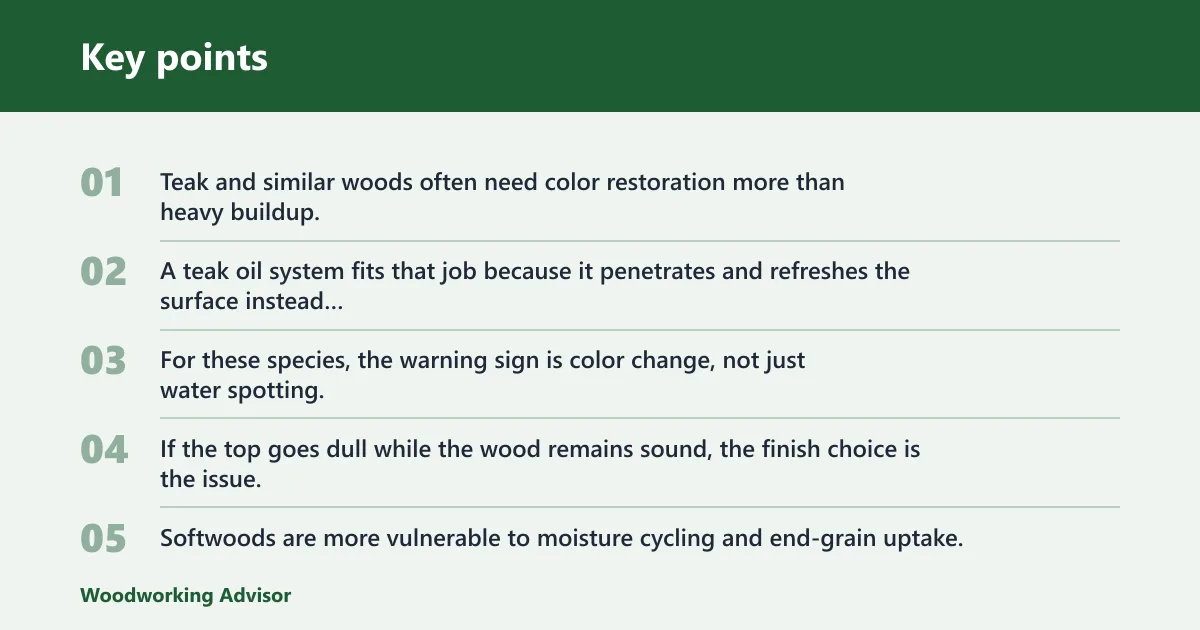
This table separates the product class from the job it does. Use it to match wood type, exposure, and the likely failure mode before you buy.
| Wood type | Sun/rain exposure | Desired look | Recommended chemistry | Expected recoat window | Common mistake to avoid |
|---|---|---|---|---|---|
| Teak or exotic hardwoods | Moderate sun, regular rain | Warm natural tone | Teak oil with UV filter | When color starts to fade, often within a season on exposed pieces | Leaving excess oil on the surface and creating a tacky buildup |
| Pine or other softwoods | Heavy sun and intermittent rain | Visible grain with moisture defense | Oil-based stain and sealer | Recheck after 2 to 8 hours for recoat timing; maintenance depends on wear | Skipping end-grain sealing and assuming the face boards are enough |
| Cedar | Full sun, uncovered patio | Natural look with better UV control | Penetrating oil or tinted exterior stain with UV blockers | Shorter on horizontal surfaces; inspect after seasonal exposure | Using a clear film in full sun and expecting it to stay clear |
| Previously finished wood | Covered porch or partial shade | Freshened surface with minimal sanding | Compatible water-based sealer or matching film finish only after proper prep | Depends on the old coating and prep quality | Recoating over residue without confirming compatibility first |
| End cuts, hidden joints, or ground-contact points | Highest moisture risk | Invisible protection | Copper naphthenate preservative | Reapply after cutting, drilling, or exposed wear | Relying on a surface finish alone to protect end grain |
Teak and exotic hardwoods
Teak and similar woods often need color restoration more than heavy buildup. A teak oil system fits that job because it penetrates and refreshes the surface instead of masking the grain.
For these species, the warning sign is color change, not just water spotting. If the top goes dull while the wood remains sound, the finish choice is the issue.
Pine, cedar, and other softwoods
Softwoods are more vulnerable to moisture cycling and end-grain uptake, so they benefit from stain-and-sealer or penetrating protection with better moisture resistance. Cedar can do well with a UV-aware penetrating system; pine often needs extra attention at cut edges and joints.
Do not assume that one coat on the broad face protects the whole piece. Water follows the weakest point first.
Full-sun patios versus covered porches
On full-sun patios, use a chemistry that includes UV blockers and plan for more frequent maintenance, especially on tabletops and seats. Covered porches can use simpler products because the exposure level is lower and the failure mode is slower.
For a dining set that stays uncovered, choose the finish for UV and weather first, not for gloss. Appearance fades faster than many buyers expect.
End cuts and ground contact points
Copper naphthenate preservative is the product class to use below the surface line, on end cuts, and on ground-contact points where rot and fungal decay start first. It is professional-strength chemistry for protection where a topcoat cannot reach.
Use it before the decorative finish, not instead of it. A clear topcoat over untreated end grain leaves the weak spot exposed.
Which one should you buy?
Buy by wood type first. For teak and exotic hardwoods, WOCA Exterior Wood Oil Teak is the most direct choice because it is built for penetrating care with a UV filter. For a more general exterior stain-and-sealer approach, Ready Seal Exterior Wood Stain & Sealer is the practical pick. For low-VOC water-based sealing, Seal-Once Marine Premium Wood Sealer is the clearest fit.
Buy by exposure level second. Full-sun furniture needs stronger UV protection, so tinted or film-forming systems usually beat a clear sealer. Covered porches can use simpler products. If the piece is near rain splash or gets washed often, water resistance and mildew resistance matter more than sheen.
Buy by maintenance budget third. If you want fewer touch-ups and better same-day scheduling, the oil-based stain-and-sealer path is often the easier middle ground. If you want a smoother finished look and can accept the risk of peeling later, spar urethane is the film option. If you want the quickest cleanup, water-based sealer is the easy one to manage.
Say your cedar bench sits on a covered porch but still gets afternoon glare through the railing. A penetrating oil with UV support is usually the better compromise than a thick clear film, because the surface still needs breathability and easy maintenance.
Frequently asked questions
What is the best wood treatment for outdoor furniture?
The best treatment depends on wood species and exposure, but a penetrating exterior oil or oil-based stain-and-sealer is the safest default for most outdoor furniture. Add stronger UV protection for sunny, uncovered pieces. Use copper naphthenate on end grain or hidden cuts before the finish.
What is the best wood preservative for garden furniture?
For garden furniture, the best preservative is one that balances moisture resistance with UV protection and easy maintenance. Water-based sealers work well for lower-odor cleanup, while oil-based stain-and-sealer products suit furniture that needs grain visibility and better penetration. Choose by exposure, not by label alone.
What is the best wood stain for outdoor furniture?
The best wood stain for outdoor furniture is usually an exterior stain with UV blockers and moisture resistance, especially if the piece sits in sun. Ready Seal Exterior Wood Stain & Sealer is a strong fit when you want one step that stains and seals. Clear products are weaker in full sun.
What is the best wood stain for garden furniture?
The best wood stain for garden furniture is a product that can handle rain, plant moisture, and sun without becoming brittle or sticky. Oil-based stain-and-sealer formulas are useful for grain visibility, while water-based sealers suit faster cleanup. Match the chemistry to the wood and exposure.
What to treat outdoor wooden furniture
Treat outdoor wooden furniture with a finish that matches the wood and the failure mode. Use teak oil for teak and exotics, a water-based sealer for easy cleanup, a penetrating stain-and-sealer for general protection, or spar urethane when you want a film finish and accept the maintenance tradeoff.
Should I use oil, stain, sealer, or varnish on outdoor furniture?
Use oil when you want penetration and easy refreshes, stain when you want color plus protection, sealer when you want moisture resistance with simpler maintenance, and varnish or spar urethane when you want a film build. For full sun, pigmented systems usually outperform clear film alone.
How often do outdoor furniture preservatives need reapplication?
Reapplication depends on chemistry, wood species, and exposure. Many products have recoat intervals of 2 to 8 hours during the original job, but maintenance reapplication happens when color fades, water stops beading, or the surface turns gray or dull. Horizontal sun-exposed pieces need the closest watch.
What finish is best for teak outdoor furniture
Teak oil is usually the best finish for teak outdoor furniture because it restores weathered color and keeps the wood looking natural. Choose a product with UV support if the piece sits in sun. Expect periodic reapplication, especially on tabletops and exposed seat surfaces.
Sponsored / affiliate links. As an Amazon Associate I earn from qualifying purchases. I may earn additional commission from eligible campaigns.