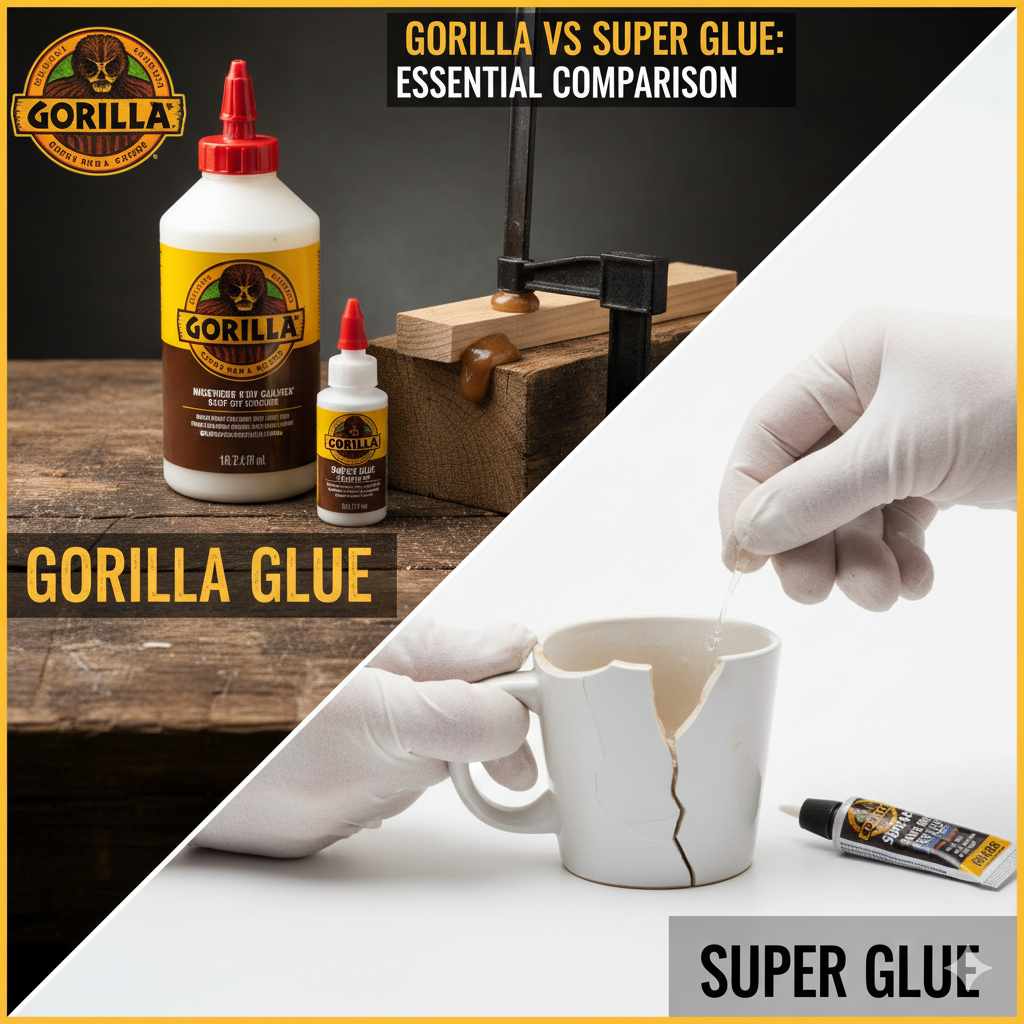
Gorilla Glue vs Super Glue: Essential Comparison
Gorilla Glue vs. Super Glue: Your Beginner’s Guide to Choosing the Right Adhesive
Choosing between Gorilla Glue and Super Glue for your DIY projects can be confusing. This guide clarifies their differences, strengths, and ideal uses, ensuring you pick the perfect glue for a strong, lasting bond every time, from small repairs to woodworking wonders.
Hey there, DIY friends! Md Meraj here, your guide to making your projects shine. Have you ever stood in the glue aisle, staring at a wall of options, wondering which bottle will actually hold your project together? It’s a common spot to be in, especially when you see names like “Gorilla Glue” and “Super Glue” and wonder what makes them so different. Picking the wrong glue can lead to frustration, weak bonds, and projects that don’t last. That’s why today, we’re diving deep into two of the most popular glues out there: Gorilla Glue and Super Glue. We’ll break down what they are, how they work, where they shine, and when you should reach for one over the other. By the end of this, you’ll feel confident grabbing the right bottle and getting your projects done right. Let’s get your repairs and creations stronger than ever!
The Big Picture: What’s the Difference?
Think of glues like tools – they’re all for sticking things together, but they’re designed for different jobs. Gorilla Glue and Super Glue are both fantastic adhesives, but they have distinct personalities and excel in different situations. Understanding these differences is key to a successful DIY experience.
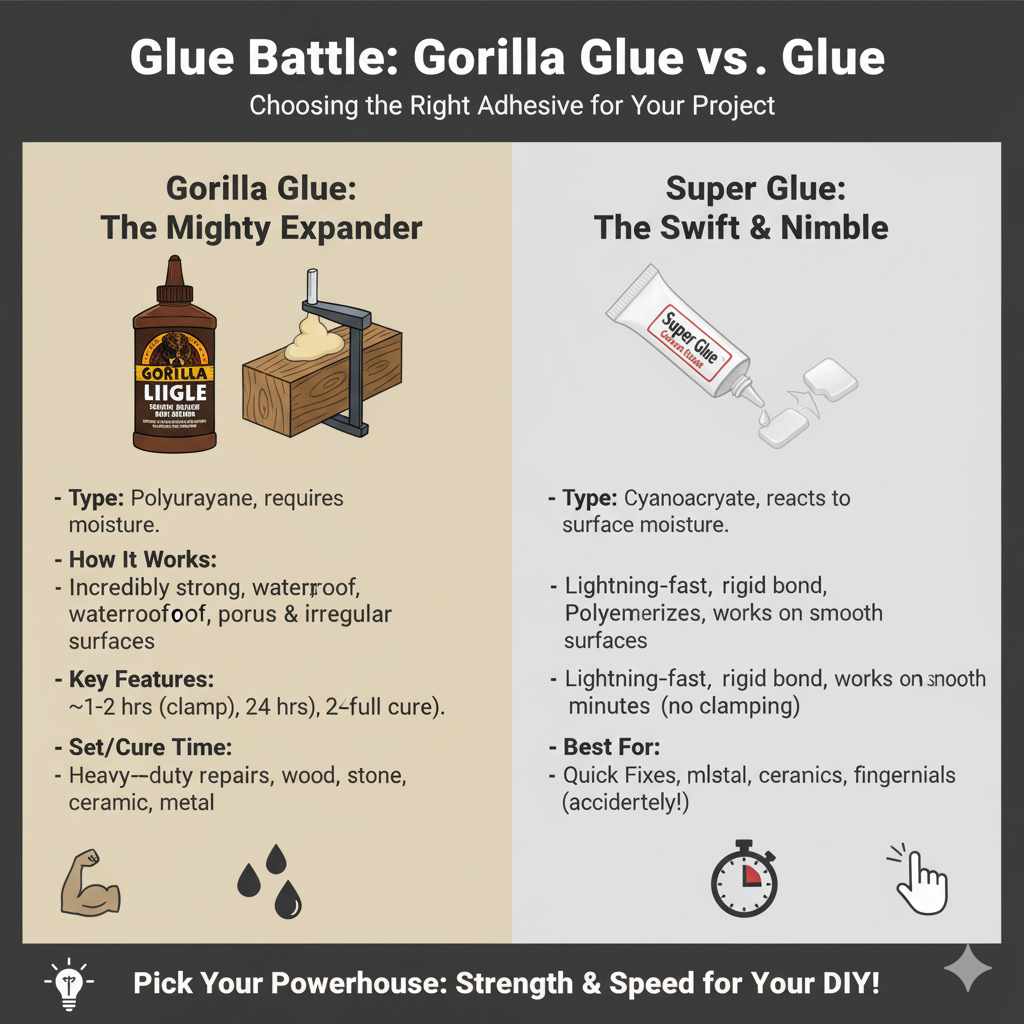
Gorilla Glue: The Mighty Expander
Gorilla Glue is famous for its incredible strength and versatility. What sets it apart is how it works: it’s a type of polyurethane glue. When exposed to moisture (even just the humidity in the air), it expands as it cures, foaming up to fill gaps and creating an exceptionally strong, waterproof bond. This expansion is its superpower, allowing it to grip irregular surfaces and fill small voids.
Because it expands, it’s important to use Gorilla Glue wisely. You don’t need a ton of it, and you should clamp your pieces together tightly while it dries to prevent excess bubbling or squeezed-out glue. It typically takes a bit longer to cure than super glue, often requiring several hours for a full bond.
Super Glue: The Swift and Nimble
Super Glue, often referred to by its chemical name “cyanoacrylate,” is a very different beast. It’s known for its lightning-fast bonding time. Super glue works by polymerizing – essentially, hardening – when it comes into contact with tiny amounts of moisture present on nearly any surface. This chemical reaction happens incredibly quickly, often creating a bond in seconds.
Super glue creates a rigid, strong bond, but it’s often more brittle than Gorilla Glue. It’s fantastic for smooth, non-porous surfaces and for quick fixes when you need something held together immediately. Because it cures so fast, you usually don’t have much time for adjustments, and clamping isn’t typically required once the pieces are in place. However, it also means it can easily glue your fingers together if you’re not careful!
When to Reach for Gorilla Glue
Gorilla Glue is your go-to when you need a heavy-duty, long-lasting, and often waterproof bond. Its expanding nature makes it forgiving on imperfect surfaces.
Ideal Uses for Gorilla Glue:
- Woodworking Projects: Joining wood pieces, especially for outdoor furniture, decks, or structural elements where durability and water resistance are crucial.
- Outdoor Repairs: Fixing garden tools, patio furniture, or anything exposed to the elements. Its waterproof nature prevents degradation from rain and moisture.
- Bonding Dissimilar Materials: It works well on wood, metal, ceramic, stone, foam, and some plastics. This makes it incredibly versatile for various DIY projects.
- Filling Small Gaps: The expanding foam can help fill minor imperfections or gaps between pieces, creating a more solid connection.
- Projects Requiring High Strength: Anything that will be under significant stress or strain, where a robust, permanent bond is essential.
Pros of Gorilla Glue:
- Extremely strong bond.
- Waterproof and weather-resistant.
- Fills small gaps due to expansion.
- Bonds a wide variety of materials.
- Durable and long-lasting.
Cons of Gorilla Glue:
- Can expand excessively and create a mess if too much is used.
- Requires clamping for best results.
- Longer curing time (several hours).
- Can bond skin and surfaces permanently if not handled carefully.
- May require light sanding or trimming of excess cured glue.
When to Reach for Super Glue
Super glue is the champion of speed and precision for small, quick repairs and bonding smooth surfaces where speed is of the essence.
Ideal Uses for Super Glue:
- Crafting and Hobbies: Assembling small models, attaching embellishments, or quick fixes on delicate items.
- Ceramics and Pottery: Repairing broken china, figurines, or pottery where a fast, strong bond on smooth surfaces is needed.
- Plastic Repairs: Bonding most common plastics for household items, toys, or small appliance parts.
- Quick Household Fixes: Reattaching a loose knob, fixing a headphone cable come-apart, or emergency repairs on shoes.
- Bonding Small Parts Together: When you need to join two small components rapidly and precisely without the need for clamping.
Pros of Super Glue:
- Extremely fast bonding time (seconds to minutes).
- No clamping required for many applications.
- Creates a rigid, clear bond on many materials.
- Good for small, detailed repairs.
- Easy to apply in small amounts.
Cons of Super Glue:
- Can be brittle and crack under impact or stress.
- Not ideal for materials with large gaps or porous surfaces.
- Not typically waterproof or weather-resistant.
- Can easily bond skin instantly and painfully.
- May not hold up well on flexible materials.
Gorilla Glue vs. Super Glue: A Direct Comparison
To make the choice even clearer, let’s break down their performance across key factors.
| Feature | Gorilla Glue | Super Glue (Cyanoacrylate) |
|---|---|---|
| Bonding Speed | Slow (hours to fully cure) | Very Fast (seconds to minutes) |
| Strength | Very High, durable, flexible to a degree | High, but can be brittle and prone to cracking |
| Water Resistance | Excellent (waterproof when cured) | Poor to Fair (can degrade with moisture) |
| Gap Filling Capability | Good (expands to fill gaps) | Poor (requires tight-fitting surfaces) |
| Material Versatility | Excellent (wood, metal, ceramic, stone, foam, plastics) | Good (plastics, ceramics, wood, metal, rubber – best on smooth surfaces) |
| Flexibility | Moderate | Low (rigid) |
| User Effort | Requires clamping, careful application to avoid excess | Requires precision, can bond skin instantly, no clamping usually needed |
| Best For | Heavy-duty repairs, outdoor projects, wood bonding, filling gaps | Quick fixes, small craft projects, smooth surface bonding, speed |
How to Safely Use Gorilla Glue
Using Gorilla Glue effectively and safely is all about understanding its expanding nature.
Step-by-Step Guide to Using Gorilla Glue:
- Prepare Your Surfaces: Ensure the surfaces you are joining are clean, dry, and free from dust, grease, or loose material. For wood, a light sanding can help create a good surface for the glue to adhere to.
- Slightly Dampen One Surface (Optional but Recommended): For wood and porous materials, lightly misting one of the surfaces with water helps kickstart the chemical reaction for faster curing. Don’t drench it – just a light spray is enough.
- Apply the Glue Sparingly: Apply a small amount of Gorilla Glue to one of the surfaces. Remember, it expands! You typically need only about half as much as you think you do. A thin bead or a few dots are usually sufficient for most jobs.
- Join the Pieces: Press the two surfaces together firmly and quickly.
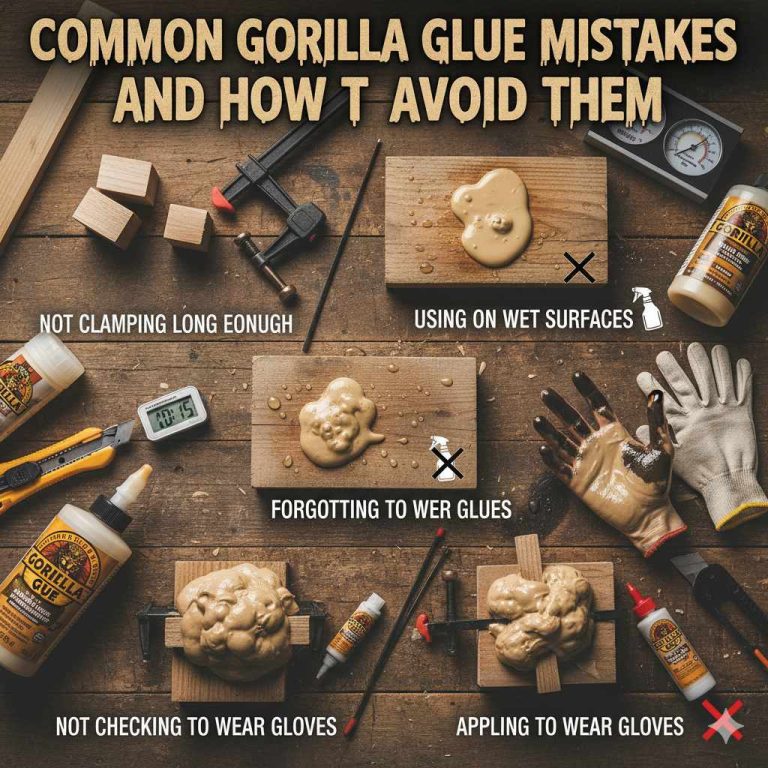
- Clamp Securely: This is a crucial step for Gorilla Glue. Use clamps, strong tape, or weights to hold the pieces tightly together while the glue cures. This prevents excessive expansion and ensures a strong, flush bond.
- Wipe Away Excess Immediately: If any glue squeezes out, wipe it away immediately with a damp cloth. Once it starts to foam, it’s much harder to remove cleanly.
- Allow Ample Curing Time: Gorilla Glue needs time to fully cure. While it might hold in an hour or two, it’s best to leave it clamped for 4-24 hours, depending on the project size and humidity, to achieve maximum strength. Refer to the product’s instructions for specifics.
- Clean Up and Sand (If Necessary): Once fully cured, any dried excess glue can be carefully trimmed with a sharp blade or sanded away.
How to Safely Use Super Glue
Super glue is all about speed, so preparation and careful application are key.
Step-by-Step Guide to Using Super Glue:
- Prepare Surfaces: Clean the surfaces thoroughly. Super glue works best on smooth, non-porous materials like plastics, ceramics, and some metals. For wood, ensure it’s smooth and dust-free.
- Test Fit: Always dry-fit the pieces you are gluing before applying the glue. Once super glue is applied, you have very little time to reposition.
- Apply a Tiny Amount: Apply just one or two small drops of super glue to one of the surfaces. Too much glue will ooze out and weaken the bond, and it’s harder to clean.
- Press Quickly and Hold: Immediately press the two surfaces together. Hold them firmly in place for about 30-60 seconds. For most glues, this is enough time for the initial bond to set.
- Avoid Clamping (Usually): Clamping is generally not needed for super glue as it cures so rapidly. However, for delicate items, you might use gentle tape for support while it fully hardens if needed.
- Be Mindful of Fingers: Super glue bonds skin instantly. Avoid touching any glued areas, and keep it away from your skin and eyes. If you get glue on your skin, don’t panic; try to peel it off gently or soak in warm, soapy water.
- Let it Fully Harden: While the initial bond is fast, it takes longer – often a few hours – for super glue to reach its maximum strength, especially in humid conditions.
- Clean Up: Clean up any excess glue immediately with a dry cloth. Dried super glue can be difficult to remove without damaging the surrounding material.
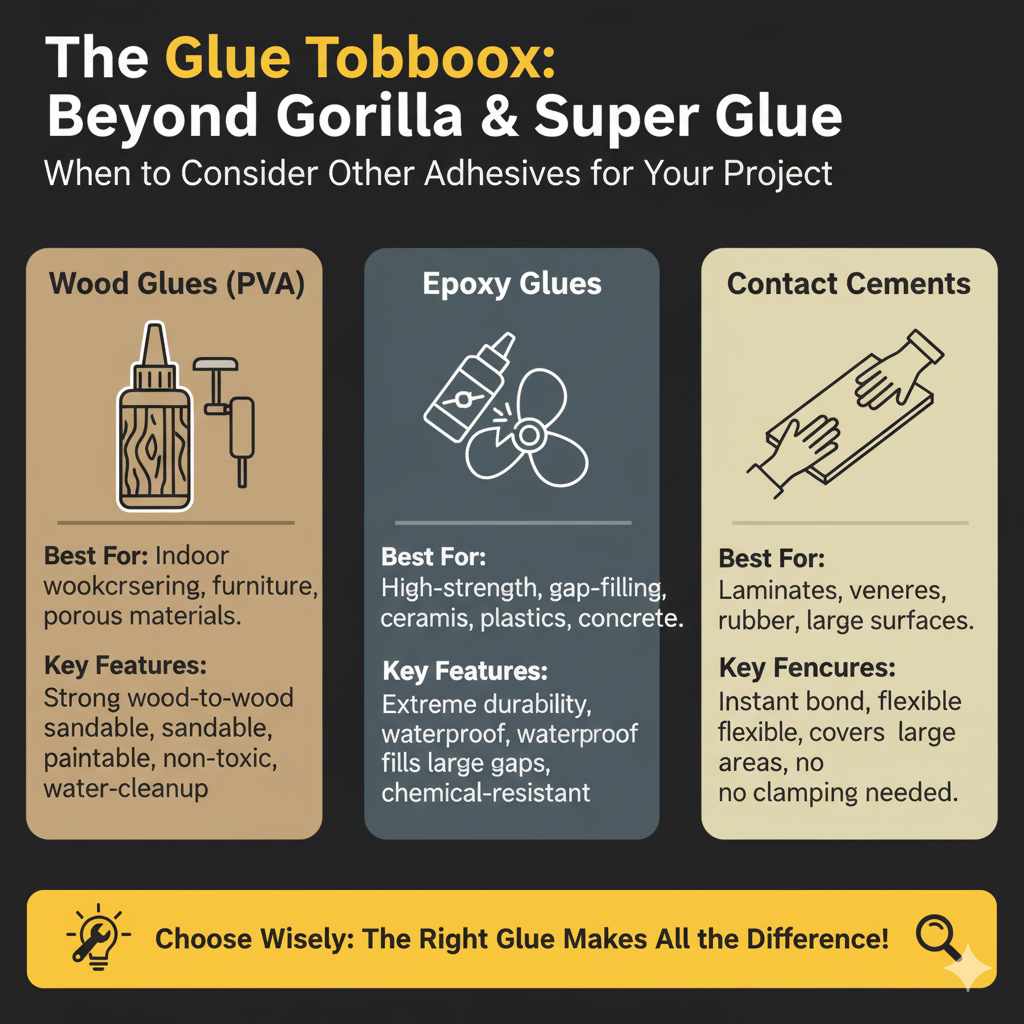
When to Consider Other Glues
While Gorilla Glue and Super Glue are fantastic, they aren’t always the best choice for every single repair or project. Depending on your material and needs, other glues might be more suitable.
Wood Glues (PVA):
For simple indoor woodworking projects where water resistance isn’t a concern, a good quality PVA wood glue is often preferred. Brands like Titebond offer woodworking-specific glues that create an incredibly strong bond on wood and are sandable and paintable once dry. They are non-toxic and clean up with water. For more information on wood glues, Woodworkers Journal provides excellent comparisons on different wood glue types.
Epoxy Glues:
Epoxies are typically two-part adhesives (resin and hardener) that you mix together. They offer exceptional strength, can bond a massive range of materials, and are very durable and often waterproof. Epoxies are excellent for filling larger gaps and can be used on projects requiring high structural integrity, like repairing boat parts, furniture with significant damage, or even jewelry. Popular Mechanics has a great guide on using epoxy.
Contact Cements:
These glues are spread on both surfaces, allowed to dry until tacky, and then pressed together. They create an instant, strong bond that is often flexible. Contact cement is ideal for laminates, veneers, and rubber, where you need to cover a large area and want an immediate, permanent bond without clamping.
Frequently Asked Questions (FAQs)
Q1: Can I use Gorilla Glue on fabric?
A1: Yes, original Gorilla Glue can bond fabric, but it will create a stiff, permanent bond. For most fabric projects where flexibility is key, a fabric-specific glue or a strong stitch is a better choice.
Q2: Will Super Glue work on Styrofoam?
A2: No, most super glues will actually melt or damage Styrofoam (expanded polystyrene foam). For Styrofoam, use glues specifically designed for foam, such as dedicated craft glues or certain spray adhesives.
Q3: Which glue is better for repairing a broken mug handle?
A3: For a quick, strong bond on a ceramic mug handle, super glue is often a good choice due to its fast action and ability to create a precise bond. However, if the mug will be exposed to water or heat, a strong epoxy or a ceramic adhesive designed for high temperatures would be more durable.
Q4: Can I use Gorilla Glue for quick fixes like a loose heel on a shoe?
A4: While Gorilla Glue is strong, it’s not ideal for flexible materials like shoe soles or heels where movement and flexibility are important. A flexible adhesive like a shoe repair glue or a strong contact cement would be a better option.
Q5: Is Gorilla Glue safe to use on food containers?
A5: No, most Gorilla Glue products are not considered food-safe. For food containers or items that come into contact with food, look for glues specifically labeled as food-grade or FDA-approved for safe use.
Q6: How do I remove Super Glue that got on my skin?
A6: Gently peel the skin apart. You can try soaking the area in warm, soapy water for several minutes. Acetone (nail polish remover) can also help dissolve super glue, but use it sparingly and be sure to rinse thoroughly afterward, as it can be drying to the skin.
Q7: Can I sand Gorilla Glue after it dries?
A7: Yes, cured Gorilla Glue can be sanded. This is useful for smoothing down any excess glue that oozed out or for creating a flush surface. Use medium-grit sandpaper to start, then switch to finer grits for a smoother finish.
Conclusion
So, there you have it! Gorilla Glue and Super Glue are both incredible tools in your DIY arsenal, but they each have their own strengths. Think of Gorilla Glue as your robust, industrial-strength workhorse for demanding jobs that need power and resilience, especially in outdoor or damp conditions. It’s perfect when you have a little time and need that extra bit of grip to fill minor imperfections.
On the other hand, Super Glue is your speedy, precision instrument. It’s the go-to for those lightning-fast fixes on smooth surfaces where you need things held together now. It’s brilliant for intricate crafts and small repairs where speed and a non-clamped bond are paramount.
By understanding these distinctions and knowing when to use each glue, you’re setting yourself up for success in all your projects. Don’t be afraid to experiment, but always remember to read the labels and prioritize safety. Happy building, crafting, and repairing!