Hand-Held Wood Cutting Tools: Saws, Chisels & Planes Explained
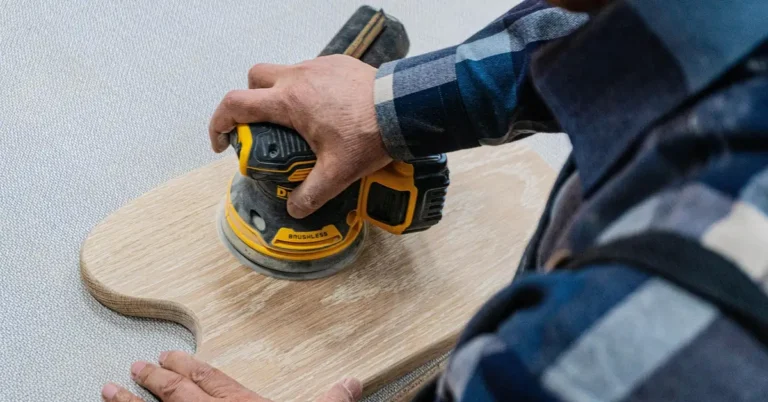
Hand-held wood cutting tools are anything you guide by hand to cut wood – hand saws, chisels, planes, and coping saws, plus portable power tools like jigsaws and circular saws – as opposed to stationary machines like a table saw or band saw that the wood is fed through instead.
This guide breaks down the manual and powered options, what to look for in each, and which tool actually fits a given project – plus the sharpening angles and blade specs most beginner guides skip.
What Counts as a Hand-Held Wood Cutting Tool
The dividing line isn’t “manual vs. electric” – it’s whether the tool is guided by hand or the wood is fed through a fixed machine. A cordless jigsaw is still a hand-held wood cutting tool even though it has a motor, because you move it across the workpiece. A table saw isn’t, even though someone’s hands are on the wood, because the blade is fixed and the wood moves past it. Keeping that distinction straight matters when you’re shopping, since “hand tool” listings on Amazon and elsewhere mix true manual tools with battery-powered handheld saws.
Best All-Around Starter Kit
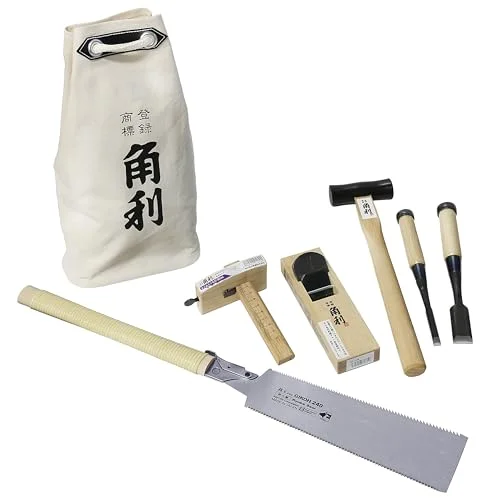 |
KAKURI Japanese Woodworking Hand Tool Set – $168.80 Covers all three core hand-held categories from this guide – saw, chisels, and plane – in one matched kit instead of buying each tool separately.
|
Manual Hand Tools: Saws, Chisels, and Planes
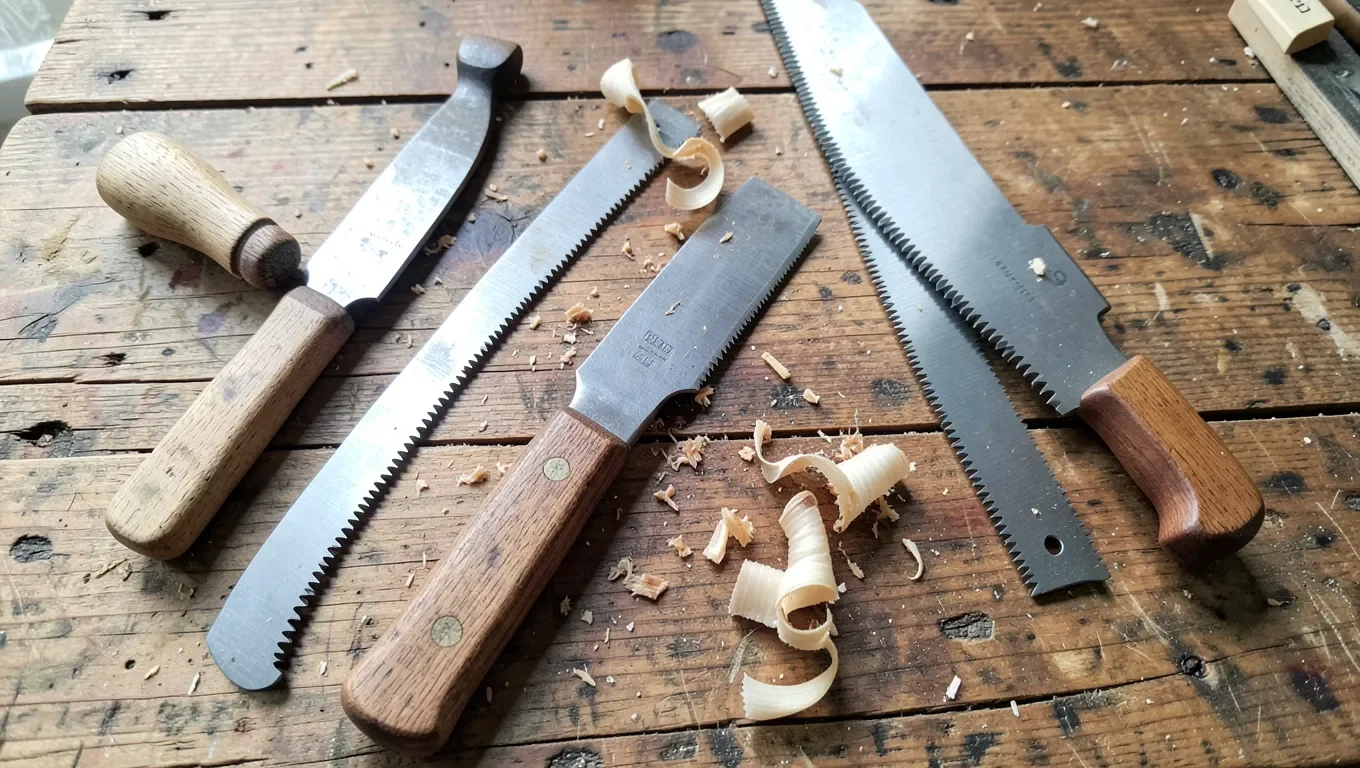
Saws. A Western crosscut saw with 8-11 TPI (teeth per inch) is the standard all-purpose choice – enough teeth for a clean cut without dragging. A fine-cut hand saw in the 11-15 TPI range is worth adding once you’re doing trim or joinery work where tear-out matters. The coping saw is a separate tool built for curves and coped joints, not straight cuts – its thin, narrow blade can turn inside a kerf that a wider saw blade can’t follow.
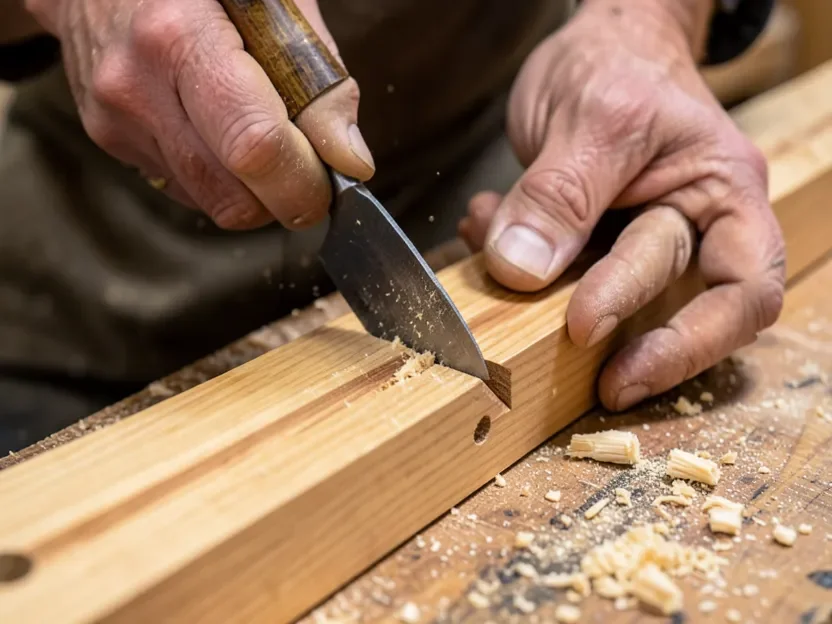
Chisels. A bevel-edge chisel (typically ground to a 25° primary bevel with a 30° micro-bevel) is the one to buy first – it handles general paring, trimming, and cleaning out joints. A mortise chisel has a thicker, stronger blade built to take mallet blows when chopping deep, square-sided mortises; a paring chisel is thinner and meant to be pushed by hand for fine, controlled cuts, never struck.
Planes. A block plane (blade bedded around 12-20°, low-angle) is the compact, one-handed option for chamfering edges and trimming end grain. A jack plane is longer and heavier, meant for flattening and smoothing larger faces in fewer passes. A rabbet plane cuts a step (a rabbet) along an edge for joinery, and its blade runs the full width of the sole so it can cut right into a corner.
Hand-Held Power Tools for Cutting Wood
A jigsaw is the most versatile handheld power option for wood – it cuts curves, straight lines, and plunge cuts in sheet goods, though the blade can wander in thick hardwood without a guide. A circular saw is the faster choice for long, straight rip cuts in plywood and dimensional lumber. A reciprocating saw isn’t built for finish work but earns its place for demolition and rough cuts where precision doesn’t matter. An oscillating multi-tool handles flush cuts and tight spots none of the others can reach, at the cost of a slower cut.
How to Choose the Right Tool for Your Project
Wood species changes the calculus. Softwoods like pine and cedar cut easily with a lower-TPI saw or a sharp chisel and don’t dull an edge quickly. Hardwoods like oak and maple need a saw with a more aggressive tooth geometry or a power tool, and they wear down a chisel edge faster, so budget extra time for touch-ups.
Project scale matters just as much. A hand saw and a couple of chisels are enough for small joinery, picture frames, or repairs. Repetitive cuts across sheet goods – a shed, a set of shelves, cabinet carcasses – are where a circular saw or jigsaw earns back its cost in time saved.
Noise and dust are worth factoring in too, especially if you’re working in an apartment, a garage that shares a wall, or any space with people nearby. Manual hand tools produce a fraction of the dust a power tool does and make almost no noise, which is part of why they’re still the default choice for apartment-shop woodworkers and anyone doing evening or early-morning projects.
Essential Features to Look For
Blade steel is the first thing to check. High-carbon steel takes a sharper edge and is easier to resharpen at home; some budget saws use hardened “impulse-hardened” teeth that stay sharp longer but can’t be resharpened at all – you replace the blade instead. For chisels, look for the steel type in the listing (O1 or high-carbon steel is easy to sharpen; harder alloy steels hold an edge longer but take more work on the stones).
Handle ergonomics matter more on tools you’ll use for an hour at a time. An octagonal or contoured wood handle registers the blade angle in your hand better than a smooth plastic grip, which is part of why Japanese-style handles are shaped the way they are.
Price is a reasonable proxy for how much of the above you’re getting, but it isn’t linear. A decent crosscut hand saw runs $15-30; a quality Western bevel-edge chisel set runs $40-80, and a single well-made block plane is often $30-60 on its own. Japanese pull saws and chisels tend to cost more per tool than their Western equivalents because of the harder, thinner-ground steel, which is part of why a bundled starter set can work out cheaper than buying each piece separately from the same maker.
Safety Tips When Using Wood-Cutting Hand Tools
Keep both hands behind the cutting edge on a chisel – never brace the workpiece with a hand in front of the blade’s travel path. Clamp the work instead of holding it whenever the cut allows it. Wear safety glasses for any striking or power-tool work, and a heavy-duty leather work apron keeps sawdust and stray shavings off your clothing and gives sharp edges a layer to catch on instead of skin.
A sharp edge is actually safer than a dull one on hand tools, counterintuitive as that sounds – a dull chisel or saw needs more force to cut, and that extra force is what makes it slip.
Sharpening and Maintenance
Chisels and plane irons are typically honed at a 25° primary bevel with a 30° secondary micro-bevel for durability – a honing guide keeps that angle consistent freehand sharpening tends to round over. Hand saws need occasional jointing (filing the teeth level) and sharpening with a triangular saw file matched to the tooth pitch; our full guide to sharpening a hand saw by hand walks through the filing angles step by step.
Wipe tools dry after use, never store them wet, and a light coat of camellia oil or paste wax on bare steel prevents surface rust between uses.
Frequently Asked Questions
What Is a Hand-Held Wood Cutting Tool?
A hand-held wood cutting tool is any saw, chisel, plane, or portable power tool you operate by hand rather than feeding wood through a stationary machine like a table saw or band saw. That covers manual tools (hand saws, coping saws, chisels, block planes) as well as handheld power tools such as jigsaws and circular saws, since both categories are guided by hand across or into the workpiece.
What TPI Should a Hand Saw Have for Cutting Wood?
For general wood cutting, look for 8-11 TPI (teeth per inch). Fewer teeth (5-8 TPI) cut faster but rougher, which suits framing lumber and rip cuts along the grain. More teeth (11-15 TPI) cut slower but leave a cleaner edge, which suits crosscuts, trim, and joinery like dovetails.
Are Hand-Held Wood Cutting Tools Safe for Beginners?
Yes, manual hand tools like saws, chisels, and planes are generally safer for beginners than stationary power tools because there’s no motor to grab the wood or your hand. Chisels still need respect: always cut with both hands behind the blade, never toward your body, and keep the edge sharp, since a dull chisel needs more force and is more likely to slip.
Should Beginners Start With Hand Tools or Power Tools?
Start with a few core hand tools: a crosscut saw, one or two chisels, and a block plane. They’re cheaper, don’t require dust collection or hearing protection, and teach you to read grain and control a cut, skills that make you better with power tools later. Add a jigsaw or circular saw once you’re cutting larger sheet goods or need speed on repetitive cuts.
Conclusion
A crosscut saw, one or two bevel-edge chisels, and a block plane cover most beginner projects on their own, and a kit like the one above bundles all three plus a plane in one purchase. Add a jigsaw or circular saw once you’re working with sheet goods or need to move faster on repetitive cuts. Either way, a sharp edge and a clamped workpiece matter more to the quality of the cut than which brand is on the handle.
Sponsored / affiliate links. As an Amazon Associate I earn from qualifying purchases. I may earn additional commission from eligible campaigns.