Hardwood Floor Separation Between Boards: Causes, Fixes & Prevention
Hardwood floor separation between boards is almost always caused by seasonal humidity changes — wood contracts in dry winter air and expands again when humidity returns. If your gaps close in summer, humidity control is the only fix you need. If gaps stay open year-round, the floor was either improperly acclimated before installation or installed too tightly. This guide covers the four proven fixes: humidity control, flexible wood filler, wood rope, and board re-gluing, ranked by gap size and permanence.
Quick Answer
Why do hardwood floor gaps appear between planks? Gaps between hardwood planks are caused by wood shrinking in low humidity (typically below 30% RH in winter). Boards expand back in summer — seasonal gaps are normal. For permanent gaps, use a flexible color-matched wood filler, never rigid putty. Keep indoor humidity at 35–45% RH year-round to prevent recurrence.
Why Do Gaps Appear Between Hardwood Floor Boards?
Best for Hardwood Floor Separation Between Boards
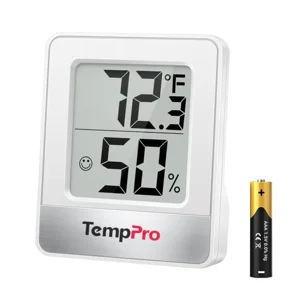 |
TempPro TempAir Digital Hygrometer Indoor Thermometer – $8.99 The product this guide names by name for hardwood floor separation between boards – matched here to a real, currently listed ASIN.
|
Wood is hygroscopic — it absorbs and releases moisture based on the surrounding air. When indoor humidity drops (typically in winter, when forced-air heating runs), hardwood boards lose moisture and shrink across their width. A single board may shrink only 1/32 of an inch, but across 20 boards, that adds up to visible gaps. When humidity rises in spring and summer, the boards expand and gaps close.
Understanding Wood’s Movement
Hardwood moves primarily across the grain — not along its length. A 3-inch-wide plank of red oak can change up to 3–5% in width across the full range of indoor humidity (20%–80% RH). That translates to roughly 1/16 inch per board at the extremes. The gap you see between planks is the sum of many boards each shrinking a small amount.
What causes permanent gaps (gaps that do not close in summer): The floor was installed when the wood was too dry and then expanded to fill the gaps — boards pushed against each other and cannot contract back. Or the floor was installed without proper acclimation (wood was not left in the house for 3–5 days before installation), so it shrank to its true equilibrium size after laying.
Assessing the Severity of Separation
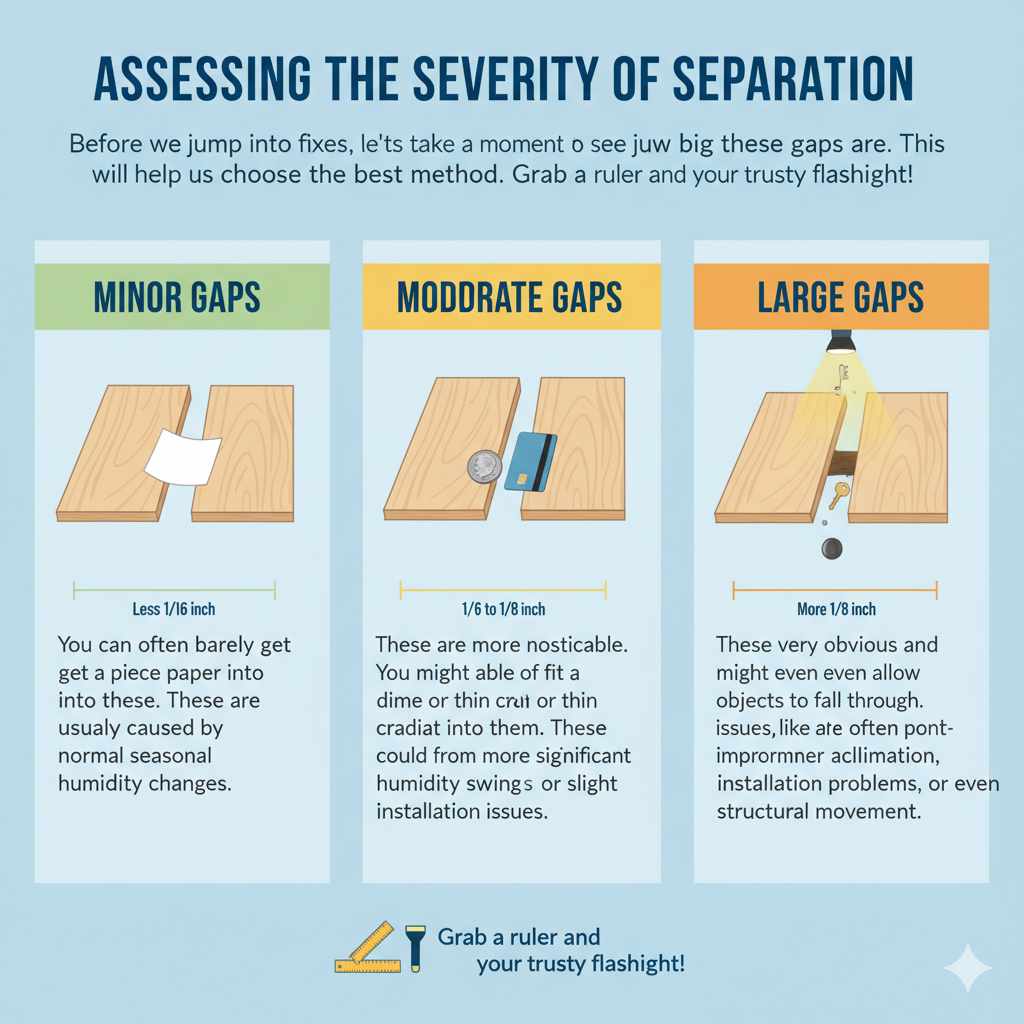
Before choosing a fix, measure the gap at its widest point and check whether it is seasonal or permanent:
- Under 1mm (hairline) — Normal. No action needed. These gaps are invisible when standing.
- 1–3mm (~1/8 inch) — Normal seasonal movement for solid hardwood. If gaps close in summer, maintain humidity and do nothing.
- 3–6mm (1/8–1/4 inch) — Moderate. Fill with flexible wood filler if gaps do not close seasonally.
- Over 6mm (1/4 inch+) — Wide. Use wood rope or consider professional re-installation for structural gaps.
Seasonal test: Check the gaps in late summer (highest humidity). If they have closed or mostly closed, the floor is behaving normally and only humidity management is needed. If wide gaps remain in late summer, they are permanent and need physical filling.
Proven Ways to Fix Hardwood Floor Separation
Method 1: Control Your Home’s Humidity (The Best Long-Term Fix)
The National Wood Flooring Association recommends maintaining indoor humidity at 35–55% RH and temperature at 60–80°F for hardwood floor stability. Running a whole-house humidifier during winter (when heating systems dry the air below 30%) prevents the seasonal shrinkage that causes gaps.
A portable humidifier placed in the room with the most gap activity is a practical starting point. Target 40% RH as your baseline. Use a hygrometer (a $15 humidity meter) to monitor the level — do not guess by feel alone, as air can feel comfortable at 25% RH while wood is actively shrinking.
★ Best Fix — Humidity Control
ThermoPro TP50 Digital Hygrometer
- Monitors humidity and temperature in real time
- Know exactly when your floor is at risk of shrinking
- Comfort level indicator — immediate visual feedback
- Under $15 — the cheapest floor gap prevention tool
As an Amazon Associate we earn from qualifying purchases.
Method 2: Using Wood Filler or Color-Matched Putty (For Minor to Moderate Gaps)
For gaps that are permanent (do not close seasonally), use a flexible, color-matched wood filler — not rigid wood putty. Rigid putty does not flex with seasonal wood movement and will crack or be pushed out within one heating season.
Application: Clean the gap with a vacuum and dry cloth. Apply the flexible wood filler with a putty knife, slightly overfilling the gap. Allow to cure fully per the product instructions (typically 2–4 hours). Sand lightly with 120-grit sandpaper until flush, then apply a matching floor finish to blend the repair. Best for gaps under 1/4 inch.
Method 3: Using Wood Glue and Clamping (For Moderate Gaps, Best for Newer Installs)
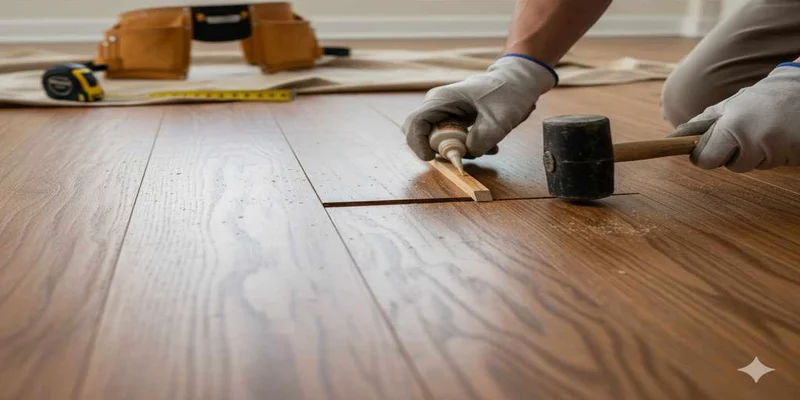
For gaps where adjacent boards have completely separated (a gap you can fit a credit card into), wood glue and clamping can pull the boards back together if the flooring is floating (not nailed). Apply wood glue into the gap, use a tapping block to close the boards, and clamp or weight overnight. This method works best on newer floating floors where boards are not locked by surrounding rows.
Method 4: Caulk for Gaps Near Walls or Baseboards
Gaps between the last floor board and the baseboard or wall are best filled with flexible wood-toned caulk, not wood filler. The expansion gap between the floor and wall is intentional — it allows the floor to move without buckling. Use a color-matched paintable caulk in a line along the baseboard. Do not overfill — the caulk line should be level with the floor surface, not raised.
When to Call a Professional
Call a flooring professional when: gaps are wider than 1/4 inch across most of the floor (indicates installation error or structural issue); the floor is cupping (boards curling up at edges, indicating water damage from below); boards are lifting at the ends (sign of excessive moisture from a subfloor leak or crawlspace); or the floor creaks loudly in multiple places alongside the gaps (loose nails or delaminating subfloor).
A professional can diagnose whether the gaps are from the flooring, the subfloor, or the structural framing — the fix for each is different. DIY filling of gaps caused by a subfloor problem will not last.
Preventing Future Separation
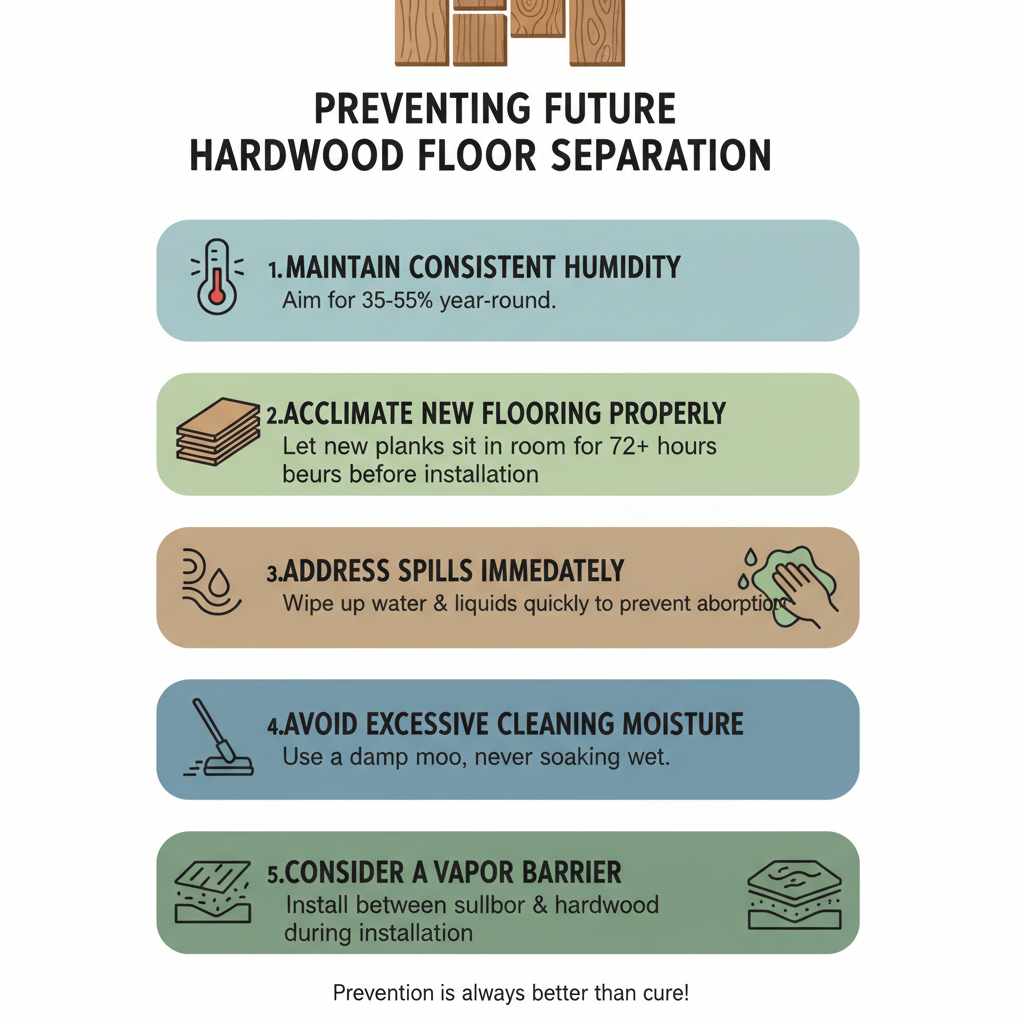
Prevention is simpler than repair. Maintain indoor humidity at 35–45% RH year-round with a whole-house humidifier (winter) and dehumidifier or air conditioning (summer). Seal subfloor gaps and crawlspace vents to reduce moisture migration from below. Before any hardwood installation, acclimate the wood in the room for a minimum of 3–5 days (most manufacturers recommend 5–7 days) so the wood reaches its equilibrium moisture content before nailing.
When selecting a floor finish, oil-based finishes penetrate the wood and help slow moisture exchange slightly compared to bare wood. A properly finished floor with all four sides of each board sealed will move less than unfinished or partially finished flooring.
FAQ: Hardwood Floor Separation
Q1: How quickly can I expect to see gaps in my hardwood floors?
Gaps typically appear within the first heating season after installation — usually within the first winter. Floors installed in summer will show gaps by December or January when the heating system drops indoor humidity below 30%.
Q2: Is it normal for hardwood floors to have gaps?
Yes — seasonal gaps up to 3mm are normal in solid hardwood. Gaps that close in summer are expected behavior. Only gaps that remain open in the humid season are abnormal and need physical repair.
Q3: Can I use regular caulk instead of wood caulk?
No. Regular silicone caulk does not accept stain or paint and creates a visible shiny line. Use a paintable, color-matched latex caulk labeled for wood floors, or a flexible wood filler for in-field gaps.
Q4: Will filling the gaps permanently solve the problem?
Filling treats the symptom, not the cause. If humidity fluctuates significantly each year, new gaps will open adjacent to filled ones. The permanent solution is stable humidity management plus filling existing gaps once the floor has reached a stable moisture state.
Q5: Can I fix gaps that are all the way through the floor?
Gaps that go all the way through to the subfloor need to be filled in layers — first with backer rod (foam cord) to reduce depth, then topped with flexible wood filler. Alternatively, a flooring contractor can cut out and re-install the affected section.
Q6: How do I stop my kids or pets from getting things stuck in the gaps?
Use rope caulk (also called gap filling rope or wood rope) pressed into the gaps — this is a traditional method used on older wood floors. It fills gaps with a flexible, wood-toned material that can be stained to match and does not crack under seasonal movement. It is also the safest approach for gaps in houses with pets or young children.
Q7: What is the ideal humidity level for hardwood floors?
The National Wood Flooring Association recommends 35–55% RH. Most flooring professionals target 40% as a practical year-round goal. Below 30%, significant shrinkage and visible gaps are likely in solid hardwood.
Conclusion
Hardwood floor gaps between planks are caused by low humidity in most cases — seasonal gaps that close in summer need only humidity management, not filling. For permanent gaps, use flexible color-matched wood filler (not rigid putty), caulk at perimeter joints, and wood rope for wide through-gaps. Maintain 35–45% RH year-round to prevent recurrence. If gaps are accompanied by cupping, lifting, or wide-spread separation across the whole floor, call a flooring professional before attempting DIY repairs.
Sponsored / affiliate links. As an Amazon Associate I earn from qualifying purchases. I may earn additional commission from eligible campaigns.