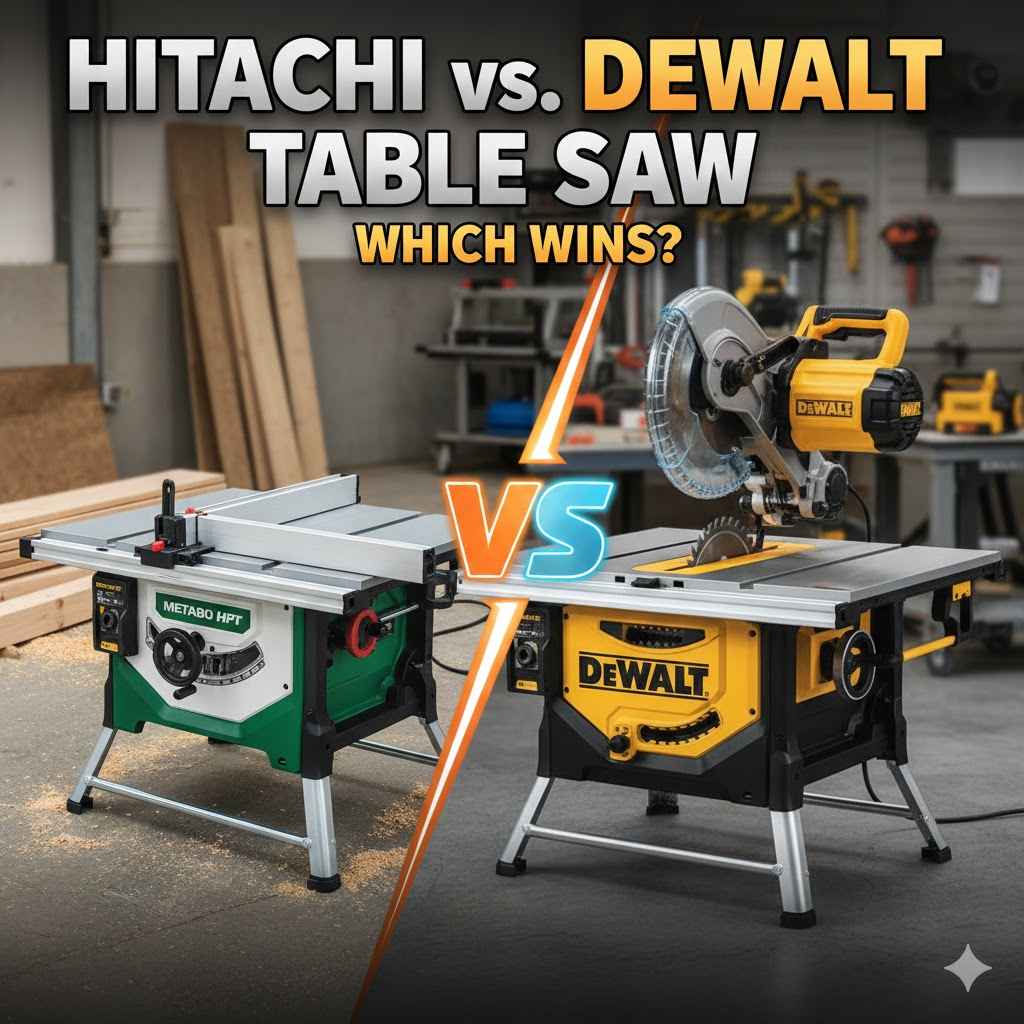
Hitachi vs DeWalt Table Saw Which Wins
Choosing your first table saw can feel tricky. Lots of options exist, and two popular names that come up are Hitachi and DeWalt. When you’re starting out, figuring out the best fit for your projects can be confusing.
This guide makes it simple. We’ll break down the key things to look at so you can pick the right saw for your workshop without any stress. Get ready to see how the Hitachi vs DeWalt Table Saw: Which Wins? question gets a clear answer.
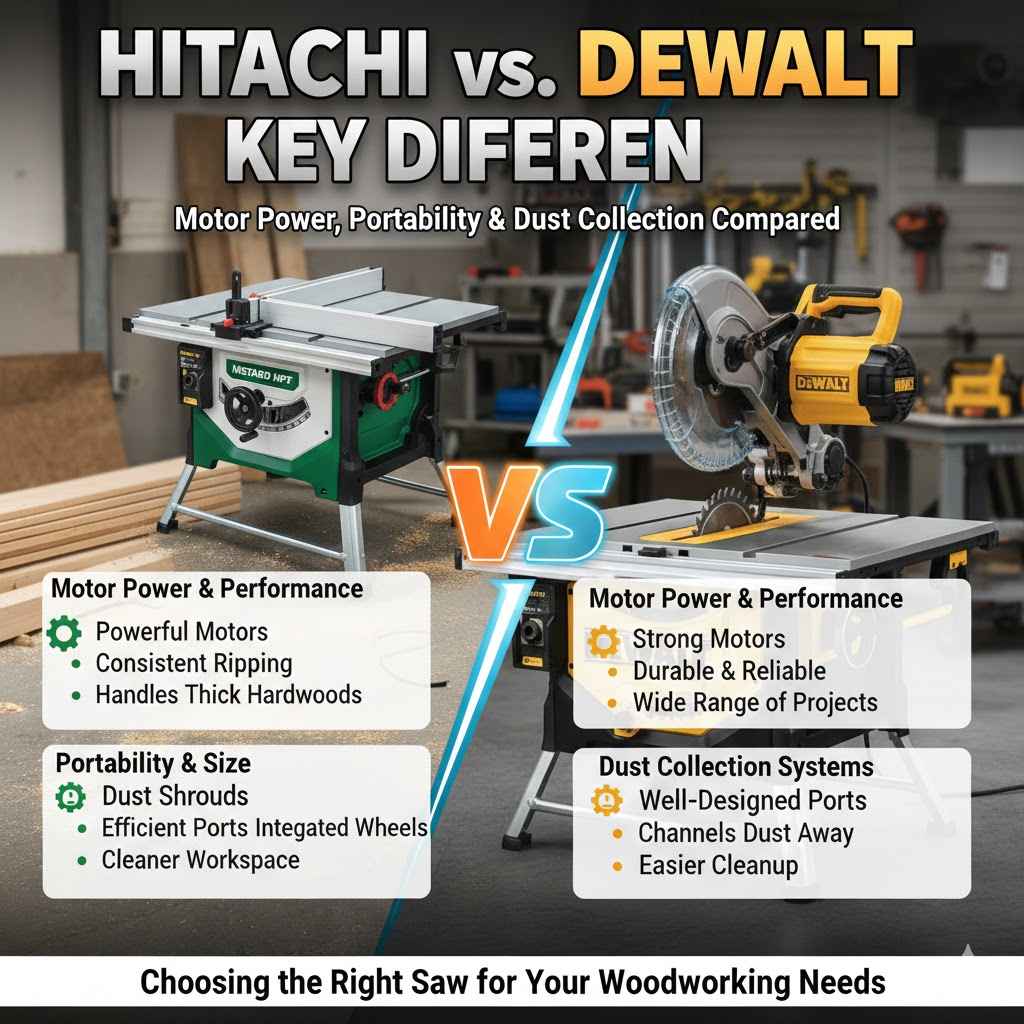
Hitachi vs DeWalt Table Saw Key Differences
When you start looking at table saws, you’ll notice different brands have their own strengths. Hitachi and DeWalt are two big players in the power tool world. They offer table saws that many woodworkers consider.
Understanding what makes them unique is the first step to picking the right one for your needs. This section will highlight the main ways these two brands differ so you can see which approach might suit you better. We’ll look at their general design philosophies and what you can expect from their table saw lines.
Motor Power and Performance
The motor is the heart of any table saw. It drives the blade and determines how easily it can cut through different types of wood. More power means it can handle tougher jobs without bogging down.
Hitachi saws often come with powerful motors that can tackle demanding tasks. They are built to provide consistent performance, even when you’re ripping thick hardwoods. This means fewer interruptions and a smoother cutting experience.
DeWalt also focuses on strong motors, aiming for durability and reliable power output. Their saws are designed to deliver performance that DIYers and professionals can count on for a wide range of projects.
A common motor size to look for in a good portable table saw is around 15 amps. This is usually enough for most home workshop needs. For stationary cabinet saws, motors can be much larger, often 3 horsepower or more.
Portability and Size
Where you plan to use your table saw matters a lot. Some saws are built to be moved around easily, while others are meant to stay in one spot. This difference affects their size, weight, and how they are set up.
Many Hitachi table saws offer features that make them more portable. This can include folding stands or integrated wheels. This is a big plus if you need to set up your workspace in different locations or store the saw when not in use.
DeWalt also has portable options, known for their sturdy yet manageable designs. Their portable saws often feature quick-release levers for miter gauges and sturdy fences that lock securely. These features help with quick setup and reliable results, even on the go.
For example, a popular DeWalt portable table saw weighs around 50-60 pounds. This makes it manageable for one person to carry. Some Hitachi models might be slightly heavier or lighter depending on the specific design, but they also aim for user-friendly transport.
Dust Collection Systems
Cutting wood creates a lot of dust. A good dust collection system is important for keeping your workspace clean and for your health. It also helps your tools last longer by preventing dust buildup.
Hitachi table saws often include dust shrouds and ports designed to work with shop vacuums. This helps capture sawdust as you cut, leading to a much cleaner work area.
DeWalt models also prioritize dust management. They typically have well-designed dust collection ports that efficiently channel dust away from the blade and into your vacuum system. This makes cleanup much easier after a project.
A good dust collection system can capture 80-90% of the sawdust produced. This makes a huge difference in air quality and reduces the need for constant sweeping.
Hitachi Table Saw Features and Benefits
Hitachi offers a range of table saws that appeal to woodworkers looking for solid performance and practical features. When considering the Hitachi vs DeWalt table saw debate, understanding Hitachi’s specific offerings helps paint a clearer picture. These saws are often designed with the home hobbyist and light professional in mind, balancing power with user-friendly operation.
We will explore what makes Hitachi a compelling choice for many.
Precision and Accuracy
Accuracy is key when cutting wood. Even small errors can lead to pieces that don’t fit together correctly. Hitachi table saws are known for their ability to make precise cuts time after time.
They often feature high-quality fences that lock down firmly and run parallel to the blade. This is crucial for making straight rips. The miter gauges also usually provide clear markings for accurate angle cuts.
Many Hitachi models come with features like blade height and bevel adjustment knobs that offer smooth, reliable control. This allows for fine-tuning your settings to achieve the exact dimensions needed for your project.
Durability and Build Quality
A table saw is an investment, so it needs to be built to last. Hitachi has a reputation for creating tools that can withstand regular use and harsh workshop conditions.
Their table saws are often constructed with sturdy materials, such as cast iron or heavy-duty steel, which contribute to their overall durability. This robust build also helps to reduce vibration, leading to cleaner cuts.
The components are designed for longevity, meaning less worry about frequent repairs or replacements. This build quality ensures that your Hitachi saw remains a reliable workhorse for many years of woodworking.
Ease of Use and Setup
For many woodworkers, especially beginners, ease of use is a major factor. Hitachi often designs its saws with simplicity in mind, making them accessible even if you’re new to table saws.
Features like tool-free blade changes and clearly labeled controls simplify operation. Their folding stands and integrated handles further enhance portability and setup speed. This means you can spend more time cutting and less time fiddling with the machine.
For instance, a user might unbox their Hitachi saw, attach the legs or stand, and be ready to make their first cut in under 30 minutes. This quick setup is invaluable for those with limited workshop time.
DeWalt Table Saw Features and Benefits
DeWalt is another brand that stands out in the power tool market, and their table saws are popular among a wide range of users, from hobbyists to professionals. When we look at the Hitachi vs DeWalt table saw comparison, DeWalt’s contributions are significant. Known for their innovation and user-centric design, DeWalt table saws aim to provide a blend of power, portability, and cutting-edge features.
Let’s examine what makes DeWalt a strong contender.
Innovative Safety Features
Safety is paramount when operating a table saw. DeWalt is known for incorporating advanced safety features into its designs to protect the user.
Many DeWalt table saws come with advanced blade guards, anti-kickback pawls, and a modular blade guard system. These elements work together to minimize risks during operation. The modular system allows users to adjust the guard for different cuts while maintaining protection.
The power loss-reset feature is another safety innovation. If the saw loses power, it won’t automatically restart when power is restored. This prevents unexpected blade engagement, greatly reducing the chance of injury.
Statistics show that kickback is one of the most common causes of table saw injuries. Features designed to prevent this, like effective pawls and a well-designed blade guard, are invaluable.
Cutting Capacity and Versatility
A table saw’s capacity dictates the size of the material it can handle. DeWalt table saws are often praised for their impressive cutting capacity, allowing for a wide range of woodworking tasks.
They typically offer substantial rip capacity, meaning you can cut wide boards efficiently. The depth of cut is also usually sufficient for most common lumber thicknesses. This versatility makes them suitable for various projects, from small crafts to larger furniture pieces.
Some DeWalt models also offer features like rack-and-pinion fence systems, which allow for smooth and precise adjustments. This further enhances the saw’s versatility and ease of use for different types of cuts.
Power and Durability
DeWalt is synonymous with powerful and durable tools. Their table saws are built to withstand demanding jobs and provide long-lasting performance.
The motors in DeWalt table saws are typically robust, delivering ample power to cut through hard materials without struggling. This reliability is backed by the brand’s commitment to using high-quality components in their construction.
The overall build quality of DeWalt saws contributes to their durability. They are designed to handle the rigors of a workshop environment, ensuring they remain dependable tools for years to come.
For example, a DeWalt contractor saw might feature a 15-amp motor, providing plenty of power for ripping 2x4s or plywood sheets. This motor is designed for continuous duty, meaning it can run for extended periods without overheating.
Comparing Hitachi vs DeWalt Table Saw for Your Needs
Now that we’ve looked at each brand separately, it’s time to directly compare the Hitachi vs DeWalt table saw offerings to help you make the best choice. The “which wins?” question really depends on your specific situation, what you plan to build, and your budget. We’ll break down the decision-making process step-by-step.
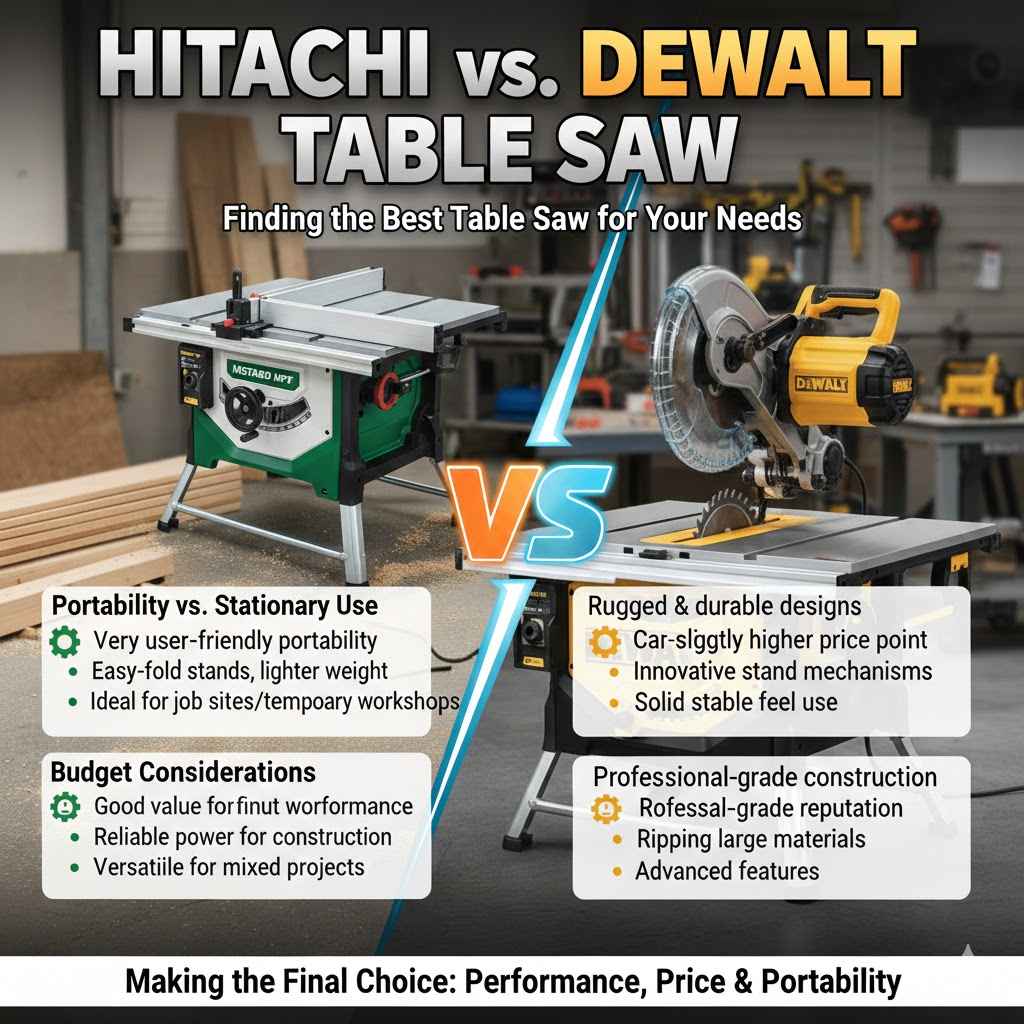
Portability vs. Stationary Use
If you frequently move your tools or have limited space, a portable table saw is likely your best bet. Both brands offer excellent portable models, but their specific features might lean towards different user preferences.
Hitachi often provides very user-friendly portability features. Think easy-fold stands and lighter overall weight on some models. This is ideal if you need to set up and pack away your saw often, perhaps for job sites or temporary workshops.
DeWalt also excels in portability with their rugged designs and often innovative stand mechanisms. Their saws might feel a bit more solid, which some users prefer, even if it means a slight increase in weight. The choice here is about how easily you need to move it and how stable you want it to feel when in use.
Consider a scenario where you work in a small garage. You might need to move the saw to access other tools or to make space for your project. In this case, a saw with a quick-release stand and compact folded size would be very valuable.
Budget Considerations
Price is always a significant factor when buying tools. Both Hitachi and DeWalt offer saws at various price points, but there can be differences in their typical ranges.
Generally, DeWalt tools might be positioned at a slightly higher price point, reflecting their advanced features and professional-grade reputation. However, this can vary greatly depending on the specific model and current sales.
Hitachi saws can sometimes offer a more budget-friendly option without sacrificing too much in terms of performance. This can make them an attractive choice for those who are just starting out or working with a tighter budget. It’s important to compare specific models rather than relying solely on brand perception.
For example, a portable DeWalt table saw might retail for $500-$700, while a comparable Hitachi model could be found for $400-$600. However, sales and refurbished options can significantly alter these numbers. Always check current prices from multiple retailers.
Intended Use and Project Types
What you plan to build with your table saw will heavily influence which model is best. Are you making fine furniture, rough construction cuts, or a mix of both?
For fine woodworking, where precision and smooth finishes are critical, both brands offer excellent options. Look for features like micro-adjustment fences and smooth blade control.
For heavy-duty construction or ripping large sheets of plywood repeatedly, you might want to prioritize motor power and durability. Both brands have saws designed for this, but looking at the motor amperage and build materials will be key.
If you are a beginner, a good portable saw from either brand with clear instructions and safety features will serve you well. For example, if you are building cabinets, you’ll need accuracy for dadoes and repeatable cuts. If you are building a deck, you’ll need power to rip lumber quickly.
| Feature | Hitachi Focus | DeWalt Focus |
|---|---|---|
| Portability | Often very user-friendly, quick-fold stands | Rugged design, stable yet portable |
| Budget | Can offer more budget-friendly options | Often a slightly higher price point, professional-grade |
| Safety | Standard effective safety features | Advanced and innovative safety systems |
| Power | Reliable power for various tasks | Robust motors for demanding applications |
Frequently Asked Questions
Question: Which table saw is better for a beginner Hitachi or DeWalt
Answer: For beginners, both brands offer great options. DeWalt often has excellent safety features which are crucial when learning. Hitachi can be very user-friendly and sometimes more budget-friendly, making it a great starting point too.
It depends more on the specific model’s ease of use and safety features.
Question: What is the rip capacity of a typical Hitachi table saw
Answer: A typical portable Hitachi table saw usually offers a rip capacity of around 20 to 24 inches to the right of the blade. This is generally sufficient for cutting standard plywood sheets and ripping smaller boards.
Question: How does DeWalt’s dust collection compare to Hitachi’s
Answer: Both brands generally have good dust collection systems. DeWalt often incorporates well-designed dust ports and shrouds, while Hitachi also focuses on capturing sawdust efficiently with its models. It’s best to check reviews for specific models regarding dust collection performance.
Question: Are Hitachi table saws durable enough for professional use
Answer: Yes, many Hitachi table saws are built with durable materials and robust motors, making them suitable for light professional use or demanding DIY projects. However, for constant heavy-duty professional work, some might prefer a more specialized cabinet saw.
Question: Can I easily find replacement parts for DeWalt or Hitachi table saws
Answer: Yes, both DeWalt and Hitachi are major brands with widespread availability of parts. You can typically find replacement blades, fences, and other components through authorized dealers or online retailers.
Final Thoughts
When deciding between a Hitachi and DeWalt table saw, consider your specific needs. If you prioritize cutting-edge safety features and professional-grade power, DeWalt might be your choice. If you are looking for user-friendly operation and potentially a more budget-friendly option, Hitachi could be a better fit.
Both brands deliver reliable performance for woodworking tasks.