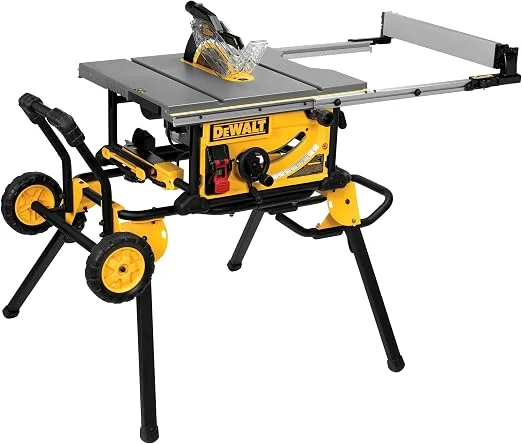
DeWalt DWE7491RS 10-Inch Jobsite Table Saw Review
The DEWALT DWE7491RS is a 15-amp, 10-inch jobsite table saw with a 32-1/2-inch rip capacity and a folding rolling stand, built for contractors and serious DIYers who need a saw that’s powerful enough for real work but still portable enough to move between a shop and a job site. Here’s what its specs actually mean in practice, how it compares to similarly priced competitors, and where it falls short.
What the DWE7491RS Is
The Saw This Review Covers
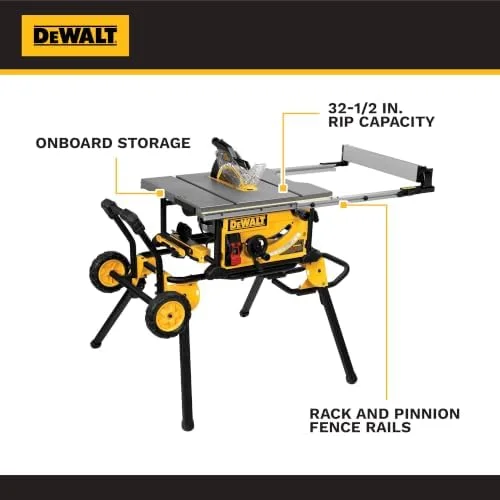 |
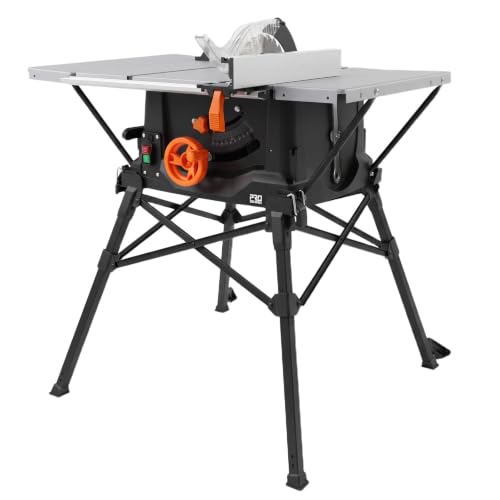
DEWALT DWE7491RS 10″ Table Saw with Rolling Stand The exact saw covered in this review, with its included folding rolling stand.
|
Its rack-and-pinion fence system is the feature most reviewers point to first: turning the front wheel moves the fence smoothly along telescoping rails, and it locks down parallel to the blade far more reliably than the cheaper cam-lock fences on entry-level jobsite saws. The 15-amp motor spins the blade at 4,800 RPM, enough to rip through hardwoods like oak and maple without bogging down, and the 32-1/2-inch rip capacity handles a full sheet of plywood ripped down the middle in one pass – a real advantage over the 24-26 inch capacity common on smaller portable saws.
What’s Actually in the Box
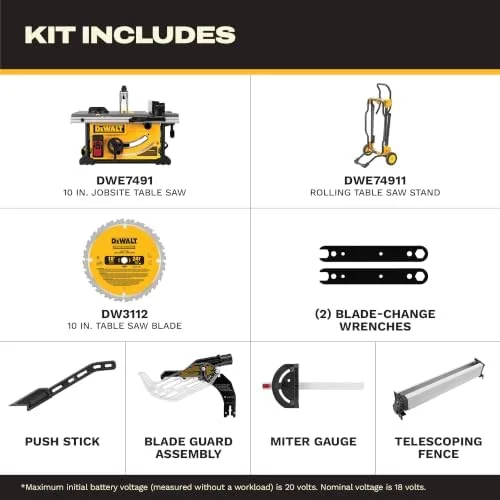
The kit includes the saw itself, the DWE74911 rolling stand, a DW3112 10-inch combination blade, a miter gauge, a push stick, and the wrenches needed for blade changes – everything needed to start cutting without buying separate accessories, aside from a dado stack if you need one. Onboard storage built into the saw’s base holds the blade guard assembly, miter gauge, and wrenches when not in use, which matters more than it sounds like for a tool that gets loaded in and out of a truck regularly. The stand typically takes 15-30 minutes to assemble the first time; the instructions are straightforward, and it goes faster on repeat setups once the sequence is familiar.
Setting Up and Squaring the Blade
- Unfold the rolling stand and lock the legs into position, then set the saw onto the stand’s mounting brackets.
- Plug into a grounded outlet and confirm the blade guard, riving knife, and anti-kickback pawls are installed and functioning.
- Check the blade is square to the table using a square against the blade body – it’s common for this to be slightly off out of the box, and it’s an easy fix via the bevel lock screw behind the blade wheel.
- Set the fence to the desired rip width using the rack-and-pinion adjustment wheel, checking it reads true against the built-in scale.
- Feed the workpiece steadily, standing to the side of the blade’s line of travel rather than directly behind it.
- Use the included push stick for any cut where hands would come within a few inches of the blade.
The throat plate may also need a quick adjustment using its four leveling screws to sit flush with the table surface. If dado cuts are part of the plan, note that this model doesn’t include a dado throat plate – a separate zero-clearance insert is needed for that.
Why the Rack-and-Pinion Fence Matters
Cheaper jobsite table saws typically use a cam-lock fence, which clamps down at whatever angle the fence happened to be at when you locked it – if it drifts even slightly out of parallel with the blade before locking, the cut will taper along its length. A rack-and-pinion fence like the DWE7491RS’s rides on a geared track, so turning the adjustment wheel moves the entire fence assembly evenly and it locks down parallel to the blade every time by design, not by how carefully the fence was eyeballed. This is the single feature experienced users point to most often when explaining why they’ll pay more for a saw like this over a basic contractor-grade model.
How It Compares to Similarly Priced Saws
| Feature | DeWalt DWE7491RS | Bosch 4100XC-10 | SKIL TS6307-00 |
|---|---|---|---|
| Rip Capacity | 32-1/2 in. | 25 in. | 25-1/2 in. |
| Motor | 15 amp | 15 amp | 15 amp |
| Stand | Rolling, foldable | Gravity-rise wheeled | Folding |
| Typical Price | ~$600-650 | ~$700-750 | ~$300-350 |
The DWE7491RS’s biggest edge over the Bosch is rip capacity – 32-1/2 inches versus 25 – which matters directly if sheet goods are a regular part of the work. The SKIL costs meaningfully less and covers the basics well, but doesn’t match the fence precision or overall build quality of either the DeWalt or Bosch. Between the DeWalt and the Bosch specifically, the Bosch’s gravity-rise stand deploys slightly faster, but the DeWalt’s lower price and larger rip capacity make it the more practical choice for most buyers who don’t already have a strong stand preference.
Where It Falls Short
- No included dado throat plate. Cutting dados requires a separate zero-clearance insert, which DeWalt doesn’t include in the box.
- Heavy for a “portable” saw. At around 90 pounds, moving it up or down stairs without the rolling stand’s wheels is a two-person job for most people.
- Stand assembly takes real time on first setup – budget closer to 30-45 minutes the first time, faster after that once the sequence of folding legs and locking pins becomes familiar.
Portability: What “Jobsite Saw” Actually Means
“Portable” in this saw’s category doesn’t mean lightweight – it means the saw and stand collapse into a package that one person can load into a truck bed or roll across a jobsite, not that it’s easy to carry up a flight of stairs. The rolling stand’s wheels handle flat and moderately uneven ground well; concrete, gravel, and packed dirt are all fine. Stairs, deep gravel, or soft ground are where the saw’s roughly 90-pound weight becomes a real two-person task rather than a one-person inconvenience.
Basic Safety Practices for Any Jobsite Table Saw
- Keep the blade guard installed for any cut where it doesn’t physically interfere with the operation being performed.
- Stand to the side of the blade’s cutting line, never directly behind the workpiece, in case of kickback.
- Use a push stick for narrow rip cuts that bring hands close to the blade.
- Unplug the saw before changing blades or clearing a jam – never rely on the power switch alone.
Good First Projects for a Saw This Size
A 32-1/2-inch rip capacity is enough headroom for full sheets of plywood, which makes cabinet carcasses, bookshelves, and built-ins realistic first projects rather than something that requires a second, larger saw. Simpler projects like picture frames or small boxes are a reasonable way to get comfortable with the fence and crosscut sled before moving to sheet goods, since mistakes on scrap 1x pine cost far less than a ruined sheet of plywood. Running a few crosscuts and rips on inexpensive scrap to confirm the fence reads true against its scale is worth the extra few minutes, especially after the saw has sat in storage for a while.
Budget Tips
A thin-kerf replacement blade removes less material per cut, which reduces the load on the motor and can speed up cuts in dense hardwood. Buying construction lumber and sheet goods during seasonal sales at a home center, and saving offcuts for smaller projects, are two reliable ways to cut project costs without cutting corners on the tool itself. Checking a saw’s stock and current price directly on the retailer’s page before buying is also worth the extra minute, since demand and pricing on popular jobsite tools like this one can shift noticeably between visits.
Frequently Asked Questions
What is the DeWalt 10-inch jobsite table saw best for?
Cutting wood, plastic, and thin metal for projects like shelving, decking, and trim. Its 32-1/2-inch rip capacity and rolling stand make it suited to both home shop and jobsite use.
Is this saw beginner-friendly?
Yes. The rack-and-pinion fence is easier to set accurately than a cam-lock fence, and the standard safety equipment (blade guard, riving knife, anti-kickback pawls) is present out of the box.
How do I keep the saw clean and running well?
Connect a shop vac to the 2-1/2-inch dust port after each use, and check the blade and fence rails for sawdust buildup, which can affect cut accuracy over time.
Does it work for dado cuts?
Not out of the box – DeWalt doesn’t include a dado throat plate with this model, so a separate zero-clearance insert is needed to cut dados safely.
Conclusion
The DWE7491RS earns its popularity mainly through its rip capacity and fence precision at a price that undercuts saws with similar specs. It’s not the lightest or the cheapest jobsite table saw available, but for anyone who regularly rips full sheets of plywood or needs a fence that holds true cut after cut, it remains one of the strongest value picks available in its class today.
Sponsored / affiliate links. As an Amazon Associate I earn from qualifying purchases. I may earn additional commission from eligible campaigns.