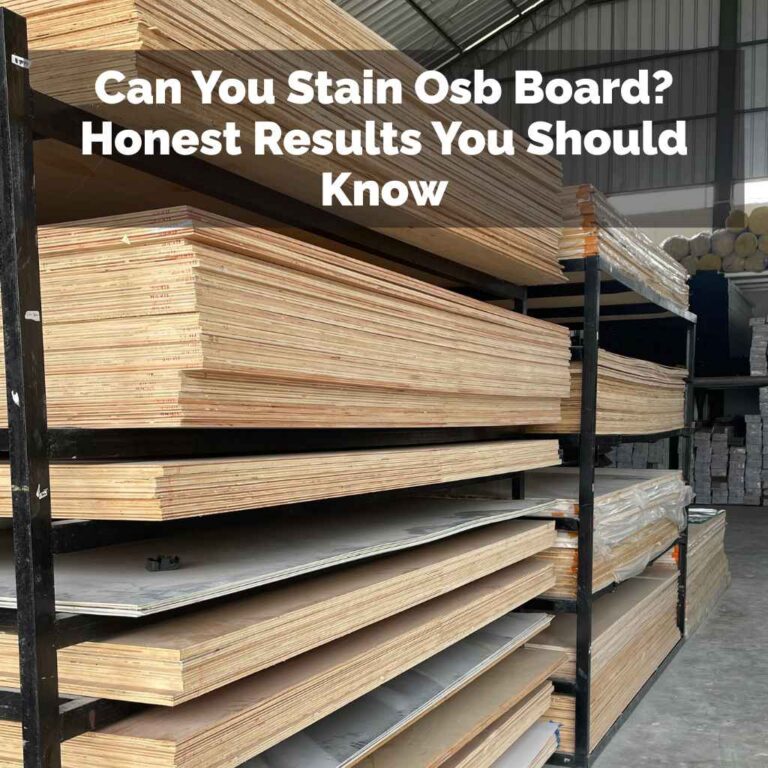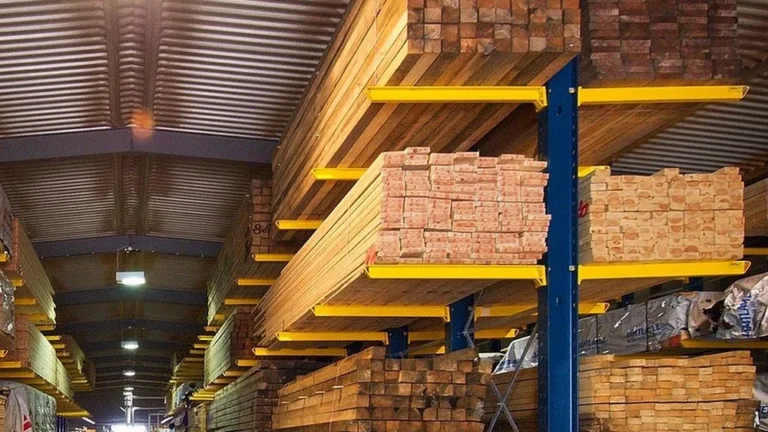
Home Depot Plywood Quality Review: What to Expect
Home Depot plywood works for many shop fixtures, utility shelving, and painted cabinet parts if you buy cabinet-grade or sanded panels and reject sheets with through-knots, voided edges, or severe warp. Use cheap sheathing only where it will stay hidden and serve a structural role. Skip face grade or edge voids, and you invite bad glue joints, telegraphed patches, swollen edges, and parts that need extra labor or replacement. This guide explains store tags, face grades, core defects, and which sheets to buy or skip for cabinets, furniture, and sheathing.
What Home Depot plywood labels actually mean
Start with the label, then verify the sheet. Plywood is a layered veneer panel, and the tag tells you far more than the brand name. Face grade, exposure rating, veneer species, and thickness point to different jobs, and those clues matter more than shelf placement or packaging.
Face grades A through D
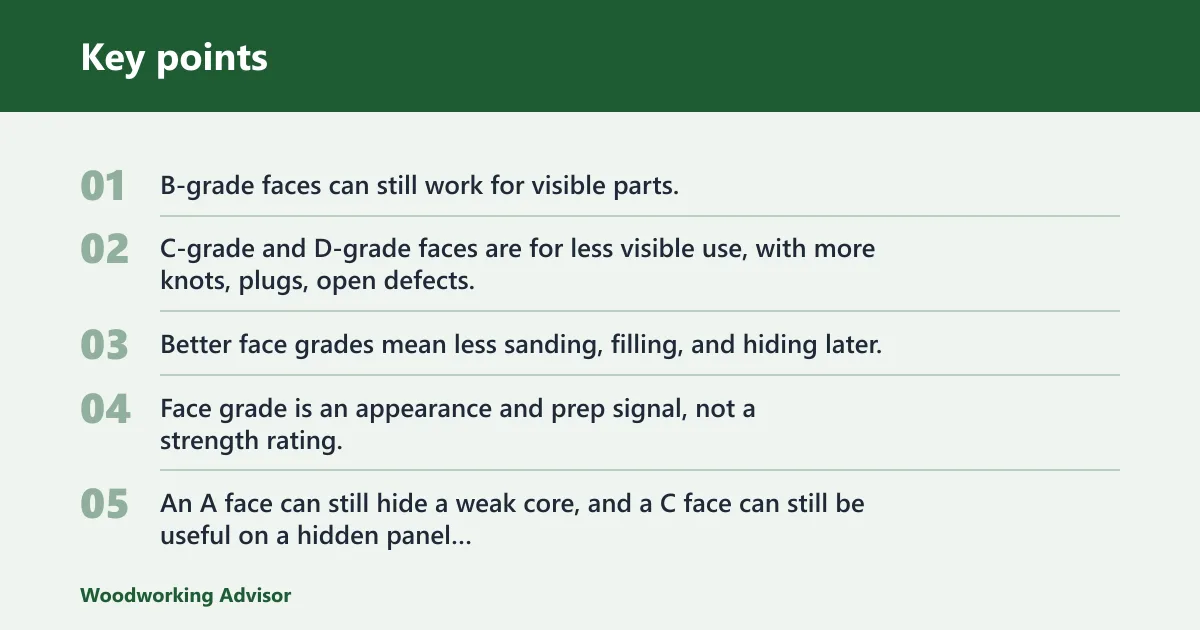
A-grade faces are smooth and paintable. B-grade faces can still work for visible parts, but they usually allow more repaired spots and color variation. C-grade and D-grade faces are for less visible use, with more knots, plugs, open defects, and surface repair. Better face grades mean less sanding, filling, and hiding later.
Face grade is an appearance and prep signal, not a strength rating. An A face can still hide a weak core, and a C face can still be useful on a hidden panel if the sheet is flat and the edges are sound.
Exposure ratings
Exposure ratings tell you how the glue line is meant to handle moisture. Interior panels are for dry spaces only. Exposure 1 is built for limited wetting during construction, then dry service. Exterior-rated panels are the safer choice where moisture is more likely. Structural 1 markings point toward building use, not fine finish work.
Do not mix up exposure rating and face grade. A pretty face does not make a sheet suitable for damp conditions, and an exterior-rated sheet is not automatically better for cabinets if the face is rough or full of patches.
Common sheet sizes and thicknesses
Home Depot plywood is sold in 4×8-foot sheets. Common retail thicknesses include 1/4-inch to 3/4-inch, and Common retail thicknesses include about 1/4-inch to 3/4-inch, and 23/32-inch often appears in sheathing stock. Thickness affects stiffness, fastener bite, and how much the sheet deflects on shelves or cabinet spans.
For most buyers, the practical question is simple: use thinner sheets for backs and skins, and thicker sheets for boxes, shelves, and parts that must stay straight under load.
| Label | What it signals | Typical use |
|---|---|---|
| A face | Smooth, paintable surface with few visible defects | Visible cabinet parts, painted furniture |
| B face | Good appearance with more repair marks allowed | Cabinet boxes, shelves, utility panels |
| C face | Rougher surface with more knots and repairs | Hidden sides, sheathing, shop parts |
| D face | Lowest appearance grade in common sheet stock | Hidden structural or rough utility use |
| Exposure 1 | Limited moisture exposure during construction | Sheathing, rough utility panels |
| Exterior | Better suited to moisture-prone conditions | Outdoor or damp-side applications |
Is Home Depot plywood good enough for your project?
Yes, if you match the sheet to the job. Cabinet and furniture parts need flatter sheets, cleaner faces, and tighter cores. Shop fixtures can tolerate more cosmetic flaws. Utility sheathing can use rougher CDX stock if the sheet meets the structural need and the space will not be seen.
Best uses for cabinets and built-ins
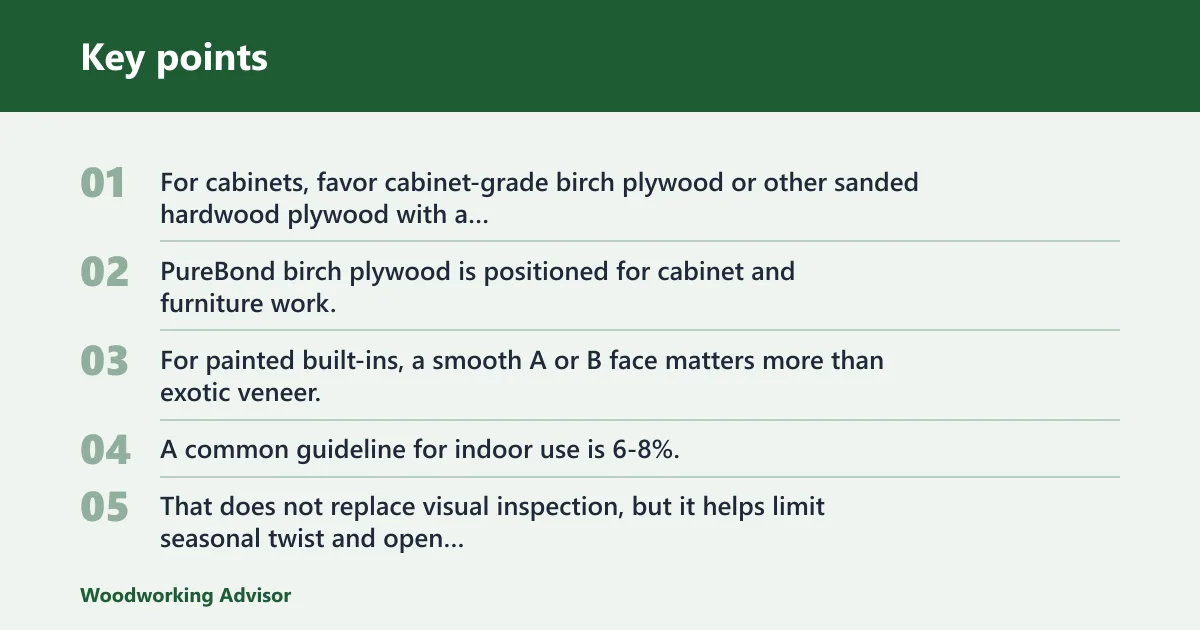
For cabinets, favor cabinet-grade birch plywood or other sanded hardwood plywood with a clean face, stable core, and low void content. PureBond birch plywood is positioned for cabinet and furniture work, and birch veneer is usually easier to finish cleanly than rough pine faces. For painted built-ins, a smooth A or B face matters more than exotic veneer.
Moisture content matters here. A common guideline for indoor use is 6-8%, because drier sheet stock is less likely to move after installation. That does not replace visual inspection, but it helps limit seasonal twist and open joints.
Best uses for painted furniture and shop fixtures
Painted furniture can use sanded plywood, especially A/C or B/C style panels with a better front face. That option is often a budget alternative to premium hardwood plywood. Shop fixtures can usually tolerate more face defects if the parts are hidden, but you still want solid edges and enough screw holding for the load.
Suppose you are building a 30-inch-deep garage workbench cabinet with painted doors. A sanded face may be enough for the visible panels, but a sheet with open edge voids will still cause fastener trouble and filler work at the corners.
Where utility sheathing makes more sense
CDX plywood belongs in utility and sheathing work, not in fine furniture. The CDX tag points to C and D faces with a construction focus, and Exposure 1 or exterior-oriented use is common on that stock. If the panel will be hidden behind drywall, siding, or other layers, CDX often makes more sense than paying for a prettier face you will never see.
Do not buy CDX for a cabinet side. You will pay later in sanding, edge filling, and visible patching.

How to inspect a sheet in 60 seconds
Begin with flatness, then move to the edges, then the face. The best sheet on the rack stays flat, has tight edges, and shows no serious surface damage. A quick in-aisle inspection catches most bad buys before they reach the cart.
- Look across the sheet from one corner to the opposite corner for bow or twist.
- Set one corner down and check whether the opposite corner lifts.
- Scan the edges for voids, crushed layers, and broken plies.
- Check the face for through-knots, open patches, sanding marks, and delamination.
- Reject any sheet with water damage, swelling, or a lifted veneer edge.
Check flatness and corner lift
Use a straight visual line across the sheet edge and face. A useful comparison point is a warp threshold of less than 0.25 inch over 4 feet. Anything beyond that starts to complicate cabinet fit, shelf leveling, and glue-up alignment.
Inspect edges for voids and chips
Edge inspection tells you more about core quality than the face does. Small pinholes are one thing; repeated open voids at the edge are another. Voids weaken screw holding and make the panel more likely to chip when you cut, route, or fasten it.
A sheet can look fine from the aisle and still fail at the edge. That is why you should look at the cut side, not only the pretty face.
Scan the face for knots, patches, and sanding marks
Face defects matter most on visible parts. Knots, football patches, torn veneer, and heavy sanding marks will show through stain or paint if they are in the wrong place. For painted projects, a few small patches can be acceptable. For stain-grade work, reject the sheet if the face quality will force too much filler or masking.
Home Depot plywood quality checklist
Use this as a buy-or-reject filter, not a wish list. The sheet that passes is easier to cut, glue, and finish. The sheet that fails will cost you time even if the sticker price looks low.
| Item | Buy | Acceptable | Reject |
|---|---|---|---|
| Warp | Flat to the eye, no corner lift | Minor bow under 0.25 inch over 4 feet | Visible twist, dish, or lift beyond 0.25 inch over 4 feet |
| Voids | Tight edge with no open cavities | Small, isolated internal voids that stay away from fasteners and edges | Through-voids, repeated edge gaps, or crumbling plies |
| Edge chips | Clean edge with intact plies | Minor nicks that will trim away | Broken corners, crushed edges, or long chip-out |
| Face defects | Few repairs, no lifted veneer | Small filler spots on hidden or painted parts | Through-knots, wide patches, torn veneer, or delamination |
| Moisture cue | Dry, stable panel with no swelling | Slightly variable stock that still lies flat | Raised grain, swollen edges, or a damp feel |
PureBond Birch was listed at $85 per sheet in the comparison page, CDX Sheathing at $45 per sheet, and AC Sanded Pine at $55 per sheet. Those numbers matter only after quality checks. A cheap sheet that needs recuts and filler can cost more than the cleaner one once waste is added.
Which plywood should you buy for cabinets?
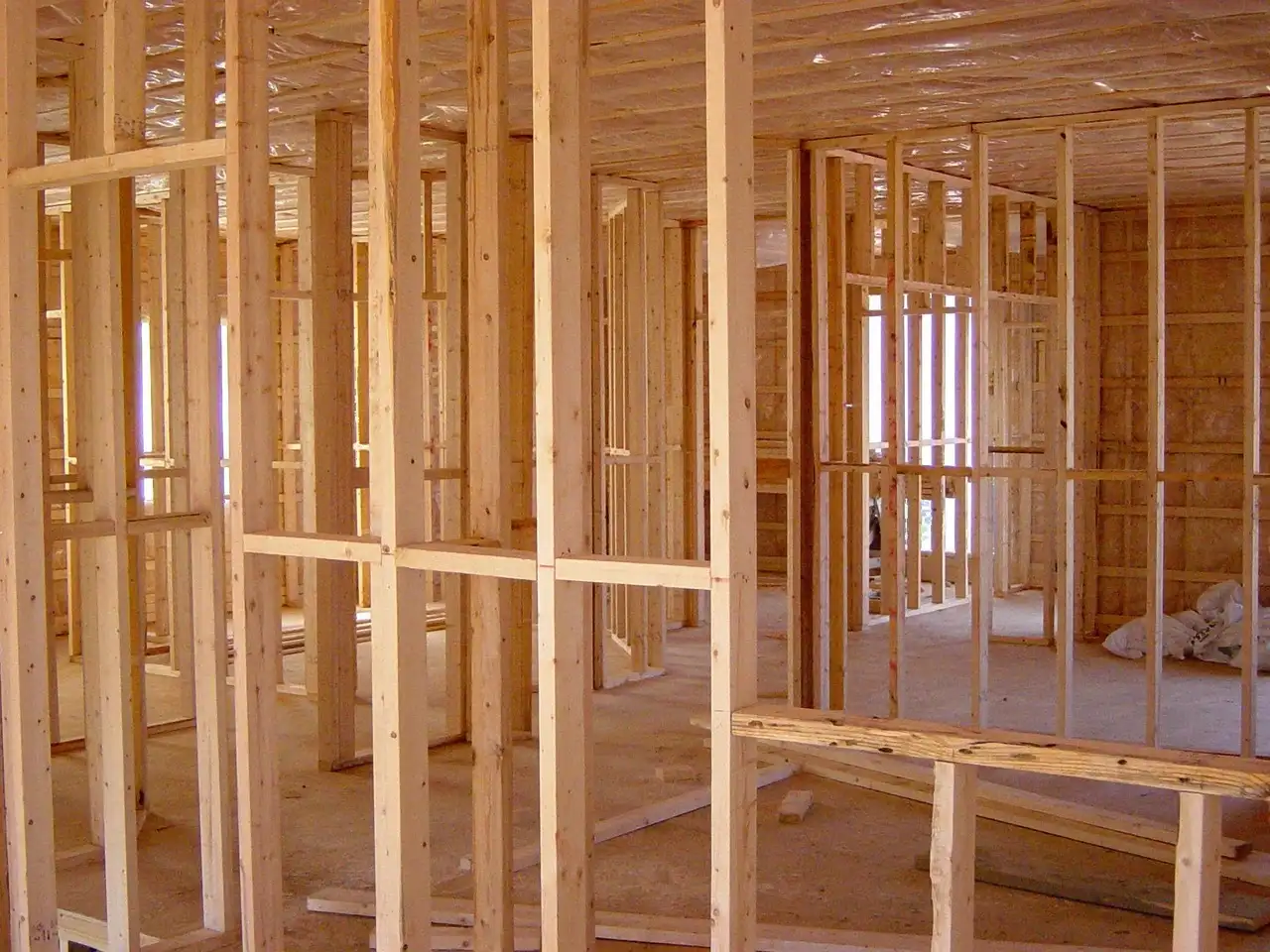
For cabinets, choose the cleanest sanded or cabinet-grade sheet you can find, with birch often the safest default. The best option is usually the one with the flattest sheet, the fewest edge voids, and a face that matches your finish plan. CDX is the wrong choice here.
PureBond birch plywood
PureBond birch plywood is the strongest match for visible cabinet parts and furniture panels when you want a cleaner face and a furniture-oriented adhesive position. Birch veneer usually finishes more predictably than rougher softwood veneers, especially when the design leaves broad flat fields in view.
The comparison page listed PureBond Birch at $85 per sheet and noted 450 pounds on shelves. That does not make it magic, but it does point to a stiffer, more furniture-friendly panel than cheap utility stock.
Sanded pine plywood
Sanded pine plywood, often sold in A/C or B/C style panels, can be a workable lower-cost choice for painted cabinet boxes, utility built-ins, and shop storage. Pine veneer is usually less formal than birch or oak, but the smoother face can still take paint well if the edge voids are minimal.
The comparison page listed AC Sanded Pine at $55 per sheet and showed 0.4 inch of warp. That level of warp is a warning sign for cabinet sides, shelf spans, and tight built-ins. A cheap price does not fix a crooked sheet.
Thickness and core choices for box parts and shelves
For cabinet sides and shelves, 3/4-inch is the common starting point because it gives better stiffness and screw holding than thin stock. Use 1/4-inch for backs and skins where structure demand is lower. If the sheet has a soft core or visible voids, even a heavy face veneer will not rescue weak shelf performance.
Which plywood should you buy for utility work?
For utility work, CDX plywood is often the practical pick. It is utility plywood for exterior sheathing, and its value comes from function, not appearance. If the panel will be hidden, loaded lightly, or covered later, CDX can be the right answer.
CDX plywood and Exposure 1 use
CDX means a C face and D back on utility stock that is commonly tied to Exposure 1 or exterior-oriented use. It belongs in sheathing, sublayers, and other hidden jobs where appearance does not matter. It does not belong in a drawer front or bookshelf side you plan to stain.
Sheathing vs interior panels
Sheathing needs structural utility, not pretty veneer. Interior panels need better faces, tighter cores, and more stable behavior in conditioned air. If the panel will stay behind drywall or siding, CDX can be enough. If the panel will stay in view, move to sanded or cabinet-grade stock.
A common first-timer mistake is buying sheathing because it is the cheapest 4×8-foot sheet on the rack, then trying to turn it into a painted hallway cabinet. The hidden cost shows up in filler, sanding, and edge repair before the first coat goes on.
Home Depot plywood buying mistakes to avoid
The biggest mistakes come from mixing up appearance and structure. A clean face does not guarantee a strong core, and a structural panel does not mean the surface will finish well. You need both the right grade and the right sheet condition for the job.
Mistaking appearance grade for structural grade
A smooth A face helps paint and stain prep, but it does not tell you much about screw holding or void content. Structural labels and exposure ratings matter when the panel must span, fasten, or resist moisture. Read the whole tag before you pay.
Even hidden seams matter because edges hold glue and screws. If the edge is crushed, hollow, or chipped out, your joint quality drops. That is true on a cabinet carcass, a shop cart, and a shelf support.
Buying by price without counting rejects and cleanup
Sheet price is only part of the cost. Add wasted cuts, edge filling, extra sanding, and the chance of replacing a bad sheet. A pricier panel with fewer defects can be the lower-cost option after labor.
Picture a shop cabinet built from a bargain sheet with hidden voids. The face may look fine at the store, but a screw lands in a void at the side panel, the joint loosens, and the repair costs more than the price gap between sheets.
Frequently asked questions
Is Home Depot plywood any good?
Yes, for the right job. Home Depot carries sheets that are suitable for cabinets, painted furniture, shop fixtures, and utility sheathing, but quality varies by brand, grade, and batch. Check face grade, edge quality, warp, and exposure rating before you buy.
Which Home Depot plywood is best for cabinets?
Cabinets usually do best with PureBond birch plywood or another clean sanded cabinet-grade panel. Look for a flat sheet, tight edges, and minimal face repairs. For painted cabinets, a smooth A or B face matters more than a decorative veneer species.
How do I tell if plywood at Home Depot is warped or void-free?
Sight down the sheet, check the corners, and look for lift at the diagonals. Then inspect the edge for open cavities and broken plies. A useful reject line is anything worse than about 0.25 inch of warp over 4 feet or any through-voids at the edge.
What does CDX mean on Home Depot plywood?
CDX points to a C face, a D back, and utility-grade sheathing use. It is built for construction and hidden structural jobs, often with Exposure 1 or exterior-oriented use. It is not the right choice for finished furniture or visible cabinet parts.
Is sanded plywood better than CDX for furniture?
Yes, for furniture, sanded plywood is usually the better starting point because the face is smoother and more finish-friendly. That does not mean every sanded sheet is furniture-grade. You still need to check for voids, warp, and edge damage before you buy.
How much does Home Depot plywood cost?
One common range is $25 to $80 per sheet, with specialty panels above or below that depending on grade and species. Compare cost per usable sheet, not sticker price alone. A cheaper panel can become expensive if you lose material to warping, voids, or extra edge filling.
Sponsored / affiliate links. As an Amazon Associate I earn from qualifying purchases. I may earn additional commission from eligible campaigns.
 Baltic Birch Plywood Sheets Box of 45 - Laser Engraving Cutting, Scroll Saw Nature Veneer Color, Stronger Than Basswood, A/A Grade,12 x 12 x 1/8”, 3mm Thickness Perfect for Wood Burning
 Baltic Birch Plywood 1/8'' x 12'' x 18'', 6 Pack, B/BB Grade, Void-Free Core, Laser Cutting Ready, Flat Sheets for CNC, Engraving, DIY Crafts, Art Painting, Wood Burning, Staining