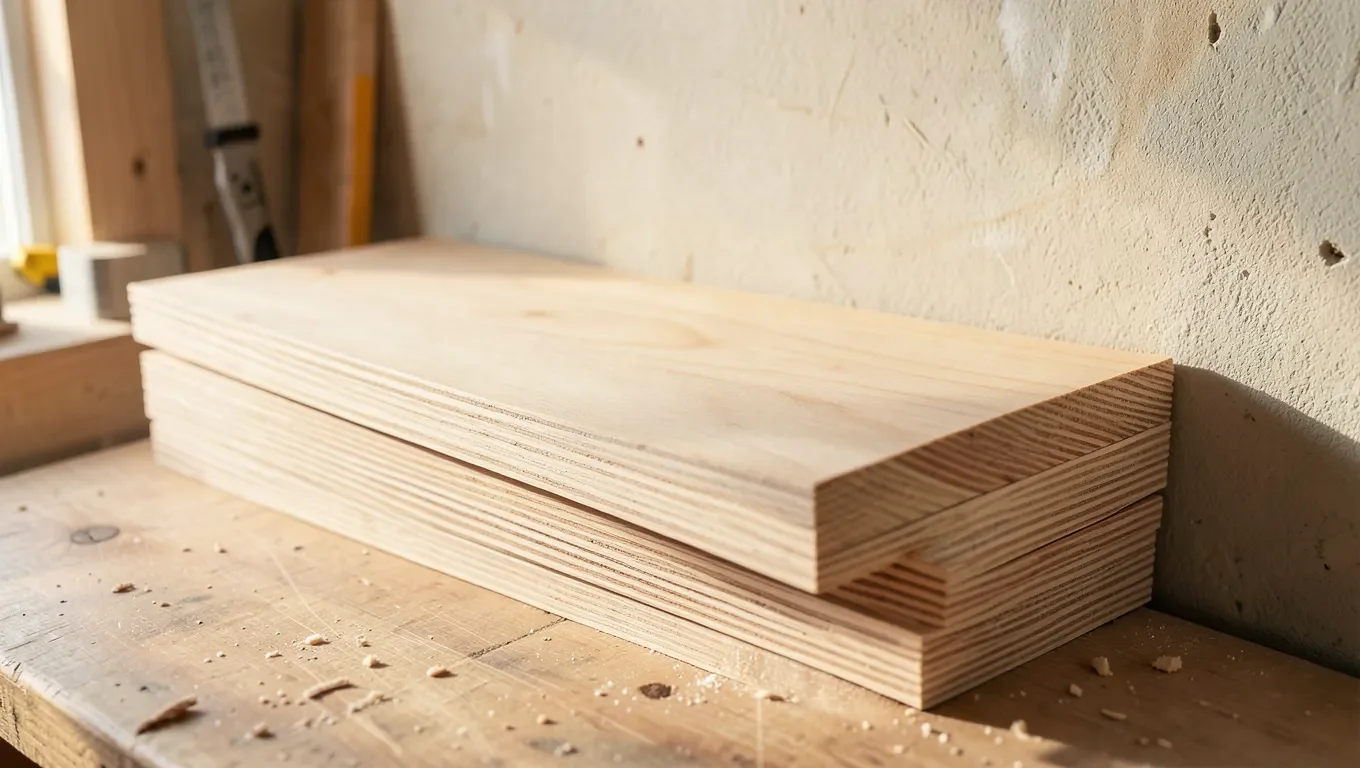
How Much Does a Sheet of Plywood Weigh? Weight Chart by Thickness
A standard 4×8 sheet of plywood weighs roughly 20 to 90 pounds, depending mostly on thickness: a thin 1/4 inch underlayment sheet runs about 19 to 30 pounds, while a full 3/4 inch sheet typically weighs 55 to 90 pounds. Wood species and core type push that range around too – a dense Baltic birch sheet weighs noticeably more than a softwood pine sheet of the same thickness.
That “it depends” answer matters more than it sounds. If you are loading sheets into a hatchback, calculating a floor’s dead load, or deciding whether one person can carry a sheet alone, a 30-pound spread between “thin softwood” and “thick hardwood” plywood is the difference between an easy afternoon and a hurt back. Below is the full breakdown by thickness and type, plus the one factor – moisture – that most weight charts leave out entirely.
Plywood Weight by Thickness: The 4×8 Sheet Chart
Thickness is the single biggest factor in plywood weight – more material means more weight, in a fairly linear relationship. Here is what a standard 4×8 foot sheet weighs at each common thickness, given as a range because the exact number still shifts with wood species:
Best Panel Carrier For Solo Plywood Hauling
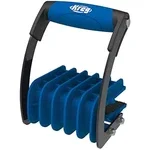 |
Kreg KMA3000 Panel Carrier – $24.00 Clamps to the top edge of a sheet up to 3/4 inch thick, letting one person carry a full 4×8 sheet by a real handle instead of pinching the edge.
|
| Thickness | Typical Weight (4×8 Sheet) |
|---|---|
| 1/4 inch | 19 – 30 lbs |
| 3/8 inch | 28 – 42 lbs |
| 1/2 inch | 37 – 60 lbs |
| 5/8 inch | 46 – 75 lbs |
| 3/4 inch | 55 – 90 lbs |
| 1 inch | 70 – 110 lbs |
The lower end of each range is almost always a softwood sheet (pine or fir), and the upper end is a dense hardwood or Baltic birch sheet. A 3/4 inch sheet is the one worth planning around: at 55 to 90 pounds it is heavy enough that carrying it solo, especially over any distance or up stairs, carries a real risk of the sheet flexing, twisting out of your grip, or straining your back – more on that below.
Weight by Plywood Type: Softwood, Hardwood, Baltic Birch, and Marine
Two sheets of the same thickness can weigh 20 or 30 pounds apart just because of what they are made from. The core veneers determine density, and density is what actually drives the weight difference – not the thickness alone:
| Plywood Type | 3/4″ Sheet Weight (approx.) | Why |
|---|---|---|
| Softwood (pine, fir, spruce) | 56 – 70 lbs | Lower-density core veneers, the lightest common option |
| Hardwood-veneer (oak, birch face) | 68 – 86 lbs | Denser face veneers over a standard core |
| Baltic birch | 80 – 90 lbs | All-birch cross-band construction with no voids, the densest common sheet good |
| Marine-grade | 75 – 90 lbs | Extra veneer plies and waterproof glue add mass |
Baltic birch is the one that surprises people. It looks similar to a standard hardwood sheet on a lumber rack, but because it is built from thin all-birch veneers with no core gaps or lower-grade filler plies, a 3/4 inch Baltic birch sheet can run close to a full 90 pounds – close to what a 1 inch sheet of construction-grade softwood plywood weighs. If you are pricing out a project by weight (for shipping, or for a wall-mounted application with a load limit), do not assume “3/4 inch” means the same weight across brands.
Why Plywood Weight Is Not Actually Fixed: Moisture Content
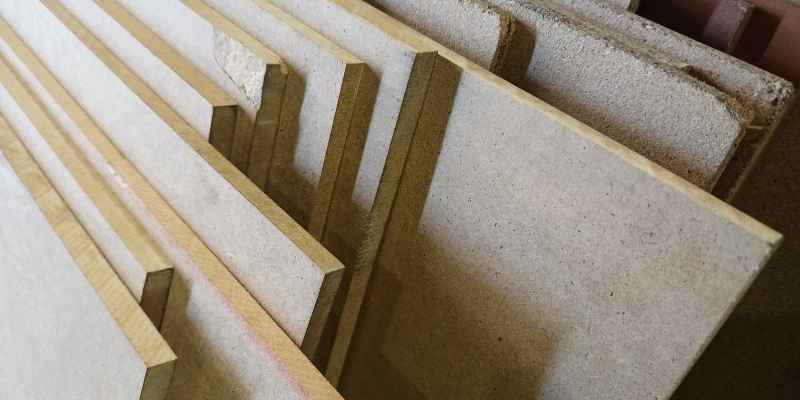
Every chart above gives a range, not a single number, and thickness/species differences are only part of why. Plywood is wood, and wood is hygroscopic – it absorbs and releases moisture from the surrounding air. A sheet stored in a humid garage or left outside under a tarp for a few weeks can weigh noticeably more than the same sheet fresh off a climate-controlled lumberyard rack, simply from moisture the wood fibers have soaked up. This is a detail most plywood weight guides skip, but it is a real, practical one: if you are trying to hit a precise weight for a shipping quote or a structural calculation, do not treat the manufacturer’s spec sheet weight as exact once that plywood has been sitting in your shop for a season.
The fix is straightforward – store plywood flat, off the ground, and under cover in a dry area, and it will stay close to its as-milled weight. Sheets stacked outdoors, even under a tarp, are the ones that gain the most moisture weight over time, along with a higher risk of warping.
How to Calculate the Exact Weight of a Sheet
If you need a number closer than a chart range – for a trailer load limit, for example – the formula is simple:
Weight = Length (ft) x Width (ft) x Thickness (ft) x Density (lbs/ft³)
Softwood plywood runs roughly 30 to 36 lbs per cubic foot, hardwood-veneer roughly 34 to 42 lbs per cubic foot, and dense Baltic birch roughly 40 to 45 lbs per cubic foot. Worked example: a standard 4×8 sheet of 3/4 inch softwood plywood (0.75 inch = 0.0625 ft) at 35 lbs/ft³ density:
| Step | Value |
|---|---|
| Area (4 ft x 8 ft) | 32 sq ft |
| Thickness | 0.0625 ft (3/4 inch) |
| Volume (area x thickness) | 2 cubic feet |
| Density (softwood) | 35 lbs/ft³ |
| Weight (volume x density) | 2 x 35 = 70 lbs |
Seventy pounds lands right in the middle of the 55-90 pound range from the chart above, which is the point – the formula is a way to narrow down where in that range your specific sheet falls, once you know (or estimate) its density. It will not replace an actual scale reading, since moisture content and manufacturing variance both still apply, but it gets you close enough to plan a lift or a load.
Carrying and Transporting Plywood Safely: The Two-Person Rule
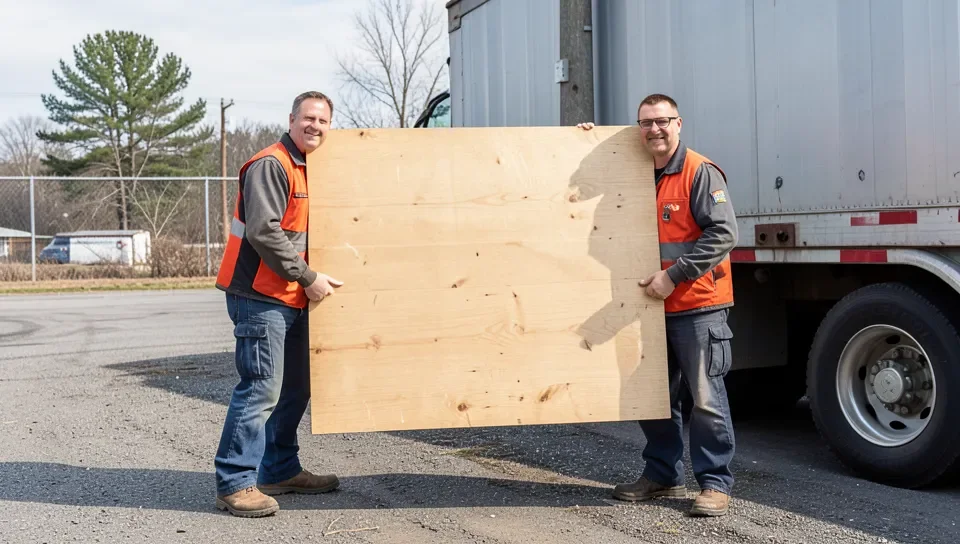
A full 4×8 sheet of 3/4 inch plywood is generally recommended as a two-person carry, and it is not just about the 55-90 pounds of raw weight. A 4-foot by 8-foot panel is large and floppy enough that it can flex, catch wind like a sail, or twist unexpectedly out of a single carrier’s grip – and an awkward one-person carry of a heavy, unwieldy sheet is a common way people strain a back or drop a sheet on a foot or a vehicle. Thinner sheets (1/4 to 1/2 inch) are light enough for one person, but even then, the sheet’s size makes it hard to see around and easy to catch on a doorframe.
If a second person genuinely is not available, a panel-carrying handle tool (like the one below) clamps onto the top edge of the sheet and lets one person carry a full sheet with a proper handle grip instead of pinching the edge with bare fingers – it will not solve the wind-catching problem on a windy day, but it removes most of the grip strain and the risk of the sheet slipping. For loading multiple sheets at once, or moving them any real distance around a shop, a panel cart or dolly is worth the cost over repeated manual carries.
A few practical habits reduce risk either way: lift with your legs rather than bending at the back, keep the sheet close to vertical rather than flat overhead in any wind, and plan your route past doorways and stairs before you pick the sheet up rather than while carrying it.
Frequently Asked Questions
How much does a 4×8 sheet of 3/4 inch plywood weigh?
A standard 4×8 sheet of 3/4 inch plywood weighs approximately 55 to 90 pounds. Softwood sheets (pine or fir) fall toward the lower end around 55-70 pounds, while hardwood-veneer and dense Baltic birch sheets run 68-90 pounds for the same thickness.
How many people does it take to carry a sheet of plywood?
A full 4×8 sheet of 3/4 inch plywood is generally recommended as a two-person carry. Beyond the 55-90 pounds of weight, the sheet’s size makes it prone to flexing or twisting out of a single carrier’s grip, which is a common cause of back strain or a dropped sheet. Thinner sheets under 1/2 inch are light enough for one person to manage alone.
Does plywood get heavier over time?
Yes. Plywood is hygroscopic, meaning it absorbs moisture from the surrounding air. A sheet stored in a humid space or exposed to weather can weigh more than its as-milled spec weight, simply from moisture absorbed into the wood fibers. Storing plywood flat, off the ground, and in a dry area keeps its weight close to the manufacturer’s original figure.
Is Baltic birch plywood heavier than regular plywood?
Yes, noticeably. Baltic birch is built from thin, all-birch veneers with no core voids or lower-grade filler plies, which makes it denser than standard softwood or hardwood-veneer plywood. A 3/4 inch Baltic birch sheet can weigh close to 90 pounds, roughly what a full inch of construction-grade softwood plywood weighs.
Is plywood heavier than OSB of the same thickness?
Generally, OSB (oriented strand board) is slightly heavier than softwood plywood of the same thickness, since its compressed wood-strand construction packs in more density than a layered veneer sheet. The difference is usually modest – a few pounds per sheet – rather than dramatic.
Sponsored / affiliate links. As an Amazon Associate I earn from qualifying purchases. I may earn additional commission from eligible campaigns.
 LISHINE 8 Pack 12 x 12 x 1/4 Inch Baltic Birch Plywood 6mm Wood Sheet, Baltic Birch Sheets for Cricut Maker, Architectural Models, Drawing Painting, Wood Burning Laser
 Baltic Birch Plywood Sheets Box of 45 - Laser Engraving Cutting, Scroll Saw Nature Veneer Color, Stronger Than Basswood, A/A Grade,12 x 12 x 1/8”, 3mm Thickness Perfect for Wood Burning