Plywood vs MDF Cost Comparison for Cabinets
For cabinets, plywood usually costs more per sheet, but it often costs less over time because it needs less edge treatment and holds screws better. Choose plywood for wet or heavily used cabinets, MDF for painted, dry cabinets with short spans. Cheap sheet goods can become expensive when sagging, chipped edges, or screw failure force repairs or replacement. This guide compares material, labor, finish, and long-term cabinet cost side by side.
| Decision factor | Plywood | MDF Cost Comparison For Cabinets | Winner |
|---|---|---|---|
| Sheet cost | Usually higher for cabinet-grade 3/4-inch and 1/2-inch sheets | Usually lower for cabinet-grade 3/4-inch and 1/2-inch sheets | MDF Cost Comparison For Cabinets |
| Finishing and edge work | Less edge sealing for paint-grade boxes, but veneer edges still need care | More edge sealing, more filler, and more attention to exposed edges | Plywood |
| Hardware and screw risk | Better fastener holding at cabinet edges and hinge areas | Higher risk of stripped edge screws and over-tightened hardware | Plywood |
| Moisture-failure replacement risk | Better for wet zones, though not waterproof | More vulnerable to swelling and edge breakdown if water reaches it | Plywood |
Beyond the sheet: real cabinet material costs
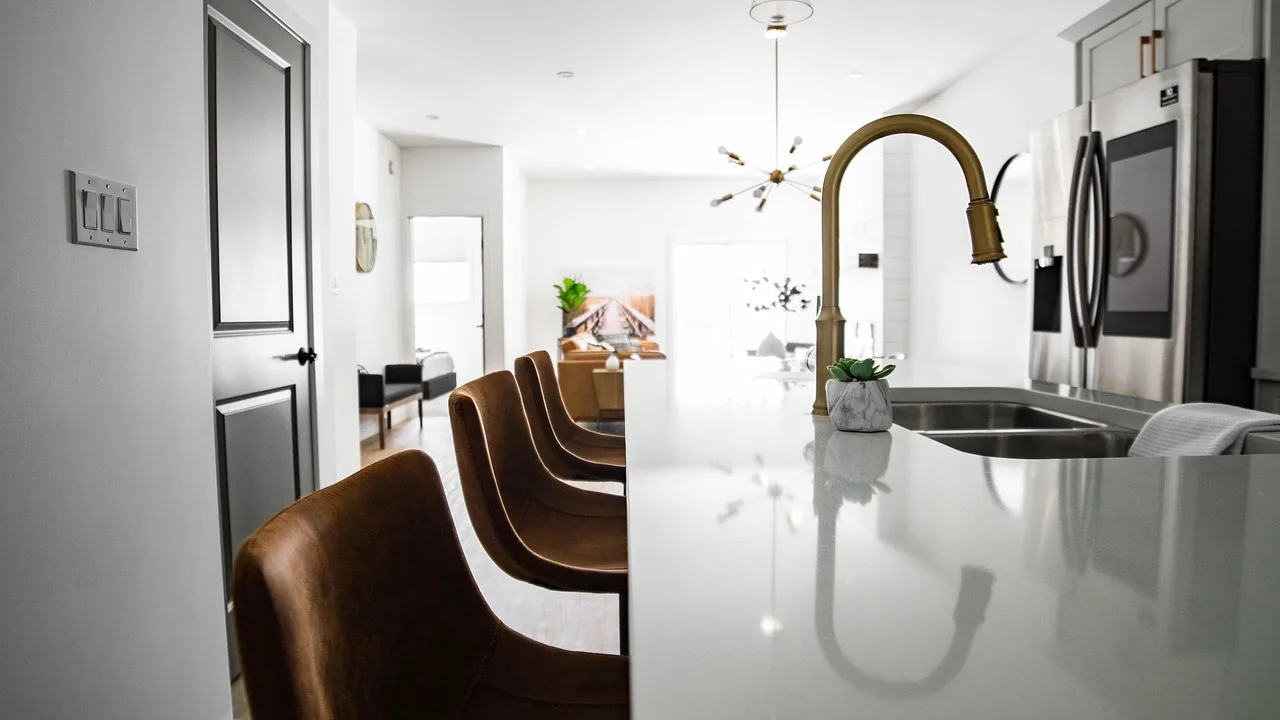
The real choice is not sheet price alone. MDF is generally cheaper than plywood, but plywood is the stronger cabinet material and holds fasteners better, while MDF gives you a smoother, grain-free surface for paint. For cabinets, the bill changes once you add edge treatment, drilling accuracy, and the chance of replacement in wet areas.
Cabinet boxes need stiffness, screw retention, and decent moisture tolerance. Cabinet doors need flatness and a surface that finishes cleanly. That means the cheapest sheet can become the more expensive cabinet if it adds labor or fails early.
What each sheet material is made
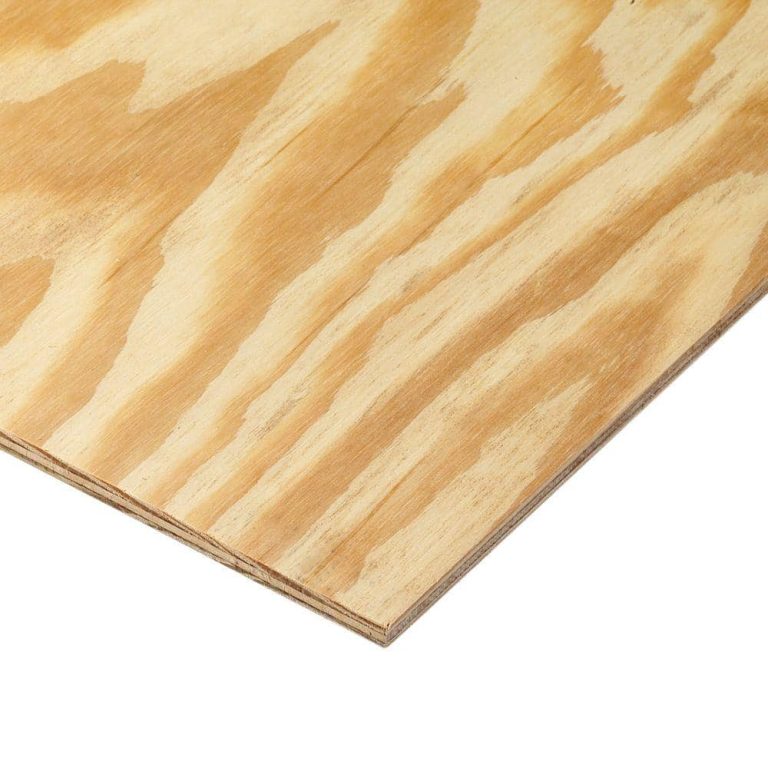
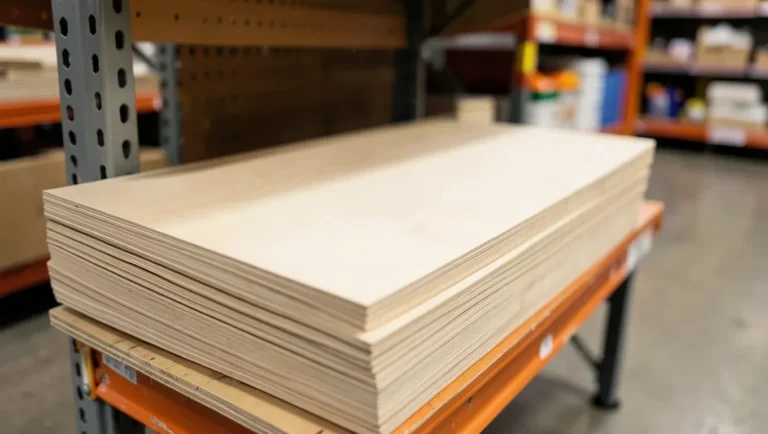
MDF is a smooth, grain-free panel made from wood fibers and resin. Plywood is built from thin wood veneers with cross-lamination. That construction is why plywood gives better edge strength and screw holding, while MDF is denser and more uniform at the surface.
MDF most often works for cabinet doors, trim, and shelving. Plywood is often used for underlayment, furniture, and flooring, and it is a common choice for cabinet boxes and shelves when strength matters more than a perfectly smooth paint surface.
Why sheet price is only one part of cabinet cost
A lower sheet price helps only if the rest of the cabinet stays cheap. With MDF, you usually spend more on sealing edges, careful pilot holes, and hardware installation because edge fasteners do not forgive mistakes. With plywood, you usually spend less on those labor-sensitive steps.
That is where the total installed cost shifts. A panel that costs less at the lumber yard can cost more by the time you add edge treatment, labor, and the risk of a repair call later.
Like-for-like grades to compare
For a fair comparison, compare matching thicknesses and similar grades: 1/2-inch MDF against 1/2-inch cabinet-grade plywood, and 3/4-inch MDF against 3/4-inch cabinet-grade plywood. Do not compare a low-grade sheet to a cabinet-grade sheet and call it a material verdict.
Cabinet-grade plywood varies by face veneer and core quality, and it may be prefinished or veneered. Moisture-resistant MDF exists, but it is not waterproof, and it still needs sealed edges.
Cabinet cost matrix
This matrix separates the price of the sheet from the cost of making a usable cabinet. The totals are practical line items, not store prices. They show where a cheaper panel can turn into a more expensive cabinet after labor and failure risk are included.
| Cost line | Plywood | MDF Cost Comparison For Cabinets |
|---|---|---|
| Sheet cost | Usually higher for cabinet-grade 1/2-inch and 3/4-inch panels | Usually lower for cabinet-grade 1/2-inch and 3/4-inch panels |
| Edge-banding / finishing cost | Lower for paint-grade boxes; moderate if exposed veneer edges need cleanup | Higher because exposed edges need sealing, filling, and more careful paint prep |
| Hardware risk cost | Lower risk of stripped hinge screws, slide bracket blowout, and edge damage | Higher risk if pilot holes are skipped or screws are over-tightened at edges |
| Moisture-failure replacement cost | Lower replacement risk in kitchens, laundry rooms, and sink bases | Higher replacement risk if water reaches raw edges or swollen panels |
Suppose a sink base has a small supply leak under a 36-inch sink cabinet. A plywood box may still need repairs, but it is less likely to swell at the edge and lose its hardware fit immediately. An MDF box in the same spot can turn into a full replacement if the leak reaches the raw edge or bottom panel.
Is MDF cheaper than plywood for cabinets?
Yes. MDF costs less than plywood in the usual cabinet-grade comparison, especially at 1/2-inch and 3/4-inch thicknesses. The savings are real at the sheet stage, but they narrow when you add more edge sealing, more careful fastening, and a higher moisture-failure risk.
That is why MDF can look cheaper on a quote and still lose on installed cost. If the cabinet is painted, dry, and simple, MDF can save money. If the box sees more stress or water, plywood often catches up.
Where MDF saves money upfront
MDF saves money when the cabinet needs a painted, smooth face and minimal milling. It cuts cleanly, the surface is uniform, and you do not spend time fighting grain telegraphing through paint. That matters on flat doors, end panels, and some interior parts.
It can also reduce material waste on simple parts because the panel is consistent from edge to edge. The savings are strongest on parts that are fully sealed and not loaded with hardware at the edges.
Where plywood narrows the gap
Plywood narrows the gap when you count finishing and failure risk. It usually needs less edge rescue, and its better fastener holding reduces the chance of stripped hinges or loose slide brackets. In a full kitchen, that can offset part of the sheet-price difference.
Picture a 10-foot run of base cabinets with several drawer stacks. If screw holes hold more reliably and the cabinet edges stay stable, you avoid extra labor and reduce the chance of a repair visit later.
Which material is better for cabinet boxes?
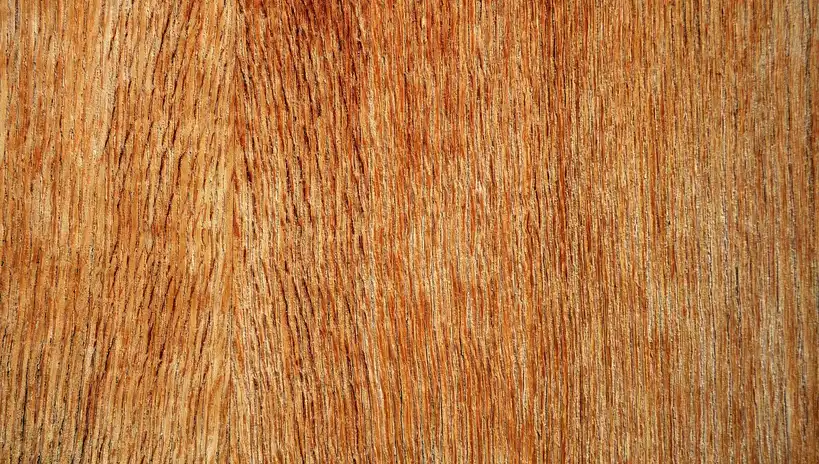
Plywood is usually the better choice for cabinet boxes because it is stronger, lighter, and holds fasteners better than MDF. Cabinet boxes need stiffness for drawers, hinges, shelves, and countertop loads, so the box material should resist edge damage and support hardware without crushing.
MDF can work in dry, low-stress boxes, but it is better treated as a paint-friendly panel than a structural favorite. For most kitchen and utility cabinet carcasses, plywood is the safer box material.
Strength and screw holding
Plywood holds fasteners better than MDF. That matters at hinge plates, drawer-slide brackets, shelf pins, and any area where repeated tightening may occur. MDF’s edge material can crumble or compress if the hole is over-driven.
That does not mean MDF cannot be used with proper pilot holes and careful torque. It means the margin for error is smaller, especially at corners and edges.
Weight and handling
MDF weighs more than plywood. That affects handling during installation, especially with large panels, tall pantry towers, and overhead uppers. More weight also makes temporary positioning more awkward during layout and fastening.
Because plywood is lighter, it is often easier to align and support while you fasten the box to the wall or level the cabinet run.
Flatness and sag resistance
MDF is not as hard and can sag under heavy weight. For shelves, long unsupported spans, and loaded bases, that becomes a real cabinet concern. Plywood is better for stiffness in box parts and shelves when the cabinet has to carry weight over time.
Cabinet-grade plywood still needs proper span control. But for structural parts, it gives you more tolerance than MDF.
How do MDF and plywood compare in wet areas?
Plywood is the better cabinet choice in wet areas because it tolerates moisture better than MDF. Neither material is waterproof, but plywood is better for sink bases and laundry cabinets, while MDF is more likely to swell if water reaches an edge or seam.
Moisture-resistant MDF exists, but it is not waterproof. Marine-grade plywood uses waterproof glue, yet it still needs sealed edges, so it is not a pass to ignore finish work.
Sink base cabinets
Can MDF be used for sink base cabinets? It can be used only with caution, but it is not the safe default. The sink base is the highest-risk moisture zone in a kitchen, and small leaks often start at edges, cutouts, and the bottom panel.
Plywood is the safer choice there because it is better for wet zones like sink bases and laundry. If you want longer cabinet life and fewer replacement surprises, use plywood under sinks.
Laundry cabinets
Laundry cabinets face humidity, hose connections, and occasional spills. Plywood handles that environment better than MDF, especially for lower boxes and utility shelves. MDF may still work for painted doors or upper trim away from splash zones.
Moisture-resistant MDF can help in a damp room, but it does not cancel sealing work. The edges still need protection, and the cabinet still needs good ventilation and careful installation.
Painted doors and face panels: MDF or plywood?
MDF is usually the better choice for painted doors and face panels because it gives you a smooth, grain-free surface. Plywood can be painted well too, but the face veneer, edge treatment, and grain pattern usually require more prep to reach the same flat painted look.
For stain-grade fronts, plywood or wood veneer is usually the better route because the natural veneer is part of the look. For paint-grade fronts, MDF keeps the surface simpler.
Why MDF paints well
MDF accepts paint cleanly because it has no grain to telegraph through the finish. That makes it useful for flat panel doors, end panels, and other visible parts where a smooth painted surface matters more than moisture tolerance.
The trade-off is edge care. If you leave raw edges exposed, they can soak up finish and need extra sealing before topcoating.
When plywood is better for fronts
Plywood is better when you want a stain-grade front, a wood veneer look, or a door that will see more abuse around the edges. Its structure is stronger, and it is less likely to fail at screw points and hinge areas than MDF.
A common first-timer mistake is choosing MDF for a painted kitchen door and then skimping on edge sealing. The door may look smooth at first, but the exposed edge can swell or fuzz once moisture and cleaning splash reach it.
Choose Plywood if… / Choose MDF Cost Comparison for Cabinets if…

Choose plywood if you want the safest cabinet box material, especially for bases, sink cabinets, laundry rooms, pantry towers, and any run with heavy hardware or longer spans. Choose MDF Cost Comparison For Cabinets if the part is paint-grade, dry, and mostly about a smooth surface rather than structural duty.
- Choose Plywood if the cabinet is a base box, sink base, laundry cabinet, or pantry tower.
- Choose Plywood if you need better screw holding for hinges, slides, and shelf supports.
- Choose MDF Cost Comparison For Cabinets if the part is a painted door, flat panel, or trim piece in a dry room.
- Choose MDF Cost Comparison For Cabinets if surface smoothness matters more than moisture tolerance or edge toughness.
For most kitchen buyers, the best total-cost mix is plywood for cabinet boxes and MDF for painted doors or panels. That hybrid approach keeps structural parts stronger and puts the smoother panel where it does the most visual work.


Frequently asked questions
Which is cheaper, MDF or plywood?
MDF is usually cheaper than plywood for cabinet work. The gap matters most on sheet price, but it can shrink after you add edge sealing, careful drilling, and a higher risk of replacement in wet or high-wear areas. For simple painted parts, MDF often stays the lower-cost option.
What is the difference between MDF and plywood?
MDF is a smooth, grain-free panel made from wood fibers and resin, while plywood is built from thin wood veneers with cross-lamination. That construction makes plywood stronger, lighter, and better at holding fasteners, while MDF gives you a smoother surface for paint.
Which material holds screws better, MDF or plywood?
Plywood holds fasteners better than MDF. That matters for hinges, drawer-slide brackets, shelf pins, and any edge-mounted screw that may need adjustment later. MDF can work, but it is more sensitive to pilot-hole sizing and over-tightening at the edge.
Can MDF be used for sink base cabinets?
MDF can be used, but it is not the best choice for sink base cabinets. The sink base is the highest-risk moisture zone, and MDF does not handle moisture very well. Plywood is the safer cabinet box material under a sink, even though neither material is waterproof.
Can plywood be painted as well as MDF?
Plywood can be painted well, but MDF usually gives a smoother painted finish with less grain showing through. If you paint plywood, edge filling and surface prep matter more. For a visible front, MDF is still the easier path to a flat painted result.
How does plywood vs MDF weight affect cabinets?
MDF weighs more than plywood, so it is harder to handle during installation and adjustment. That extra weight matters on large panels, tall pantry cabinets, and overhead pieces. Lighter plywood is usually easier to align, lift, and fasten without stressing the installer or the cabinet support.
Sponsored / affiliate links. As an Amazon Associate I earn from qualifying purchases. I may earn additional commission from eligible campaigns.
 Baltic Birch Plywood Sheets Box of 45 - Laser Engraving Cutting, Scroll Saw Nature Veneer Color, Stronger Than Basswood, A/A Grade,12 x 12 x 1/8”, 3mm Thickness Perfect for Wood Burning
 Double Side Plywood Sheets 4mm or 5mm for Painting Stenciling Wood Burning and Decoration 150x220mm 220x300mm 300x450mm Art Project Wood