Marine Grade Plywood vs Pressure Treated Wood (2026 Comparison)
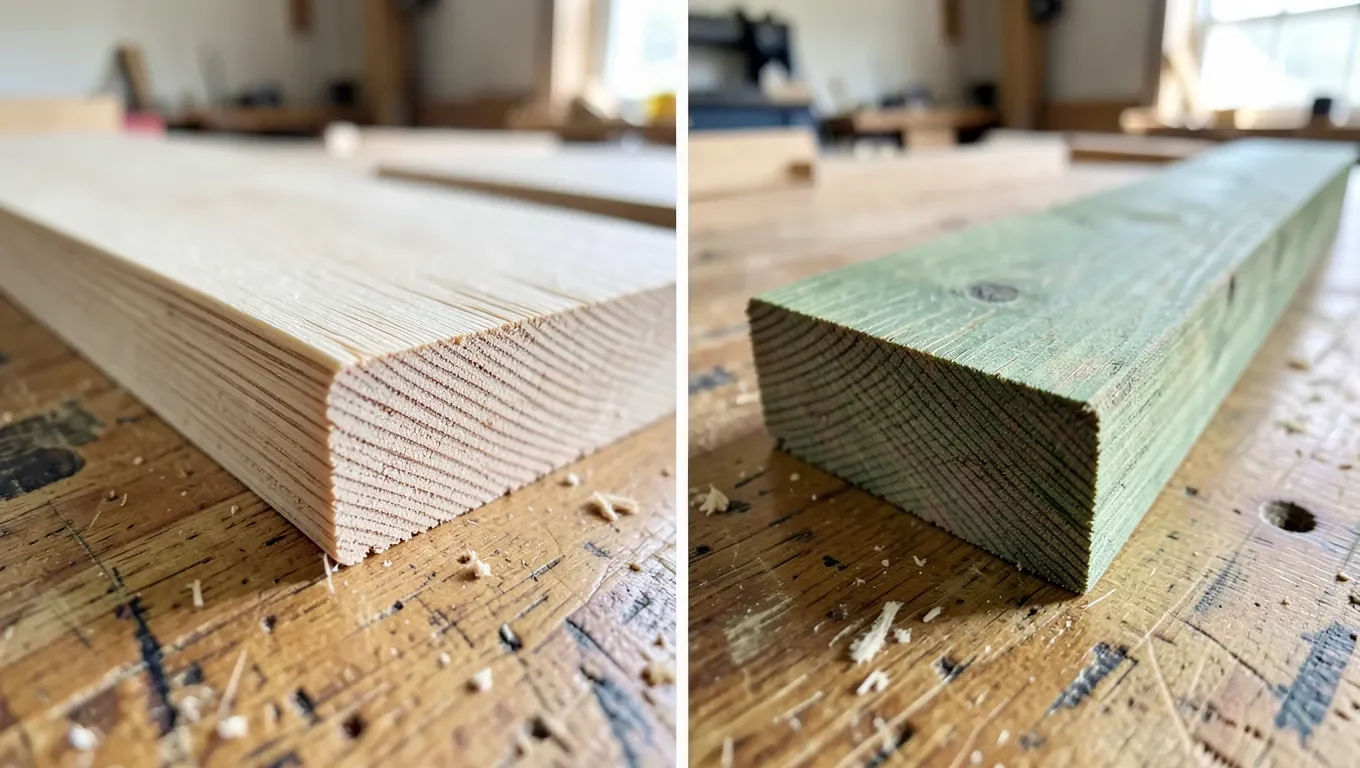
Marine grade plywood and pressure-treated lumber solve the same problem – wood that fails outdoors – with two completely different methods. Marine grade plywood is built to BS 1088, the international marine plywood standard: void-free veneers bonded with waterproof phenolic (WBP) glue. Pressure-treated lumber is ordinary softwood forced full of preservative chemicals under an AWPA Use Category rating like UC4A or UC4B. This guide compares Marine Grade Plywood and Pressure Treated lumber on water resistance, rot resistance, cost, and the specific projects each one actually belongs on.
Short answer: if the wood will sit in or under water – a dock deck, a boat hull, a bilge panel – marine grade plywood is the safer material because its glue line doesn’t fail. If the wood just needs to survive rain, ground contact, and insects – a fence, a deck frame, a garden bed – correctly rated pressure-treated lumber does the job for a fraction of the cost.
Understanding Marine Grade Plywood
Best Marine-Grade Wood Sealer
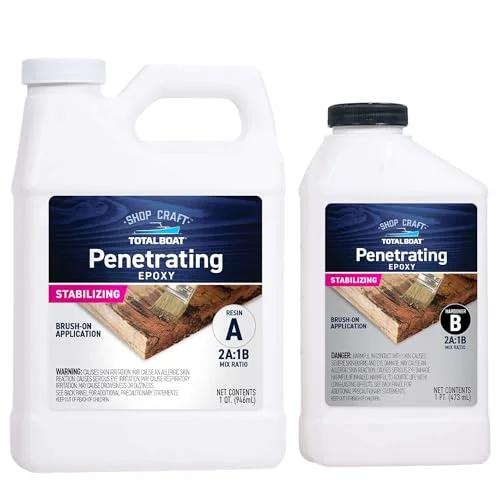 |
TotalBoat Clear Penetrating Epoxy Wood Sealer – $59.99 Whichever material you pick, sealing cut edges and exposed end grain with a marine-grade epoxy like this closes the one weak point neither pressure treatment nor marine glue covers on its own.
|
Marine grade plywood isn’t a marketing term – in the US and UK it typically means construction that meets BS 1088 (or the equivalent ISO 12122 rating), a spec that leaves no room for shortcuts. Every veneer has to be free of core gaps and large knots, and the panel has to be bonded with a waterproof adhesive that passes a boil test. That’s what separates it from a sheet of ordinary exterior plywood with a similar-looking face.
What Makes It “Marine Grade”
The glue is the real difference. Marine grade plywood uses a phenolic resin adhesive (often called WBP – water and boil proof) that doesn’t soften, dissolve, or creep when it’s constantly wet. Regular exterior plywood glue can eventually let go under years of standing water; phenolic resin generally forms a bond stronger than the wood fibers around it, so the panel fails at the wood before it fails at the glue line.
The wood itself matters too. Douglas fir is common in North America; okoume, sapele, and meranti are common on BS 1088-stamped imported panels. Every veneer is graded and any panel with internal voids – the hidden air gaps that let water travel through a cheap panel – gets rejected before it’s sold as marine grade.
Construction and Cross-Graining
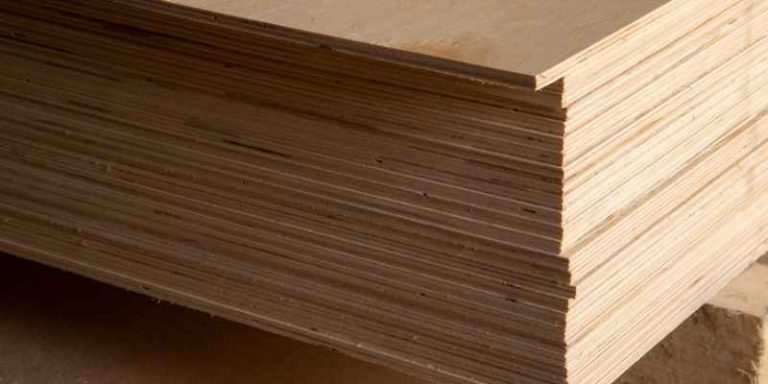
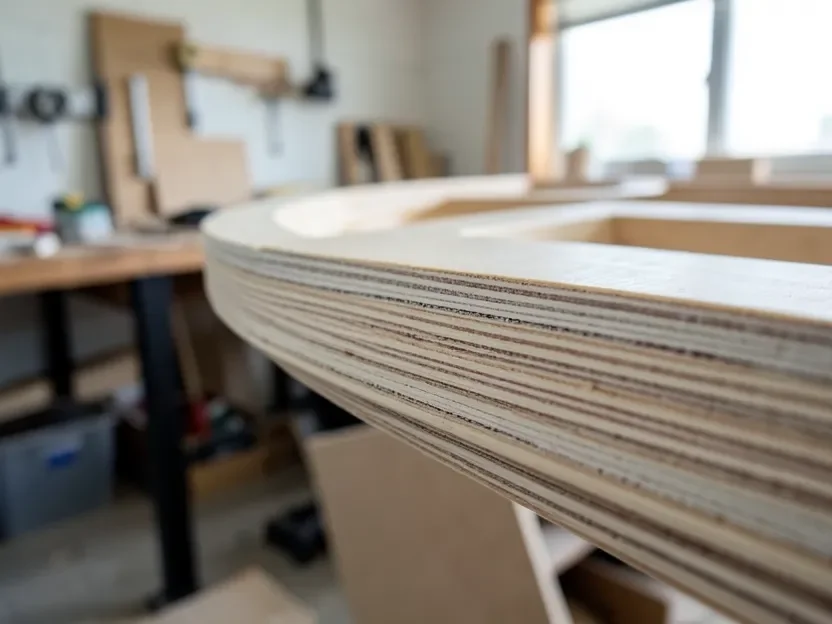
Marine plywood is built from more, thinner veneers than standard construction plywood – often 7 to 13 plies in a 3/4-inch sheet versus 5 in a comparable big-box panel – with each layer’s grain running perpendicular to the one below it. That cross-graining is what keeps the sheet flat and resists warping as humidity swings, and the extra glue lines add real resistance to splitting and impact damage.
Key Benefits
- Water resistance: the void-free construction and phenolic glue mean there’s no hidden gap for water to travel through or pool in.
- No delamination: the layers don’t separate the way cheap exterior plywood can once its glue line gets old and wet.
- Dimensional stability: cross-graining keeps sheets flatter through wet/dry cycles than most other panel products.
Expect to pay roughly $90–$180 for a 3/4-inch, 4×8 sheet depending on face species and grade – several times what a comparable sheet of treated plywood or OSB costs. That premium buys a panel engineered specifically for constant water exposure, not just rain and humidity.
Common Applications
Marine grade plywood shows up in boat hulls, decks, bulkheads, and cabins – anywhere the panel is submerged or constantly wet. See what it actually costs to build a wooden boat for a full materials and labor breakdown by size.
Outside of boats, it’s a good fit for outdoor furniture, playground equipment, exterior wall sheathing in very wet climates, and consistently humid indoor spaces like bathrooms, wet rooms, and saunas, where standard plywood would eventually swell or delaminate.
Pressure-Treated Lumber: AWPA Ratings, Chemicals & Cost
Pressure-treated lumber is standard softwood – usually southern yellow pine – forced full of preservative chemicals in a sealed cylinder. A vacuum pulls air out of the wood cells, then preservative solution is pumped in under high pressure so it penetrates deep into the fibers rather than just sitting on the surface. A final vacuum step pulls out the excess and cleans the surface, leaving wood that’s protected from the inside out.
The AWPA Use Category That Actually Matters
Not all “pressure-treated” lumber is rated for the same job – that’s set by the American Wood Protection Association’s Use Category system, and it’s the number to check before you buy:
- UC3A/UC3B – above-ground use only (fence pickets, deck boards not touching soil)
- UC4A – general ground contact (fence posts, deck framing)
- UC4B/UC4C – heavy-duty and critical ground contact (permanent foundations, structural posts)
- UC5A/B/C – marine use, including saltwater and marine-borer exposure
A board rated UC3B for a fence picket and a board rated UC4B for a buried post can look identical off the shelf – only the tag tells you the actual preservative retention level, and using an above-ground board in ground contact is one of the most common reasons a “treated” project rots early.
Preservative Chemicals
Older pressure-treated lumber used chromated copper arsenate (CCA), which was phased out of residential use over health concerns. Today’s residential lumber is almost always treated with alkaline copper quaternary (ACQ) or copper azole (CA-B/CA-C, sometimes labeled MCA for the micronized version). Both are copper-based fungicides that fix into the wood fibers rather than leaching out, so the protection doesn’t wash away over the lumber’s life.
Benefits and Cost
The main advantage is straightforward: rot and insect resistance that extends lifespan well beyond untreated wood, at a fraction of marine grade plywood’s price. A standard ground-contact-rated 2×6×8 typically runs $12–$20, and most treated lumber carries a manufacturer warranty against rot and insect damage of 25 years or more when installed at the correct Use Category.
What it doesn’t do well is handle constant submersion – the wood fibers themselves are protected from decay, but standard treated lumber isn’t engineered as a continuously wet-water panel product the way marine plywood is.
Common Applications
Pressure treated lumber is used for decks, fences, pergolas, and garden beds, plus outdoor stairs, retaining walls, and structural framing for sheds and other outdoor structures. Because it’s strong, widely available, and inexpensive relative to marine plywood, it’s the default choice for most residential outdoor building.
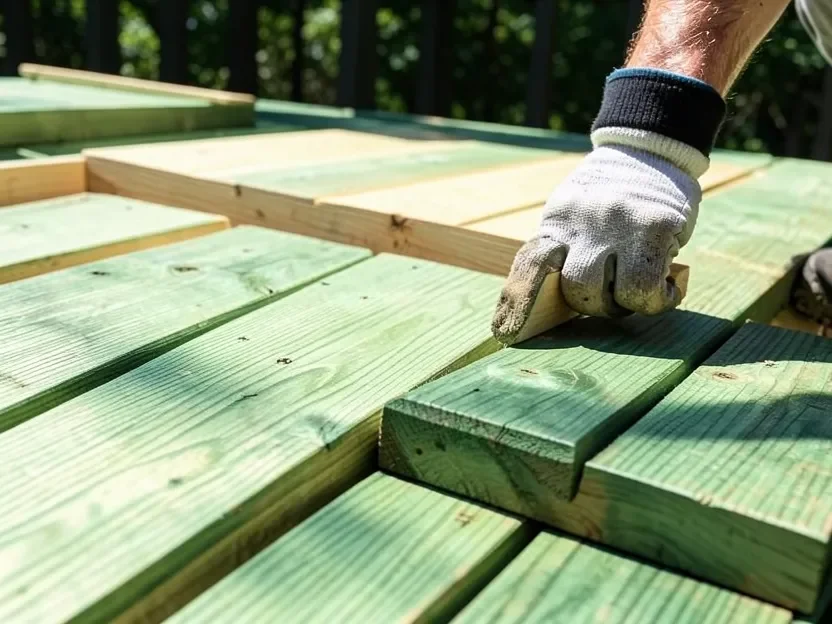
Marine Grade Plywood vs Pressure Treated: Side-by-Side Comparison
When you compare Marine Grade Plywood and Pressure Treated lumber, you’re comparing two different protection strategies – a waterproof glue line versus preservative chemistry – not two grades of the same product. Here’s how they actually measure up.
Water Resistance and Durability
Marine grade plywood is engineered for constant water exposure – its waterproof phenolic glue prevents delamination even under permanent submersion, which is why it’s the default for boat hulls. Pressure-treated lumber resists rot and insects extremely well outdoors, but standard treated stock is not rated for continuous submersion; the wood fiber is protected, but it isn’t built as a permanently-wet panel product.
Strength and Stability
Marine grade plywood’s cross-grained veneers resist warping and dimensional change through humidity swings better than dimensional lumber does. Pressure-treated lumber is plenty strong for structural framing and holds fasteners well, but it can still twist, cup, or check as it dries after installation, especially if it’s put up before it’s had time to season.
Cost
Marine grade plywood runs roughly 3–6x more per sheet than treated plywood or OSB. Pressure-treated dimensional lumber is the budget option for nearly any outdoor build where the wood won’t be permanently underwater.
| Feature | Marine Grade Plywood | Pressure-Treated Lumber |
|---|---|---|
| Water Resistance | Excellent – rated for constant submersion, void-free phenolic-glued panel | Good against rain/humidity; not rated for permanent submersion |
| Rot Resistance | High – dense marine species, no voids for decay to start in | High when correctly rated (UC4A–UC5C); depends on preservative retention |
| Cost (typical) | $90–$180 per 3/4″ 4×8 sheet | $12–$20 for a treated 2×6×8; $25–$45 for treated plywood |
| Chemical Treatment | None – protection comes from WBP/phenolic glue, not chemicals | ACQ or copper azole (CA-B/CA-C) preservative, pressure-forced into fibers |
| Best Use Case | Boat hulls, docks, bilge panels, anything constantly wet or submerged | Decks, fences, posts, garden beds – ground contact, not submersion |
Scenario: Building a Floating Dock
A floating dock sits in constant contact with water and may be submerged at high tide, so the material choice isn’t close.
- Decking and structural panels: marine grade plywood is the right call – its waterproof glue and void-free construction won’t delaminate or rot under constant water exposure.
- Framing that isn’t constantly submerged: UC5-rated pressure-treated lumber is a reasonable, cheaper option for supports that see splash but not permanent immersion.
- Fasteners: use marine-grade stainless steel (316) regardless of which wood you choose – ordinary hardware will rust and stain the deck long before the wood fails.
Scenario: Building a Raised Garden Bed
A raised bed holds damp soil and sits in ground contact, but it’s never actually submerged – a very different exposure profile.
- Material choice: UC4A/UC4B-rated pressure-treated lumber is the practical pick – it’s rated for ground contact and resists rot and insects from damp soil.
- Durability: the preservative in the wood fiber handles years of soil moisture without the wood needing to be waterproof the way a dock panel does.
- Cost: at a fraction of marine plywood’s price per square foot, treated lumber makes far more sense for a bed you might need several sheets’ worth of material to build.
Maintenance and Longevity
Both materials hold up well long-term, but they age differently and need different upkeep to get there.
Caring for Marine Grade Plywood
The panel itself doesn’t need protection from rot, but any face exposed to UV benefits from a marine-grade varnish, sealant, or exterior paint to keep the wood surface from graying and checking. Clean with mild soap and water, inspect fastener points periodically, and make sure the installation allows drainage – standing water on top of even a marine panel is worth avoiding.
Maintaining Pressure-Treated Lumber
Let new pressure-treated lumber dry for several weeks before staining or sealing – it’s often visibly wet at the lumberyard, and finish applied too early won’t bond well. A stain or sealer adds UV and moisture protection and improves appearance, but the wood’s core rot resistance comes from the preservative already in the fibers, not from the surface finish.
Realistic Lifespan
Marine grade plywood in a marine environment can last decades because its failure mode – glue-line breakdown – simply doesn’t happen with phenolic resin. Correctly rated pressure-treated lumber in ground contact commonly carries 25+ year manufacturer warranties against rot and insects, and performs close to that in practice when the Use Category matches the actual exposure.
Frequently Asked Questions
Is Marine Grade Plywood Better Than Pressure Treated for a Deck?
For a deck surface that sits in standing water or constant splash, marine grade plywood resists delamination better because its phenolic glue line won’t break down. For a standard deck that just gets rain and humidity, pressure-treated lumber rated for ground contact is the more practical and far cheaper choice.
Can I Use Marine Grade Plywood for a Fence?
You can, but it isn’t the practical choice. Pressure-treated lumber rated for ground contact costs a fraction as much and is already designed for fence posts and pickets. Marine grade plywood is better saved for decorative panels in very wet, high-visibility spots.
Does Pressure-Treated Wood Last Longer Than Marine Grade Plywood?
It depends on exposure. In constant water contact, marine grade plywood’s void-free, phenolic-glued construction outlasts standard pressure-treated plywood, which isn’t rated for submersion. In ground contact and general outdoor use, correctly rated pressure-treated lumber (UC4B or higher) performs just as well for decades.
What Is the Main Difference in Protection?
Marine grade plywood protects itself with waterproof phenolic glue and a void-free veneer stack, so there’s no weak seam for water to enter. Pressure-treated lumber protects itself with preservative chemicals, like copper azole or ACQ, forced deep into the wood fibers to stop rot and insects.
Which Is Better for Boat Building?
Marine grade plywood. It’s the industry standard for hulls, decks, and bulkheads because BS 1088 construction guarantees no internal voids and a glue line that holds up under constant water exposure – something standard pressure-treated plywood was never engineered for.
Summary
Choose marine grade plywood when the wood will be constantly wet or submerged – boat hulls, dock decking, bilge panels – because its phenolic glue line is engineered specifically for that exposure. Choose pressure-treated lumber, matched to the correct AWPA Use Category, for everything else: decks, fences, posts, and garden beds that need rot and insect resistance at a fraction of the cost.
Both materials are durable when used for the job they’re rated for – the mistake isn’t picking the “worse” material, it’s using either one outside its actual exposure rating.
Sponsored / affiliate links. As an Amazon Associate I earn from qualifying purchases. I may earn additional commission from eligible campaigns.