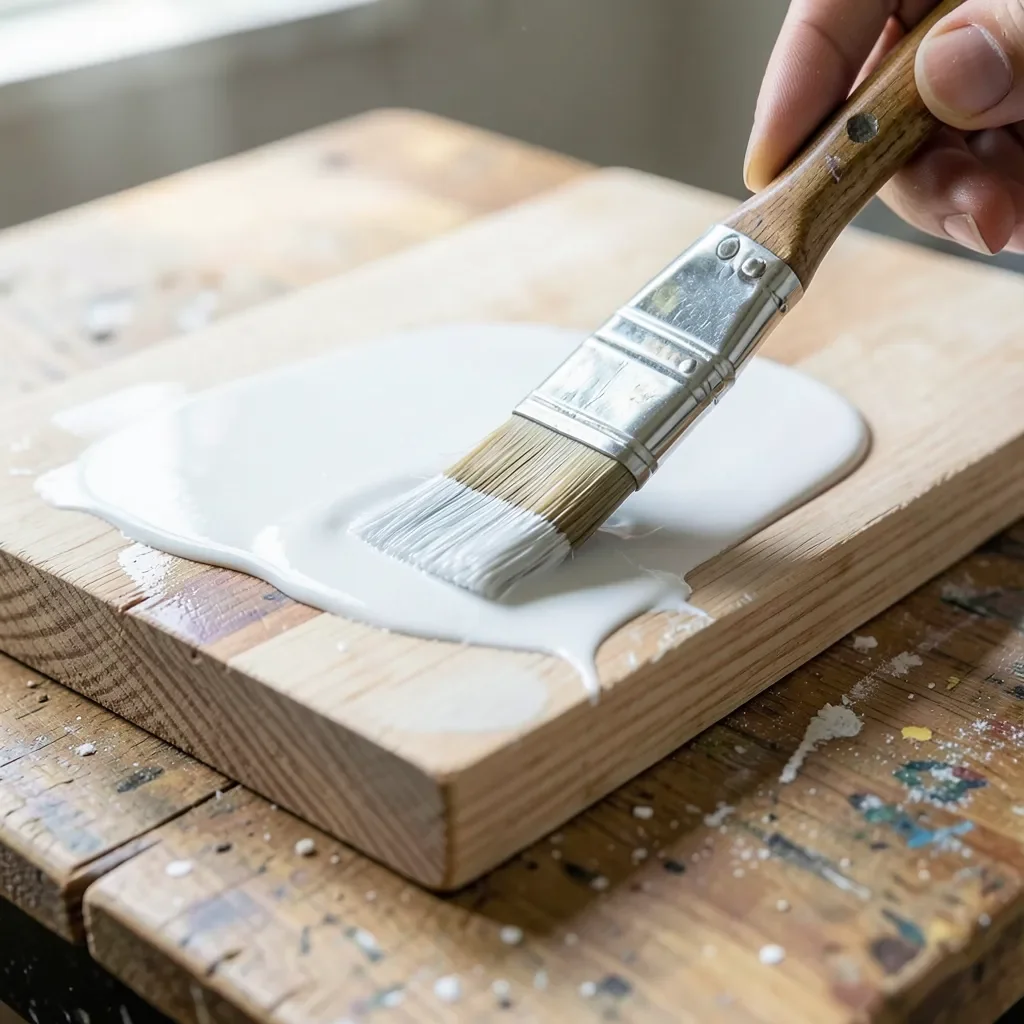
How Long Does Acrylic Paint Take to Dry on Wood?
Acrylic paint on wood dries to the touch in 20-30 minutes and is ready for a second coat in 2-4 hours, but full cure — the point where the paint film has actually hardened and bonded to the wood — takes 24-48 hours, longer for thick coats. The step most guides skip: below about 48°F (9°C), most acrylics physically cannot form a proper paint film no matter how long you wait, since the paint’s polymer particles need enough warmth to fuse together. This guide covers real dry-vs-cure timing, what actually slows drying, and why “just wait longer” doesn’t fix a cold garage.
Dry vs. Cure: Two Different Things
Best Multi-Surface Acrylic for Wood Pick
 |
FolkArt Multi-Surface Acrylic Paint Set (16 Colors) – $30.99 Formulated for wood, terra cotta, and other craft surfaces without a separate primer step for most raw wood — the multi-surface binder is what gives it the touch-dry and cure timing this guide covers.
|
“Dry” and “cured” describe two separate processes, and confusing them is the most common mistake with acrylics on wood. Drying is water evaporating out of the paint film — this is what makes the surface feel dry to the touch. Curing is the paint’s polymer particles physically fusing into one continuous, hardened film that bonds to the wood. A coat can feel bone-dry to the touch within 30 minutes while still being weeks away from a full cure underneath.
- Touch dry: 20-30 minutes for a thin coat under normal indoor conditions (65-75°F, moderate humidity).
- Recoat ready: 2-4 hours between coats — manufacturer paint chemist Golden Artist Colors rates a standard 10-mil wet film as dry to the touch within 2 hours above 65°F with humidity under 70%.
- Full cure: 24-48 hours for a standard thin coat, 3-7+ days for heavy body or multiple thick layers, before the piece should see regular handling, moisture, or weight.
The Temperature Threshold Most Guides Skip
Every acrylic formulation has a minimum film formation temperature (MFFT) — the point below which the paint’s polymer particles are too rigid to fuse into a continuous film, regardless of how long you wait. For most standard acrylic paint lines, that threshold sits around 45-49°F (7-9°C). This is why paint applied in an unheated garage or shed in early spring or late fall can stay permanently soft, chalky, or prone to cracking — the paint didn’t just dry slowly, it never actually cured correctly in the first place. The fix isn’t more waiting; it’s moving the work to a space that stays above the paint’s MFFT for the entire cure window, not just while you’re applying it.
📊 A standard 10-mil wet acrylic film dries to the touch within 2 hours above 65°F with humidity under 70%; below the paint’s minimum film formation temperature (roughly 45-49°F for most acrylics), the film won’t properly cure no matter how long it sits. — Source: Golden Artist Colors, Drying Technical Notes
What Actually Speeds Up or Slows Down Drying
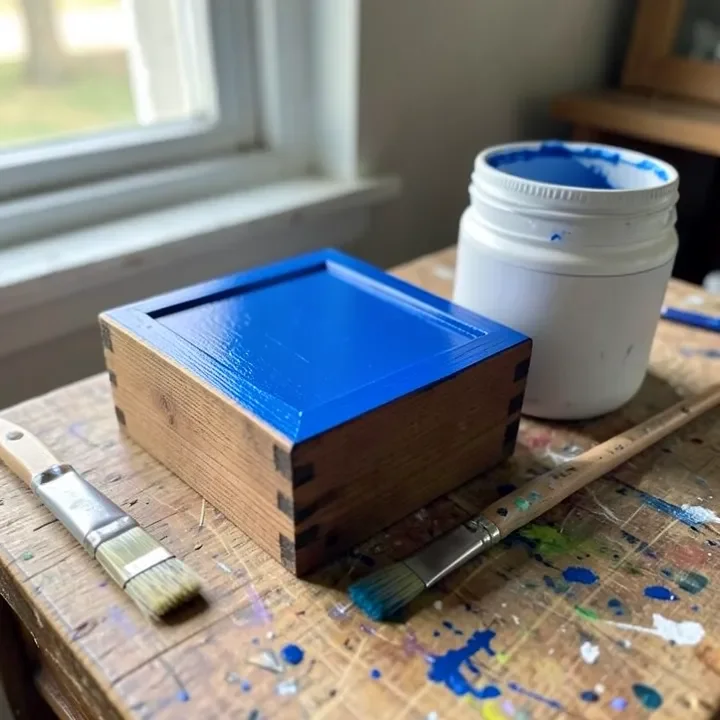
- Wood porosity: Raw, unprimed pine or fir absorbs paint quickly, which can make the surface feel dry faster even though the paint has simply soaked in rather than formed a proper film. A primed surface dries more evenly because the paint sits on top and forms a film rather than being drawn into the grain unevenly.
- Coat thickness: A thin, even coat dries and cures faster than a thick or globbed-on one — water and the coalescing solvent have to work their way out of the entire film thickness, not just the surface layer.
- Humidity: Above roughly 70% relative humidity, water in the paint film evaporates more slowly because the surrounding air is already close to saturated — this is the single biggest variable in an indoor shop.
- Temperature: Warmer air (70-75°F / 21-24°C) speeds both evaporation and the polymer coalescence that makes curing possible; anything below the paint’s MFFT stalls curing outright, not just slows it.
- Airflow: A gentle fan moves saturated air away from the surface so drier air keeps contacting the paint — but too much airflow directed at a still-wet coat can kick up dust that lands in the film.
Drying Times by Acrylic Type
| Paint Type | Touch Dry | Recoat | Full Cure |
|---|---|---|---|
| Standard/craft acrylic (thin coat) | 20-30 min | 1-2 hrs | 1-2 days |
| Heavy body artist acrylic | 45-60 min | 1-3 hrs | 3-7+ days |
| Fluid/soft body acrylic | 15-25 min | 30-60 min | 1-3 days |
| Acrylic gesso/primer | 30-60 min | 4-12 hrs | ~24 hrs |
These are estimates for normal indoor conditions (65-75°F, moderate humidity) — cold, humid, or thickly applied paint pushes every number in this table higher.
Speeding Up Drying Without Ruining the Finish
- Apply thin coats: Two thin coats dry and cure faster in total than one thick coat, and give a more even, durable finish.
- Keep the room above 70°F: This keeps you comfortably above most acrylics’ MFFT with margin, rather than drying right at the edge where curing stalls if the temperature dips overnight.
- Add gentle airflow: A fan on low, aimed to circulate air across the room rather than blast the wet surface directly, moves humid air away without stirring up dust.
- Lower humidity if needed: A dehumidifier in a small shop space measurably speeds evaporation in humid climates or seasons.
- Avoid heat guns aimed at one spot: Concentrated heat can dry the surface faster than the layer underneath, trapping moisture and causing the film to crack or blister later — a fan and warm ambient air are safer than direct heat.
Why Paint Is Taking Longer Than Expected
If you’ve controlled temperature and airflow and the paint is still tacky well past the expected window, check for one of these: humidity genuinely above 70-80% (a hygrometer is worth the few dollars if this happens often), a coat applied thicker than intended, a non-porous or sealed surface that can’t absorb any moisture at all so everything has to evaporate off the top, or room temperature that’s dropped below the paint’s MFFT even briefly — a cold snap overnight can stall curing that had otherwise been going normally.
Why Full Cure Matters Before Heavy Use
A “touch dry” coat can still be soft enough that stacking, clamping, or applying a topcoat too early will dent, print, or trap moisture under a sealant — a common cause of the cloudy or blistered look people blame on the topcoat itself. Adding a polyurethane topcoat or any other sealant should wait for full cure, not just touch-dry, since sealing over paint that’s still off-gassing moisture traps it under the new layer. The same logic applies to reassembling a painted piece — screwing hardware back into freshly painted wood before full cure risks chipping the film right where it’s still soft.
Frequently Asked Questions
Will acrylic paint wash off untreated wood if it hasn’t dried?
Yes. Until acrylic paint has cured, it’s still water-soluble, so untreated, porous wood exposed to water or heavy humidity can lose paint or develop streaking. Give it the full 24-48 hour cure window before exposing it to moisture.
How long should you wait between coats in humid conditions?
Extend the standard 2-4 hour recoat window to closer to 4-6 hours above roughly 70% relative humidity, and expect full cure to take longer than the normal 24-48 hours as well.
Is it better to paint indoors or outside?
Indoors with controlled temperature and light airflow gives the most consistent results, since outdoor temperature swings can drop below the paint’s minimum film formation temperature overnight even in mild seasons. If painting outdoors, work in the warmest, driest part of the day and bring the piece inside before evening temperatures drop.
Can a heat gun or hair dryer speed up drying safely?
A hair dryer on low, kept moving and held several inches away, can speed surface drying without issue. A heat gun aimed too closely or held on one spot can dry the surface faster than the paint underneath, trapping moisture and causing cracking or blistering later — if you use one, keep it moving constantly and never linger on one area.
The number that actually matters isn’t how long you waited — it’s whether the room stayed warm enough, dry enough, and long enough for the paint to finish coalescing into a real film. Track conditions, not just the clock, and the drying-time table above will hold up in practice.
Sponsored / affiliate links. As an Amazon Associate I earn from qualifying purchases. I may earn additional commission from eligible campaigns.
 PINTAR | 26 PACK | Acrylic Paint Markers Medium Point | Shoes, Leather, Rock Painting, Wood, Glass | Acrylic Paint Pens | Medium Point 5.0mm
 PINTAR | 6 PACK | Gold & Silver Acrylic Paint Markets Extra Fine Tip | Leather, Shoes, Rock Painting, Ceramic Glass, Wood, Paper, Fabric | Acrylic Paint Pens | 3 Gold & 3 Silver, 0.7mm