How Long Does It Take for Hardwood Floors to Cure? Dry vs. Cured
“Dry” and “cured” are not the same thing, and mixing them up is what leads to dents and cloudy patches under rugs. A finish is dry to the touch in hours; it’s fully cured – hard enough for area rugs, furniture, and normal life – on a much longer timeline. Water-based polyurethane finishes reach full cure in about 2 weeks. Oil-based (oil-modified) polyurethane needs closer to 30 days. Everything you do on that floor in between should be scaled to how far along it actually is.
Curing vs. Drying: What’s Actually Happening
Best Way to Confirm a Floor Is Actually Cured
 |
General Tools MMD4E Pinless Moisture Meter – $38.83 Guessing by smell or feel is unreliable. A pinless meter reads moisture through the finish without marking the wood, so you can actually confirm a floor is ready for rugs.
|
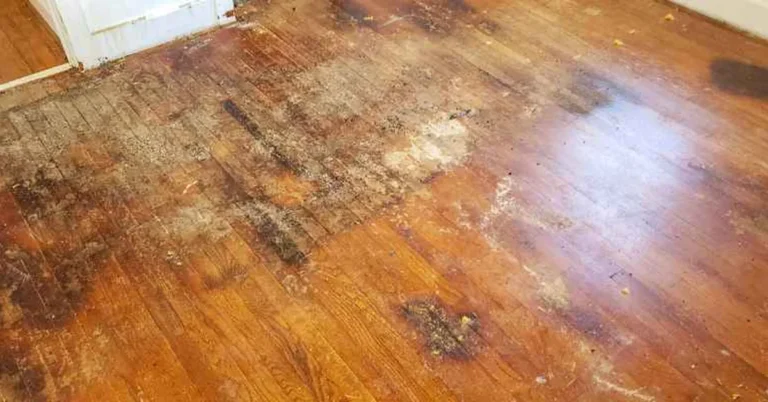
Drying is solvent or water evaporating out of the finish until it’s no longer tacky – that happens fast, often within hours. Curing is the finish’s chemical structure fully cross-linking into a hard, stable film, and that process continues long after the surface feels dry. A floor that looks and feels finished after 24 hours can still be soft enough underneath to dent under a chair leg or trap moisture under a rug for another two to four weeks, depending on the finish type.
Cure Time by Finish Type
Water-based polyurethane dries fast – often walkable in socks within 4-6 hours and safe for normal foot traffic in 24 hours – but don’t mistake that speed for full cure. Give it about 2 weeks before placing area rugs, and avoid rubber-backed mats specifically, since rubber traps off-gassing moisture against the finish even after it’s technically cured. Oil-based (oil-modified) polyurethane takes longer at every stage: typically 24 hours before walking in socks, several days before normal shoe traffic, and a full 30 days before rugs or heavy furniture go back. In exchange for the wait, oil-based finishes are generally more durable and develop a warmer amber tone as they age – a real tradeoff, not just a downside.
Wood species has a smaller but real effect on timeline mainly through moisture content, not the finish curing chemistry itself – a dense, well-acclimated oak floor holds its dimensions more predictably than a species prone to seasonal movement, which matters if you’re also dealing with a fresh filled and leveled subfloor that needs to finish drying alongside the finish coat.
What Actually Changes Cure Speed
Keep the room between 65-75°F and relative humidity between 40-60% – those are the ranges finish manufacturers actually test to, and straying outside them is the single biggest reason a cure runs long. High humidity slows solvent and moisture evaporation directly; low humidity combined with a heater running can dry the surface too fast, sealing in uncured finish underneath and risking a soft, easily-marked topcoat later. Don’t run space heaters or point a heat gun at a curing floor to “speed things up” – it does the opposite by curing the surface before the layer underneath has finished off-gassing.
Good air circulation genuinely helps – a couple of box fans set to circulate air across the room (not blasting directly on the wet finish, which can cause uneven drying lines) keeps humidity from building up right at the floor’s surface. Direct sunlight through an uncovered window can cause uneven curing and premature yellowing on oil-based finishes specifically, so close blinds during the first week.
Signs a Floor Is Actually Cured
A cured finish is uniformly hard across the whole floor, not just at the edges where air movement is best. Press a fingernail into an inconspicuous spot (inside a closet, under where a rug will sit) – if it leaves a mark, it’s not cured yet, finish or no finish smell. Any lingering solvent smell is itself a sign of incomplete cure; a truly cured floor is odorless. A quick moisture-meter check (see the pick above) across several spots in the room, compared against a baseline reading on an interior door frame of similar wood, is the most reliable way to confirm you’re actually ready for rugs rather than guessing by the calendar.
Fixing Tackiness and Uneven Curing
Persistent tackiness well past the expected cure window is almost always a humidity or ventilation problem, not a bad batch of finish – run a dehumidifier and increase air movement rather than adding another coat over a tacky surface, which traps the problem underneath a new layer. Uneven curing between rooms or even across one room usually traces back to temperature swings (a room near an exterior door or without heating running) or a spot that got direct sun exposure. Track it down with the moisture meter rather than assuming – treating the wrong cause (adding heat when the real issue is low humidity, for example) can make it worse.
Frequently Asked Questions
How long do you have to stay off hardwood floors after refinishing?
Stay off completely for at least 24 hours, then socks-only foot traffic for another day or two. Wait a full 2 weeks (water-based) or 30 days (oil-based) before returning rugs and furniture, and always defer to your refinishing professional’s specific timeline, since the exact product used changes these numbers.
How long do you have to wait to walk on hardwood floors?
Most finishes are safe for careful sock-foot walking within 24 hours and normal shoe traffic within 2-3 days. Avoid heavy or dragged furniture for at least a week, longer for oil-based finishes.
How soon can you put furniture on new hardwood floors?
Light furniture can typically go back after about a week; wait the full cure window (2 weeks water-based, 30 days oil-based) for heavy pieces and anything with metal or hard plastic feet. Use felt furniture pads either way, and lift rather than drag everything back into place.
When can you sleep in the house after refinishing floors?
Usually the same night if ventilation is good and fumes have cleared, though water-based finishes off-gas less and clear faster than oil-based. If anyone in the house has respiratory sensitivity, waiting 48 hours with the space well-ventilated is the safer call.
Conclusion
Give water-based finishes 2 weeks and oil-based finishes 30 days before treating a hardwood floor as fully cured, and don’t let a fast-drying surface fool you into rushing rugs and furniture back sooner. Stable temperature and humidity do more for cure time than any product trick, and a cheap moisture meter takes the guesswork out of deciding when the floor is actually ready.
Sponsored / affiliate links. As an Amazon Associate I earn from qualifying purchases. I may earn additional commission from eligible campaigns.